A motorcycle tank pad never felt necessary — until the day my knees wouldn’t stay on the tank in the middle of a corner. This is the story of that ride, and the $4 fix that followed.
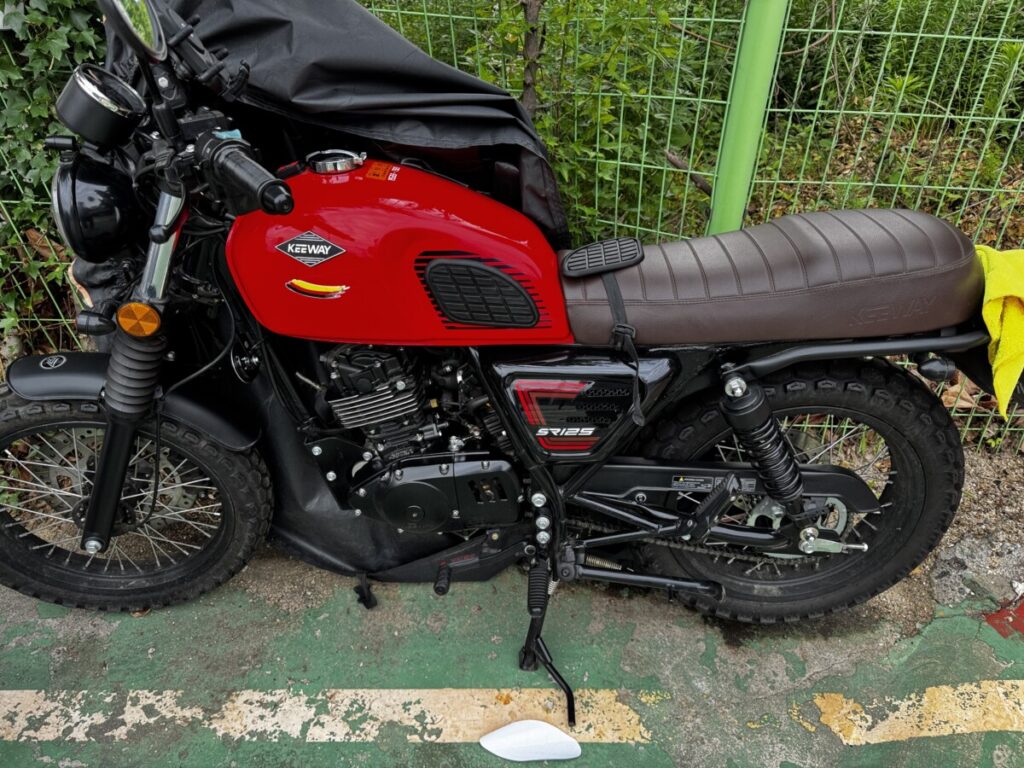
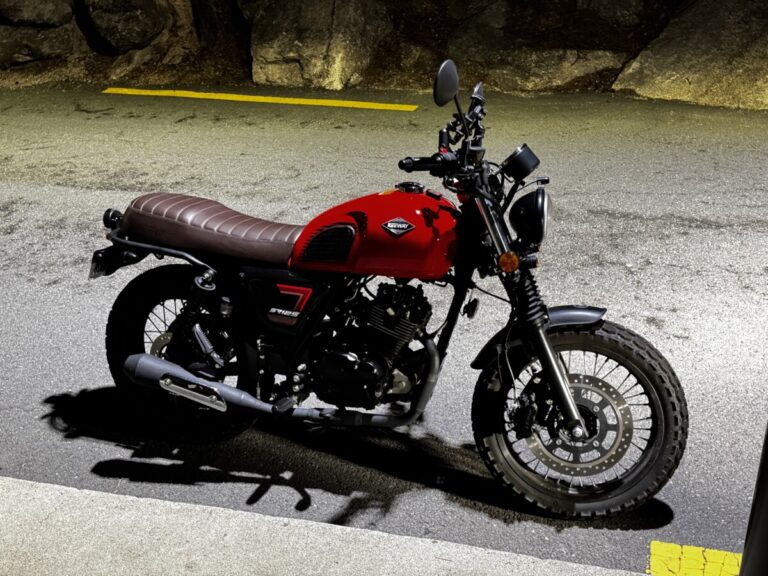
I try to ride my Keeway SR125 at least once a week. It’s not my main bike, so I’ve made peace with its shortcomings — when a bike only sees occasional duty, you stop sweating the small stuff. That’s my rule for second bikes, and it keeps me sane.
Then came the ride that broke the truce. A sharp corner, a bit over 60 km/h, knees pressed against the tank the way they should be. Except that day I was wearing pants made of some slippery, flimsy summer fabric — and my knees would not stay put. They kept sliding off. Mid-corner. If you’ve felt your lower body come loose right when you need it anchored, you know the feeling.
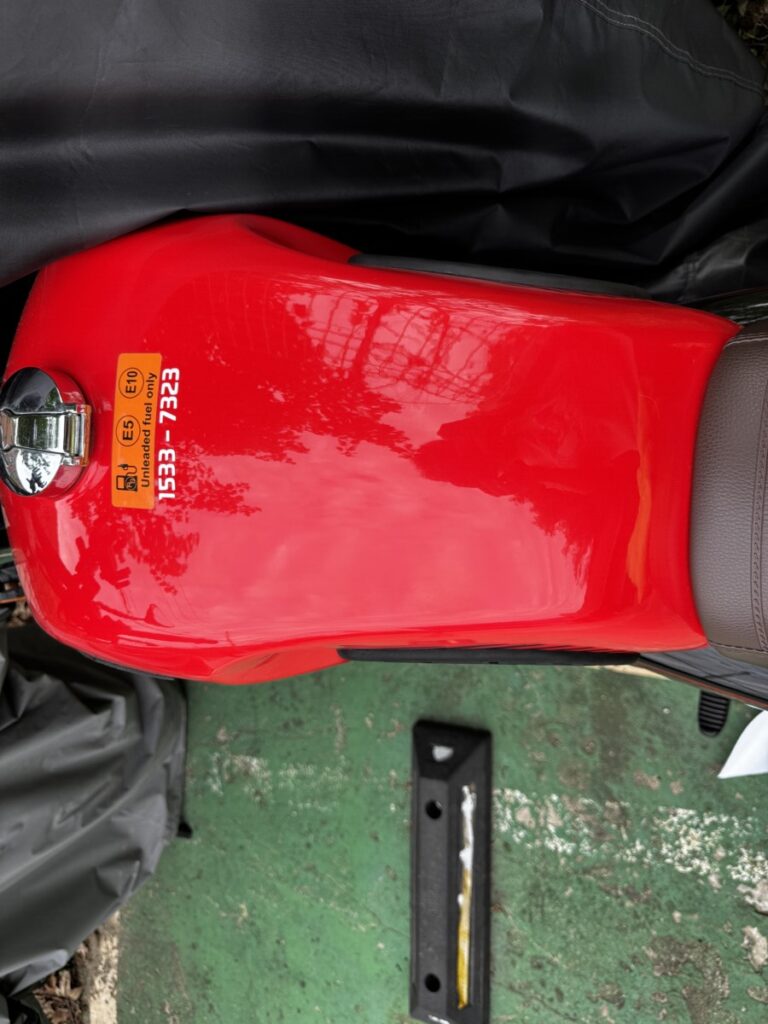
Looking back, it was always going to happen. The SR125 has a classic-style tank: glossy paint, smooth curves, and nothing where your knees land. My jeans had been doing the gripping all along. The tank never was.
Why a motorcycle tank pad matters more than it sounds
Your lower body is supposed to hold the bike so your arms can stay loose for steering. The moment your knees lose the tank, your arms inherit the job — the bars get heavy, braking pitches your weight onto your wrists, and your shoulders are stiff within half an hour. Braking, cornering, fatigue: all of it traces back to whether your knees can lock in.
A tank pad is the cheapest fix there is. One thing worth knowing before you buy: pads come in two kinds. A center pad sits on top of the tank and exists to protect paint from belt buckles and jacket zippers. Side pads — traction pads — are the ones your knees actually grip. I needed the latter. Paint protection was a bonus; grip was the whole point.
Why I bought from AliExpress
Korean shopping sites came up short — thin selection, and the prices felt ambitious for what is, honestly, a piece of textured rubber. AliExpress had a pair for about ₩5,000 (roughly $4), shipped in a week.
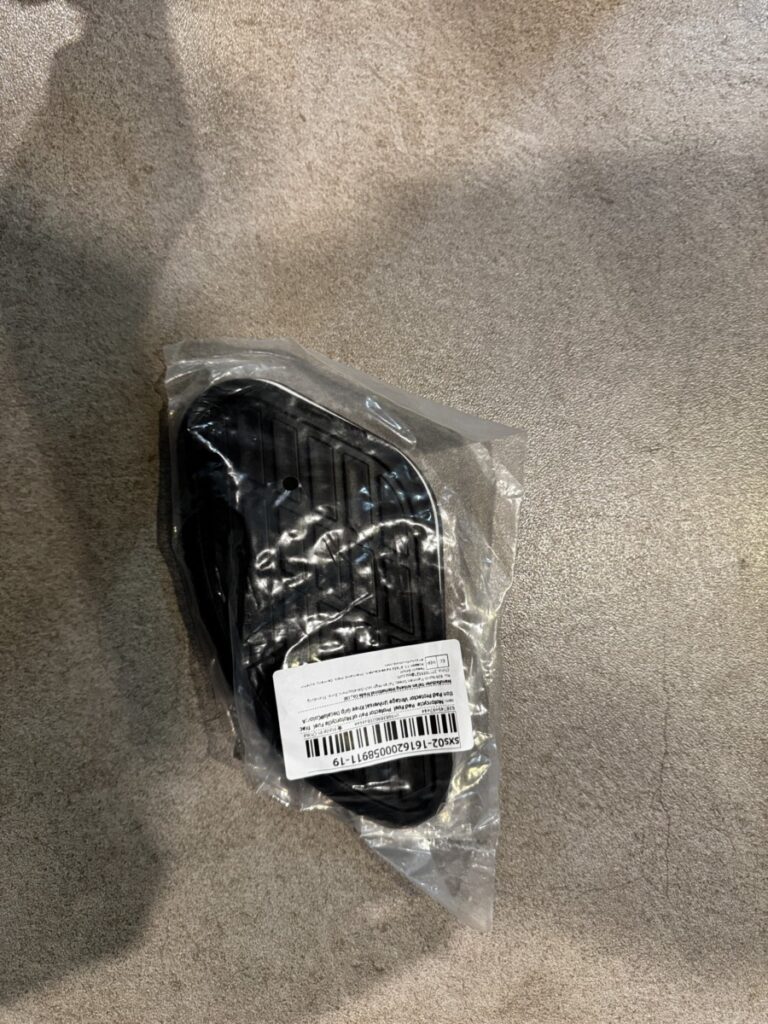
The pads are palm-sized, thick rubber, with a vintage grid pattern — the kind you see on old café racers. That mattered to me. Stick a modern carbon-look pad on a retro bike like the SR125 and it fights the whole design; this one looks like it could have left the factory there. The back is pre-applied double-sided tape. Will a $4 part have 3M-grade adhesive? I doubt it. My expectations are low, which is partly why I’m writing this — I’ll report back.
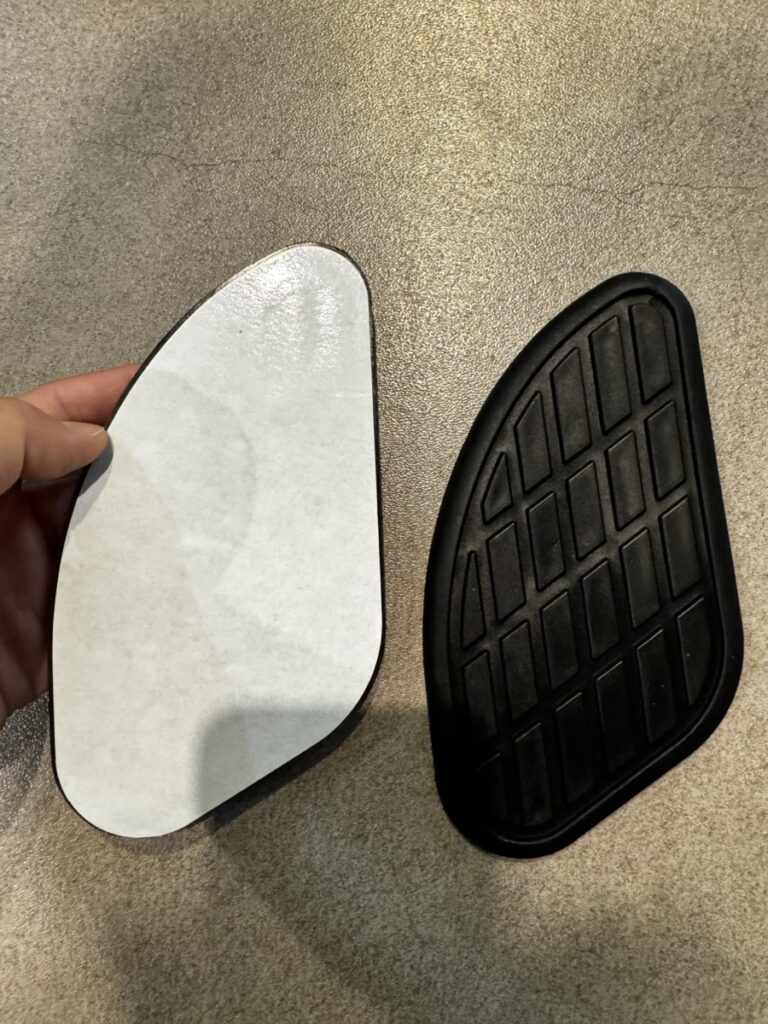
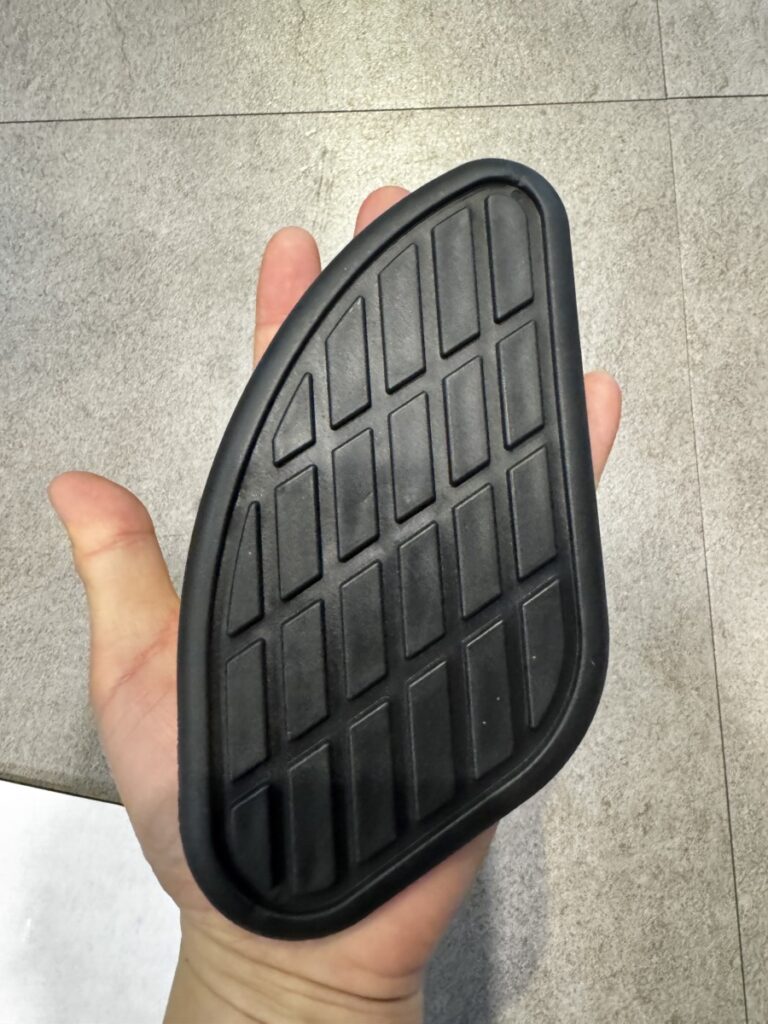
Installing the tank pad — over the factory stickers
One decision before anything: my tank came from the factory with decals exactly where the pads needed to go. Peel them first? I considered it. But they were stuck down hard and dead flat, and removing them would’ve been a whole project. So I judged it fine to mount the pads right on top. Cleaned the area thoroughly first, of course.
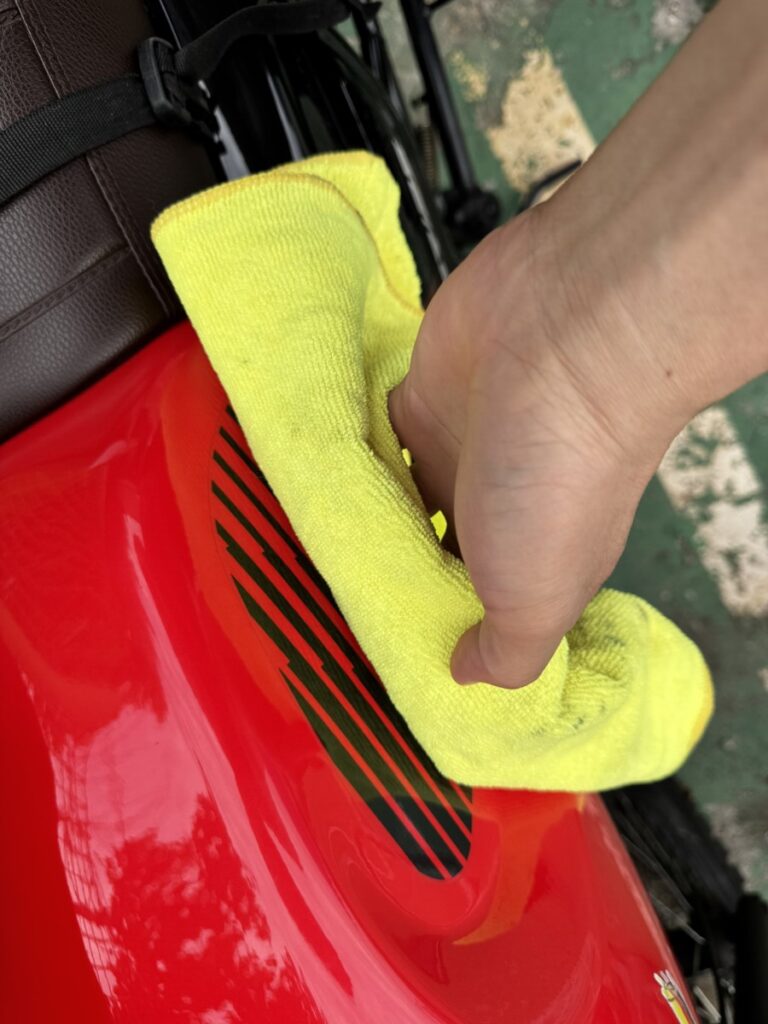
The process itself is simple: clean the surface → dry-fit the pad and mark your position → peel the backing → press from the center outward. One tip that actually matters: sit on the bike and put your knees where they naturally land before you commit. Eyeballing it while standing next to the bike is how you end up with pads an inch away from where your knees actually go. Ten minutes, start to finish — most of it positioning.
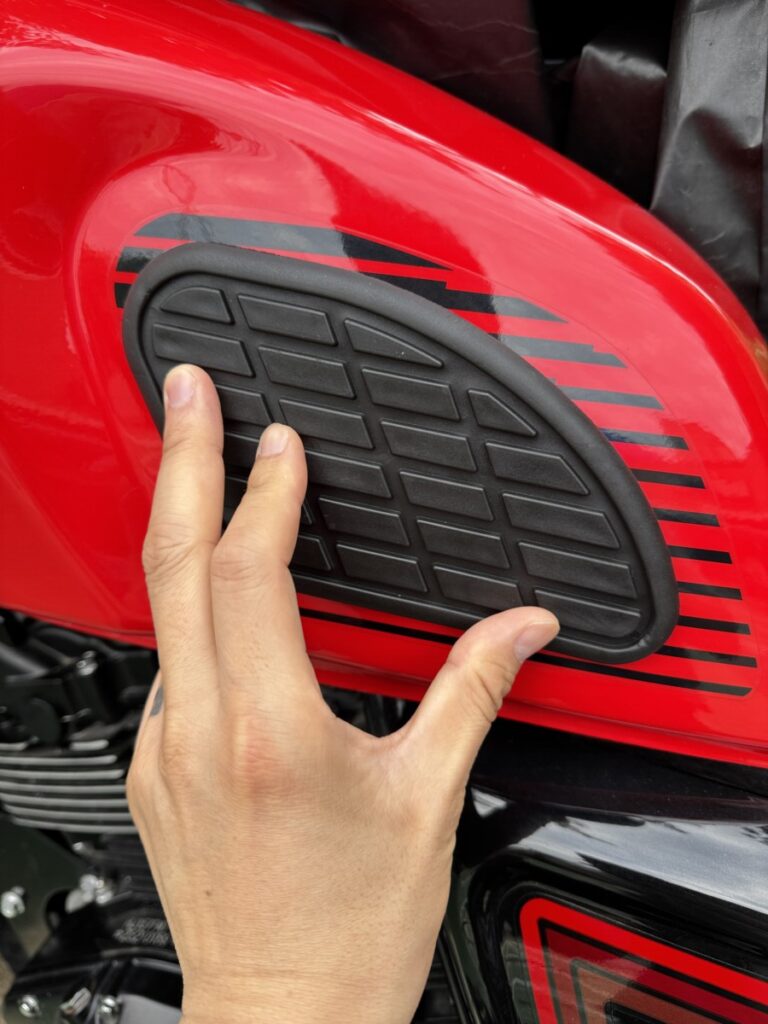
Two caveats. If your factory stickers are peeling or bubbled, remove them first — mine were flat and solid, which is the only reason the shortcut works. And with tape-mounted pads, give the adhesive a day to settle before washing the bike or riding in rain.
First impression
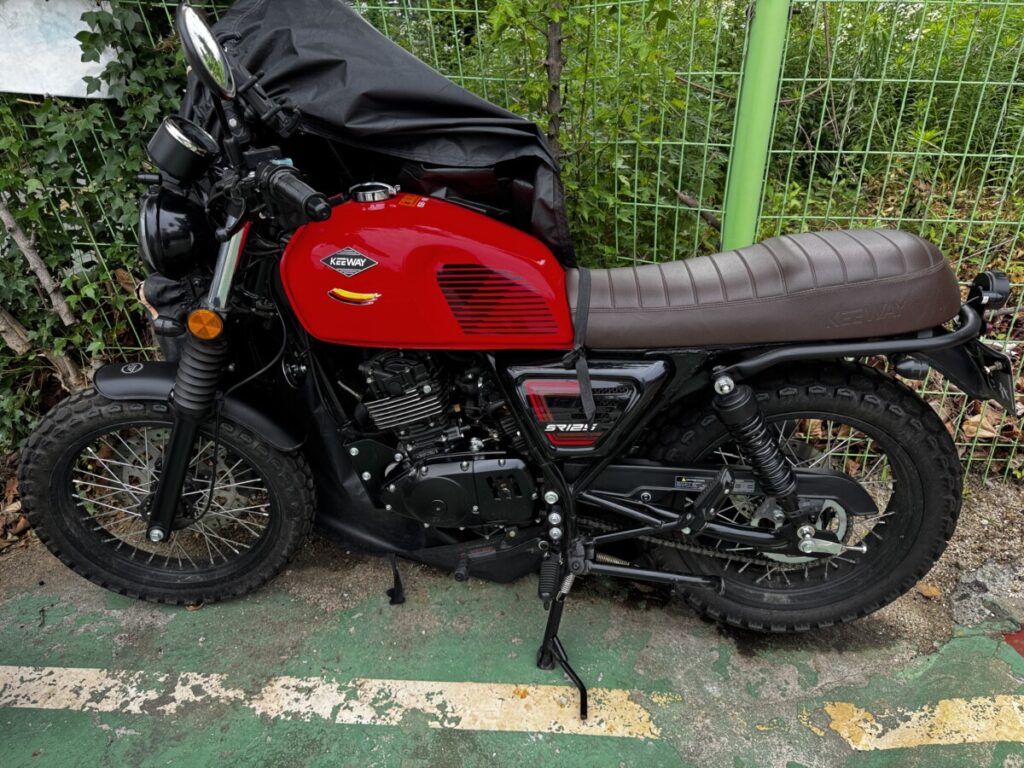
Knees on, and — oh. That’s grip. The rubber grid bites into the fabric and nothing slides. The slippery-pants incident is officially unrepeatable. The bike and I are one step closer to moving as a single unit, which is a grand thing to say about a $4 part, but that’s honestly what solid knee grip feels like.
Update: the pad got its first real test on a midnight mountain climb — see the Doseonsa night ride.
What I’m watching
Three durability questions remain for this motorcycle tank pad: whether the tape survives a summer of the tank heat-cycling in the sun, whether the edges start lifting first, and whether the grid pattern wears smooth. I’ll update this post after a few weeks of riding.