The Honda Super Cub history is unlike any other motorcycle story. There are faster bikes. There are more expensive one
1.Why the Super Cub Still Matters
There are faster motorcycles. There are more expensive ones. There are bikes with more horsepower, more technology, and more prestige.
And then there is the Honda Super Cub — a 50cc commuter bike that has outsold all of them combined.
With over 100 million units produced, the Super Cub holds the record as the best-selling motorized vehicle in human history. Not just motorcycles. Every car, truck, and two-wheeler ever made — none comes close.
What makes this even more remarkable is that the bike has looked essentially the same since 1958. No dramatic redesigns. No reinventions. Just quiet, relentless improvement of something that was already close to perfect.
This is the story of how a small Japanese motorcycle changed the world — through engineering brilliance, cultural savvy, and a design philosophy so clear it has never needed to change.
2.The Origin Story: Noodle Deliveries and a European Road Trip (1956–1958)
Two Visionaries, One Mission
In 1956, Honda founder Soichiro Honda and his business partner Takeo Fujisawa traveled through Europe on a research trip. The continent was in the middle of a scooter boom — the Vespa and Lambretta were everywhere, giving ordinary people affordable, stylish mobility.
Soichiro watched closely. He admired the concept but spotted a critical flaw: the wheels were too small. Europe’s roads were well-paved. Japan’s were not. Back home, dirt roads, gravel paths, and uneven terrain were the norm. A scooter with 10-inch wheels would struggle.
He saw the gap. He flew home and got to work.
“A Delivery Man Must Be Able to Carry Noodles With One Hand”
The design brief Soichiro gave his engineers was unusually specific:
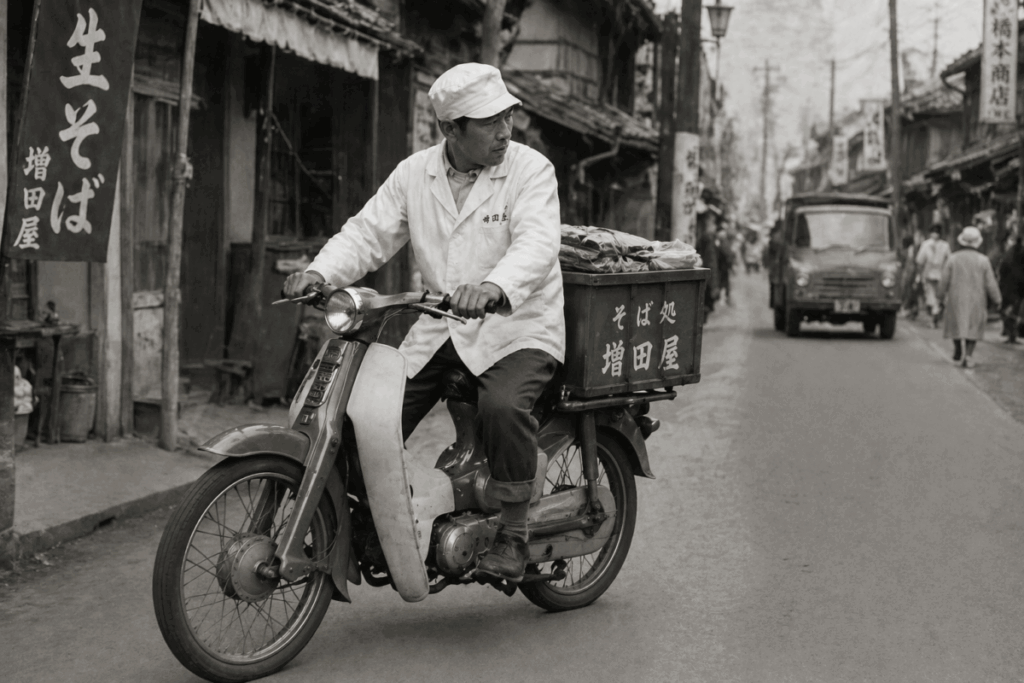
“A delivery man carrying a box of soba noodles in one hand must be able to ride this bike safely with the other.”
This single sentence shaped every engineering decision that followed. The bike had to be operable with one hand. It had to be so intuitive that anyone — elderly riders, women in skirts, first-time riders — could get on and go without a second thought.
A vehicle for everyone. That was the Super Cub’s founding purpose.
Three Design Breakthroughs That Changed Everything
The engineering team delivered three innovations that set the Super Cub apart from anything else on the market:
① Larger 17-Inch Wheels
While scooters used small 10-inch wheels, the Super Cub was designed with 17-inch wheels. The result was a bike that could handle rough, unpaved roads with stability and confidence — perfectly suited for real-world Japanese conditions.
② The Underbone Frame
Traditional motorcycles had a high crossbar between the seat and handlebars, making it awkward for women in skirts or older riders to mount. The Super Cub’s low-slung underbone frame eliminated this entirely. Step-through access made the bike welcoming to absolutely everyone. This frame design became the blueprint for virtually every commuter bike that followed.
③ Plastic Body Panels — A World First
The Super Cub was the first motorcycle in history to use polyethylene resin plastic for its bodywork. This reduced weight and, just as importantly, gave the bike a softer, rounder, friendlier appearance. It didn’t look like a machine. It looked approachable. That aesthetic has remained almost completely unchanged for over six decades.
3.Engineering Excellence: Small Engine, Enormous Ambition
The Four-Stroke Conviction
In the late 1950s, small motorcycles ran on two-stroke engines. They were cheaper to build, simpler in design, and offered reasonable power. Almost everyone used them.
Soichiro Honda refused.
He believed the future belonged to four-stroke engines — quieter, cleaner, and far more fuel-efficient. Using racing technology his team had developed, he engineered a 50cc four-stroke engine that produced 4.5 horsepower. For a 50cc engine in that era, this was exceptional output, achieved without the noise, smell, or fuel waste of two-stroke alternatives.
It was a defining moment. The Super Cub was built on principles, not compromises.
The Automatic Centrifugal Clutch: One-Hand Riding Made Real
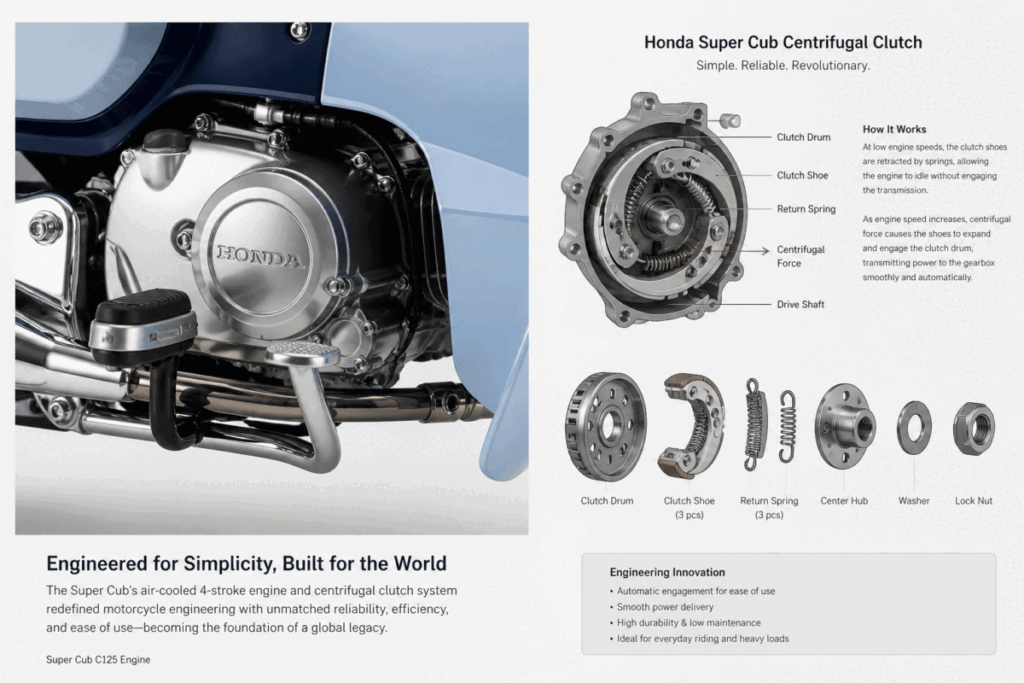
The Super Cub’s most clever mechanical innovation was its automatic centrifugal clutch.
On a conventional motorcycle, changing gears requires pulling in the clutch lever with your left hand — a coordination skill that takes time to learn. The Super Cub removed this requirement entirely. The clutch engages and disengages automatically based on engine RPM. The rider simply clicks through gears with their left foot. No clutch lever. No learning curve.
This wasn’t just a convenience feature. It was the direct technical solution to the founding design brief. A delivery man really could carry noodles in one hand. The engineering made it possible.
Built to Last Forever
The Super Cub’s reputation for durability borders on legendary. During the Vietnam War era, bikes were ridden for hundreds of thousands of kilometers across jungle terrain with minimal maintenance. In rural Africa and South Asia, Super Cubs ran for years without formal servicing.
The fuel economy matched the durability. Early models achieved close to 100km per liter — a figure that seemed almost impossible for a combustion engine. For small business owners, farmers, and rural communities across the developing world, this wasn’t just impressive engineering. It was the difference between affordable mobility and none at all.
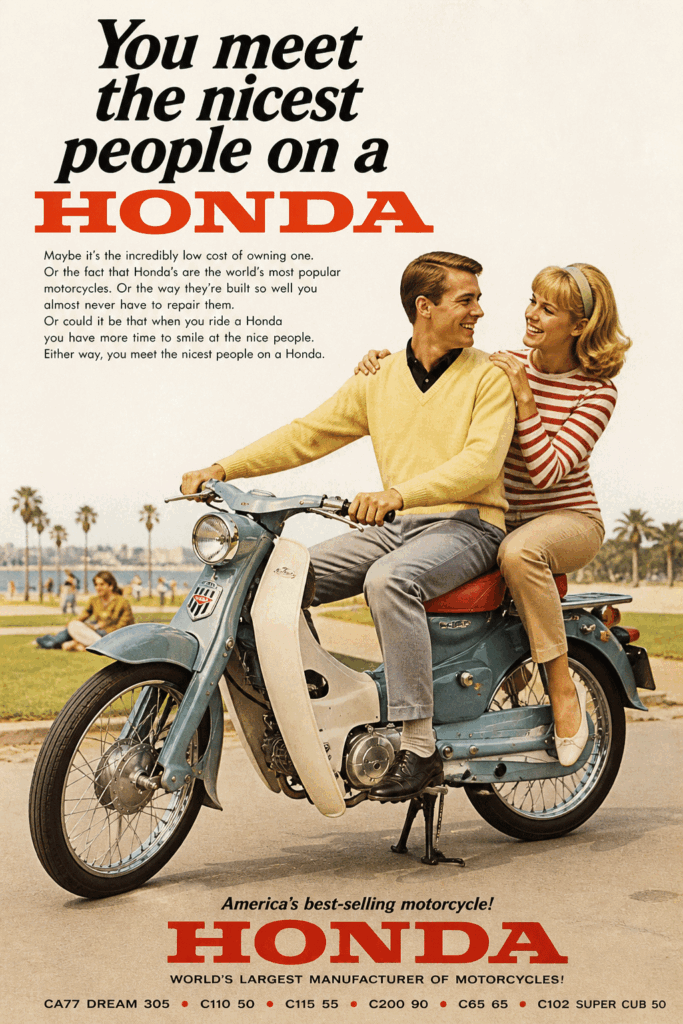
4.Conquering America: “You Meet the Nicest People on a Honda” (1960s)
A Market Built on the Wrong Idea
When Honda set its sights on the American market in the early 1960s, the motorcycle industry faced a serious image problem. In the American public imagination, motorcycles meant one thing: danger. Leather jackets. Gang culture. The kind of people you crossed the street to avoid.
Films and media had cemented this perception. Selling a small, friendly Japanese commuter bike into this environment seemed like an uphill battle at best.
Honda chose a different strategy entirely.
The Campaign That Changed Everything
Rather than fighting the stereotype directly, Honda simply ignored it. They created advertising that showed an entirely different kind of motorcycle rider — ordinary Americans living ordinary lives.
College students. Young mothers. Office workers. Grandparents. All of them smiling, all of them on a Honda.
“You Meet the Nicest People on a Honda.”
The campaign, developed with advertising agency Grey Advertising, became one of the most celebrated in American marketing history. It didn’t just sell motorcycles. It fundamentally repositioned what motorcycles were — shifting them from the fringes of society to the mainstream.
Sales exploded. Honda’s American market share surged. And the Super Cub, once an unknown Japanese product, became a symbol of clean, affordable, everyday transportation.
Going Global
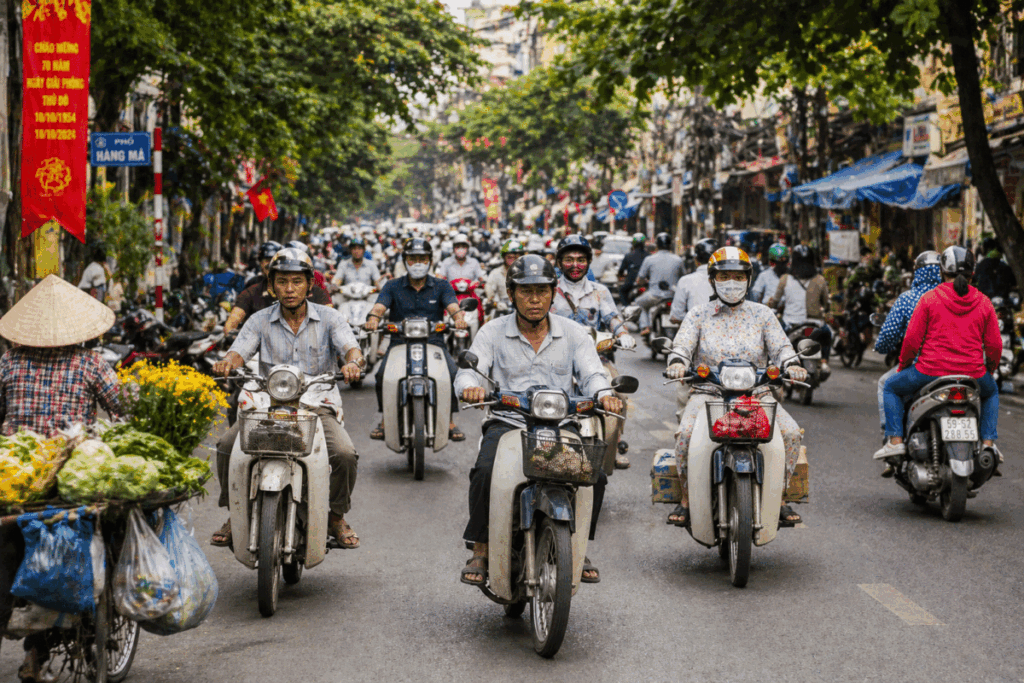
The American success opened the door to the world. Throughout the 1960s and 1970s, the Super Cub expanded into Southeast Asia, Latin America, Africa, and beyond. Local production facilities were established in Vietnam, Thailand, Indonesia, and across the developing world.
In these markets, the Super Cub wasn’t a lifestyle product. It was infrastructure. For a street vendor in Ho Chi Minh City, a rice farmer in rural Thailand, or a clinic worker delivering medicine across unpaved roads in rural Africa, the Super Cub was the vehicle that made their livelihood possible.
One bike. One hundred million lives changed.
5.Evolution Without Compromise: The Super Cub Today
A Design That Never Needed to Change
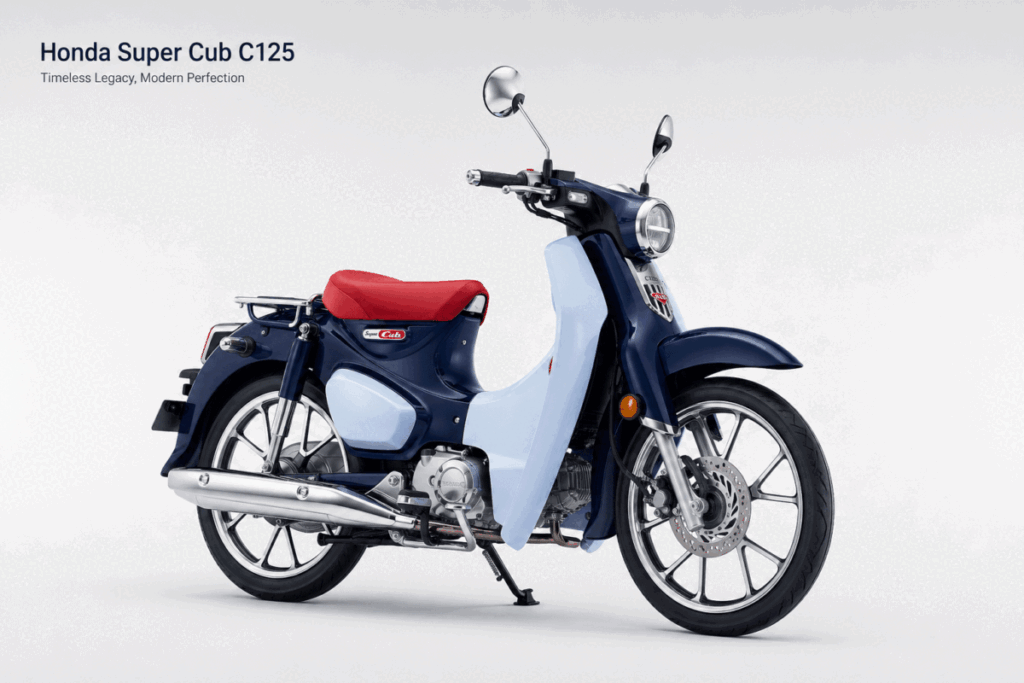
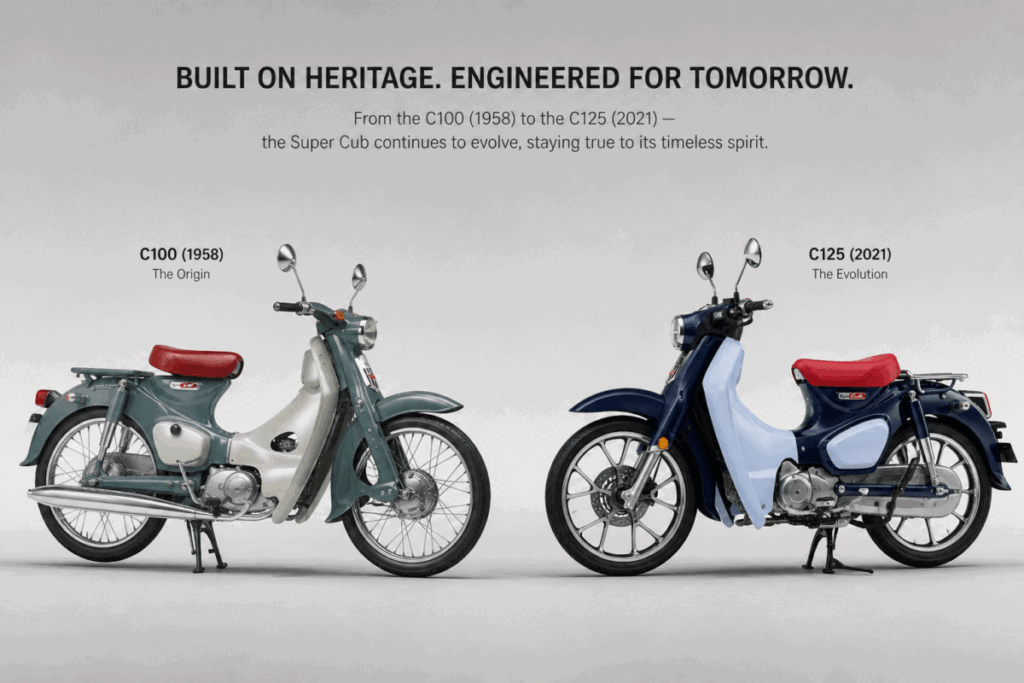
From the original C100 in 1958 to the current C125 and CT125 Hunter Cub, the Super Cub’s visual identity has remained remarkably consistent. The underbone frame. The rounded headlight. The box-shaped side covers. These elements have defined the bike across generations because they were right from the beginning.
When a design works this well, you don’t reinvent it. You refine it.
What Changed Under the Hood
While the silhouette stayed the same, the technology evolved significantly.
The original carbureted engine has been replaced by Honda’s PGM-FI (Programmed Fuel Injection) system, improving fuel efficiency, reducing emissions, and making cold starts effortless. The current C125 has grown from 50cc to 125cc — a meaningful step up in real-world performance. Combined Braking System (CBS) is now standard, adding a layer of safety that earlier models never had.
The Super Cub today is cleaner, safer, more powerful, and more refined than any previous generation — while being unmistakably itself.
The CT125 Hunter Cub: A New Chapter
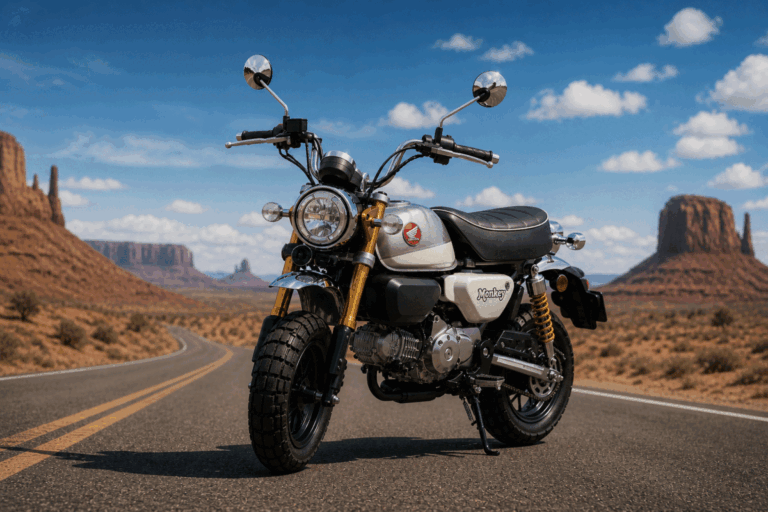
The CT125 Hunter Cub, launched in 2020, brought the Super Cub’s DNA into the adventure and lifestyle segment. With higher ground clearance, knobby tires, and a more rugged aesthetic, it found an entirely new audience among campers, overlanders, and younger riders drawn to its retro-outdoor personality.
The Hunter Cub proved something important: the Super Cub isn’t a relic. It’s a living platform, still capable of speaking to new generations in new ways.
If you’re wondering whether the C110 or C125 is the right choice for you, check out our detailed comparison: Honda Super Cub 110 vs C125: Is the Premium Version Worth the Upgrade?
6.The Legacy: What 100 Million Units Really Means
In 2017, Honda officially announced that Super Cub production had surpassed 100 million units — a milestone no other vehicle in history has reached.
But the number itself isn’t the point.
Behind that figure are 100 million individual stories. A Vietnamese farmer who could finally reach the market before sunrise. A Filipino nurse who could get to the clinic when no other transport was available. A Japanese teenager discovering the freedom of the open road for the first time.
The Super Cub succeeded not because it was the most powerful, the fastest, or the most stylish. It succeeded because it was designed around real human needs, built to last, priced within reach, and trusted completely by people whose lives depended on it.
Honda’s founding philosophy — “technology exists to serve people” — has never been more clearly expressed than in the Super Cub.
Sixty-six years after its debut, it still rolls off production lines every single day. It still looks like itself. And it still works exactly as promised.
That is what a true icon looks like.