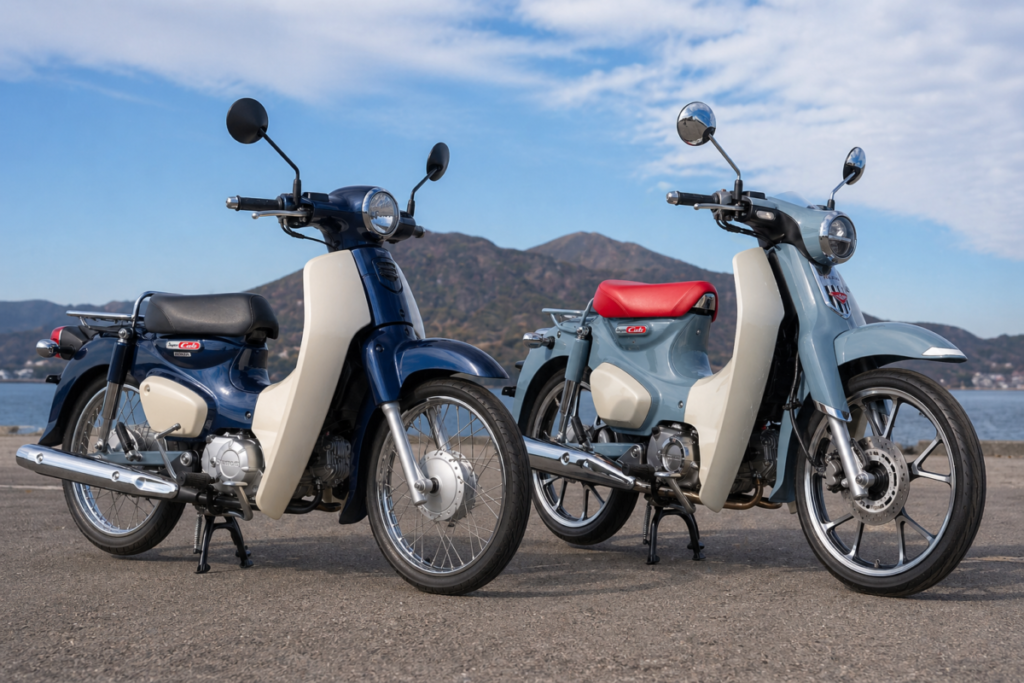
The Honda Super Cub 110 vs C125 debate comes up constantly in rider communities — and for good reason. Both bikes wear the same iconic silhouette that’s sold over 100 million units worldwide — a production history that spans more than six decades and makes the Super Cub one of the most documented motorcycles ever built. Honda Super Cub — Wikipedia
But spend a week on each and the differences become impossible to ignore. This isn’t a spec sheet comparison. It’s a breakdown of what actually changes between the two models when you’re riding in traffic, dealing with a flat on a rural road, or deciding whether the premium version makes sense for how you actually use a motorcycle.
Honda Super Cub 110 vs C125: What’s Actually Different
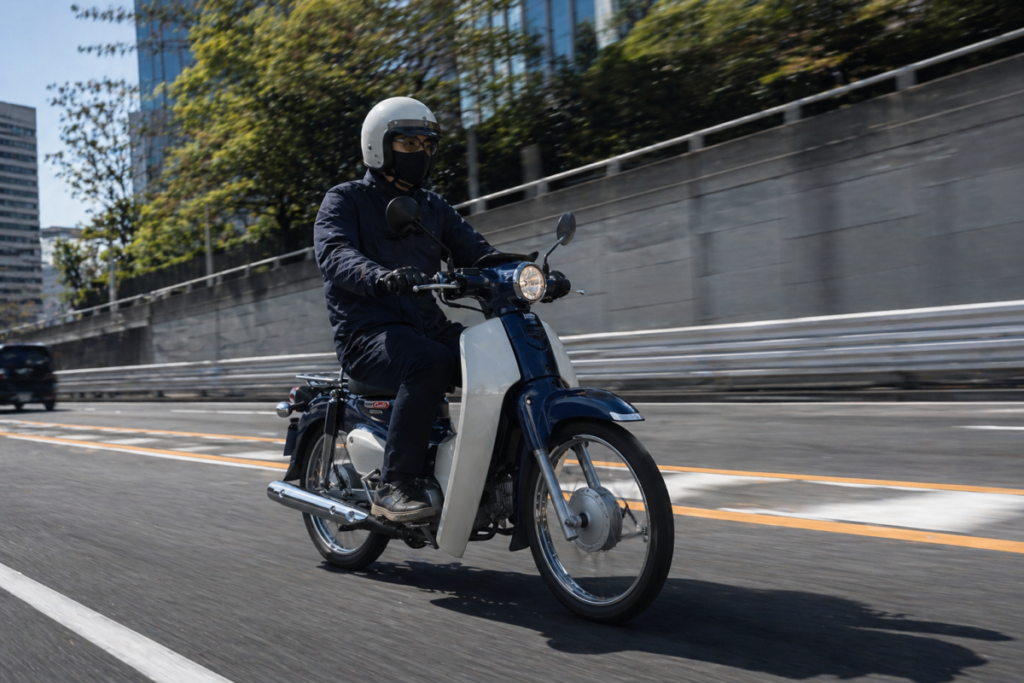
The C125 costs more than the 110 in every market it’s sold in. The gap varies depending on where you buy, but the premium is consistent — and what you get for it goes beyond the displacement increase.
The two bikes have fundamentally different design philosophies. The 110 is built around simplicity, durability, and accessibility. It’s a workhorse — easy to maintain, forgiving to ride, and straightforward to repair anywhere in the world. The C125 is built around the same platform but tuned for a more premium ownership experience, with safety features and refinements that reflect a different kind of rider priority.
Neither is objectively better. They’re designed for different people. Understanding which person you are makes the decision straightforward.
Performance: Where the 110 Surprises You
On paper, the C125 produces more torque. In practice, the 110 often feels more responsive in the situations that matter most for everyday riding.
The 110’s engine is tuned for strong low-end response. In urban stop-and-go traffic, through roundabouts, or pulling away from lights on an incline, the 110’s initial throttle response is sharper and more immediate than the C125. Riders coming from larger displacement bikes sometimes find this surprising — the smaller engine feels more alive in the rev range they actually use.
The C125 counters this at higher speeds and over longer distances. Its engine is smoother through the rev range, gearshifts are more refined, and the overall sensation of riding is noticeably more polished. On a multi-hour touring run, this difference in engine quality becomes meaningful — less vibration transmitted to the rider, less fatigue over distance.
Fuel economy favors the 110 slightly. Real-world figures typically put the 110 at around 60km per liter and the C125 at around 55km per liter under similar conditions. The gap is narrow enough to be irrelevant for most riders, but worth noting for anyone doing significant daily mileage.
The Rattling Issue: An Unexpected C125 Weakness
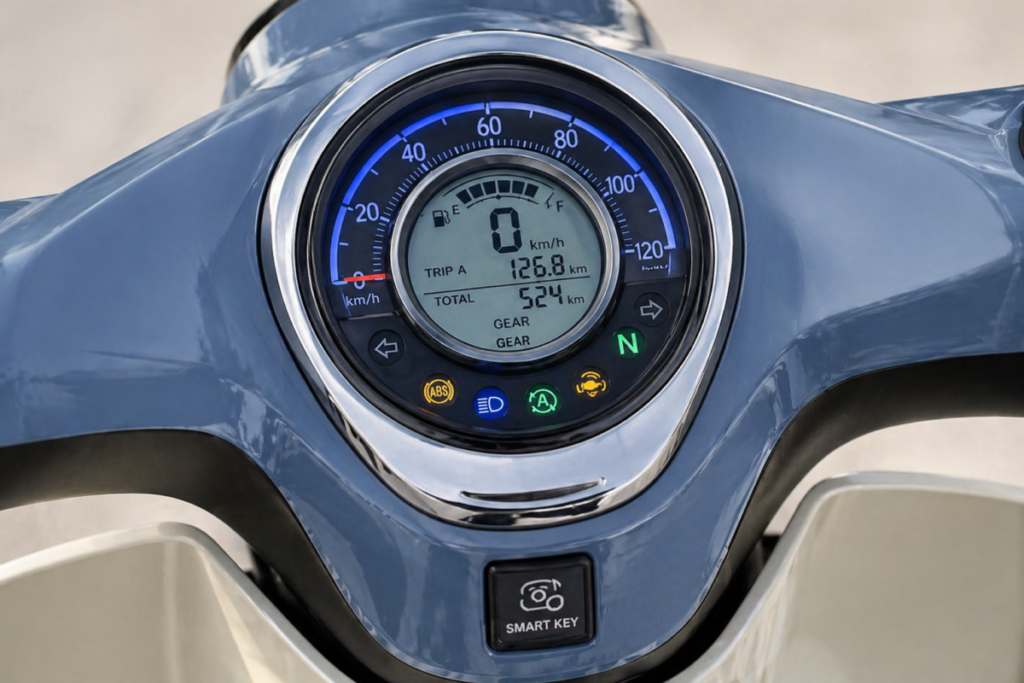
The C125 packs ABS hardware, a smart key system, and associated electronics into a dashboard that was originally designed for a much simpler bike. The result, for some owners, is a high-frequency vibration from the instrument cluster area — particularly noticeable at certain engine speeds.
This isn’t universal, but it’s consistent enough in owner reports to be worth knowing about before purchase. The vibration tends to become more noticeable as mileage accumulates and components settle. Some owners address it with additional vibration dampening around the dashboard. Others don’t notice it at all.
The 110’s simpler construction works in its favor here. Fewer components means fewer potential vibration sources, and the engine’s characteristic sound has a mechanical honesty that many riders find appealing rather than problematic.
One noise issue that affects both models equally: internal engine timing wear. The cam chain tensioner, oil pump gear, and chain guide roller all wear gradually over tens of thousands of kilometers. When they do, the symptoms — a metallic clicking that persists after external chain adjustment — can be mistaken for an external chain problem.
If you’re hearing this on either model, the fix is inside the engine, not at the chain adjuster. More detail on diagnosing this is covered in the Super Cub clicking noise guide linked at the end of this article.
ABS and Smart Key: Where the C125 Justifies Its Premium
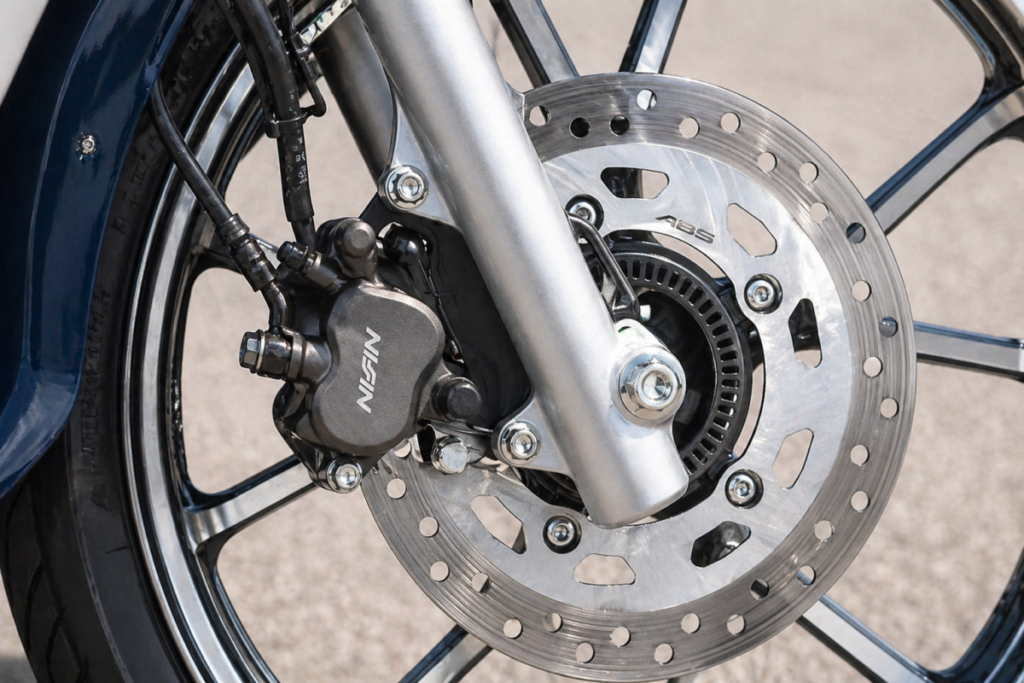
ABS is the C125’s most defensible upgrade. The Super Cub gets ridden in conditions where ABS earns its presence — wet roads, unexpected gravel, emergency stops in traffic. Front wheel lockup under hard braking is one of the most common causes of motorcycle accidents, and ABS eliminates that specific failure mode entirely.
For riders transitioning from larger displacement bikes, the absence of ABS on the 110 is the most significant adjustment. The 110’s braking performance is adequate, but it requires more conscious technique in emergency situations. For newer riders or anyone who prioritizes minimizing risk, this single difference can justify the upgrade on its own.
The smart key system is a quality-of-life improvement that’s difficult to quantify until you’ve used it daily. No fumbling for keys in a jacket pocket, no key insertion in the rain, no leaving the key in the ignition by accident. Riders who use their Super Cub as a primary commuter consistently report that the smart key becomes one of the features they’d miss most if they switched back to the 110.
The caveat: smart key systems draw a small continuous current from the battery. Extended storage — anything beyond two weeks without riding — risks battery drain. Riders in climates with long winters or those who store their bikes seasonally need to factor this in, either through regular charging or disconnecting the battery during storage periods.
Seat Height and Practical Riding Position
The C125 sits 40mm taller than the 110 — 780mm versus 740mm seat height. This matters more than the number suggests.
For shorter riders, the difference between confident foot placement and tiptoe balancing at a stop is a genuine safety consideration, not just a comfort preference. The 110’s lower seat height makes it accessible to a wider range of riders and reduces the mental load of managing the bike in slow-speed situations.
For cargo carrying, the 110 is the more practical platform. Its design accommodates front carriers, rear racks, and various luggage solutions without compromising the overall aesthetic. The C125’s cleaner design lines work against it here — adding practical cargo solutions tends to disrupt the visual balance that many C125 owners specifically chose the bike for.
Long-Term Ownership: Maintenance and Reliability
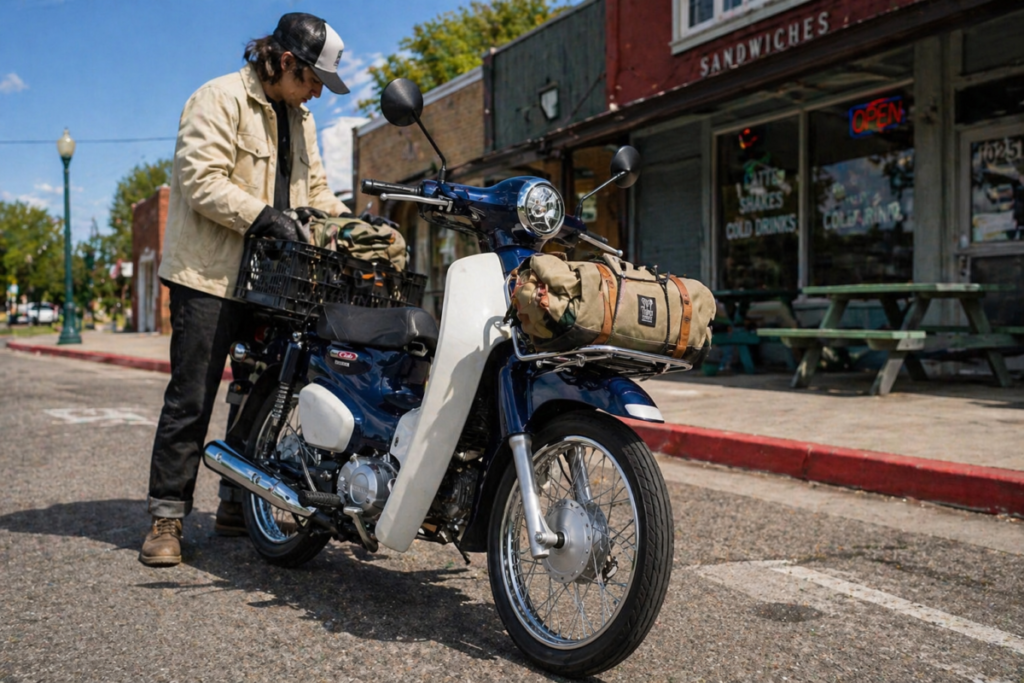
The 110’s mechanical simplicity is a significant long-term advantage. Fewer components, no ABS system, no smart key electronics — the maintenance surface area is smaller and the cost of any required repairs is lower. In markets where dealer networks are thin or independent mechanics are the primary service option, this matters considerably.
The C125’s additional systems introduce additional potential failure points. ABS components and smart key systems are more expensive to repair than standard mechanical parts, and not every shop that services Super Cubs will have experience with the electronic systems. This is worth factoring in for riders who plan long-distance travel or ride in areas with limited dealer access.
Both models use the same basic engine architecture, and both benefit from the same preventive maintenance: regular oil changes, external chain service, and periodic inspection of the internal timing components at higher mileage intervals.
Who Should Buy Each Model
When it comes to the Honda Super Cub 110 vs C125, the decision comes down to what kind of rider you are. The 110 is the right choice for daily commuting in demanding conditions, for riders who want to handle their own maintenance, for use as a second bike, and for anyone operating in environments where dealer support is limited.
The C125 makes sense for riders who want to own a single bike long-term and value the complete ownership experience — ABS safety margin, smart key convenience, and the more refined engine character. It’s also the right choice for anyone for whom the additional safety features genuinely change the risk profile of their riding.
The 110 and C125 aren’t competing for the same rider. Knowing which one you are makes the decision straightforward.
Frequently Asked Questions
Q. Is the Honda Super Cub C125 significantly faster than the 110?
Not meaningfully so in real-world conditions. The C125 is smoother and more refined at higher speeds, but the 110’s stronger low-end response means it often feels quicker in everyday urban riding scenarios.
Q. Does the Super Cub 110 need ABS?
The 110 is rideable and safe without ABS. Whether ABS is necessary depends on the rider’s experience level, typical riding conditions, and personal risk tolerance. For urban commuting in wet or unpredictable conditions, ABS provides a meaningful safety margin.
Q. How serious is the C125 dashboard rattling issue?
It varies by individual bike and isn’t universal. Some owners never experience it; others find it noticeable enough to address with additional vibration dampening. It’s worth checking owner forums for your specific market’s production year before purchasing.
Q. What’s the recommended service interval for both models?
Oil changes every 3,000km under normal conditions. External chain inspection and adjustment every 1,000km. Internal timing components — cam chain tensioner, oil pump gear, chain guide roller — should be inspected around 20,000 to 30,000km or if clicking noise develops that doesn’t respond to external chain adjustment.
The Bottom Line

The Honda Super Cub 110 vs C125 decision comes down to what kind of rider you are, not which bike is objectively superior.
If you want a reliable, low-maintenance, highly practical motorcycle that you can ride hard and fix anywhere, the 110 delivers everything the Super Cub platform is known for at a lower entry cost.
If you want the same platform with ABS, smart key convenience, and a more polished engine, and you’re willing to pay for the upgrade, the C125 justifies its premium.
The bike that fits your riding life is the right one. Both are exceptional motorcycles by any reasonable measure.
For more on Super Cub maintenance, start with the guide on internal engine noise — it covers the timing component wear that affects both models at higher mileage.