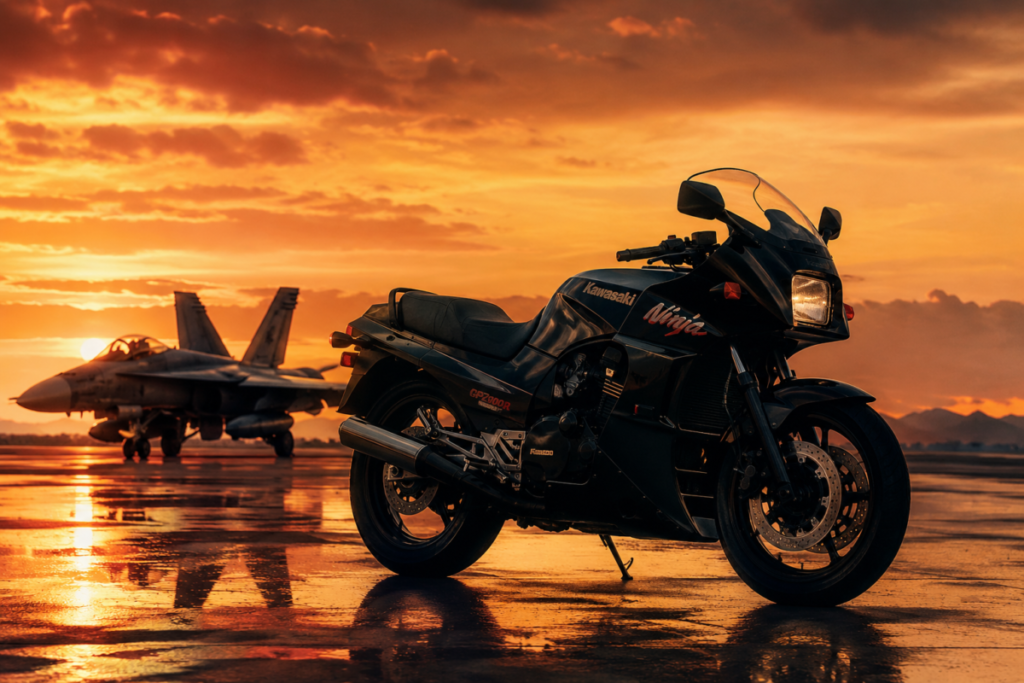
When people talk about Top Gun, the 1986 film that defined an era, they remember the fighter jets. They remember the rivalry, the soundtrack, and the sunsets.
But they also remember a motorcycle.
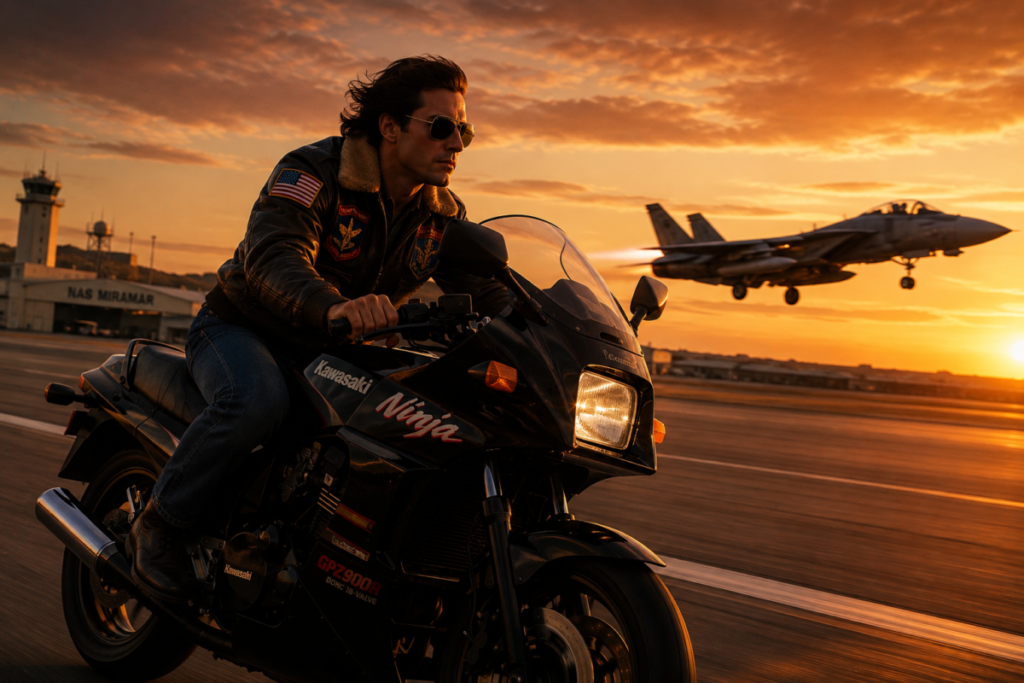
Specifically, they remember a black sport bike racing alongside the runway — engine roaring, fighter jets overhead, golden hour light cutting across the frame. The scene lasts seconds. The impression lasts decades.
At the center of that image was the Kawasaki Ninja GPZ900R, a motorcycle that didn’t just appear in a film. It became inseparable from everything Top Gun represented: speed, freedom, youth, and a particular brand of American masculinity that the 1980s exported to the world.
This is the story of how a Japanese sport bike became a cultural icon by showing up in the right movie at exactly the right moment.
The Scene People Remember More Than the Plot
Here’s something interesting: people who haven’t watched Top Gun in years can still picture the motorcycle scene.
The details may blur — was it at the beginning or the end? — but the image itself remains sharp. A rider in a bomber jacket. A sleek black sport bike. An airstrip. The roar of jet engines mixing with the mechanical scream of an inline-four at high revs.
The 1980s were defined by a specific set of obsessions that the film captured perfectly: speed as aspiration, machines as objects of romance, and the belief that freedom looked like movement at velocity. Top Gun didn’t invent these ideas, but it distilled them into a two-hour visual statement that an entire generation absorbed.
And the motorcycle was part of that statement.
The Motorcycle: Kawasaki Ninja GPZ900R
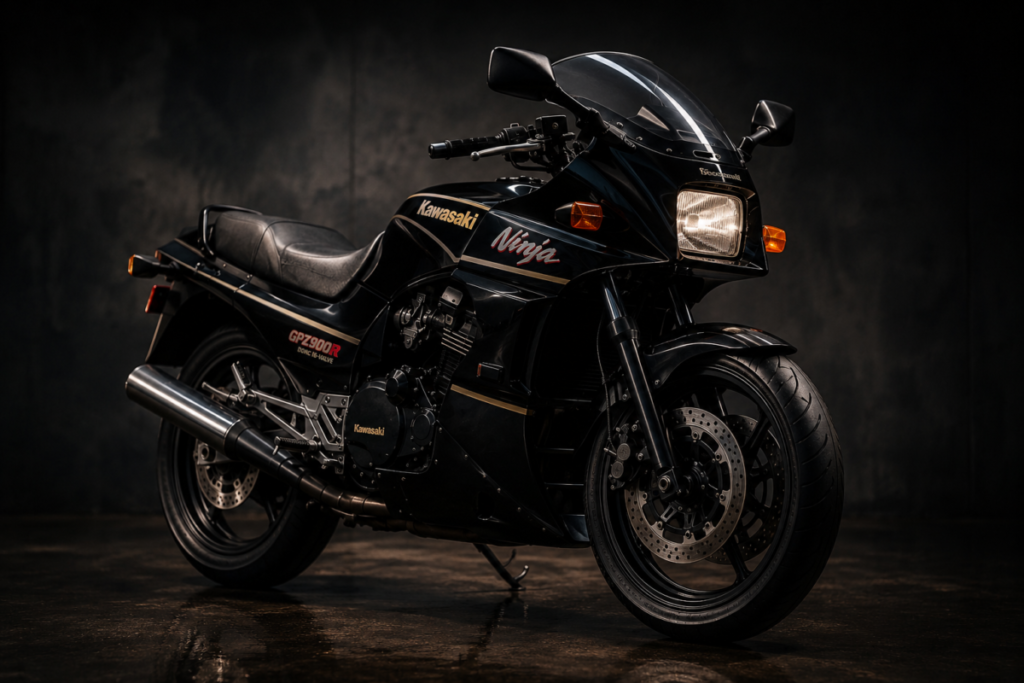
The bike in the film was the Kawasaki Ninja GPZ900R, launched in 1984.
At the time, it wasn’t just another sport bike. It was a significant engineering step forward. The GPZ900R introduced:
- A liquid-cooled inline-four engine
- 908cc displacement
- A top speed approaching 150 mph (240 km/h)
- A level of high-speed stability that previous machines hadn’t matched
In 1984, that combination was remarkable. The GPZ900R wasn’t just fast — it was fast in a way that felt controllable, predictable, and repeatable. For riders used to air-cooled engines and handling that became vague at high speeds, the GPZ900R represented a new level of refinement.
Visually, it also signaled something new. The full fairing and low, aggressive stance suggested velocity even when stationary. It looked like a machine built to go very fast in a straight line — which, functionally, it was.
And critically, the GPZ900R was the bike that introduced the Ninja name to a global audience. Before this model, Ninja was a marketing term. After Top Gun, it was a brand identity.
Why the GPZ900R Was Shocking in 1984
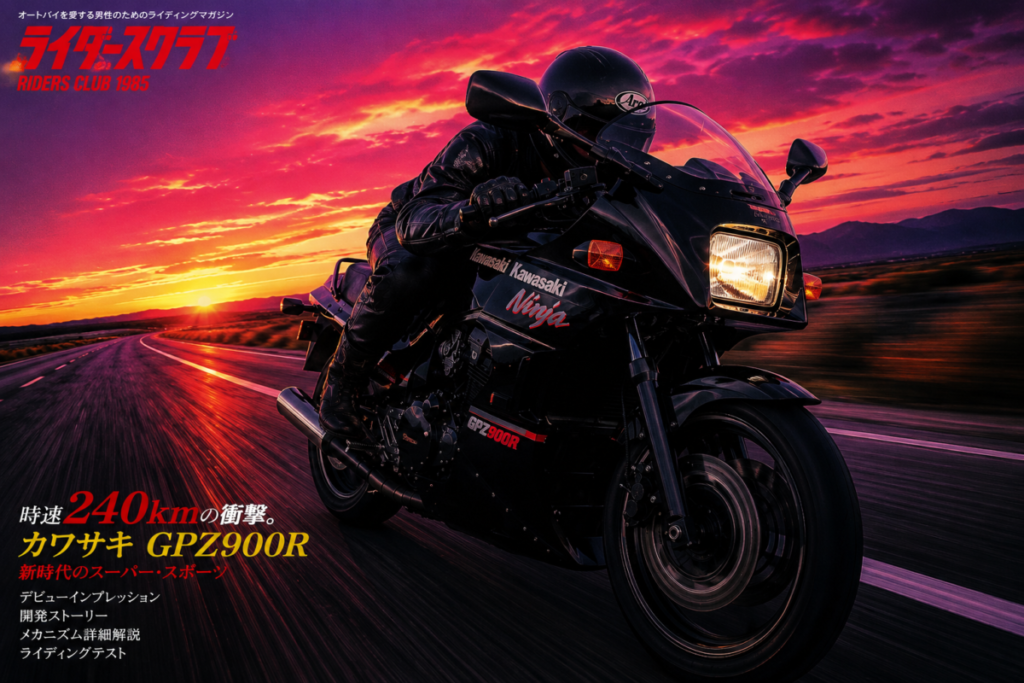
The early 1980s sport bike market was not yet dominated by electronics, traction control, or sophisticated rider aids. What mattered then was simpler:
- Raw speed
- Engine response
- Stability at high velocity
- Aggressive, purposeful design
The GPZ900R delivered all of that, and it did so at a moment when the sport bike category was evolving rapidly. The machine was genuinely fast by the standards of its time — approaching 150 mph was notable in an era when many sport bikes topped out well below that.
But performance alone doesn’t create a legend. Plenty of fast motorcycles have been forgotten. The GPZ900R became unforgettable because a film gave it emotional resonance.
Top Gun didn’t just show the bike. It connected it to a feeling — and that feeling stayed with people long after the specifics of the plot faded.
Why the Top Gun Motorcycle Scene Still Resonates
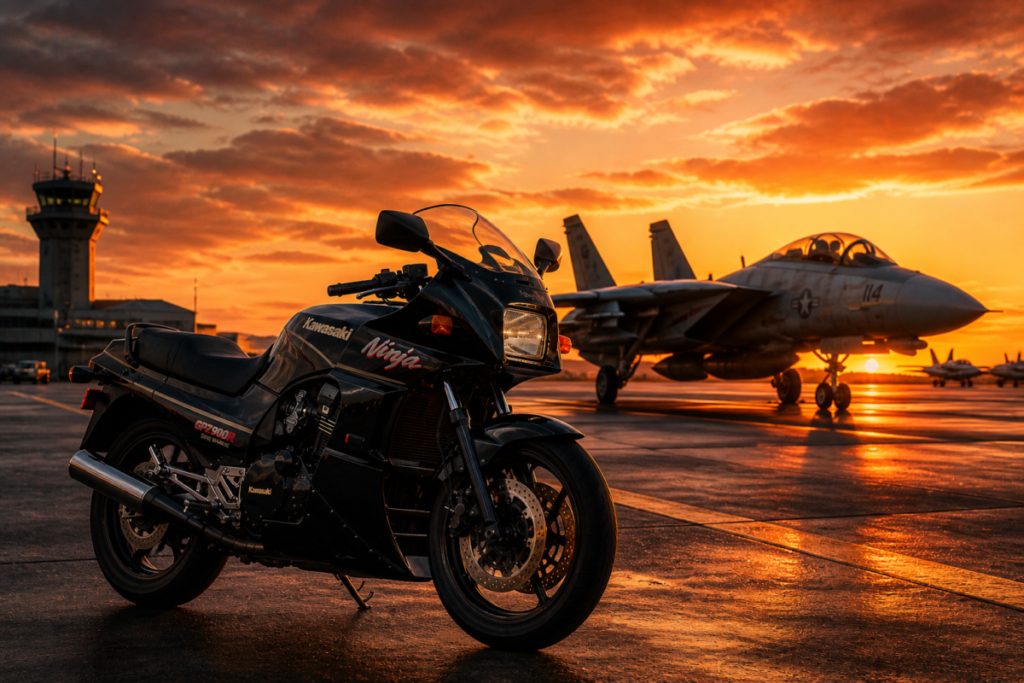
The runway scene is not about transportation. It’s about layering sensory and emotional cues until the motorcycle stops being a machine and becomes a symbol.
Consider what the scene delivers in rapid succession:
- The roar of fighter jet engines
- The long, clean line of the runway
- Golden hour lighting
- A black sport bike in sharp profile
- Military flight gear
- The physical image of a young pilot
Every element contributes to a single idea: freedom.
And motorcycles convey that idea more viscerally than cars. A rider’s body is exposed to the air, to speed, to risk. The vulnerability is visible. The connection between human and machine feels direct. When a filmmaker wants to communicate freedom, danger, or intensity, a motorcycle does that work more efficiently than four wheels ever could.
That’s why motorcycle scenes in films often burn into memory more intensely than car chases. The emotional transmission is more direct.
How Top Gun Changed Sport Bike Culture
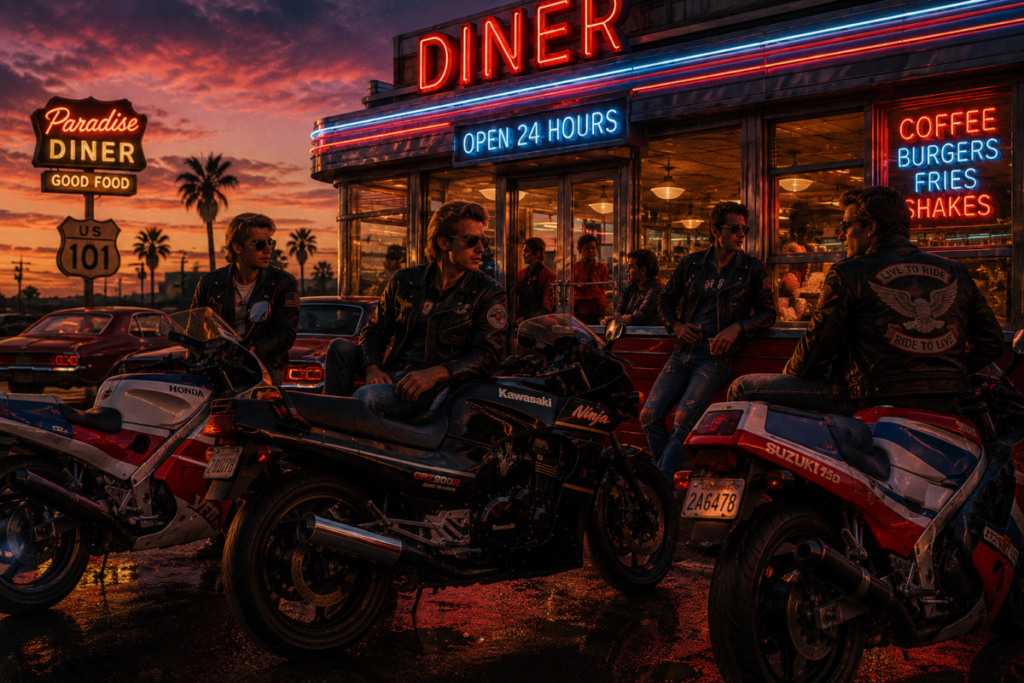
After Top Gun’s release, American interest in sport bikes surged. The numbers are debated, but the cultural shift is not. Kawasaki’s brand image benefited significantly, and the Ninja name became synonymous with performance motorcycles in a way it hadn’t been before.
The GPZ900R became more than a fast bike. It became associated with:
- A particular version of masculinity
- A lifestyle built around freedom and movement
- The romance of speed
- 1980s American youth culture
Sales of the GPZ900R increased after the film’s release, and the broader sport bike category saw renewed interest from riders who wanted to inhabit the image the film had created.
Why the Design Still Works
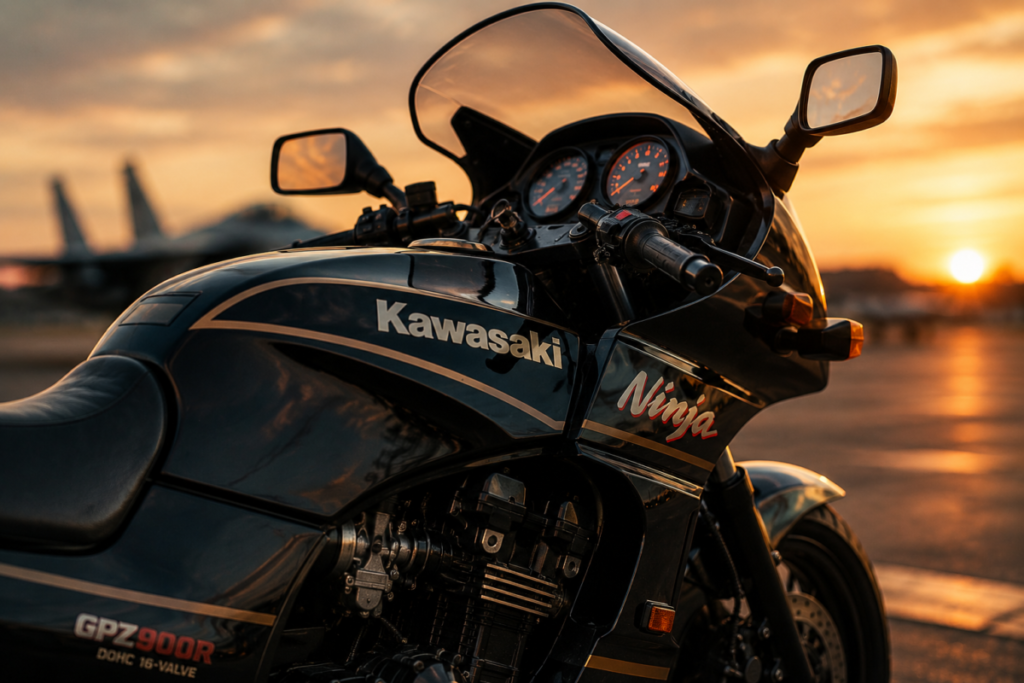
Remarkably, the GPZ900R doesn’t look dated in the way many 1980s designs do.
It’s not as sharp as a modern superbike. The ergonomics are more relaxed. The electronics are nonexistent by current standards. But the fundamental proportions — the low nose, the clean fairing lines, the mechanical simplicity — give it a quality that reads as classic rather than obsolete.
The recent neo-retro trend in motorcycle design has only reinforced this. Riders are increasingly drawn to bikes that prioritize character and feel over outright performance. The GPZ900R, viewed from that perspective, looks less like an artifact of the past and more like an early example of a philosophy that’s cycling back into fashion.
Straight lines. Minimal graphics. Visible mechanical components. An analog feel. These are the elements that define both the GPZ900R and the retro-styled sport bikes gaining popularity today.
Modern Bikes With a Similar Feel
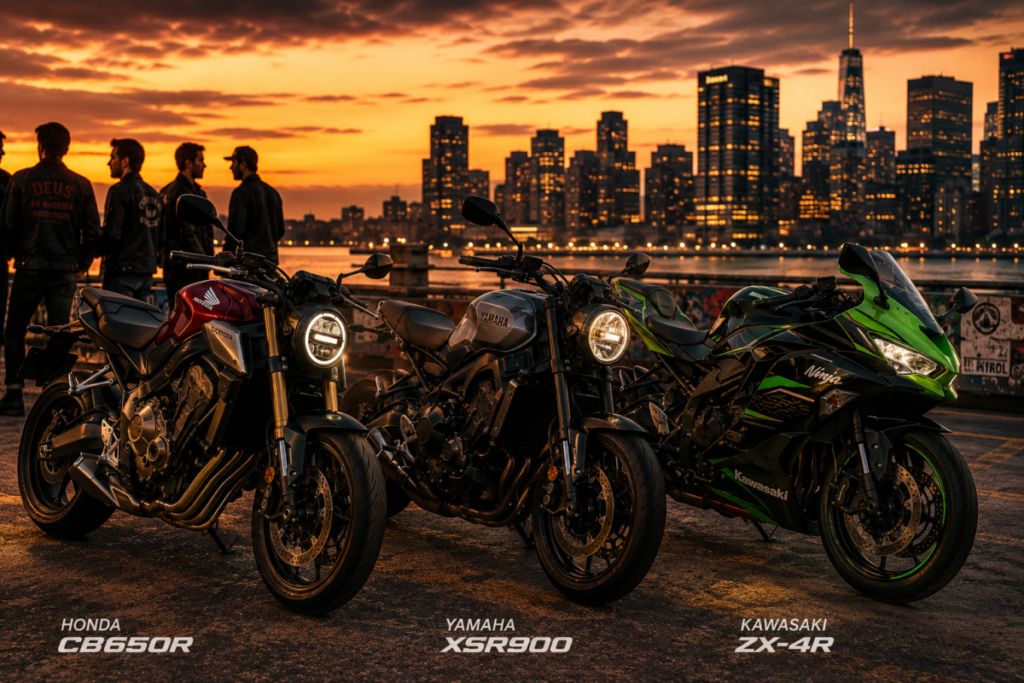
For riders looking to capture some of the GPZ900R’s spirit in a current model, a few options come close:
- Honda CB650R — naked sport bike with retro-modern styling
- Yamaha XSR900 — heritage design with contemporary performance
- Kawasaki Ninja ZX-4R — modern Ninja with classic proportions
None of these bikes replicate the 1980s aesthetic exactly, but they reflect a similar design philosophy: performance wrapped in a package that prioritizes feel and character alongside raw speed.
The market is shifting toward riders who care as much about how a bike makes them feel as how fast it can go. That shift makes the GPZ900R feel less like a relic and more like a preview of what’s happening now.
Why Movie Motorcycles Matter
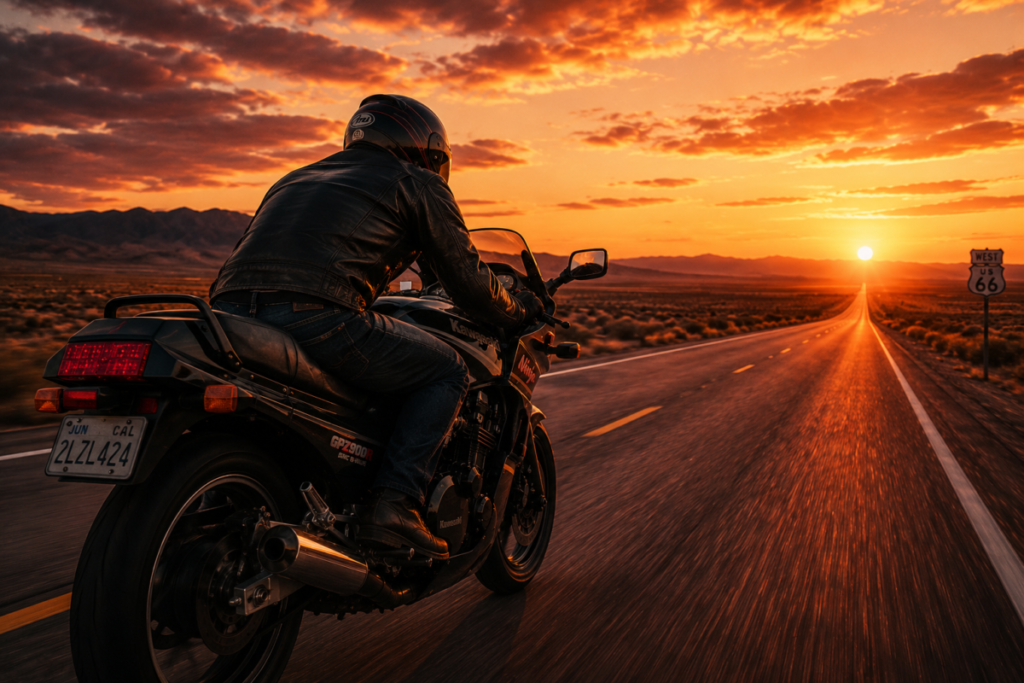
It’s worth noting that many people who have never ridden a motorcycle still respond powerfully to motorcycle scenes in films.
The bike itself is often secondary. What people respond to is:
- The sensation of freedom
- The emotional weight of speed
- The romance of youth and possibility
- The feeling of escaping constraint
Motorcycles deliver those ideas more directly than almost any other object on screen. They’re physical, exposed, dangerous, and visceral. Filmmakers know this, which is why certain films are remembered less for their plots than for a single motorcycle sequence that captured something the rest of the film couldn’t.
Top Gun is one of those films.
Verdict: We Remember Scenes, Not Specs
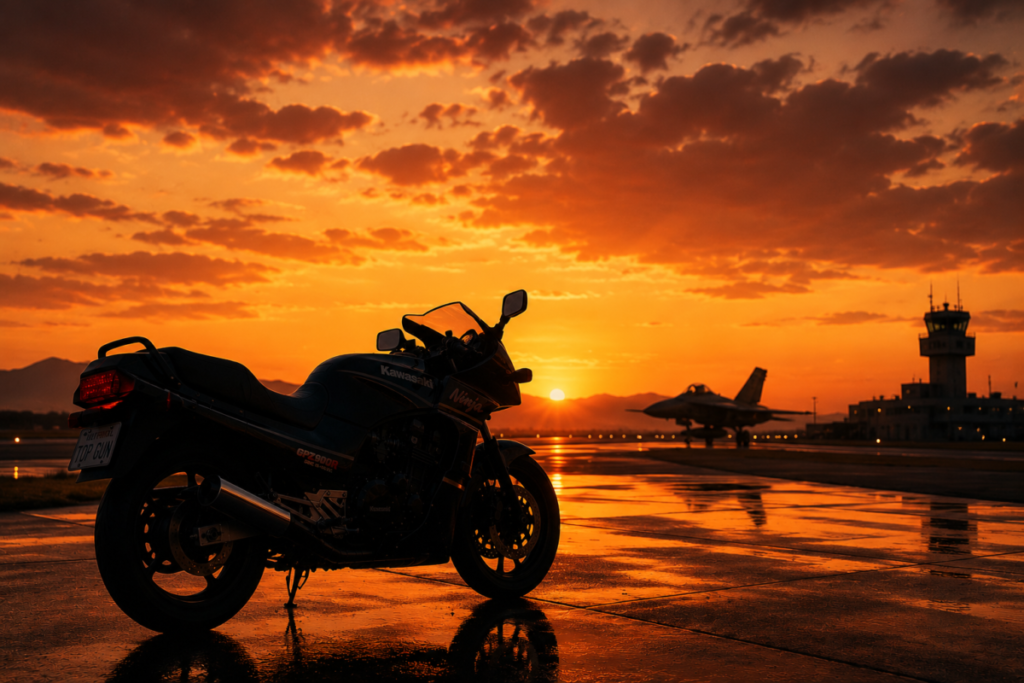
The Kawasaki Ninja GPZ900R was a significant motorcycle when it launched. Fast, refined, and visually striking, it represented a clear step forward in sport bike engineering.
But that’s not why people remember it.
People remember it because a film connected it to an idea — speed as freedom, youth as possibility, movement as meaning. The motorcycle became a vessel for something larger than transportation, and that transformation is what makes it a legend rather than just another model in the history of sport bikes.
The runway scene is still referenced today not because the GPZ900R was the fastest bike of its time, but because the image it created has outlasted the specifics that produced it.
We remember scenes. We remember feelings. And the Kawasaki Ninja GPZ900R, racing alongside a fighter jet in golden light, gave us a scene worth remembering.
For more on iconic motorcycles and their cultural impact, read: The Honda Super Cub: How a 50cc Bike Became the World’s Best-Selling Vehicle
For current Kawasaki Ninja models, visit the Kawasaki Official Website