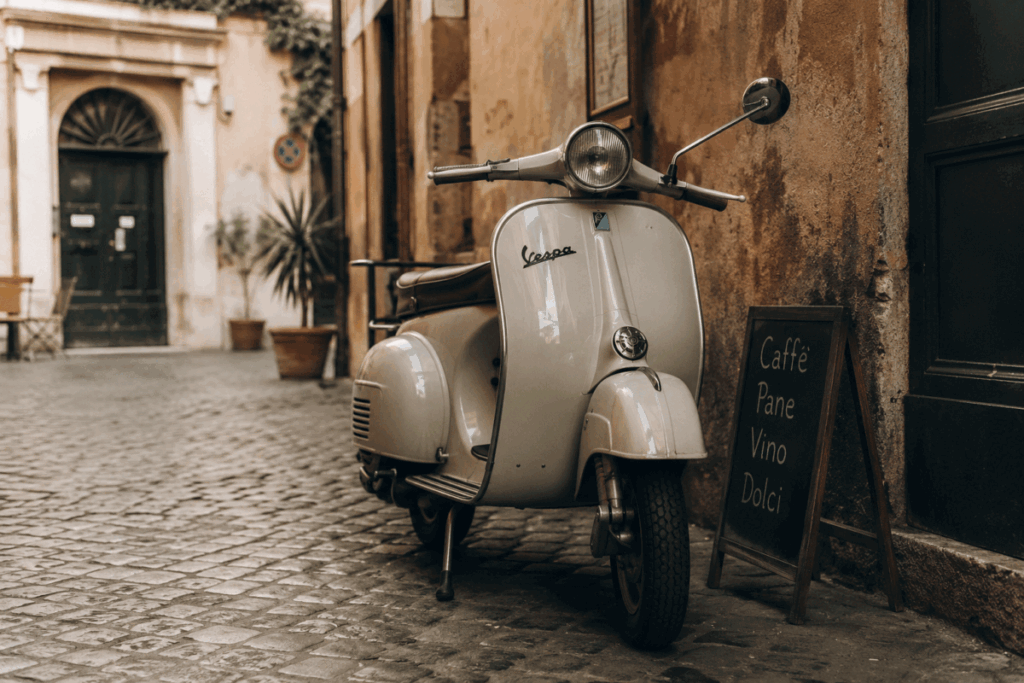
The history of the scooter begins not with engineers dreaming of a better commute, but with a continent trying to rebuild itself from ruins.
It begins in Italy, 1946. The war is over. The roads are broken. The economy is shattered. Most people cannot afford a car, and the motorcycles of the era are heavy, oily, and complicated. What Italy needed — what millions of people across Europe needed — was something different. Something simple. Something anyone could ride.
What emerged from that need changed the way cities move.
This is the complete history of the scooter — from its post-war origins to the British streets of the 1960s, through decades of reinvention, and into the electric future taking shape today.
The Birth of the Scooter: Post-War Italy (1940s)
Italy After the War
When World War II ended in 1945, Italy was in ruins.
Infrastructure had been bombed. The economy had collapsed. Unemployment was widespread. Automobiles were a luxury that ordinary Italians could not begin to afford, and the motorcycles that existed were heavy, mechanical, and prone to covering their riders in oil and grime. The country needed transportation that was affordable, accessible, and clean enough to ride in everyday clothes.
That need created the conditions for one of the most significant inventions in the history of personal transportation.
The Birth of the Vespa (1946)
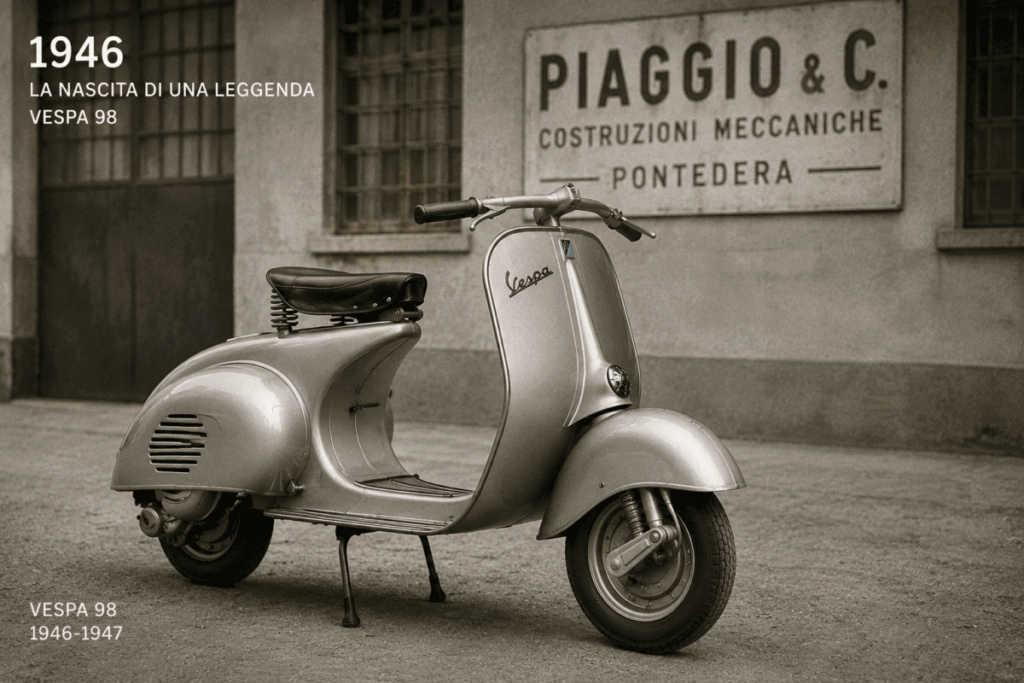
The Piaggio company had spent the war years manufacturing aircraft. With the war over and aircraft production no longer viable, the company needed a new direction. Its chief engineer, Corradino D’Ascanio, was tasked with designing a motorcycle — but D’Ascanio disliked conventional motorcycles. He set out to design something entirely different.
The result, unveiled in 1946, was the Vespa.
Everything about it broke from convention. The engine was enclosed within the bodywork, keeping oil and grease away from the rider’s clothes. A flat floorboard replaced the traditional step-over frame, making the scooter accessible to women wearing skirts as much as men in trousers. The wheels were small and the seat was low, making the vehicle easy to manage for riders of any size or experience level. And the price was low enough that ordinary working people could actually afford one.
When Piaggio’s chairman Enrico Piaggio first saw the prototype, he reportedly exclaimed that it looked like a wasp — vespa in Italian. The name stuck.
The Vespa sold out immediately. In a country desperate for hope and mobility, it offered both. Within its first year, Piaggio sold 2,484 units. By 1950, annual production had reached 60,000. The scooter had arrived.
The Lambretta Arrives
Piaggio’s success attracted competition almost immediately.
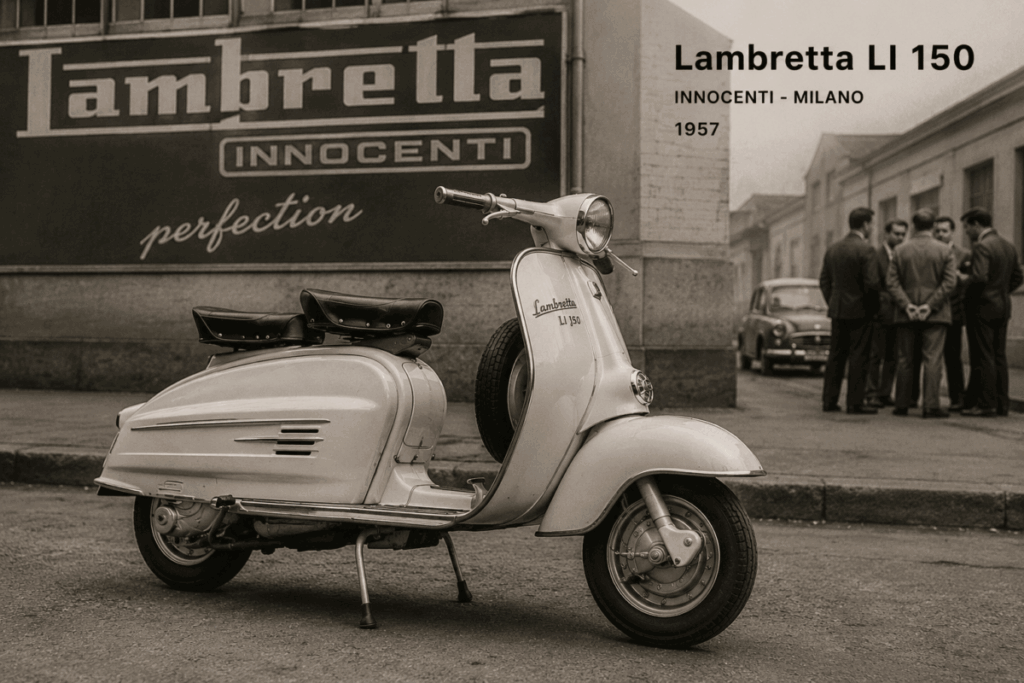
The Innocenti company launched the Lambretta in 1947, taking a different engineering approach — where Vespa enclosed its engine entirely, the Lambretta used a more open frame design that some riders found more mechanically accessible. The two brands developed into fierce rivals, each pushing the other to improve, innovate, and expand.
Their competition didn’t divide the market — it grew it. By the early 1950s, Italian scooters were being exported across Europe, and the Vespa and Lambretta had become symbols of Italian ingenuity and postwar recovery.
The Golden Age: 1950s and 1960s
Roman Holiday and the Scooter as Icon
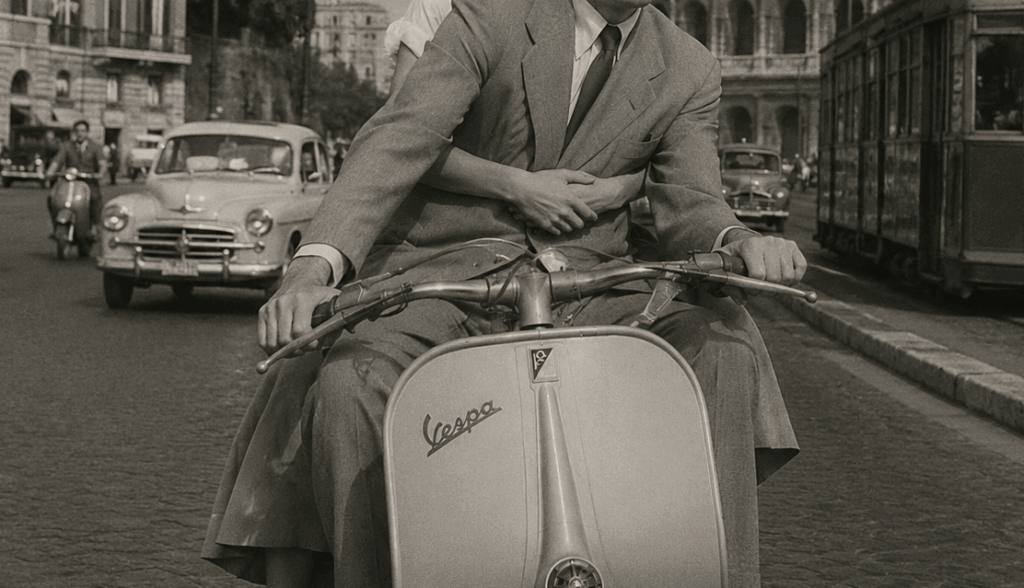
In 1953, a single film changed the scooter’s trajectory forever.
Roman Holiday, starring Audrey Hepburn and Gregory Peck, featured a now-iconic sequence in which the two leads rode a Vespa through the streets of Rome. The image — freedom, romance, and the beautiful chaos of an Italian city — reached audiences across the world and attached itself permanently to the scooter’s identity.
The Vespa was no longer just transportation. It was a lifestyle. It was aspiration. The film is credited with driving a significant surge in Vespa sales internationally, and its cultural impact on the scooter’s image is still felt today.
The British Mods
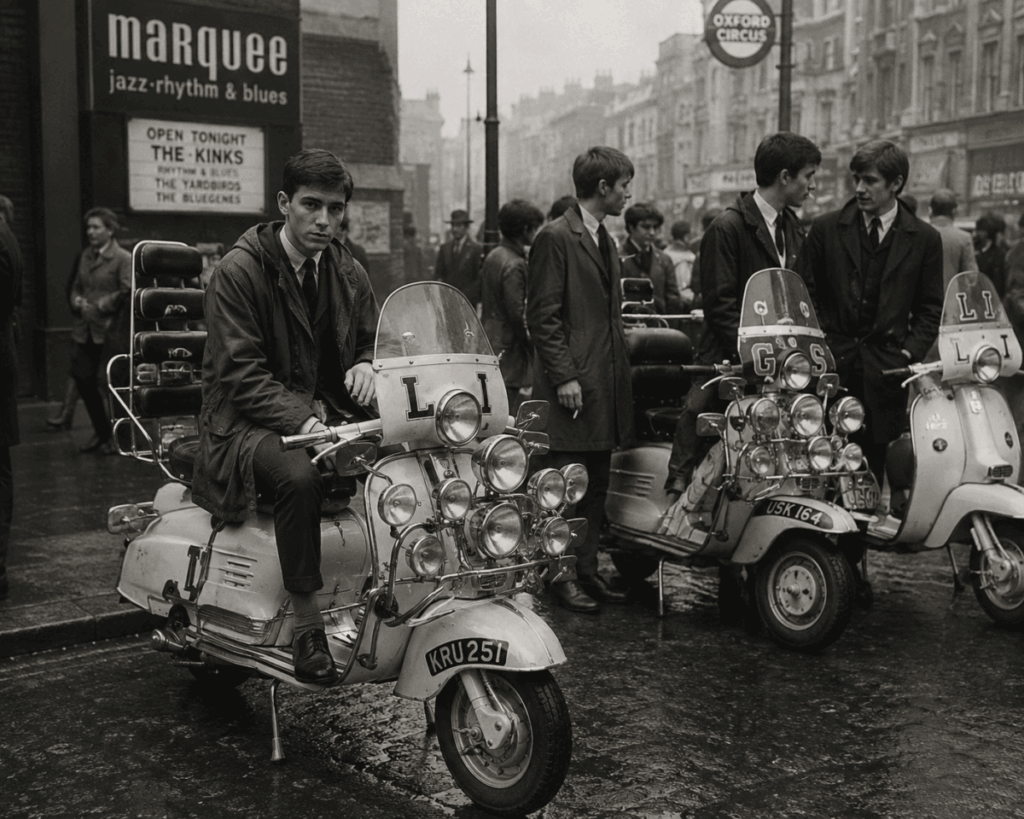
In 1960s Britain, the scooter found an entirely different cultural role — one considerably less romantic, and considerably more defiant.
The Mods were a British youth subculture defined by sharp fashion, rhythm and blues music, and an attitude of working-class stylishness that set them apart from both mainstream society and their rivals, the leather-jacketed Rockers. Their chosen vehicle was the scooter — specifically the Vespa and the Lambretta, decorated with dozens of mirrors, lights, and accessories that transformed each machine into a personal statement.
Bands like The Who and the Small Faces soundtracked the movement. Clashes between Mods and Rockers on English seaside towns became tabloid news. And the scooter became permanently associated with youth culture, rebellion, and the restless energy of a generation that refused to inherit the world exactly as it had been left to them.
Japan Enters the Market
While Italy invented the scooter and Britain gave it a counterculture identity, Japan made it global.
Honda, Yamaha, and Suzuki began producing scooters through the 1950s and into the 1960s, bringing Japanese manufacturing efficiency and reliability to a product category that Italian craftsmanship had created. Japanese scooters were less expensive to produce, more mechanically consistent, and well-suited to the growing markets of Southeast Asia, where affordable two-wheeled transportation was not a lifestyle choice but an economic necessity.
The Japanese manufacturers didn’t replace Italian scooter culture — they extended the scooter’s reach to markets that Vespa and Lambretta had never fully penetrated.
Decline and Reinvention: 1970s to 1990s
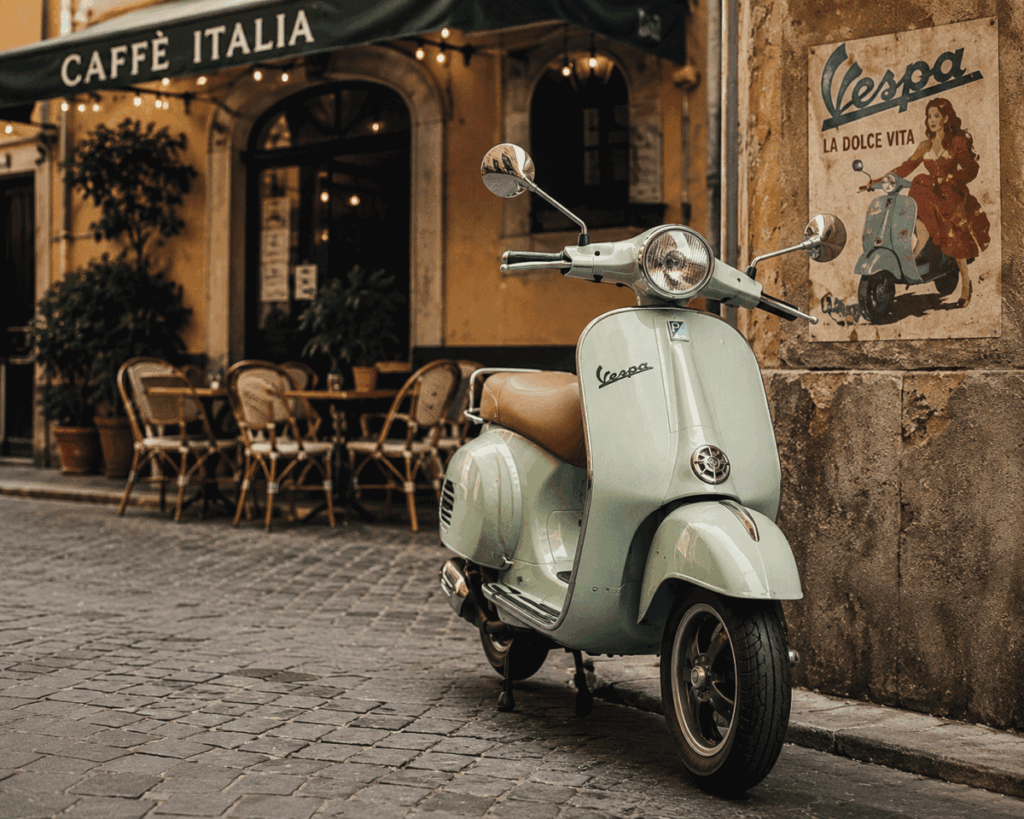
The Automobile Arrives
The 1970s brought a challenge the scooter had not faced before: widespread car ownership.
As European economies recovered and grew through the late 1950s and 1960s, the automobile gradually became accessible to the same working and middle class families who had relied on scooters. When given the choice between a scooter and a car, millions of people chose the car. Scooter sales fell sharply across Western Europe. Lambretta ended production in 1971. Even Vespa struggled.
The scooter that had been born from postwar necessity found itself associated, somewhat unfairly, with those who couldn’t afford anything better.
The CVT Revolution
The period’s most significant technical development came quietly — but its impact was enormous.
The widespread adoption of continuously variable transmission (CVT) technology removed the last remaining mechanical complexity from scooter operation. With no clutch to manage and no gears to select, riding a modern scooter required nothing more than throttle and brake operation. The learning curve that had always existed between a potential rider and their first scooter essentially disappeared.
This democratization of the riding experience set the stage for everything that followed.
Japanese Dominance
While European scooter brands struggled, Japanese manufacturers continued to expand.
Honda, Yamaha, and Suzuki built distribution networks across Asia, Latin America, and Africa, supplying affordable 50cc and 125cc scooters to markets where personal transportation options were limited. In many developing economies, a Japanese scooter was not a lifestyle choice — it was a business tool, a family vehicle, and a lifeline to employment rolled into one machine.
The scooter’s story in this era is largely a story of quiet, practical usefulness rather than cultural glamour. It was doing the work that mattered.
The Revival: 2000s
Traffic, Cities, and the Scooter’s Return
As the 21st century began, the cities that had abandoned the scooter for the automobile began to reconsider.
Traffic congestion in major urban centers had reached crisis levels. Commute times were growing. Parking was expensive and scarce. The automobile, so liberating in the open landscapes of the mid-20th century, had become a liability in the dense, congested cities of the early 21st.
The scooter offered a compelling alternative — compact enough to navigate traffic that stopped cars entirely, easy to park, economical to operate, and now available in designs that no longer asked the rider to sacrifice style for practicality.
Vespa’s Comeback
No brand benefited more from the scooter’s urban revival than Vespa.
Piaggio leaned into its heritage with a series of retro-styled models that honored the original Vespa’s design language while incorporating modern engineering. The GTS series in particular found a global audience of urban professionals who wanted transportation that felt like a considered lifestyle choice rather than a compromise. Vespa became fashionable again — not despite its age, but partly because of it.
The Big Scooter Trend
In Korea and across East Asia, the scooter revival took a different form.
Maxi-scooters — machines of 300cc and above, featuring large comfortable seats, substantial storage, and automatic transmissions — became enormously popular among commuters who wanted the convenience of a scooter with the comfort and capability of a motorcycle. The category redefined what a scooter could be, extending its appeal far beyond urban short-distance commuting.
The Present and Future: The Electric Era
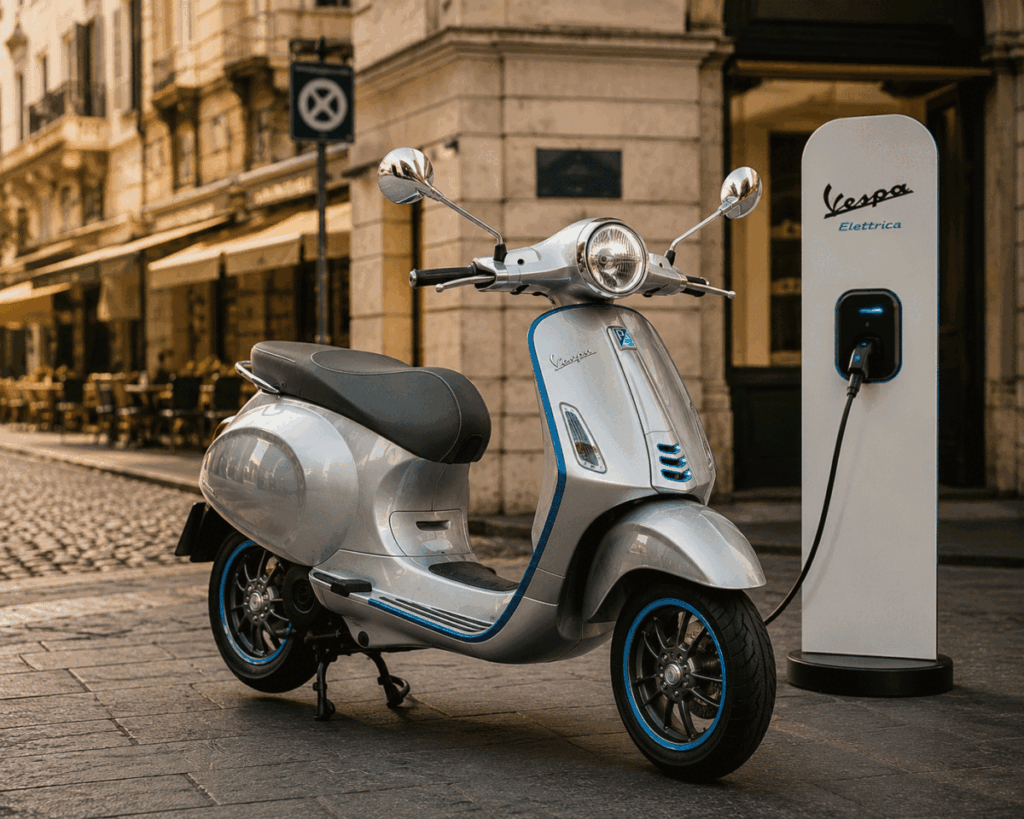
The Electric Scooter
The most significant shift in scooter history since the original Vespa may be the transition to electric power.
Environmental regulations tightening across Europe, China, and increasingly across the wider world are creating strong pressure on internal combustion scooters. In response, virtually every major manufacturer has developed or announced electric models. Vespa launched the Vespa Elettrica. Honda, Yamaha, and scores of newer brands have followed with their own electric offerings.
The electric scooter is quieter, cleaner, and in urban environments where range requirements are modest, entirely practical. The transition is accelerating.
Shared Scooters and Urban Mobility
Electric technology also enabled a new model of scooter ownership — or rather, non-ownership.
Shared scooter and e-scooter services from companies like Lime and Bird deployed fleets of electric two-wheelers across cities worldwide, offering on-demand transportation without the commitment of purchase. The model has faced regulatory challenges in many cities, but it has also demonstrated a genuine demand for flexible, lightweight urban mobility that neither public transit nor ride-hailing fully satisfies.
What Comes Next
The scooter in 2026 sits at the intersection of electrification, urban mobility planning, and a longstanding human desire to move through cities quickly, cheaply, and with some degree of personal freedom.
The specific technology changes. The underlying appeal — accessible, affordable, practical transportation that anyone can operate — has not changed since Corradino D’Ascanio drew his first sketches in 1945.
Verdict: A Vehicle Built for Its Moment, Every Time
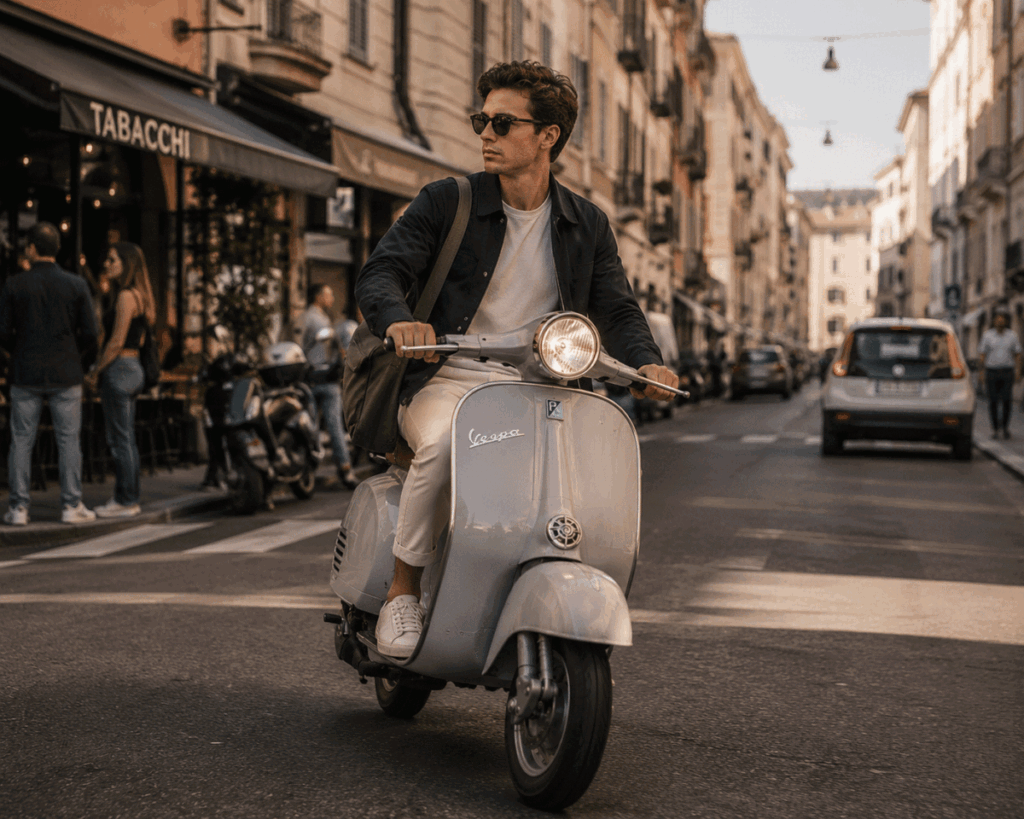
The history of the scooter is the history of people finding practical solutions to real transportation problems — and occasionally, in the process, creating something that transcends the problem it was designed to solve.
Vespa was designed to get postwar Italians moving again. It ended up in a film that defined romantic escapism for a generation. The Mods adopted a practical urban vehicle and turned it into a symbol of cultural identity. Japanese manufacturers took an Italian invention and brought it to markets its creators never imagined.
At every stage, the scooter adapted. It absorbed new technology, new culture, and new riders without losing the quality that made it useful in the first place.
That quality — the ability to get almost anyone, almost anywhere, with minimal complication — is as relevant in an electrified, urbanized, congested 21st century as it was in the ruins of 1946 Italy.
The scooter has outlasted every prediction of its irrelevance. There is no particular reason to think that will change.
For the story of how Honda’s Super Cub became the world’s best-selling vehicle of all time, read: The Honda Super Cub: How a 50cc Bike Became the World’s Best-Selling Vehicle
For official Vespa history and current models, visit the Vespa Official Website