“Don’t buy a Chinese motorcycle.”
It’s the advice you’ll find in almost every motorcycle forum, from riders who’ve been around long enough to remember when that warning was earned. Cheap copies, constant breakdowns, no parts availability — the reputation of Chinese motorcycles was built on real experiences, and it stuck.
But here’s the question worth asking in 2026: is that reputation still accurate?
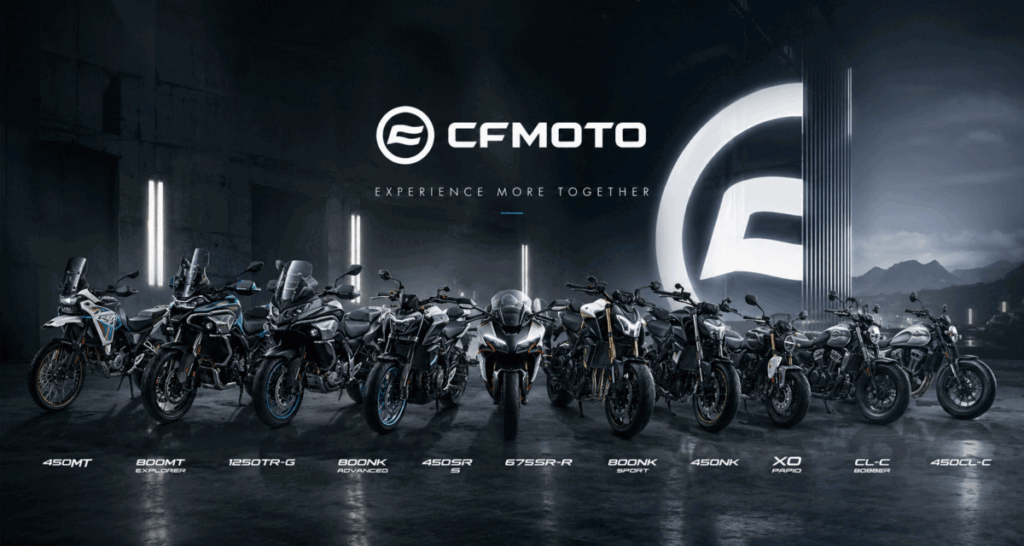
CFMoto sells motorcycles through official dealerships in Europe, Australia, and across Asia. Loncin manufactures components for Honda. KOVE entered the rally racing world with a bike that made international headlines. These aren’t the knockoff factories of the 1990s.
This guide looks at Chinese motorcycles worth buying honestly — where the industry came from, which brands deserve attention, what the real advantages and limitations are, and who should actually consider one.
How Chinese Motorcycles Got Here: A Brief History
The 1990s–2000s: The Copy Era
The negative reputation of Chinese motorcycles wasn’t invented. It was earned.
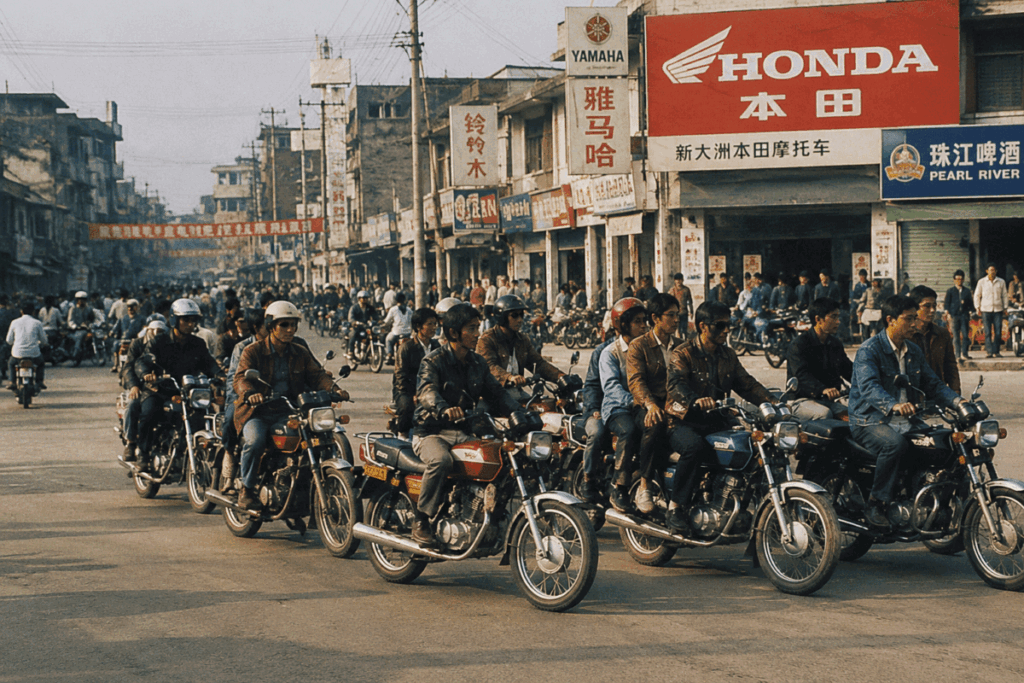
During the 1990s, China’s motorcycle industry expanded explosively — driven largely by reverse-engineered copies of Japanese designs. The price was right. The quality wasn’t. Poor welds, shortened component life, unreliable electrics, and rapid deterioration defined the era. Riders who bought Chinese motorcycles during this period learned hard lessons, and those lessons became conventional wisdom that outlasted the circumstances that created them.
The 2010s: The Turning Point
The 2010s brought structural change.
Chinese government industrial policy pushed consolidation across the motorcycle sector — thousands of small manufacturers were forced out or absorbed, leaving a smaller number of larger, better-capitalized companies. The survivors invested in engineering rather than just copying.
The most significant signal came when CFMoto entered a technology partnership with KTM, the Austrian manufacturer. A Chinese brand partnering with a premium European performance company wasn’t just a business deal — it was a statement about where the industry was headed.
The 2020s: Global Market Entry
Today’s leading Chinese motorcycle brands are selling through official dealer networks in Europe, Southeast Asia, Latin America, and beyond. The competition is no longer purely on price. Design, technology, and riding experience are in the conversation.
That doesn’t mean Chinese motorcycles are on equal footing with Japanese brands across the board. But the blanket dismissal of an entire country’s output no longer reflects reality. Brand by brand, model by model, the picture is more nuanced than the old reputation suggests.
Chinese Motorcycle Brands Worth Knowing
CFMoto
The most globally established Chinese motorcycle brand currently on the market.
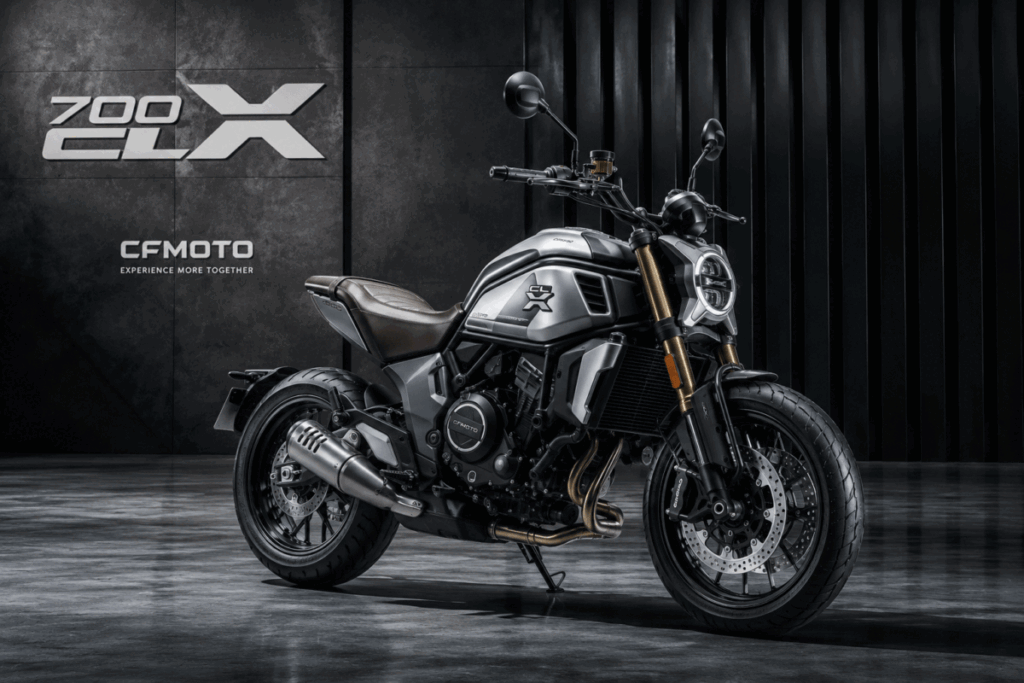
CFMoto’s technology partnership with KTM produced tangible results — the engines in several CFMoto models reflect genuine engineering collaboration rather than imitation. The lineup runs from 300cc to 800cc across naked, adventure, and touring categories, with official distribution in over 90 countries.
The 300CL-X and 700CL-X have both received positive international coverage for their value proposition. The 700CL-X in particular — with KYB suspension, Brembo brakes, cruise control, and traction control at its price point — represents hardware that would cost significantly more from a Japanese or European brand.
CFMoto is the most straightforward recommendation in the Chinese motorcycle space for riders who want official dealer support and a proven service network.
Zontes
A brand that competes on design and electronics rather than just price.
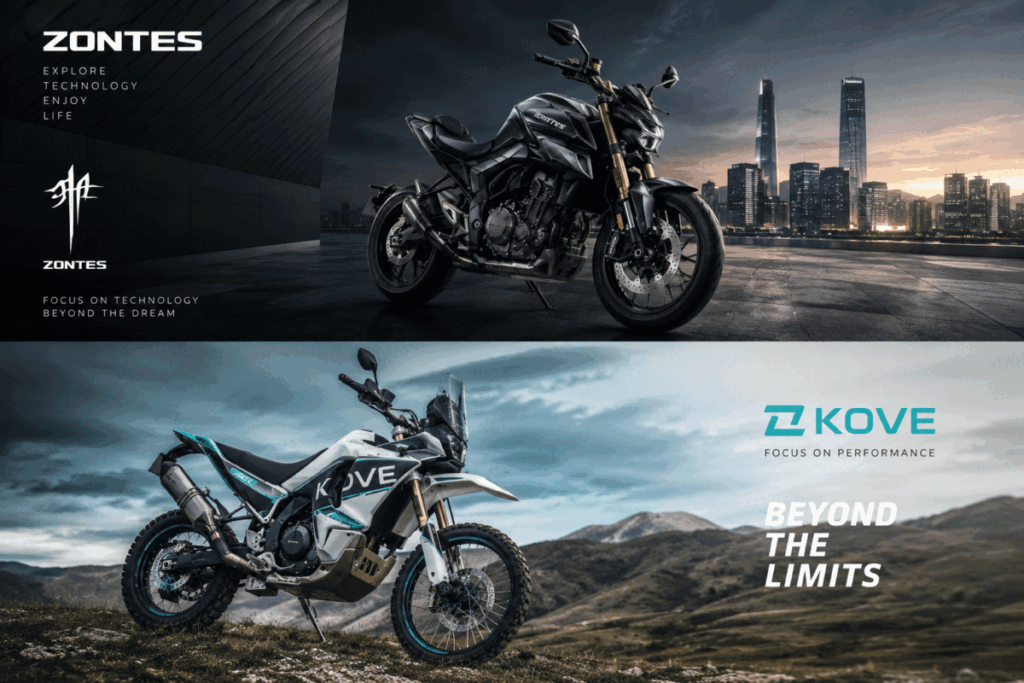
Zontes has built a following with distinctive styling across its 125cc–350cc range, and a willingness to pack models with electronic features that competitors at the same price point don’t offer. The trade-off is a smaller international footprint and less-developed service infrastructure compared to CFMoto.
For riders in markets where Zontes has official distribution, it’s worth a close look — particularly for smaller displacement naked and scrambler-style bikes.
Loncin
Not a household name in most markets, but worth understanding.
Loncin manufactures engine components for Honda under OEM contract. That relationship is the clearest available signal about manufacturing capability — Honda’s supply chain standards are not flexible. Loncin’s own-brand motorcycles don’t carry the same profile as CFMoto or Zontes internationally, but the manufacturing pedigree is real.
KOVE
The newest name on this list, and one of the most interesting.
KOVE focuses on adventure and off-road motorcycles and has moved into competitive motorsport faster than most Chinese brands have managed. The KOVE 450 Rally drew genuine international attention — not as a budget curiosity but as a competitive machine. For adventure-oriented riders, KOVE is a brand worth tracking.
The Real Advantages of Chinese Motorcycles
Price
The most obvious advantage remains the most significant one.
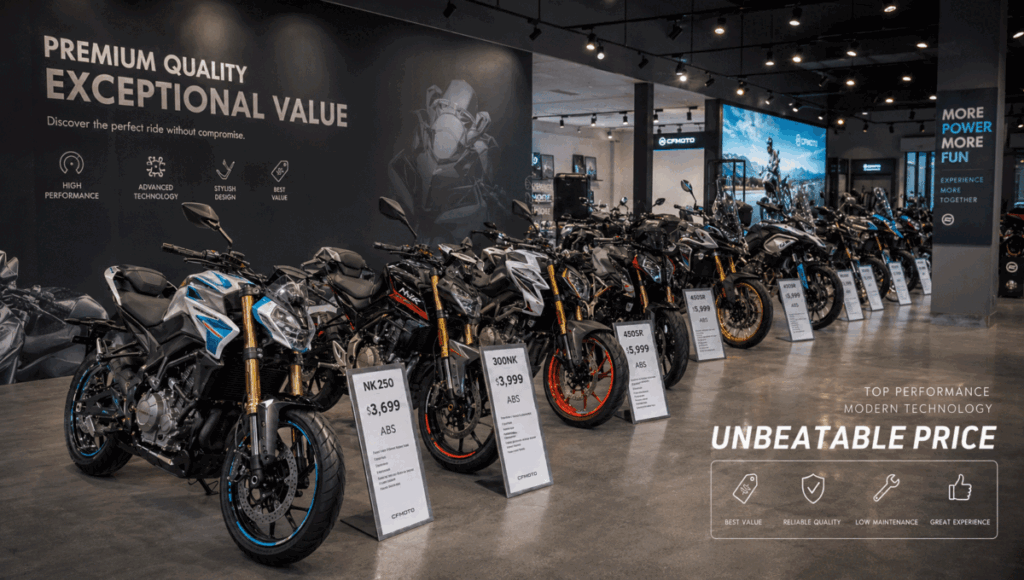
At equivalent displacement and specification levels, Chinese motorcycles typically cost 30–50% less than Japanese equivalents. At the 300cc naked bike level, that gap can represent several thousand dollars. For first-time buyers, budget-constrained riders, or anyone who wants to minimize initial outlay, that difference is hard to ignore.
Specification Value
Recent Chinese motorcycles frequently punch above their price point on paper.
Larger displays, more electronic rider aids, more aggressive styling — Chinese brands have learned that specification lists influence purchasing decisions, and they’ve responded accordingly. At the same price, a Chinese motorcycle often offers features that a Japanese equivalent reserves for a higher trim level.
Pace of Development
The rate of improvement in Chinese motorcycle engineering over the past decade has been significant.
The brand you evaluated five years ago may be substantially different today. This trajectory matters for buyers making longer-term assessments — Chinese motorcycles are not a static category.
The Real Limitations of Chinese Motorcycles
After-Sales Service and Parts
This is the most practically significant limitation for most buyers.
Japanese motorcycle brands have built dense dealer and service networks over decades. Parts availability is reliable, service quality is consistent, and the infrastructure for keeping a bike on the road long-term is well-established.
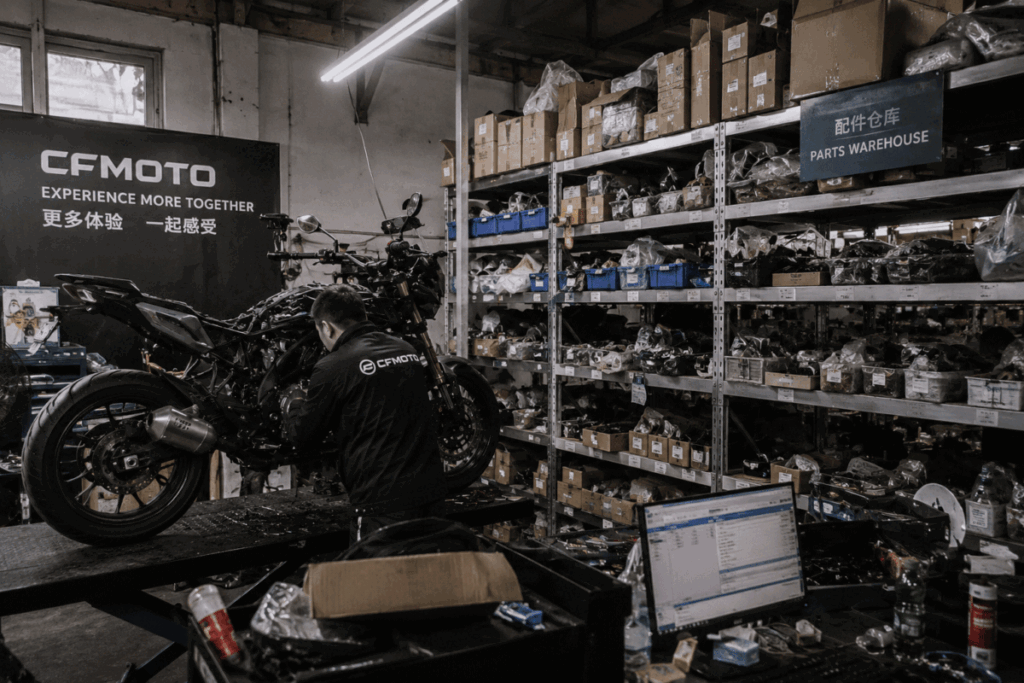
For Chinese brands, the picture varies significantly by brand and market. CFMoto’s official dealer network provides a reasonable service foundation in markets where it’s established. For brands with thinner distribution — or for grey-market imports without official support — the service situation can become genuinely difficult when problems arise.
Before purchasing any Chinese motorcycle, the service question deserves serious research: where is the nearest official service center, what is the parts lead time, and what happens if the brand exits your market?
Quality Consistency
Average quality has improved. Individual unit consistency has not always kept pace.
Variation between production runs, between model years, and sometimes between individual units of the same model remains a real phenomenon with some Chinese brands. The rider who buys a well-assembled example may have a different long-term experience than the rider who gets an outlier.
Resale Value
Chinese motorcycles depreciate faster and further than Japanese equivalents.
Japanese brands — particularly Honda, Yamaha, Kawasaki, and Suzuki — hold residual value well in most markets. Chinese motorcycles typically don’t. A buyer who plans to sell after two or three years may find that the initial price advantage is partially or fully eroded by the depreciation gap.
For riders who plan to keep a motorcycle long-term, this matters less. For those who trade regularly, it matters a lot.
Community and Information
Japanese motorcycle ownership benefits from decades of accumulated knowledge.
Forums, service manuals, modification guides, reliability databases — the information ecosystem around major Japanese brands is deep and accessible. Chinese motorcycle communities are smaller, less developed, and harder to navigate for technical support. Riders who rely on community knowledge for maintenance and troubleshooting will find the ecosystem thinner.
Who Should Consider a Chinese Motorcycle
A Chinese motorcycle makes sense if you:
- Are entering motorcycling and want to minimize initial financial exposure
- Are buying for short-term or experimental use
- Have mechanical skills and are comfortable with self-servicing
- Are purchasing a brand with established official support in your market
- Prioritize specification value over brand heritage
A Chinese motorcycle probably isn’t the right fit if you:
- Plan to own the bike long-term and prioritize reliability above all else
- Live somewhere with limited or no official service infrastructure for the brand
- Plan to resell within a few years and need to protect residual value
- Depend on community knowledge and established parts availability
- Are expecting Japanese motorcycle build quality and consistency

Verdict: Worth Buying — With the Right Conditions
The honest answer to whether Chinese motorcycles are worth buying in 2026 is: conditionally, yes.
The categorical dismissal that characterized forum advice a decade ago no longer reflects the full picture. CFMoto in particular has demonstrated that Chinese brands can compete on engineering quality, not just price. The hardware in the 700CL-X at its price point would be difficult to match from any other manufacturer.
But the conditions matter. Official dealer support, parts availability, and realistic resale expectations aren’t optional considerations — they’re the difference between a good ownership experience and a frustrating one.
Before buying any Chinese motorcycle, ask:
- Is this brand officially imported and supported in my country?
- Is there a service center within a reasonable distance?
- Am I buying this for long-term ownership or short-term use?
- Can I handle basic maintenance myself if needed?
Answer those questions honestly, and the decision becomes clearer. For the right buyer in the right market, a Chinese motorcycle in 2026 is a legitimate choice. For everyone else, the extra investment in a Japanese brand is likely worth it.
The reputation was earned in the 1990s. The reality has moved on.
Choosing the right helmet to go with your new bike? Start here: How to Choose a Motorcycle Helmet: A Beginner’s Guide
For the latest CFMoto model information, visit the CFMoto Global Website