Learning how to choose a motorcycle helmet is the first thing every new rider should do — before buying a bike, before buying gear, before anything else.
The helmet is the only piece of equipment standing between your head and the road. The difference between a good helmet and a bad one isn’t just price or looks. In a serious crash, it can be the difference between walking away and not walking away at all.
The problem is that walking into a helmet shop for the first time is overwhelming. There are full-face helmets, open-face helmets, modular helmets, half helmets — in dozens of brands, hundreds of models, and a price range that goes from $30 to over $1,000. Where do you even start?
This guide cuts through all of it. Safety ratings, helmet types, how to measure your head correctly, what to look for when trying one on, and how much you actually need to spend — everything a first-time buyer needs to make a confident decision.
Why Choosing the Right Motorcycle Helmet Actually Matters
There’s no version of this where helmet choice doesn’t matter.
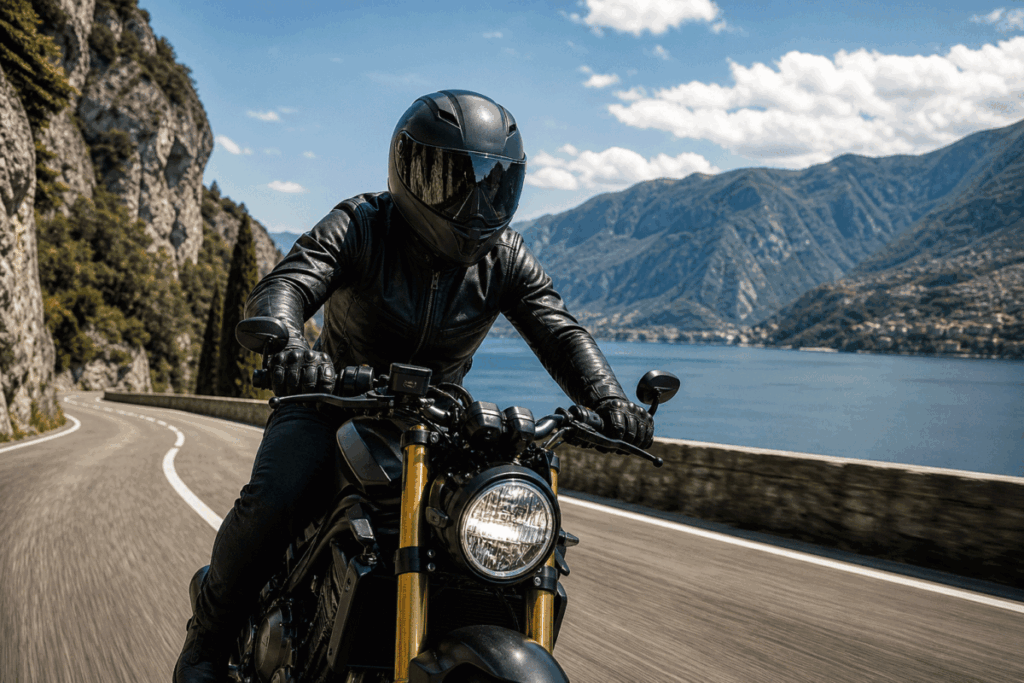
Head injuries are the leading cause of death in motorcycle accidents. Studies consistently show that wearing a proper helmet reduces the risk of fatal head injury by more than 70%. That’s not a marketing claim — it’s decades of crash data.
The issue is that not every helmet on the market offers meaningful protection. Some helmets look the part but fail basic impact absorption tests. Others are built to pass minimum legal requirements and nothing more. Without knowing what to look for, it’s entirely possible to spend good money on a helmet that won’t protect you when it counts.
Two things matter above everything else when choosing a motorcycle helmet: safety certification and fit. Get those two right and you’re most of the way there. Everything else — weight, ventilation, visors, Bluetooth pockets — is secondary.
Helmet Types: Which One Is Right for You
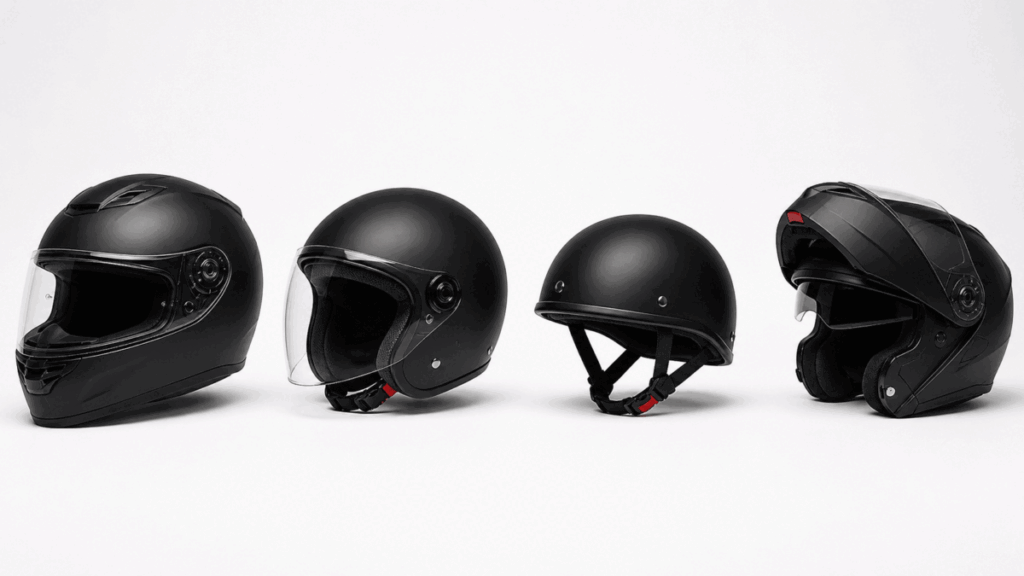
Full-Face Helmet
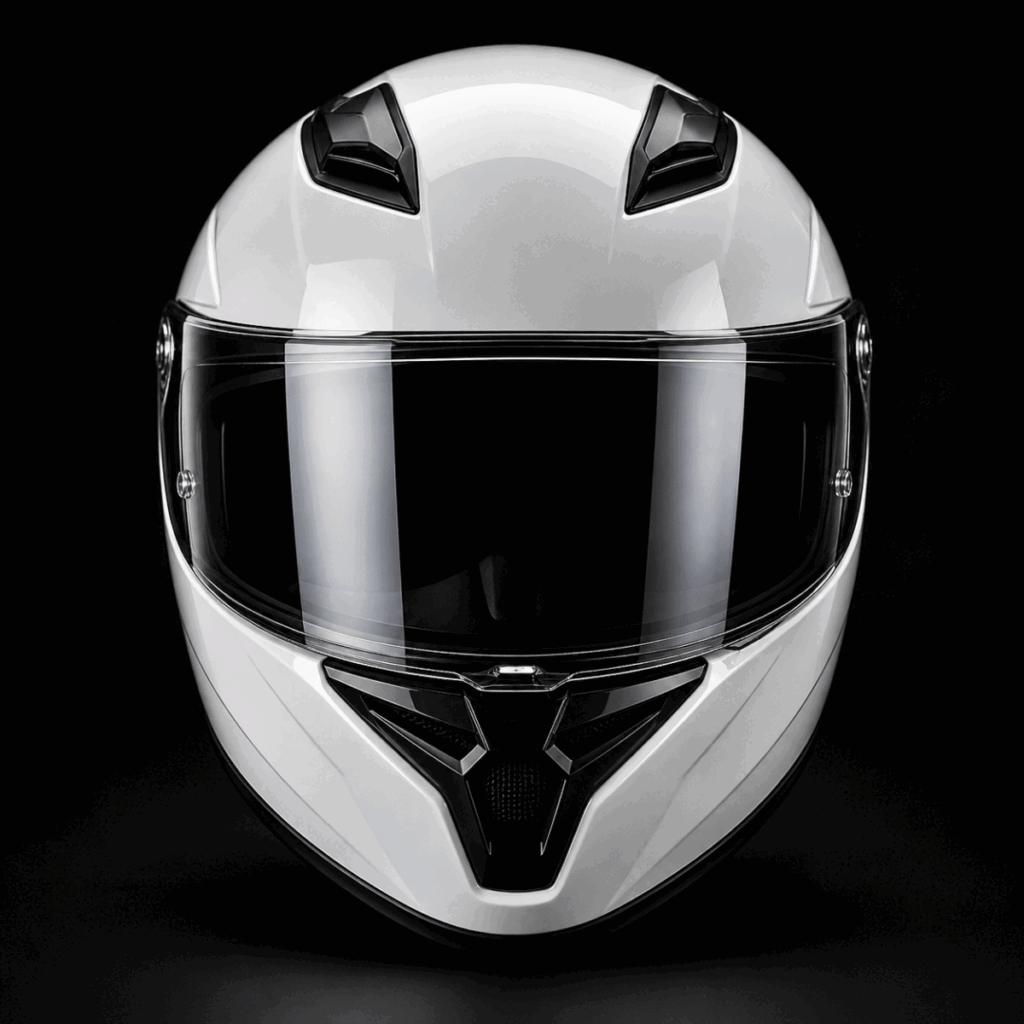
The full-face helmet covers everything — top of the head, sides, back, and chin. It offers the highest level of protection available in a standard motorcycle helmet.
The chin bar is particularly important. Studies of motorcycle crash injuries show that the chin and jaw area absorbs a disproportionately high share of impacts. A full-face helmet is the only type that protects this area.
The trade-off is ventilation. Full-face helmets can feel warm in hot weather, and some riders find them claustrophobic at first. Both issues tend to diminish with quality helmets and with time. For most riders — especially beginners — full-face is the right default choice.
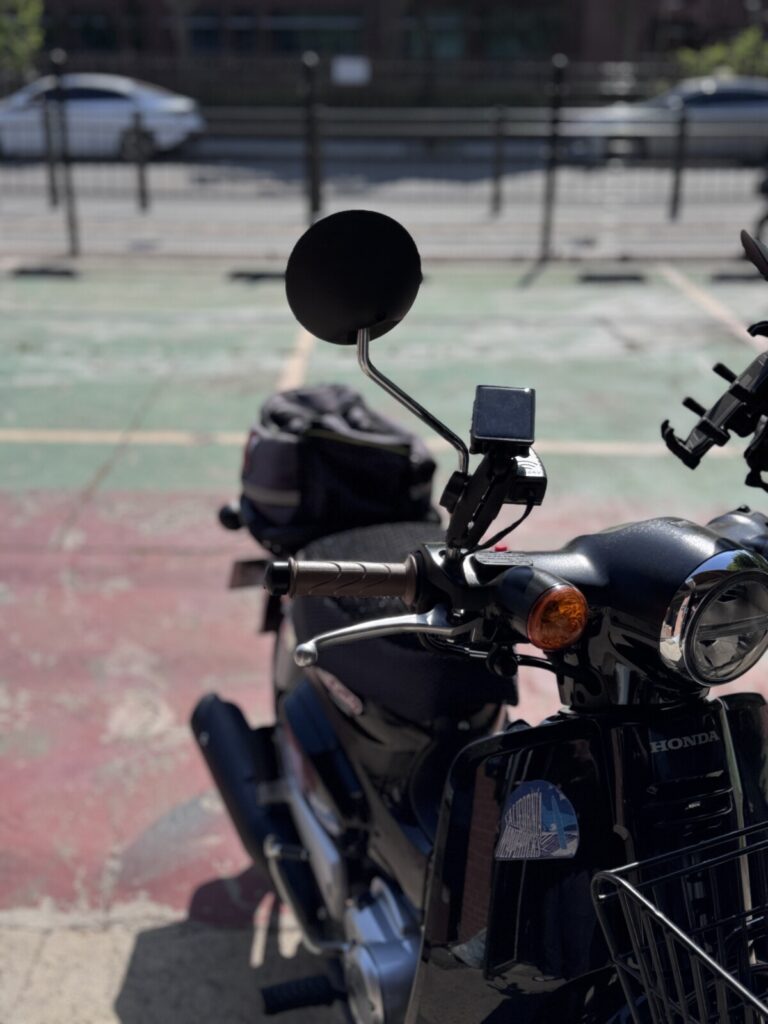
If you ride a Honda Super Cub, a small commuter, or anything in urban traffic, a full-face helmet is still the recommendation. The protection it offers doesn’t depend on how fast you’re going.
Open-Face Helmet (3/4 Helmet)
The open-face helmet covers the top, sides, and back of the head but leaves the face exposed. It offers good peripheral vision, better airflow, and a classic aesthetic that suits retro and commuter bikes particularly well.
The obvious limitation is the exposed face. Without a chin bar, the lower face has no protection in a forward impact. Riders who choose open-face helmets typically pair them with a visor or goggles for wind and debris protection.
For low-speed urban riding or shorter trips, an open-face helmet is a reasonable choice. For highway speeds or long-distance riding, a full-face helmet provides meaningfully better protection.
Half Helmet
The half helmet covers only the top of the skull. It’s lightweight, minimal, and offers the most open riding experience. It also offers the least protection — no chin coverage, no cheek coverage, no rear head coverage.
Half helmets are legal in many regions but not recommended for any serious riding. The protection gap is simply too significant.
Modular Helmet (Flip-Up Helmet)
The modular helmet combines a full-face design with a chin bar that flips up, converting the helmet into an open-face configuration. It’s popular with touring riders who want versatility — full protection on the move, open-face convenience at fuel stops or in traffic.
The mechanical hinge that allows the chin bar to flip introduces a structural compromise compared to a fixed full-face design. Quality modular helmets from reputable brands address this well, but it’s worth knowing the trade-off exists.
Off-Road and Adventure Helmets
Designed for dirt riding and dual-sport use, these helmets feature an extended chin and visor, enhanced chin bar protection, and increased ventilation. They’re not designed for highway speeds without a separate visor.
Adventure helmets blend off-road design with road-going capability — a popular choice for CT125 Hunter Cub riders and adventure tourers.
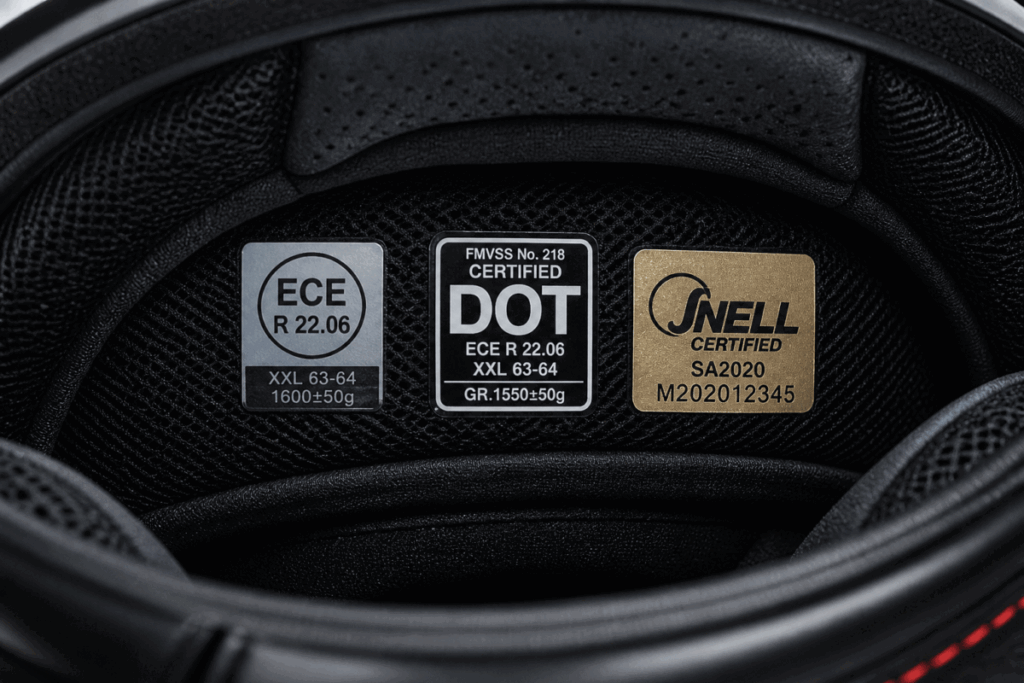
Safety Certifications: The Only Label That Actually Matters
Before anything else — before color, before brand, before price — check the safety certification. A helmet without a recognized safety certification is not a safe helmet, regardless of how it looks or what it costs.
ECE 22.06
The United Nations Economic Commission for Europe standard is the most widely respected motorcycle helmet certification in the world. The current version, ECE 22.06, introduced significantly more rigorous testing than its predecessor, including oblique impact tests that better simulate real-world crash dynamics.
ECE 22.06 certified helmets have been independently tested and verified. This is the certification to look for first.
DOT (FMVSS 218)
The U.S. Department of Transportation standard is a legal requirement for helmets sold in the United States. DOT certification is self-reported by manufacturers rather than independently tested, which makes it less rigorous than ECE as a standalone verification. Many quality helmets carry both DOT and ECE certifications.
SNELL
The Snell Memorial Foundation is an independent non-profit that operates one of the most demanding helmet testing programs in the world. SNELL certification goes beyond DOT and ECE requirements in terms of impact severity. Helmets that carry SNELL certification have passed a higher bar.
SHARP (UK)
The UK government’s helmet safety scheme independently tests and rates helmets on a five-star scale. SHARP ratings are freely available online and provide a useful comparison tool even for riders outside the UK.
The bottom line: Look for ECE 22.06 as a minimum. SNELL certification is a strong additional signal of quality. DOT alone is a lower bar. No certification at all is a hard no.
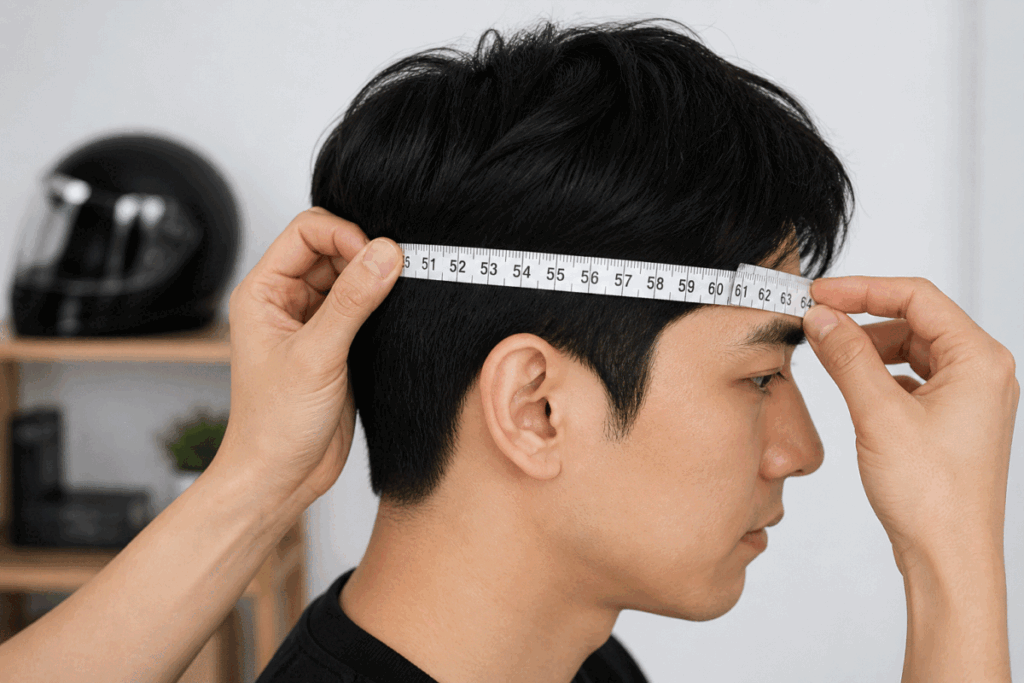
How to Measure Your Head for a Helmet
The right certification means nothing if the helmet doesn’t fit correctly. A helmet that moves on your head during a crash is a helmet that isn’t doing its job.
Step 1 — Measure Your Head Circumference
Use a soft measuring tape. Place it approximately 1cm above your eyebrows at the front, keeping it level all the way around the widest part of your head. This is typically just above the ears and across the mid-forehead.
Take the measurement in centimeters and compare it against the brand’s size chart. Sizing varies between manufacturers, so always check the specific brand’s chart rather than assuming your size transfers.
Step 2 — Try It On
If at all possible, try the helmet on before buying. Online purchases are convenient, but fit is something you need to feel.
When trying on a helmet, check for:
Movement test: With the helmet fastened, grip it firmly and try to rotate it side to side and tilt it forward and back. The helmet should move with your head. If it shifts independently, it’s too large.
Pressure distribution: You should feel even, firm pressure across the entire contact area — forehead, sides, and back. If there’s a specific pressure point that feels significantly more intense than the rest, the helmet shape may not match your head shape.
Cheek pad contact: The cheek pads should make contact with your cheeks — not pressing so hard it’s uncomfortable, but definitely touching. Cheek pads compress slightly with use, so a snug fit initially is normal and expected.
Vision check: Your full field of forward and peripheral vision should be unobstructed.
Head Shape Matters
Human head shapes vary. The two main categories are round oval and long oval. Japanese helmet brands — Shoei, Arai — tend to fit rounder head shapes well. European brands often fit longer oval shapes. This isn’t a universal rule, but it’s a useful starting point when choosing between brands.
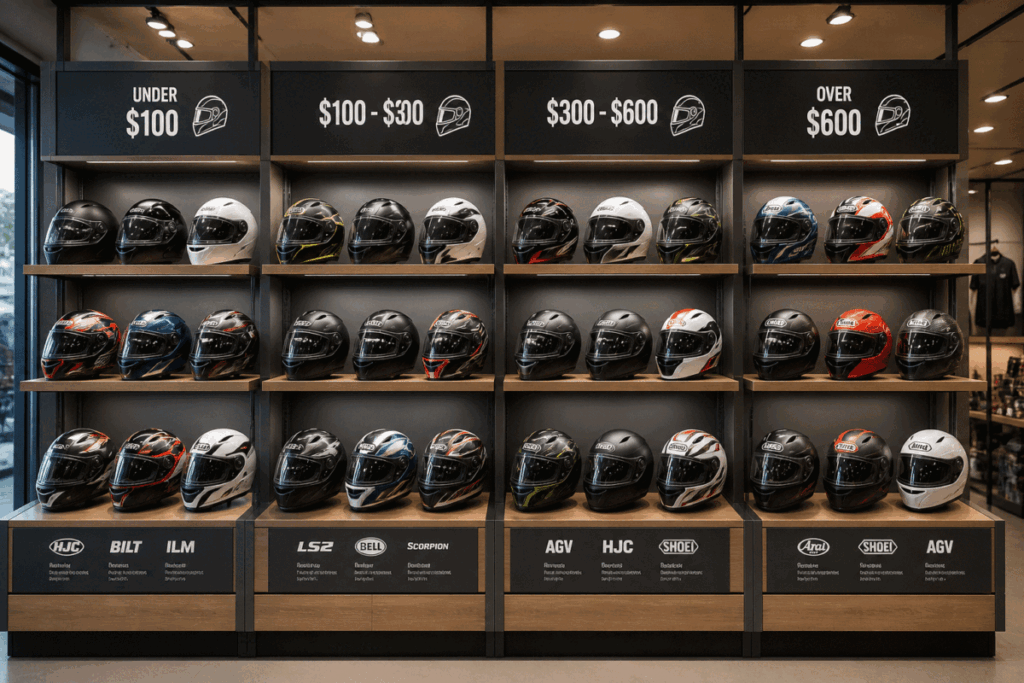
How Much Should You Spend on a Motorcycle Helmet
Under $80
At this price point, finding a helmet with ECE 22.06 or SNELL certification is difficult. If you’re shopping in this range, verify certification carefully and don’t assume it’s there.
$80 — $250
The most practical range for first-time buyers. Quality full-face helmets with ECE certification from brands like Bell, HJC, and Shoei entry-level models are available here. You don’t need to spend more than this to get a genuinely protective, comfortable helmet.
$250 — $500
Noticeable improvements in ventilation, noise reduction, weight, and internal comfort. Worth considering for riders who are on the bike regularly or covering longer distances.
$500 and above
Premium territory — Shoei, Arai, AGV flagship models. The best materials, the best fit systems, the best aerodynamics. If you plan to ride seriously for years, this investment makes sense. If you’re still figuring out whether riding is for you, start lower.
Helmet Maintenance and When to Replace
Replacement Schedule
Most manufacturers recommend replacing a helmet every five years, regardless of visible condition. The EPS foam liner — the layer that actually absorbs impact — degrades over time even without obvious damage. A helmet that looks fine on the outside may have significantly reduced protective capacity after five years of use.
After Any Impact
If your helmet takes a significant impact — whether in a crash or from being dropped from height — replace it. EPS foam is designed to absorb energy by compressing. Once it has compressed from an impact, it cannot fully recover. The outer shell may show no damage at all while the liner is compromised.
Cleaning
Remove the inner liner if it’s detachable and wash it by hand with mild soap. Clean the outer shell with a soft cloth. Avoid solvents, harsh chemicals, or anything abrasive — these can degrade both the shell material and the liner.
Storage
Keep the helmet away from direct sunlight and heat sources. A dedicated helmet bag protects the shell and visor from scratches. Avoid leaving helmets on a hot dashboard or inside a hot vehicle for extended periods.

Helmets to Avoid
A few clear rules that apply regardless of budget:
- No safety certification — Do not buy it. Full stop.
- Second-hand helmets — You cannot know the crash history of a used helmet. Always buy new.
- Helmets over five years old — Check the manufacture date, which is usually printed inside the helmet. Age alone is a reason to pass.
- Helmets that move on your head — If it shifts when you try to rotate or tilt it, it doesn’t fit. Size down or try a different brand.
Conclusion: The One Piece of Gear You Don’t Compromise On
Of everything you’ll buy as a motorcycle rider, the helmet is the one place where cutting corners has direct consequences.
The process of how to choose a motorcycle helmet isn’t complicated once you know what to look for. Confirm the safety certification first — ECE 22.06 or SNELL as a minimum. Measure your head and use the size chart. Try it on and run through the fit checks. Then consider type and budget.
For most beginners, a full-face helmet in the $80–$250 range with ECE 22.06 certification is the right starting point. It provides genuine protection, fits within a reasonable budget, and gives you a solid foundation to ride from.
A good helmet doesn’t restrict your riding. It’s what makes riding for a long time possible.
For a closer look at what tools you actually need for basic Super Cub maintenance, check out: Super Cub Tools: You Only Need These 5 Sizes to Do Almost Everything
For independent helmet safety ratings, visit SHARP Helmet Safety Scheme