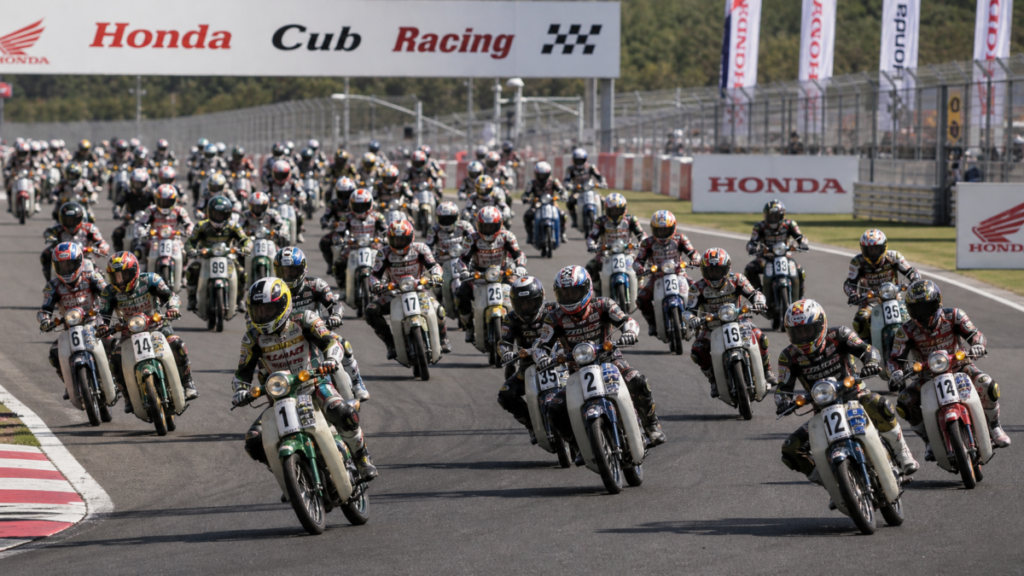
Super Cub racing exists on every continent and in every format — from 8-hour charity endurance events in the UK to professional national championships in Malaysia. Here’s what’s happening globally.
The Honda Super Cub is the most produced motor vehicle in history. What’s less known is that it’s also one of the most raced.
Super Cub racing exists in forms that range from grassroots charity events with costumed riders to nationally televised professional championships that have launched careers in MotoGP. The same basic platform — a small-displacement underbone motorcycle that’s spent decades delivering newspapers and groceries — turns out to be an ideal racing vehicle when you put enough of them on a circuit together.
Here’s what Super Cub racing actually looks like around the world.
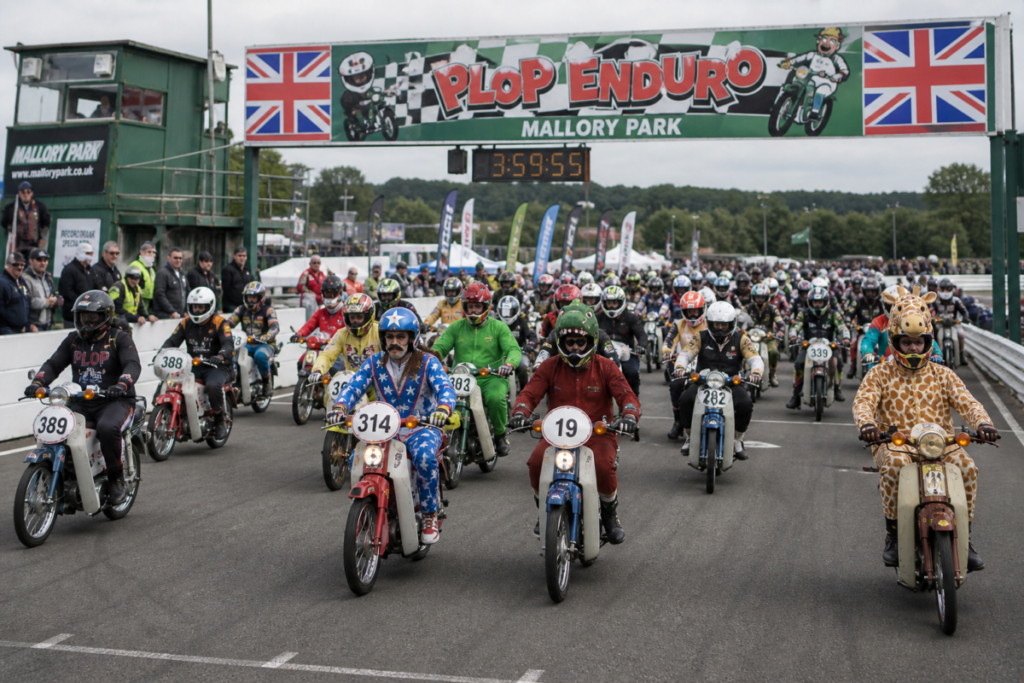
The UK: Plop Enduro — 8 Hours of Organized Chaos
The Plop Enduro is a non-profit organisation run entirely by volunteers, with the sole aim of raising money for charity and providing low-cost two-wheel fun at some of the best circuits in the UK. Events run exclusively for Honda C90 Cubs, divided into two classes: 90cc standard and 110cc modified.
The format is straightforward. Teams of up to four riders share a single C90 across an 8-hour endurance race, swapping riders at will while accumulating laps. The maximum speed of a stock C90 is around 60mph, so no speed records are in danger of being broken. What the race lacks in outright speed it makes up for in sheer volume — up to 100 teams compete across the day, all in the name of fun riding on great circuits without breaking the bank.
The series rotates across multiple UK venues including Mallory Park, Anglesey International Circuit, Teesside, and Jurby Motordrome. Each venue brings a different character to the racing, and the endurance format means the event is as much about reliability and strategy as it is about outright pace.
The atmosphere is distinctly British. Teams arrive the night before, spend the evening comparing bikes in the paddock, and approach the race with a combination of genuine competition and deliberate self-deprecation. The series motto — “Come and have a go if you think you’re slow enough” — captures the tone accurately. Costumes are common. Mechanical creativity is encouraged. Finishing is celebrated as seriously as winning.
For the Super Cub, the Plop Enduro is the ultimate reliability test. Eight hours on a circuit, shared between multiple riders, with no modifications beyond what the class rules allow. The bikes that make it to the finish have earned it.
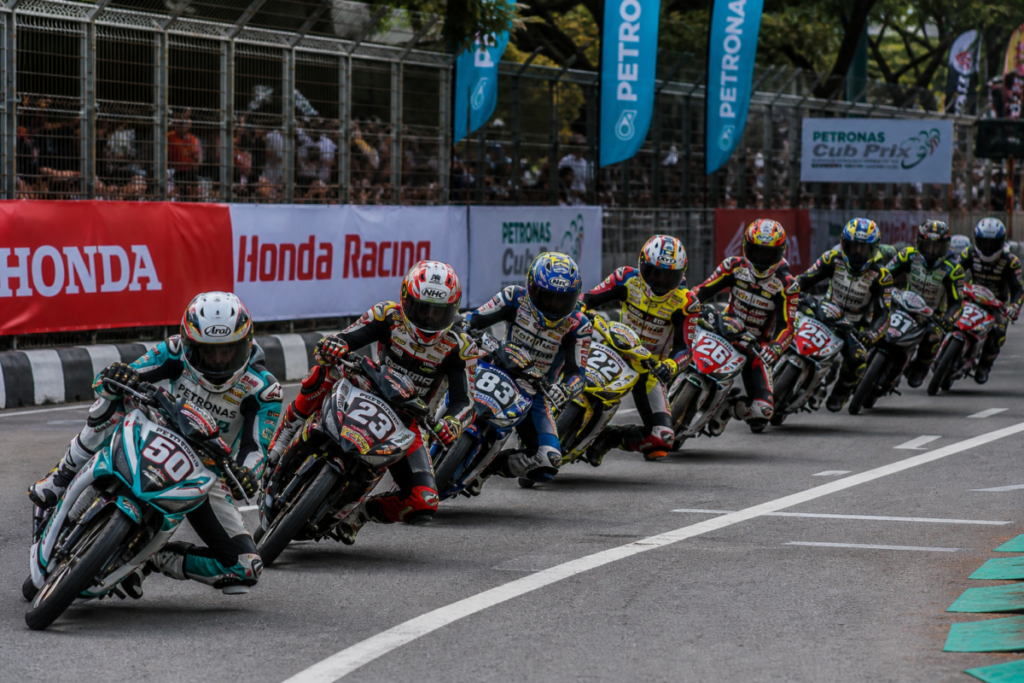
Malaysia: Cub Prix — Where the Super Cub Becomes a Professional Sport
The Malaysian Cub Prix Championship is a national-level underbone racing series for motorcycles with displacements from 100 to 150cc, established in 1994 with the main objective of discovering and developing Malaysian motorcycle racing talent.
The name comes from the motorcycle itself. “Cub Prix” derives from the Cantonese nickname “Cub 仔” or “Little Cub,” which originally referred to Honda Cub motorcycles introduced in 1958. Today it refers to underbone motorcycles in Malaysia.
What started as a grassroots initiative has grown into a fully professional national championship. PETRONAS has served as title sponsor since 2003, and more than 4,000 riders and 397 teams have participated since then. The championship has generated approximately 2,000 job opportunities including race engineers, team coordinators, and race officials.
The machines competing in Cub Prix bear only a passing resemblance to a standard Super Cub. Engines are tuned, suspension is replaced, and the entire package is optimized for circuit racing. The riders are professionals, and the competition level reflects that.
Cub Prix has produced leading riders including Hafizh Syahrin, Khairul Idham Pawi, and Kasma Daniel, who have brought their talents to the international arena via MotoGP, World Superbike, and the Asia Road Racing Championship.
The Malaysian Cub Prix is proof that the Super Cub platform, taken to its logical extreme, produces competitive professional racing. The same DNA that makes the standard Super Cub reliable and accessible makes the racing version capable of developing world-class talent.
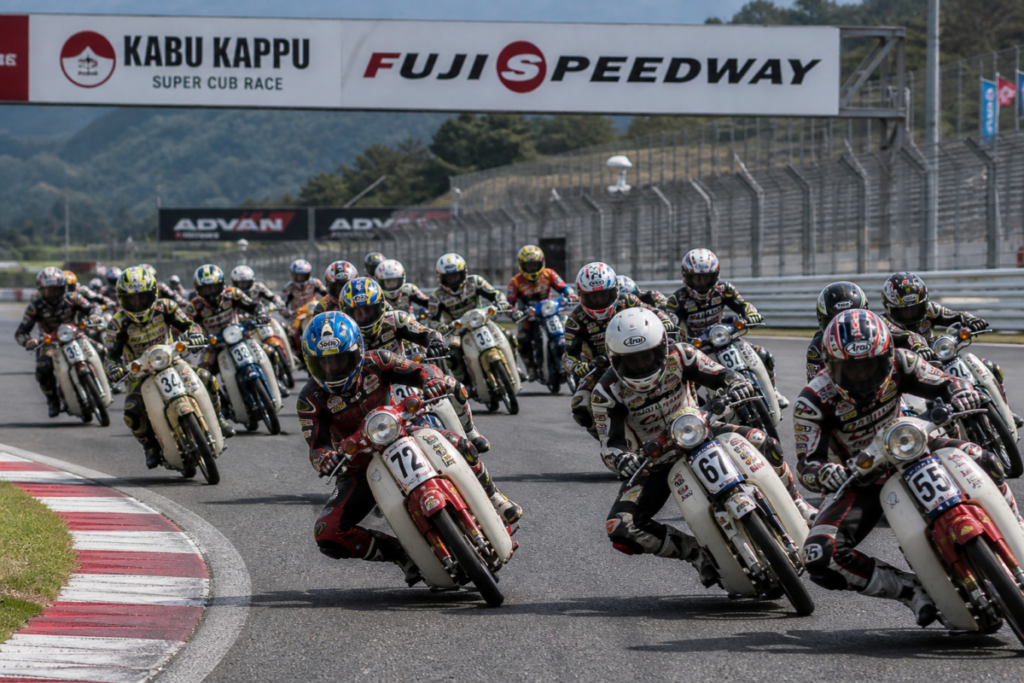
Japan: Kabu Kappu — Super Cub Racing in Its Purest Form
Japan is where the Super Cub was born, and it’s where Super Cub racing culture is most deeply embedded.
The Kabu Kappu (カブカップ) events held at venues including Fuji Speedway represent Super Cub racing in its most concentrated form. Stock classes require bikes to run in essentially unmodified condition, which means the racing is decided entirely by rider skill and race craft rather than the depth of a team’s budget.
The racing itself is deceptively intense. Riders arrive in full leathers and treat the event with the same technical seriousness as any other circuit competition. Knee-dragging through tight corners on a Super Cub is a real thing, and the close-quarters racing that comes from putting a large grid of identical bikes on a tight circuit produces battles that would look familiar on any motorsport broadcast.
In 2017, Honda marked the production of the 100 millionth Super Cub with a commemorative race at Twin Ring Motegi, one of Japan’s premier racing venues. The event brought together riders from across Honda’s racing programs — including some of the fastest motorcycle racers in the world — all competing on identical Super Cubs. The symbolism was intentional: the world’s most produced vehicle, raced by the world’s fastest riders.
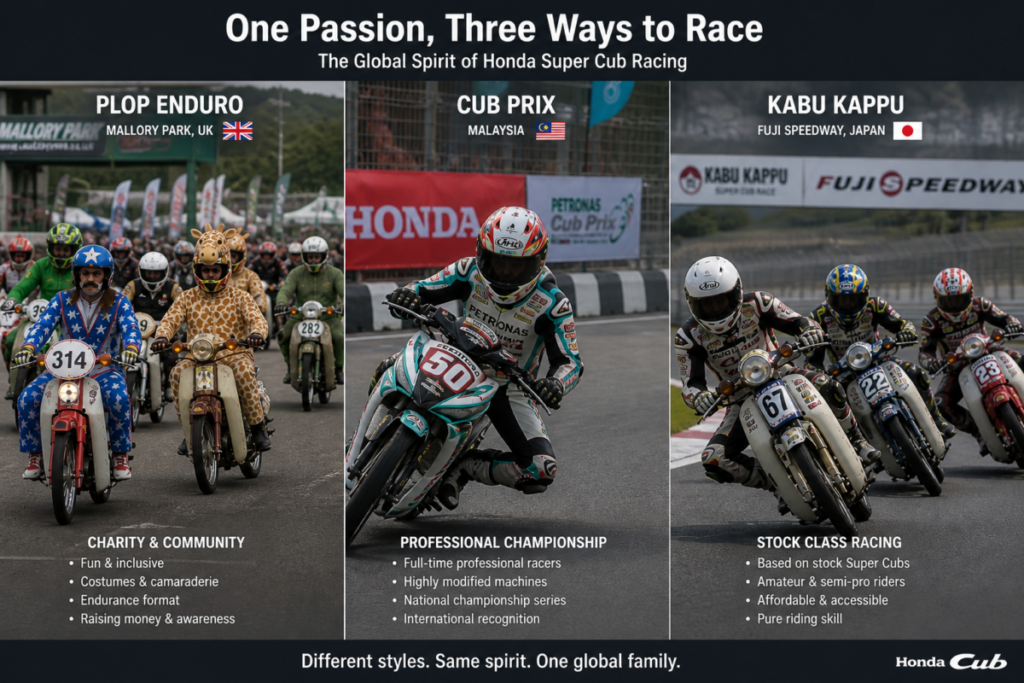
What These Three Events Have in Common
Super Cub racing in the UK, Malaysia, and Japan looks different on the surface. One is a charity endurance event in fancy dress. One is a nationally televised professional championship. One is grassroots circuit racing in leather suits.
What they share is the same underlying principle: the Super Cub’s accessibility and mechanical consistency create racing that’s defined by the rider rather than the machine. Whether the budget is minimal or professional, whether the goal is charity fundraising or MotoGP talent development, the platform delivers.
That’s not an accident. A motorcycle that has sold over 100 million units across more than six decades does so because it works reliably in almost any context. Racing turns out to be one of those contexts.
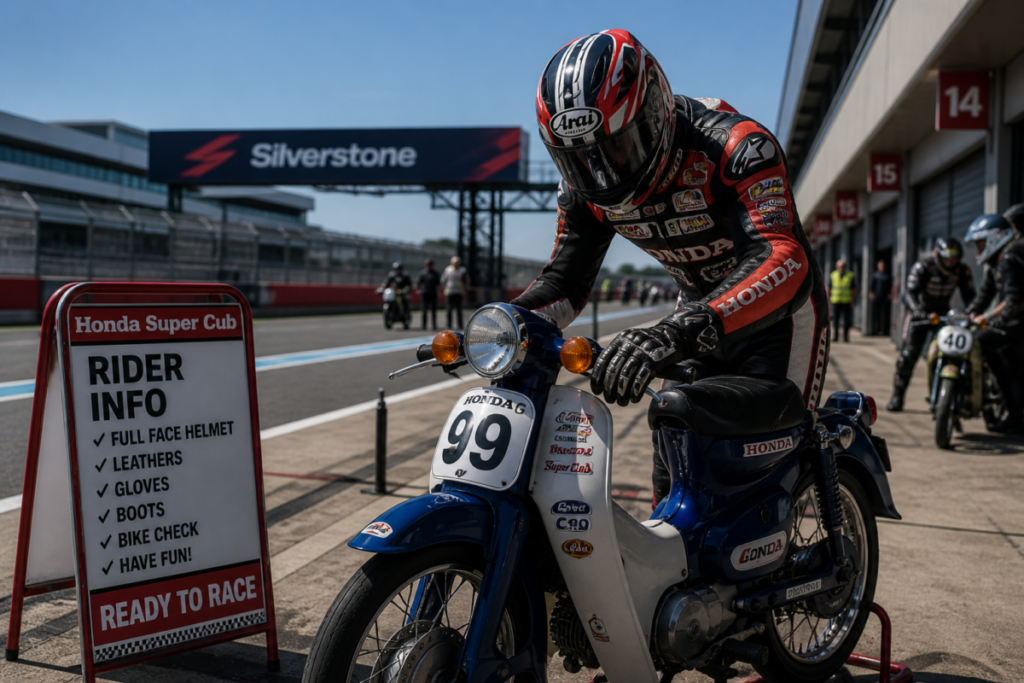
Can You Race a Super Cub?
If you own a Super Cub and the idea of circuit racing has any appeal, the entry point is lower than most riders assume.
Events like the Plop Enduro in the UK are specifically designed to be accessible — the cost is low, the format is forgiving, and the atmosphere actively encourages newcomers. Japan’s stock-class Kabu Kappu events require little more than a standard bike and appropriate safety gear. Even Malaysia’s professional Cub Prix started as a grassroots event designed to give riders from all backgrounds a competitive platform.
Super Cub racing exists at every level between charity fun run and professional national championship. Finding your level is mostly a matter of geography and how seriously you want to approach it.
The bike you already own may be more race-ready than you think.
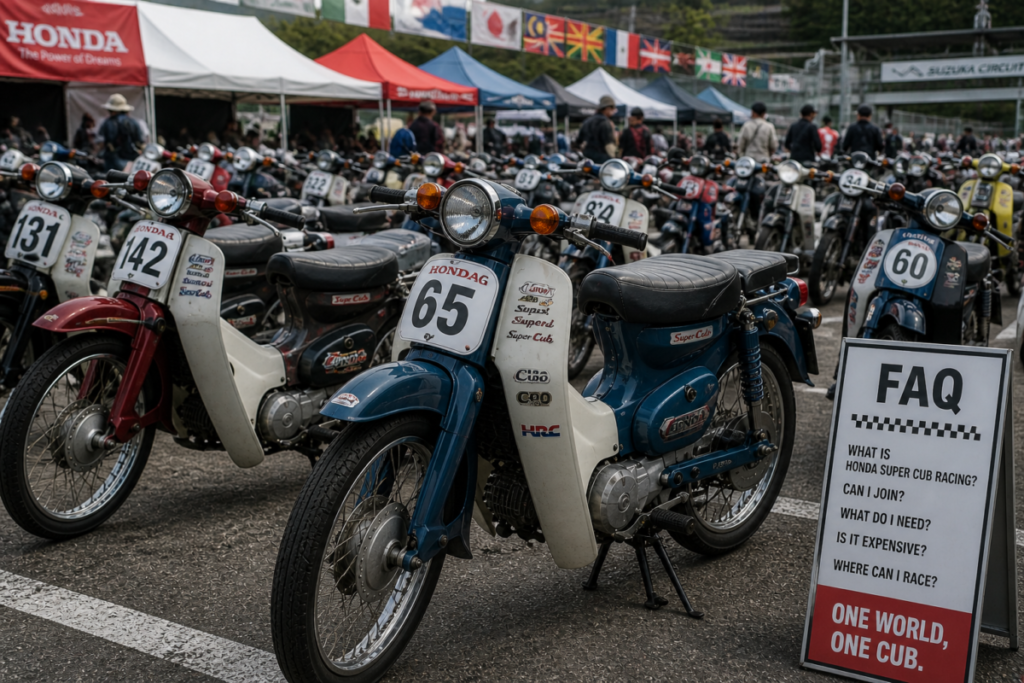
Frequently Asked Questions
Q. Is Super Cub racing only for modified bikes?
No. Most Super Cub racing series include stock or near-stock classes where modifications are tightly restricted. The Plop Enduro in the UK and Japan’s Kabu Kappu both emphasize unmodified racing as a core format. Malaysia’s Cub Prix includes both stock and modified classes.
Q. What safety equipment do Super Cub races typically require?
At minimum, a full-face helmet and protective riding gear. Most organized events require a one-piece or two-piece riding suit with armor. Specific requirements vary by event, so checking the regulations for any particular series before entering is essential.
Q. How fast do Super Cubs go in racing conditions?
In stock form, a Super Cub tops out around 90-100km/h depending on the model. Heavily modified Cub Prix machines reach significantly higher speeds. The appeal of stock-class racing is that the speed differential between riders is small, which produces close racing rather than a processional.
Q. Where can I find Super Cub racing events near me?
In the UK, the Plop Enduro series runs multiple events annually across different circuits. In Japan, Kabu Kappu events are held at various venues. In Southeast Asia, the Malaysian Cub Prix is the primary professional series. Searching for local motorcycle club events in your region is the best starting point for grassroots options.
The Bottom Line
Super Cub racing is more widespread, more varied, and more serious than most riders realize. From an 8-hour charity endurance race in England to a professional national championship in Malaysia, the same platform that delivers mail and groceries around the world also produces some of the most accessible and entertaining motorcycle racing available.
If you ride a Super Cub, you’re part of a global community that takes these machines far more seriously than their reputation might suggest.
For more on what makes the Super Cub platform so capable, the comparison between the 110 and C125 covers the mechanical differences that matter most for riders considering their options.
👉 Honda Super Cub 110 vs C125: Is the Premium Version Worth the Upgrade?