Triumph Bonneville history is not just a story about an old British motorcycle.
It is a story about speed records, salt flats, 1960s motorcycle culture, parallel-twin engines, and one of the most recognizable classic motorcycle silhouettes ever made.
When people talk about classic motorcycles, one name appears again and again.
Triumph Bonneville.
Triumph Bonneville.
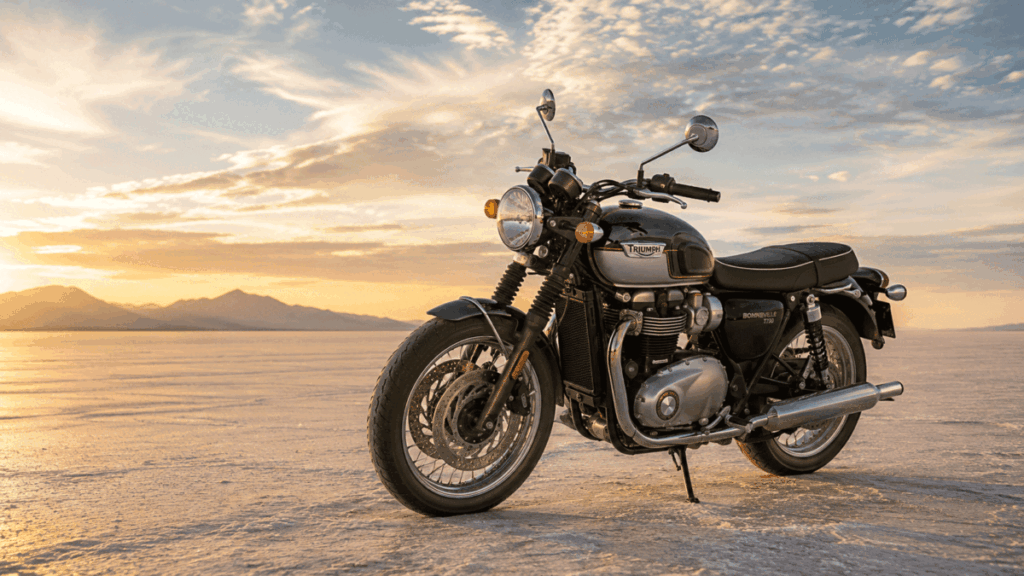
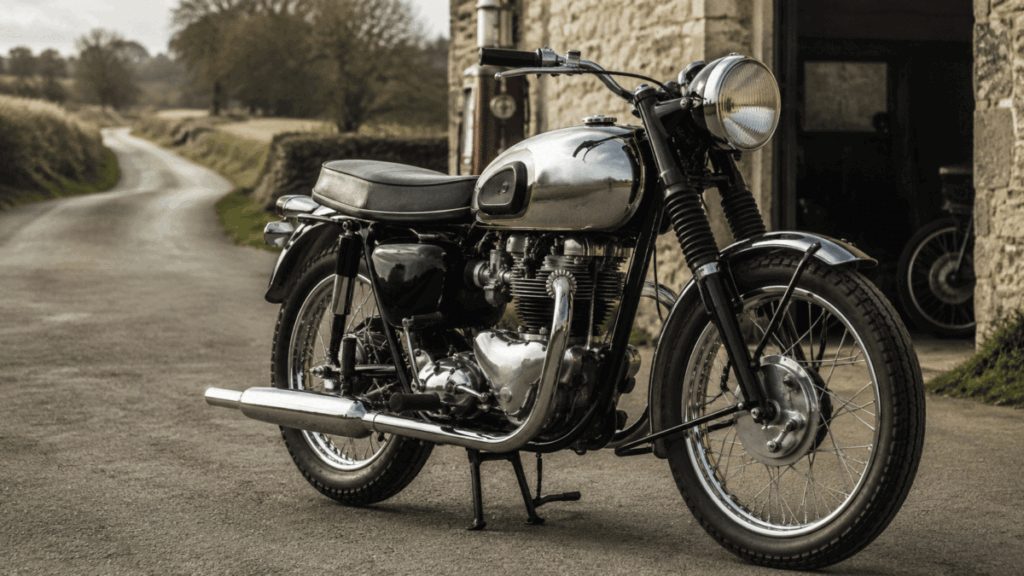
Even for people who do not know much about motorcycles, the Bonneville has a shape that feels instantly familiar. A long fuel tank. A round headlight. Twin shocks. Chrome details. A parallel-twin engine sitting proudly in the center of the frame.
It looks calm, elegant, and timeless.
But the story behind the Bonneville is not quiet at all.
The name comes from the Bonneville Salt Flats in Utah, one of the most famous places in the world for land-speed record attempts. Before the Bonneville became a symbol of British motorcycle style, it was connected to speed, salt, risk, and the pursuit of being the fastest machine on earth.
That contrast is exactly what makes the Bonneville so interesting.
It is a motorcycle that looks refined today, but its name was born from speed.
This is the story of how the Triumph Bonneville became one of the most iconic motorcycles ever made.
Triumph Bonneville History: Born on the Bonneville Salt Flats
The Bonneville name was not chosen because it sounded elegant.
It came from the Bonneville Salt Flats, a vast white salt plain in Utah that became legendary for speed records. Cars, motorcycles, and streamliners have used the flats for decades because the surface is wide, flat, and open enough for extreme high-speed runs.
In the 1950s, Triumph engines became part of that world.
One of the key moments came in 1956, when Johnny Allen rode a Triumph-powered streamliner to 214 mph. That record became a major part of Triumph’s performance image and helped give birth to the Bonneville name.
When Triumph introduced the Bonneville T120 in 1959, the name carried that salt-flat history with it.
This is important because many people now think of the Bonneville as a relaxed retro motorcycle. That is only half the story.
The Bonneville was not originally about nostalgia.
It was about speed.
The modern Bonneville may be polished and gentlemanly, but its name still points back to a time when Triumph wanted to be associated with the fastest motorcycles in the world.

The 1959 T120: The British Motorcycle Shap
The first Triumph Bonneville T120 appeared in 1959.
It was powered by a 650cc parallel-twin engine and quickly became one of the defining British motorcycles of its era. At the time, it offered a strong mix of speed, simplicity, and visual balance.
But the reason the T120 became legendary was not only its performance.
It was the way it looked.
The tank, seat, engine, wheels, and exhausts all seemed to belong together. Nothing looked excessive. Nothing looked forced. The motorcycle had a mechanical honesty that made it easy to understand at a glance.
This is one of the biggest reasons the Bonneville has lasted.
Some motorcycles look modern for a few years and then become dated. The Bonneville did something different. It created a shape that became almost permanent.
A classic roadster stance.
A visible engine.
A clean side profile.
A motorcycle that looked like the idea of a motorcycle.
The T120 became linked with British roadster culture, café racer influence, and the idea of a fast twin-cylinder machine that could be used, modified, and loved.
It was not just a model.
It became a reference point.
Steve McQueen, Triumph, and 1960s Motorcycle Cool
The Bonneville’s story is also tied to culture.
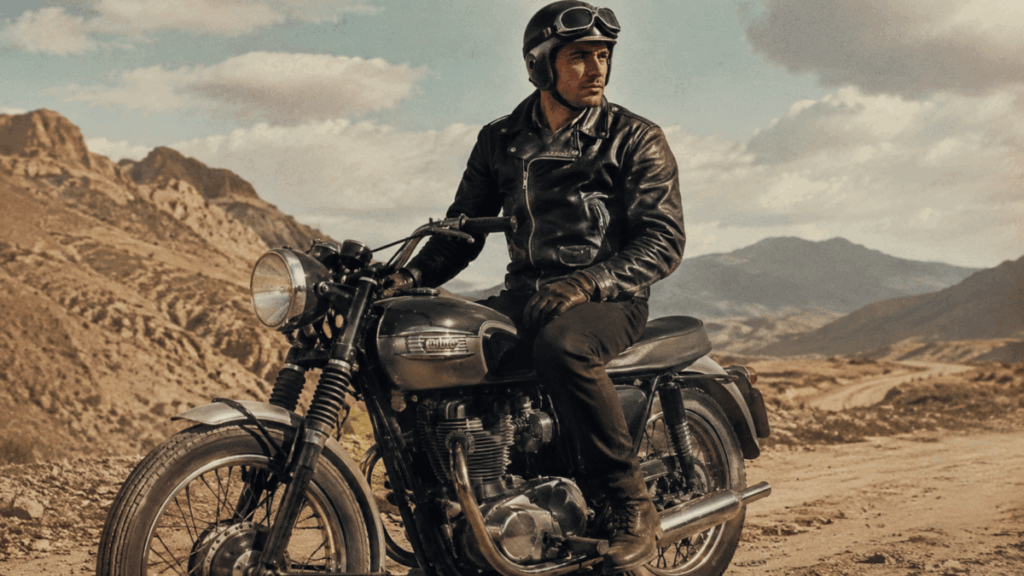
In the 1960s, Triumph motorcycles became part of a larger image of rebellion, freedom, and understated cool. One of the strongest figures connected to that image was Steve McQueen.
McQueen was not just a movie star who posed with motorcycles. He actually rode, raced, and understood them. His image matched Triumph motorcycles perfectly.
Not flashy.
Not soft.
Not overdesigned.
Just cool.
The famous motorcycle sequence in The Great Escape is often associated with McQueen and Triumph. The bike used in the film was made to look like a German military motorcycle, but it was based on a Triumph TR6, a close relative of the Bonneville family.
One detail is important: the most famous jump scene was performed by stunt rider Bud Ekins, not McQueen himself.
But that does not reduce the cultural impact.
For many viewers, the image was already complete: a rugged rider, a classic Triumph twin, open terrain, and a feeling of escape. Whether the exact model was a Bonneville or a TR6, the Triumph image entered popular culture in a way few motorcycle brands ever manage.
This helped the Bonneville too.
The bike was no longer just a British roadster. It became part of a visual language — leather jacket, open road, cool confidence, and mechanical simplicity.
That image still follows the Bonneville today.
The Parallel-Twin Engine: The Heart of the Bonneville
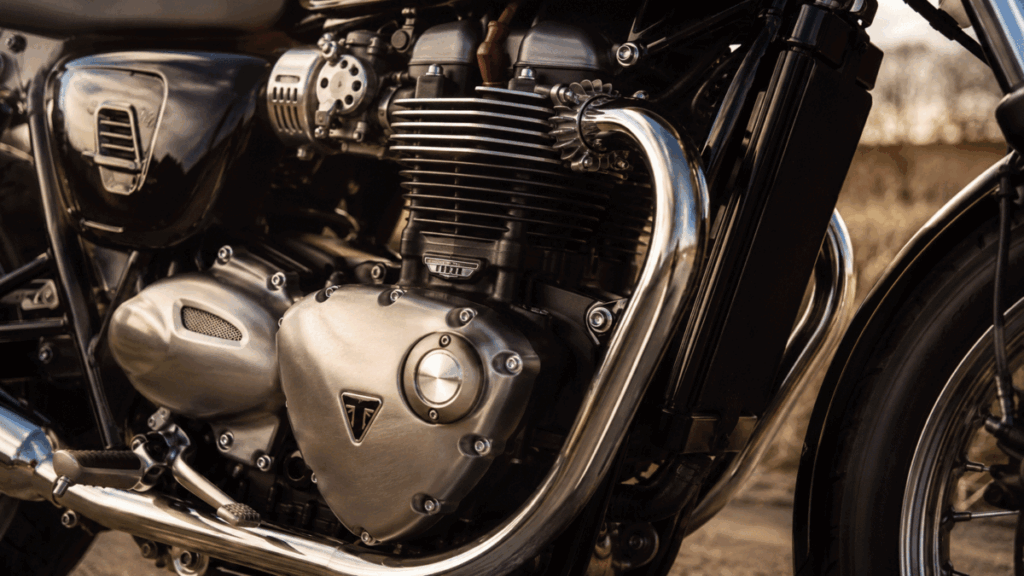
A major part of the Bonneville’s identity is its parallel-twin engine.
On many motorcycles, the engine is hidden or visually reduced. On the Bonneville, the engine is central. It is not just the power source. It is part of the motorcycle’s beauty.
The two cylinders stand upright. The engine fills the middle of the frame. The cases, cooling-fin shape, exhaust headers, and frame lines all work together.
This is why the Bonneville feels so mechanical.
It does not try to hide what it is.
The classic Bonneville engine layout also helped define the British twin look. Even people who do not know engine types can often feel the difference visually. A Bonneville does not look like a sport bike, a cruiser, or an adventure bike. It has its own center of gravity, its own rhythm, and its own silhouette.
Modern Bonneville models are very different mechanically from the old air-cooled machines. They use fuel injection, electronics, emissions systems, and liquid cooling.
But Triumph has been careful to preserve the visual language.
The engine still looks like it belongs to the Bonneville story. The cooling-fin styling, polished metal cases, black frame, chrome exhausts, and classic proportions all maintain the connection to the older bikes.
That is the trick.
The modern Bonneville is not a vintage motorcycle.
It is a modern motorcycle designed to keep the feeling of a vintage one.
The Modern Bonneville: T100 and T12
Today, the Bonneville lives on through models like the T100 and T120.
These motorcycles keep the classic shape but add the things modern riders expect: fuel injection, ABS, traction control, ride-by-wire technology, improved braking, better suspension, and far more reliability than old British twins.
This is why the modern Bonneville works.
Many riders love the idea of a vintage motorcycle. But not everyone wants to deal with the reality of owning one. Old motorcycles can be beautiful, but they can also bring maintenance demands, parts issues, oil leaks, electrical problems, and constant attention.
The modern Bonneville offers a different answer.
It gives riders the shape, mood, and identity of a classic British motorcycle without forcing them to live with all the problems of a true vintage machine.
That is why the T100 and T120 matter.
The T100 generally feels closer to the lighter, more accessible side of the Bonneville family. The T120 feels more powerful, more premium, and more mature. Both carry the same basic idea, but they serve slightly different riders.
The important point is that Triumph did not simply copy the past.
It translated the past into a motorcycle people can ride today.
Why the Bonneville Is Different from Many Modern Motorcycle
A lot of modern motorcycles are sold through numbers.
More horsepower.
More electronics.
More aggressive styling.
More performance claims.
The Bonneville does not really compete that way.
It is not trying to be the fastest motorcycle in its class. It is not trying to look like a race bike. It is not trying to overwhelm the rider with technology.
The Bonneville sells something else.
Presence.
It has a calm kind of confidence. It looks good parked outside a café. It looks right on a quiet road. It looks complete even when it is standing still.
That matters more than some people admit.
A motorcycle is not only a performance object. It is also something you look at, live with, clean, park, hear, and remember. The Bonneville understands that.
This is why judging it only by spec sheet can miss the point.
There are faster motorcycles.
There are cheaper motorcycles.
There are lighter motorcycles.
But very few motorcycles carry the same mixture of history, design, culture, and everyday usability.
That is the Bonneville’s real advantage.
Who the Triumph Bonneville Is Really For
The Bonneville is not the perfect motorcycle for everyone.
If someone wants the most horsepower for the money, there are better choices. If someone wants the lightest beginner bike possible, there are easier options. If someone only wants cheap daily transportation, the Bonneville is not the most logical answer.
But for the right rider, it makes complete sense.
The Bonneville is for someone who wants a motorcycle with identity.
A rider who values the way a bike feels, not only how fast it is.
A rider who likes classic design but does not want vintage problems.
A rider who wants a motorcycle that can handle real roads without losing its sense of history.
A rider who understands that ownership is not only about riding, but also about looking back at the bike after parking it.
That last part matters.
Some motorcycles are impressive while you ride them. The Bonneville is also impressive when you walk away from it and turn around for one more look.
That is part of why people keep buying it.
Verdict: When a Motorcycle Becomes a Standard
The Triumph Bonneville became an icon because it carries several stories at once.
It has a speed-record name from the Bonneville Salt Flats.
It has the 1959 T120 shape that helped define the British motorcycle image.
It has the 1960s Triumph culture connected to Steve McQueen and film history.
It has the visual strength of a parallel-twin engine.
And it has modern T100 and T120 models that keep the story alive.
Many motorcycles have one of those things.
The Bonneville has all of them.
That is why it has survived for more than 60 years.
The Bonneville is often called a retro motorcycle, but that description is too small. It is not just a new bike dressed like an old bike. It is a machine that carries its history in its name, its shape, and its engine layout.
It began with speed.
It became style.
It survived as heritage.
And today, when people imagine what a classic motorcycle should look like, the Triumph Bonneville is still one of the first motorcycles that comes to mind.
For current model details, visit the Triumph Motorcycles Official Website.
Ducati History: From Radio Components to racing legend