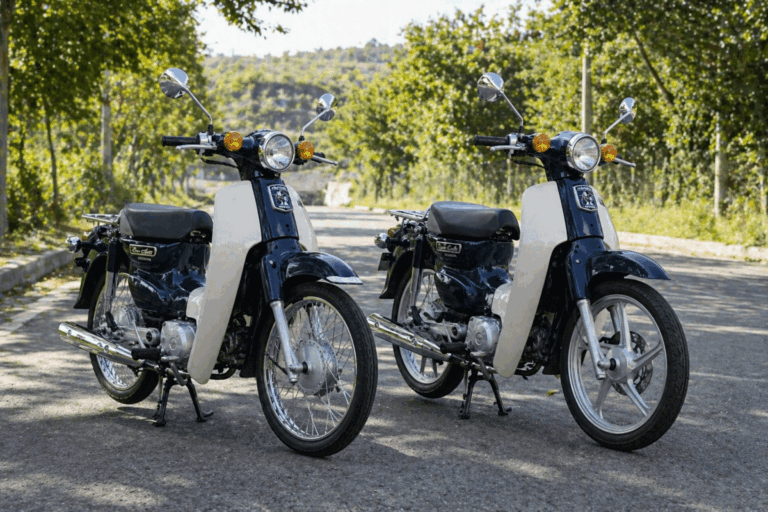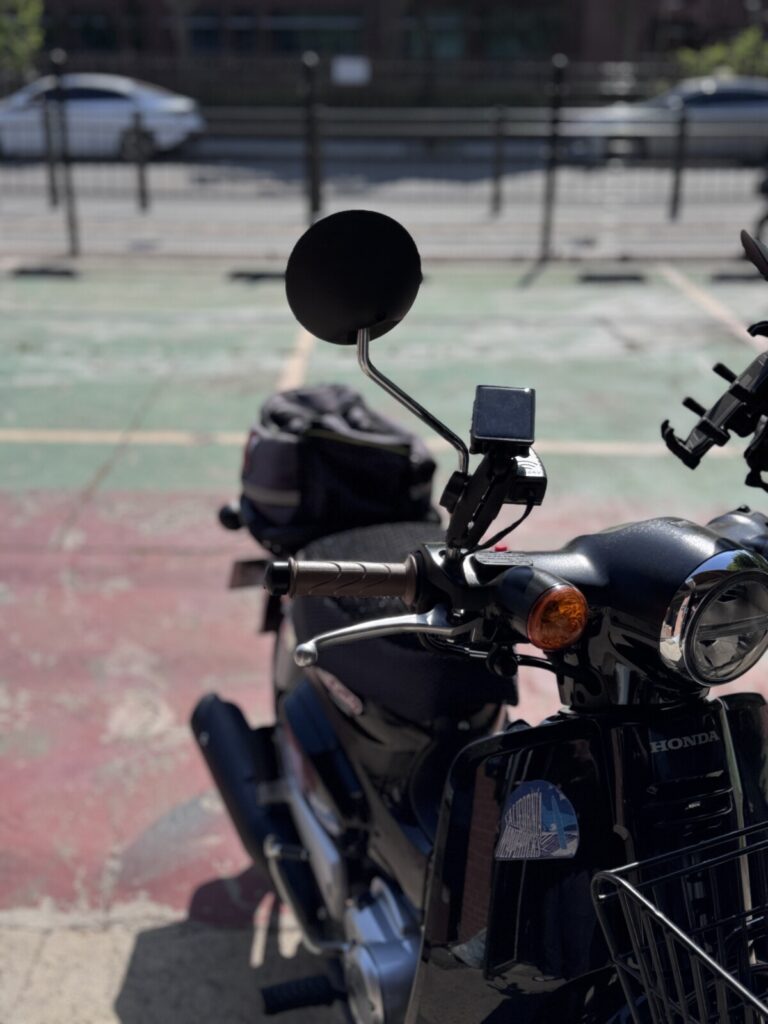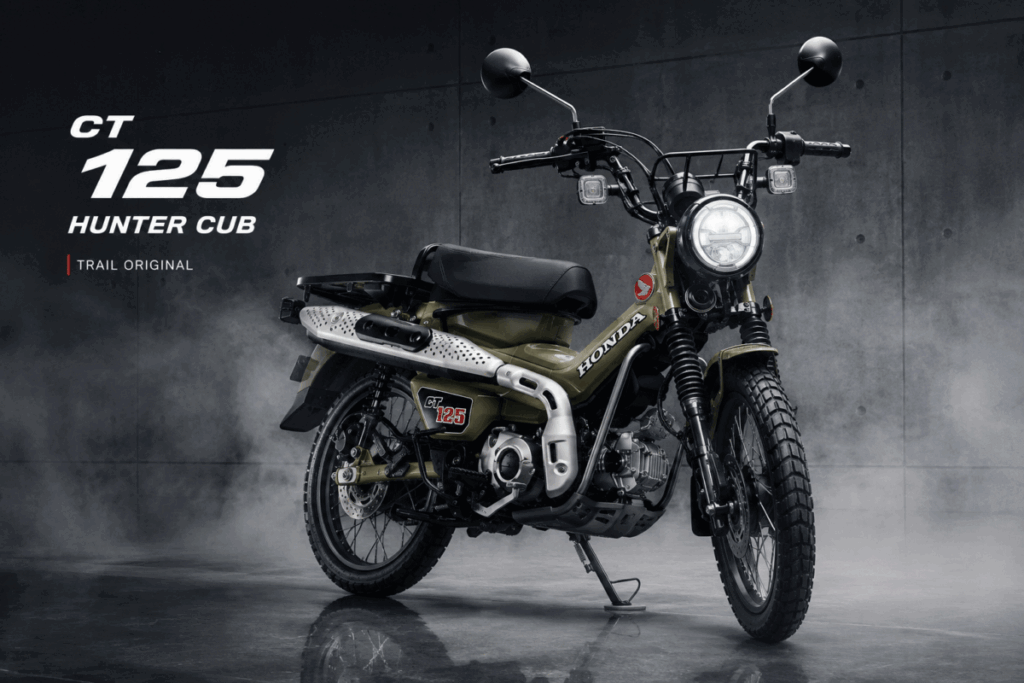
The Honda CT125 Hunter Cub review starts with a familiar silhouette.
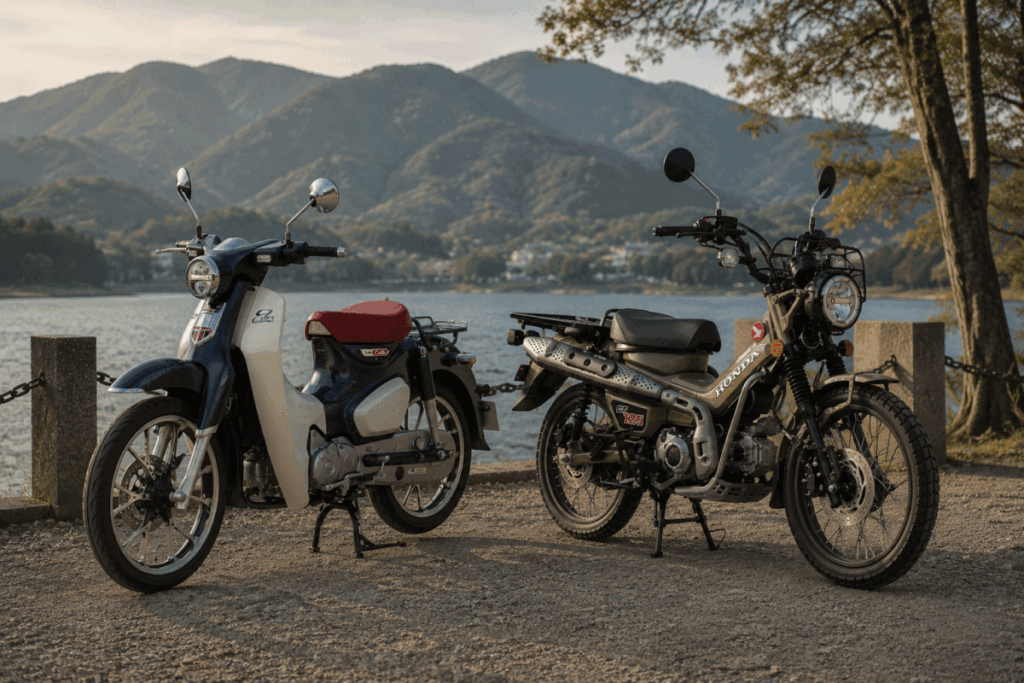
If you’ve seen a Super Cub before, the Hunter Cub will feel immediately recognizable. The underbone frame, the rounded headlight, the classic proportions — the family resemblance is unmistakable. But look closer and the differences start to emerge. The stance is higher. The tires are wider. The rear carrier is larger. And the exhaust pipe sits noticeably higher than you’d expect.
This is the Super Cub’s adventurous sibling. Same DNA, completely different purpose.
The CT125 launched in 2020 and landed at exactly the right moment. The global camping boom was already underway, outdoor lifestyle content was exploding across social media, and riders were looking for something that could do more than commute. The Hunter Cub answered all of those impulses at once — and the response was immediate. Supply shortages, waiting lists, and premiums over retail became part of the story in Japan and Korea within weeks of launch.
This review covers everything: the specs, the real-world riding experience, what makes the Hunter Cub genuinely different from the Super Cub, and who this bike is actually built for.
Honda CT125 Hunter Cub Specs: What You’re Actually Getting
Before getting into how it rides, here’s the full picture:
- Engine: 124cc single-cylinder 4-stroke air-cooled
- Power: 9.0 hp at 6,250 rpm
- Torque: 1.1 kg·m at 4,750 rpm
- Transmission: 4-speed automatic centrifugal clutch
- Fuel tank: 5.3 liters (1.4 gallons)
- Fuel economy: 63 km/L (148 mpg)
- Weight: 120 kg (265 lbs)
- Seat height: 800mm (31.5 inches)
- Tires front/rear: 80/90-17 / 80/90-17
- Brakes: Front single disc 220mm / Rear single disc 190mm
- ABS: Single channel
- Display: LCD
Two specs stand out immediately. The 5.3-liter fuel tank is significantly larger than the Super Cub C125’s 3.7 liters — a deliberate choice for a bike designed around longer adventure rides. And the 800mm seat height is the tallest in Honda’s mini bike lineup, reflecting the Hunter Cub’s more upright, trail-ready posture.
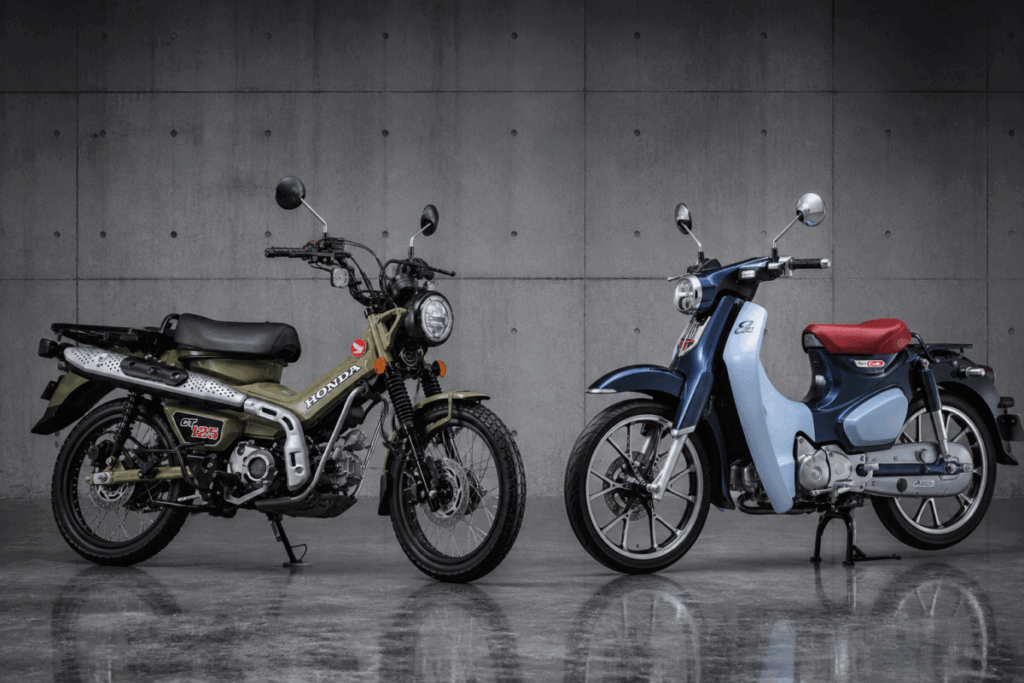
Honda CT125 Hunter Cub vs Super Cub C125 — Spec Comparison:
|
Spec |
CT125 |
C125 |
|
Displacement |
124cc |
124cc |
|
Power |
9.0 hp /6,250 rpm |
9.8 hp / 7,500 rpm |
|
Weight |
120kg |
110kg |
|
Tires front/rear |
80/90-17 80/90-17 |
70/90-17 80/90-17 |
|
Fuel economy |
63km/L |
70km/L |
|
Fuel tank |
5.3L |
3.7L |
|
Transmission |
4-speed auto clutch |
4-speed auto clutch |
|
ABS |
Single channel |
Single channel |
|
Smart key |
X |
0 |
|
Seat height |
800mm |
780mm |
The comparison reveals something interesting. The Super Cub C125 wins on power (9.8 hp vs 9.0 hp), weight (110 kg vs 120 kg), and fuel economy (70 km/L vs 63 km/L). But the Hunter Cub has a significantly larger fuel tank (5.3L vs 3.7L), wider front tires (80/90-17 vs 70/90-17), and a higher ground clearance designed for off-pavement use. Each bike is optimized for its own purpose — and the differences reflect exactly that.
Honda CT125 History: From the CT70 to the Hunter Cub
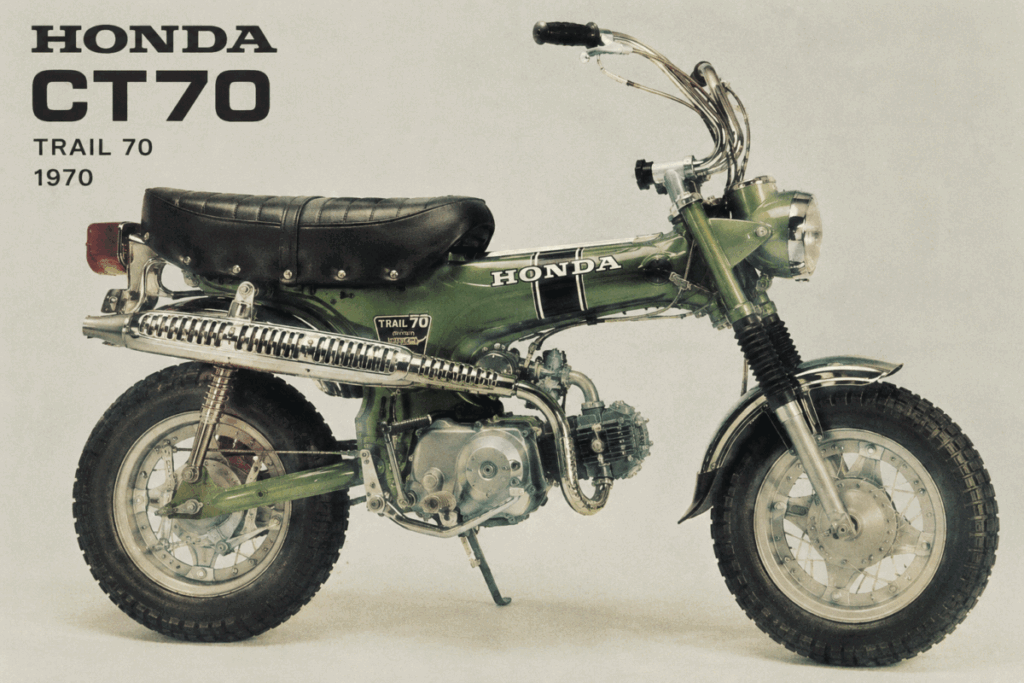
The Hunter Cub didn’t appear from nowhere. It has a heritage that stretches back to 1971.
The original CT70 and CT90 were Honda’s answer to a specific question: what if the Super Cub’s reliability and ease of use were combined with genuine off-road capability? The result was a series of trail bikes that found a devoted following in North America, where they were used for everything from farm work to camping to light trail riding. The CT series became classics — bikes that riders kept running for decades and that collectors still seek out today.
The original CT series was eventually discontinued, and for many years it existed only in memory and in the hands of enthusiasts who kept aging examples running.
In 2020, Honda brought it back as the CT125 Hunter Cub — a complete redesign that honored the original’s trail-ready ethos while replacing every mechanical component with modern hardware. PGM-FI fuel injection, ABS, LED lighting, and a refined version of the automatic centrifugal clutch transmission. The look referenced 1971. The engineering was entirely new.
The timing couldn’t have been better. The global camping and outdoor lifestyle movement was accelerating, and the Hunter Cub arrived as a perfect physical expression of that culture. It sold out immediately in multiple markets. The waiting lists were real.
What Makes the Hunter Cub Different: Adventure by Design
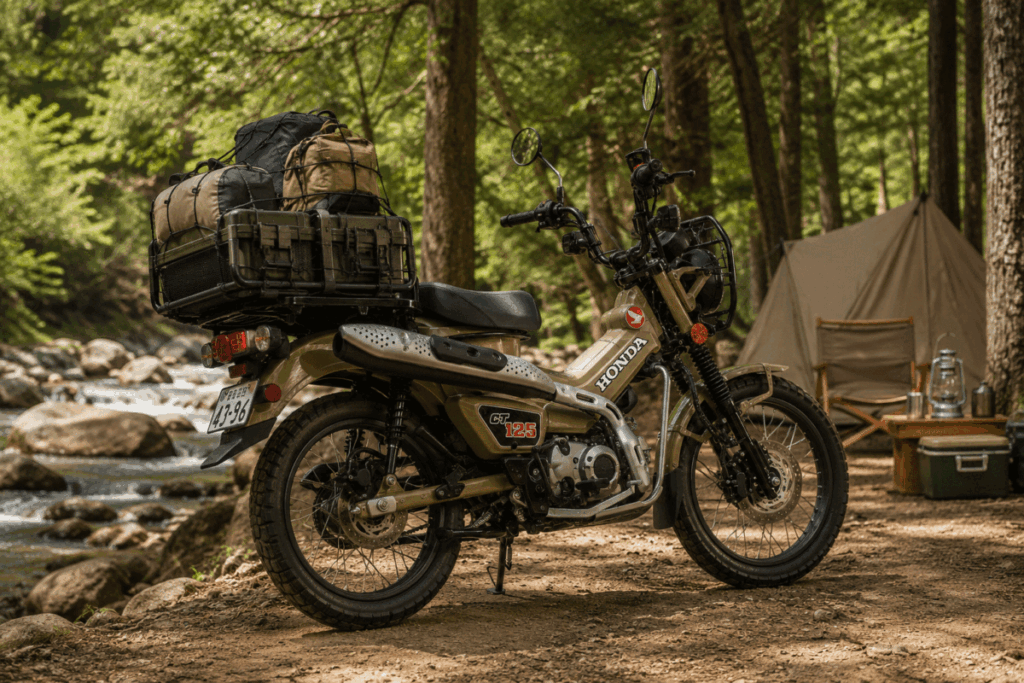
Understanding the Hunter Cub means understanding the specific design choices that separate it from its Super Cub sibling.
Large rear carrier — standard equipment
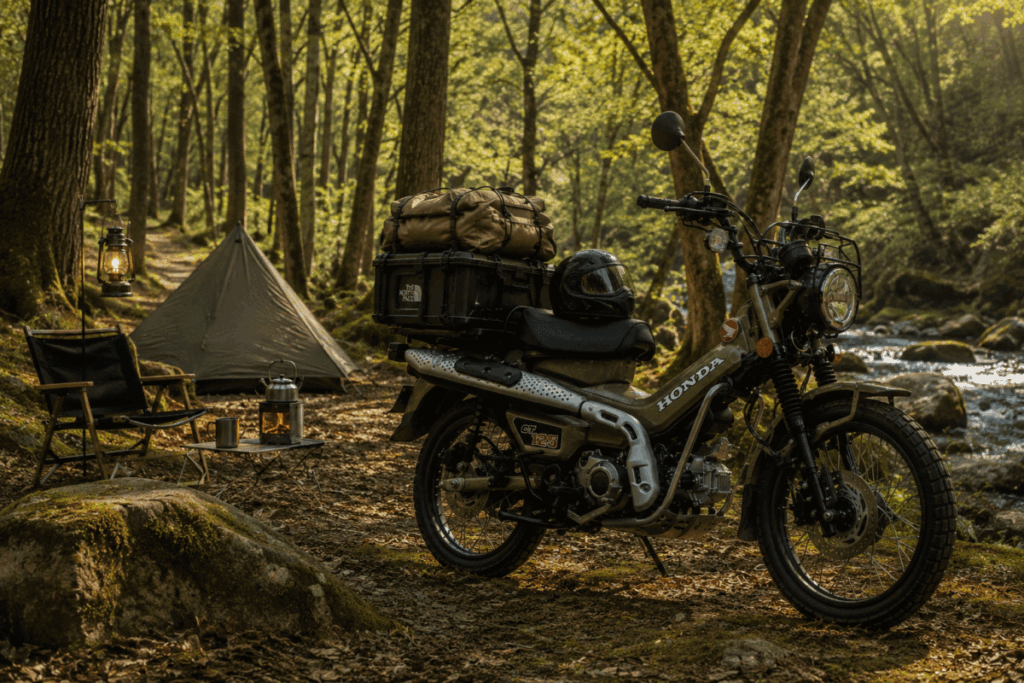
The Hunter Cub ships with a substantial rear carrier as standard. Not an optional accessory — it’s part of the bike. Camping gear, a pack, a tent roll, a tool bag — the carrier handles real loads without complaint. The Super Cub C125 doesn’t offer this.
5.3-liter fuel tank
At 5.3 liters versus the Super Cub C125’s 3.7 liters, the Hunter Cub carries 43% more fuel. At its official economy figure of 63 km/L, that translates to approximately 330 km of range per fill — meaningful for a bike designed to take riders places that require actual fuel planning.
Wider tires front and rear
Both tires are 80/90-17, compared to the Super Cub C125’s narrower 70/90-17 front tire. The wider contact patch provides more traction on loose or unpaved surfaces — exactly where the Hunter Cub is designed to go.
High-mounted exhaust
The exhaust pipe sits noticeably higher than a standard Super Cub. This isn’t aesthetic — it’s functional. A higher exhaust is less vulnerable to water ingestion when crossing shallow streams or riding through standing water. It’s a detail that reveals the design intent clearly.
Active custom and accessory culture
The Hunter Cub has developed a thriving global community of riders who modify and accessorize their bikes for adventure use. Top boxes, panniers, hand guards, skid plates, rally-style navigation mounts — the aftermarket is well-developed and continues to grow. Building a personalized adventure setup is a significant part of Hunter Cub ownership for many riders.
What It’s Like to Ride: Real-World Impressions
In the City
The Hunter Cub is a capable urban commuter, though not the most optimized one in Honda’s lineup.
The 4-speed automatic centrifugal clutch — the same transmission concept used across the Super Cub family — makes city riding genuinely effortless. No clutch lever means both hands stay focused on steering and braking. In traffic, at low speeds, in tight spaces — the Hunter Cub handles all of it without demanding attention from the rider.
The trade-offs versus the Super Cub C125 are real but manageable. At 120 kg, the Hunter Cub is 10 kg heavier. The 800mm seat height is 20mm taller. Neither is a serious obstacle for most riders, but both are worth knowing before purchase. Shorter riders should sit on the bike before committing.
On Unpaved Roads
This is where the Hunter Cub earns its name.
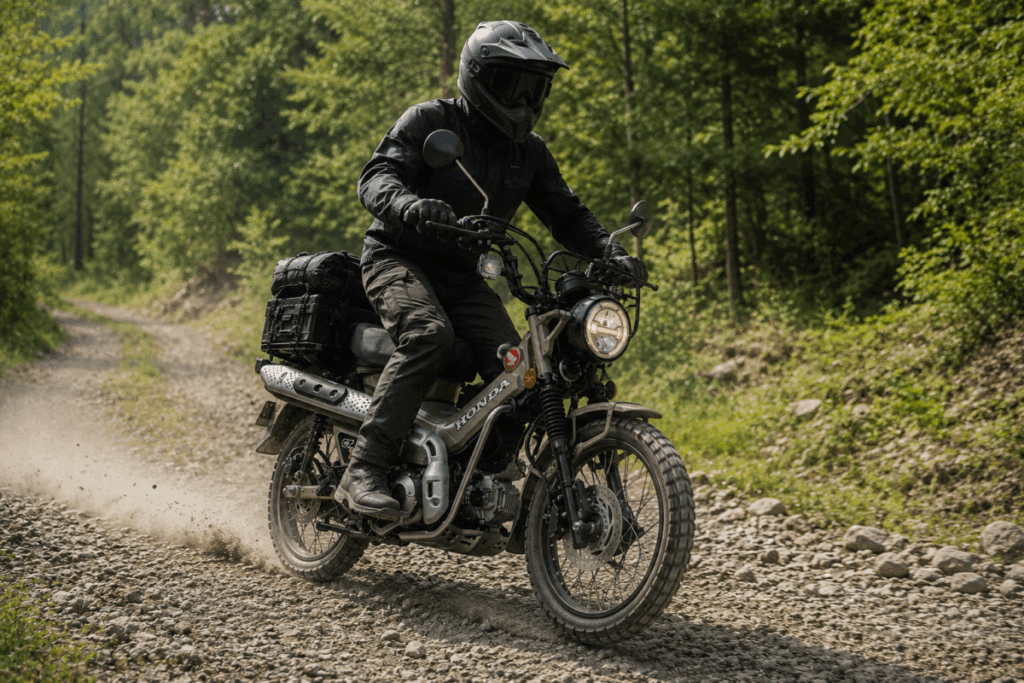
The wider 80/90-17 tires, higher ground clearance, and high-mounted exhaust combine to give the Hunter Cub genuine capability on surfaces that would give the Super Cub pause. Gravel tracks, forest trails, unpaved campsite approach roads, loose dirt — the Hunter Cub handles these with composure and confidence.
It is not a dirt bike. It is not designed for deep mud, serious rock sections, or aggressive trail riding. But the gap between what the Hunter Cub can handle and what a standard commuter can handle is significant and practically useful. For the rider whose weekends involve reaching campsites that aren’t fully paved to the front gate, the difference matters.
On the Highway
The Hunter Cub is comfortable at highway speeds and capable of sustained cruising up to approximately 100 km/h. The 9.0 hp engine isn’t strained at these speeds, and the wider tires provide stability that smaller-wheeled mini bikes don’t always offer at higher speeds.
Note: Highway access for motorcycles varies by country and local regulation. Always confirm the rules in your region before riding on motorways.
Fuel Economy and Range
The official fuel economy figure is 63 km/L (148 mpg). Combined with the 5.3-liter tank, the Hunter Cub delivers approximately 330 km of range per fill under normal riding conditions.
For context: the Super Cub C125 returns better economy at 70 km/L, but its 3.7-liter tank limits range to around 260 km. On an extended adventure ride, the Hunter Cub’s larger tank is the more practical choice despite the lower per-liter efficiency.
Honest Pros and Cons
What Works
Super Cub reliability in an adventure package
The Hunter Cub inherits Honda’s most proven small-bike platform and wraps it in hardware designed for more demanding use. The fundamental reliability that has made the Super Cub family legendary is fully present.
The largest fuel tank in Honda’s mini bike lineup
At 5.3 liters, the Hunter Cub carries significantly more fuel than any of its siblings. For riders who cover real distances on weekend trips, this is a genuinely practical advantage.
A rear carrier that’s actually useful
Standard-fit, substantial, and load-rated for real gear. This isn’t a styling detail — it’s functional equipment.
A design that works as hard as it looks
Every element of the Hunter Cub’s appearance that suggests adventure capability — the high exhaust, the wide tires, the upright stance — reflects actual engineering choices made for actual off-pavement use.
An active global community
The Hunter Cub has attracted a dedicated international following of adventure-oriented riders and builders. Information, parts, and inspiration are easy to find.
What Doesn’t Work
The tallest seat height in Honda’s mini bike lineup
At 800mm, shorter riders will find the Hunter Cub more challenging to manage than the Super Cub C125 (780mm) or the Grom (761mm). Always check fit before purchasing.
Heavier than the Super Cub C125
At 120 kg versus the Super Cub C125’s 110 kg, the Hunter Cub is noticeably heavier. In tight urban spaces or when maneuvering at low speeds, the difference is felt.
Lower power and fuel economy than the Super Cub C125
The Super Cub C125 produces 9.8 hp versus the Hunter Cub’s 9.0 hp and returns 70 km/L versus 63 km/L. For pure urban commuting efficiency, the Super Cub wins.
No smart key system
The Super Cub C125 includes Honda’s smart key system as standard. The Hunter Cub doesn’t. A minor point, but worth noting for buyers who value the feature.
Who Should Buy the Honda CT125 Hunter Cub
The Hunter Cub is a strong fit if you:
- Ride to campsites and want a bike that handles unpaved approach roads
- Take weekend trips and want the range that a larger fuel tank provides
- Want a functional rear carrier as standard equipment
- Are drawn to the adventure aesthetic and the outdoor riding community
- Want a platform with strong aftermarket support for adventure accessories
The Hunter Cub is probably not the right fit if you:
- Commute primarily in dense urban traffic and want the lightest, most efficient option
- Are shorter and find the 800mm seat height difficult to manage
- Want serious off-road capability beyond light trail use
- Are looking for the best power and fuel economy figures in the class
Honda CT125 Hunter Cub vs Super Cub C125: Which One Should You Buy?
Same engine family. Same automatic centrifugal clutch. Same Honda reliability. But these two bikes are built for fundamentally different riders.
The Super Cub C125 is optimized for efficiency. Lighter at 110 kg, more powerful at 9.8 hp, more economical at 70 km/L, and equipped with a smart key system. It’s the right choice for daily commuters who want Honda’s best-refined urban transportation solution.
The Hunter Cub is optimized for adventure. Heavier and less efficient, but with a 5.3-liter tank for genuine range, a standard rear carrier for real loads, wider tires for unpaved surfaces, and a high exhaust for water crossings. It’s the right choice for riders whose weekends involve going somewhere — specifically somewhere that requires a bit more motorcycle than a commuter provides.
If your bike mostly sees city streets, the Super Cub C125 is the more sensible choice. If your weekends involve campsites, mountain roads, and destinations that aren’t fully paved — the Hunter Cub was built for exactly that.
For the complete story of the Super Cub family, read: The Honda Super Cub: How a 50cc Bike Became the World’s Best-Selling Vehicle of All Time
Verdict: The Super Cub, Evolved for Adventure
The Honda CT125 Hunter Cub review comes down to this: Honda took the most reliable small motorcycle platform ever built and asked what it would look like if it were designed for adventure rather than commuting.
The answer is the Hunter Cub. A 5.3-liter tank that outlasts the Super Cub C125’s on long rides. A rear carrier that carries real gear. Wider tires that handle surfaces the Super Cub wasn’t designed for. A high exhaust that handles water the Super Cub would avoid.
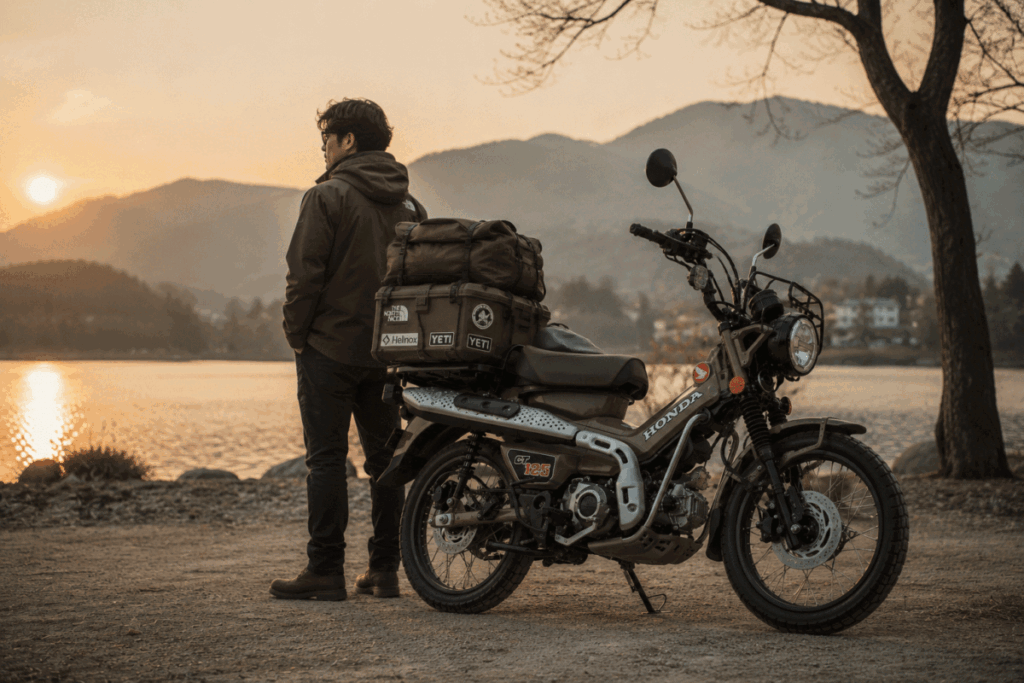
It’s not the fastest bike. It’s not the lightest. It’s not built for serious off-road use. But for the rider who wants to load up on a Friday evening and wake up somewhere interesting on Saturday morning — somewhere that required a bike that could handle a bit of unpaved road to get there — the Hunter Cub is one of the most capable and characterful small motorcycles available at any price.
The Super Cub built a legacy on reliability. The Hunter Cub extends that legacy into adventure.
Choosing a helmet for your Hunter Cub? Start here: How to Choose a Motorcycle Helmet: A Beginner’s Guide
For official Honda CT125 specifications, visit the Honda Global Newsroom