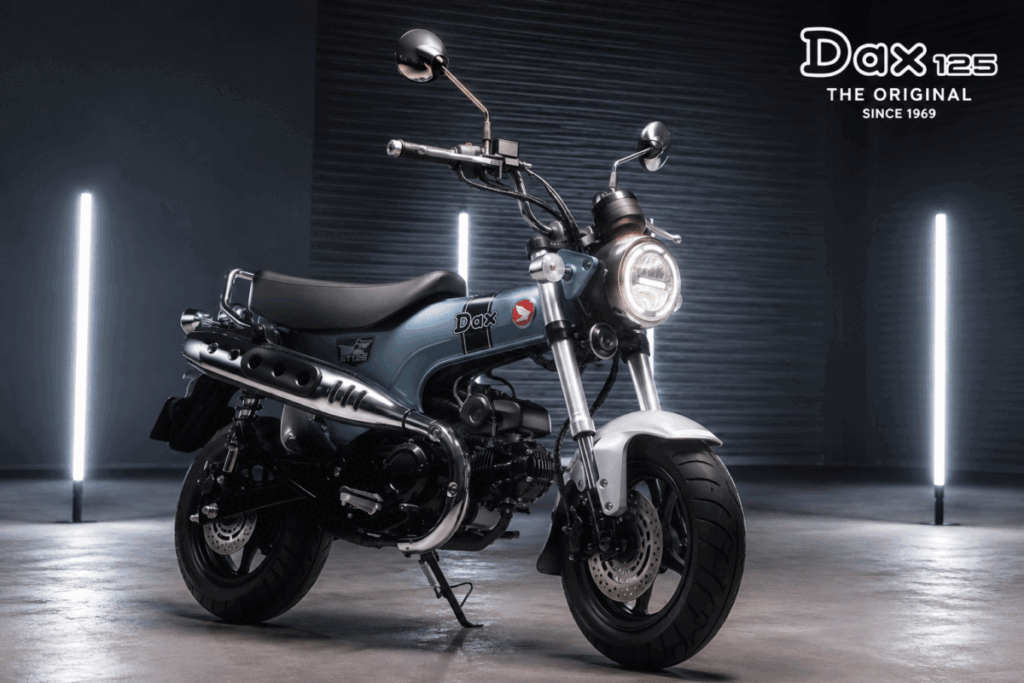
The Honda Dax 125 review starts with a frame.
Not the riding experience. Not the specs. The frame.
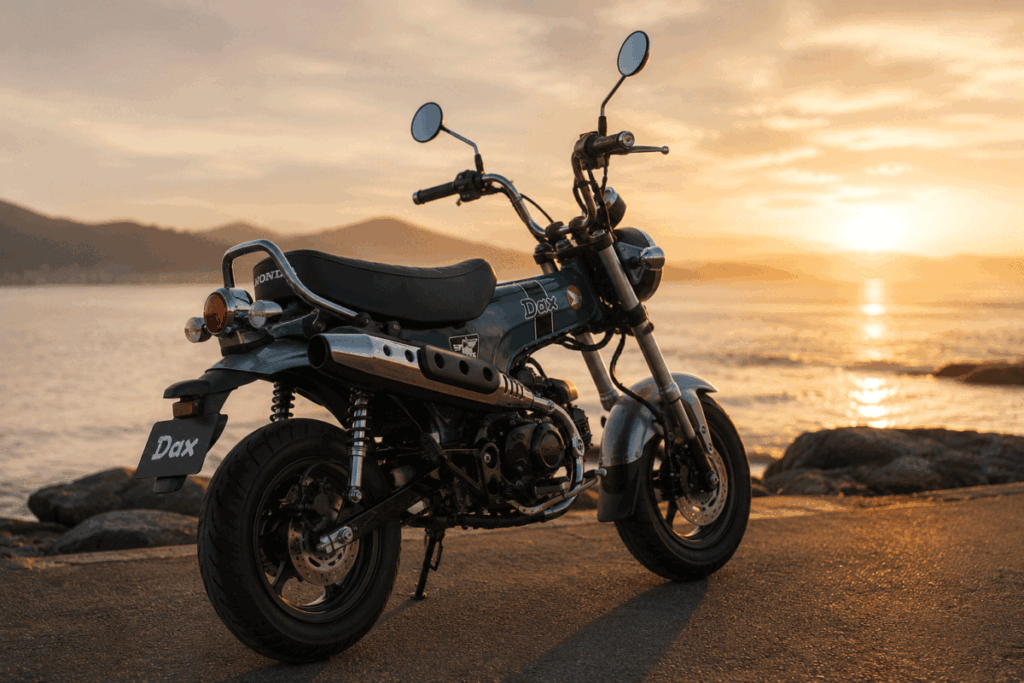
Because the first thing anyone notices about the Dax 125 — before the round headlight, before the low stance, before anything else — is that thick steel backbone running from the headstock all the way to the rear of the bike. It’s bold. It’s unmistakable. And it’s been the defining visual identity of the Dax since 1969.
The Dax 125 is the third member of Honda’s modern mini bike trilogy, alongside the Grom and the Monkey 125. All three share similar displacement, similar wheel sizes, and similar urban positioning. But the Dax brings something the other two don’t: a design heritage that stretches back over five decades, wrapped around an automatic transmission that makes it the most accessible of the three.
This review covers everything — the specs, the backbone frame, the riding experience, the honest drawbacks, and how the Dax 125 fits alongside its two siblings.
Honda Dax 125 Specs: What You’re Actually Getting
Before getting into how it rides, here’s what the Dax 125 brings to the table:
- Engine: 123cc single-cylinder 4-stroke SOHC
- Power: 9.3 hp
- Transmission: 4-speed semi-automatic (no clutch lever)
- Fuel tank: 3.8 liters (1.0 gallon)
- Weight: 107 kg (236 lbs)
- Seat height: 775mm (30.5 inches)
- Wheel size: 12 inches
The most immediately notable spec is the 4-speed semi-automatic transmission. Where the Grom and Monkey 125 both use a 5-speed manual with a clutch lever, the Dax 125 operates more like a Honda Super Cub — gear changes are made with the left foot, but there’s no clutch lever to operate. The transmission handles clutch engagement automatically.
This single difference shapes the entire ownership experience of the Dax 125.
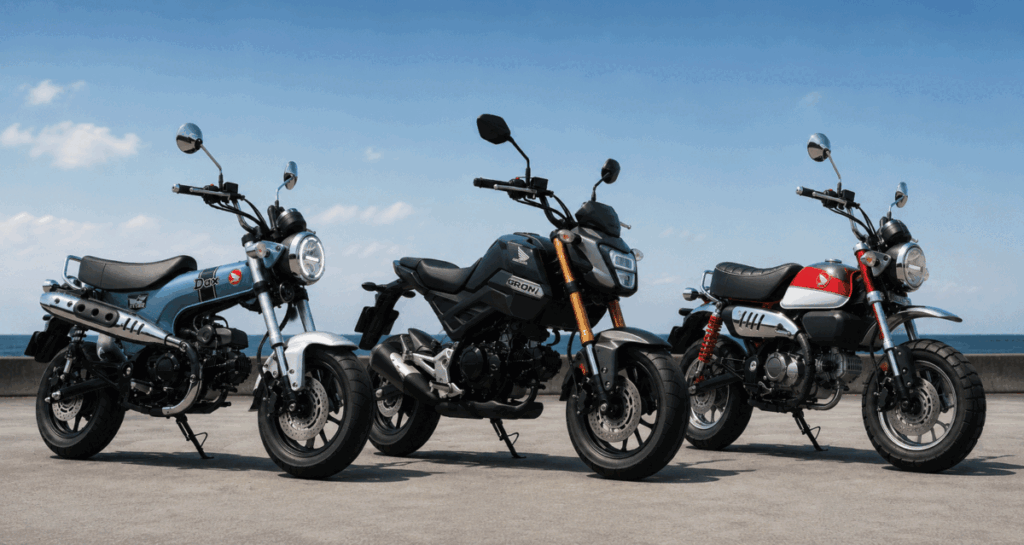
Three-Way Spec Comparison:
|
Spec |
Dax125 |
Grom |
Monkey125 |
|
Displacement |
123cc |
124cc |
124cc |
|
Power |
9.3hp |
9.7hp |
9.4hp |
|
Weight |
107kg |
104kg |
104kg |
|
Seat height |
775mm |
761mm |
775mm |
|
Wheel size |
12inches |
12inches |
12inches |
|
Transmission |
4-speed semi-auto |
5-speed manual |
5-speed manual |
|
Fuel tank |
3.8L |
6L |
5.6L |
The numbers are remarkably close across all three bikes. The differences that matter most aren’t in the specs — they’re in the character, the riding feel, and what each bike prioritizes.
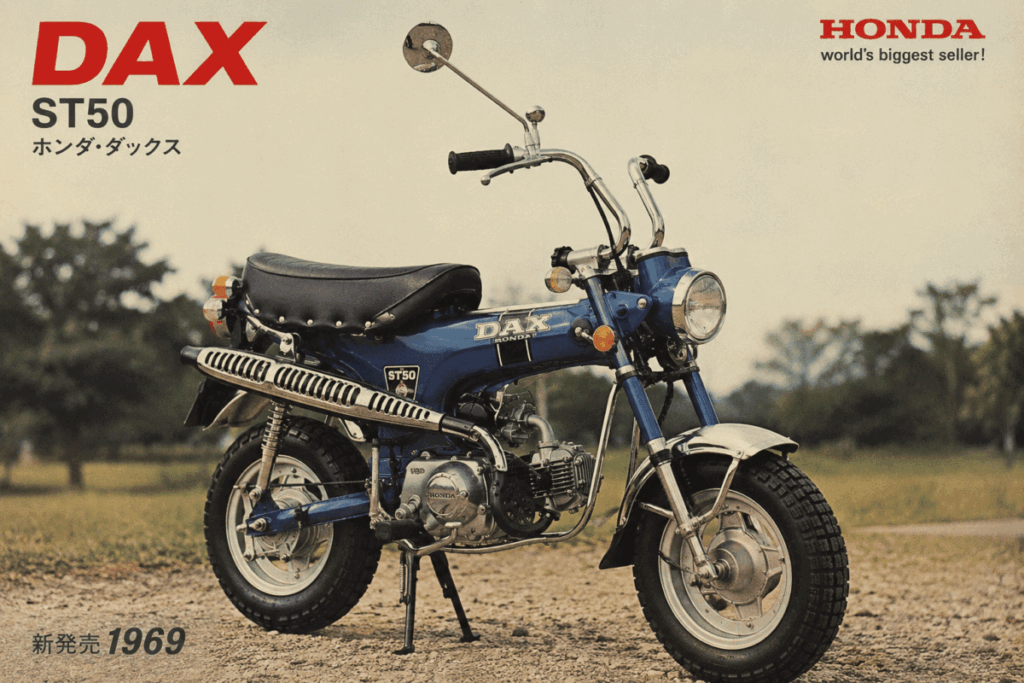
Honda Dax History: From 1969 to Today
The Honda Dax has one of the most distinctive origin stories in small motorcycle history.
The original Dax launched in 1969. The name came from the Dachshund — the long, low German dog breed whose proportions the bike’s designers apparently had in mind. In Japan it was sold as the ST50. In Europe and North America, it became the DAX — and it found an enthusiastic audience on both continents.
The original bike’s defining feature was its backbone frame. A single thick steel tube running the length of the motorcycle, serving as both structural spine and visual centerpiece. This wasn’t just an engineering choice — it became the Dax’s identity. Decades later, it still is.
The original Dax was eventually discontinued, and for many years it existed only in memories and in the hands of collectors and custom builders who kept the platform alive.
In 2022, Honda brought it back.
The new Dax 125 — officially the ST125 Dax — kept everything that made the original recognizable: the backbone frame, the low stance, the round headlight, the compact proportions. Everything mechanical was replaced with modern hardware: PGM-FI fuel injection, ABS, LED lighting, and a refined version of the semi-automatic transmission.
The response from the global retro motorcycle community was immediate. Honda had successfully translated a 1969 design into a 2022 motorcycle without losing what made it special.
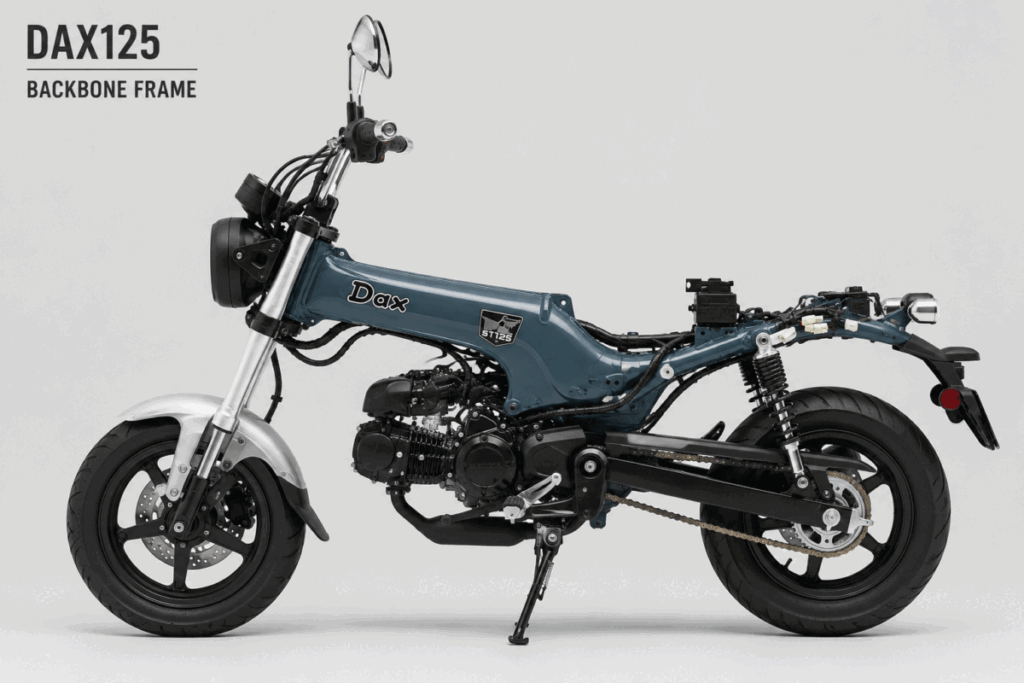
The Backbone Frame: What It Is and Why It Matters
No Honda Dax 125 review is complete without explaining the backbone frame — because it’s the feature that defines this bike more than any spec on the sheet.
A backbone frame is exactly what it sounds like: a single large-diameter steel tube running from the steering head to the rear of the motorcycle, forming the structural spine of the entire machine. The engine hangs below it. The fuel tank sits above it. Everything else connects to it.
On most motorcycles, the frame is largely hidden by bodywork. On the Dax 125, the backbone is the centerpiece. It’s exposed, it’s prominent, and it’s intentional.
What this creates:
A visual identity unlike any other mini bike
The Grom has its angular street-fighter stance. The Monkey 125 has its round-headlight retro charm. The Dax has its backbone — and that single element gives the bike a solidity and presence that photos don’t fully capture. In person, it reads as purposeful and architectural in a way that’s genuinely distinctive.
A canvas for customization
The exposed backbone has been a favorite starting point for custom builders since the original Dax. Chrome plating, custom paint, structural modifications — the frame itself becomes part of the build. This tradition continues with the Dax 125, and the custom scene around the new model has already produced some impressive results.
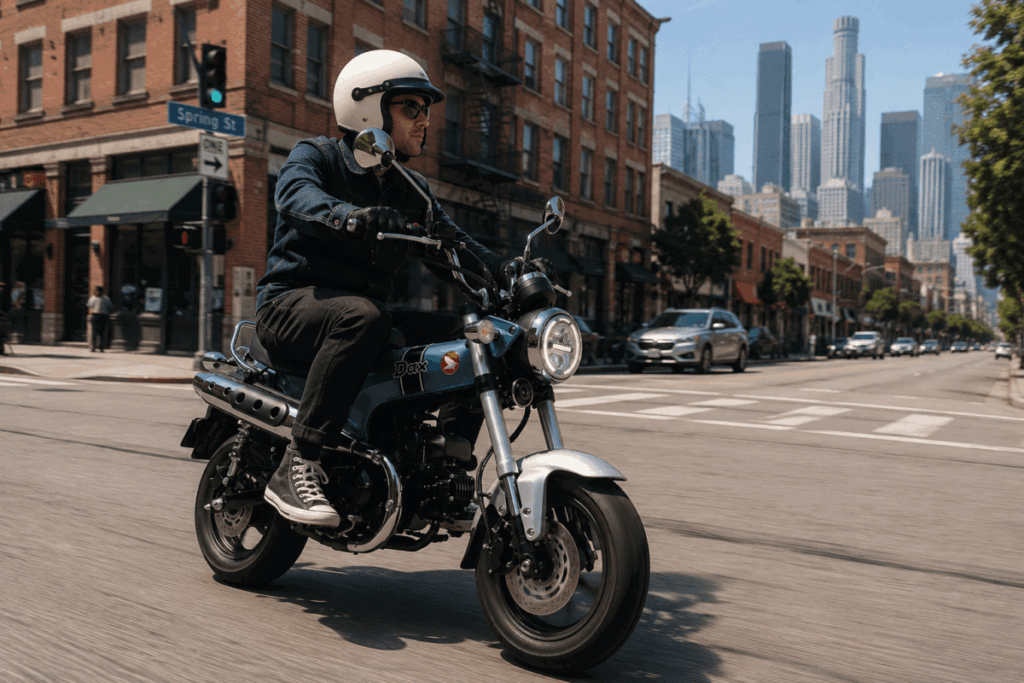
What It’s Like to Ride: Real-World Impressions
In the City
The Dax 125’s semi-automatic transmission transforms the urban riding experience.
Without a clutch lever, both hands stay focused on steering and braking. In stop-and-go traffic, at slow speeds through tight spaces, in situations where a manual clutch would require constant attention — the Dax simplifies all of it. Left foot shifts gears. Everything else is handled automatically.
This isn’t a compromise. It’s a deliberate design choice that makes the Dax 125 the most accessible of the three Honda mini bikes. Riders who are new to motorcycling, riders who find clutch operation stressful, and riders who simply want to focus on the experience rather than the mechanics will all find the Dax genuinely easy to live with from the first ride.
The 775mm seat height matches the Monkey 125 and sits above the Grom’s 761mm. Most average-height riders will have no difficulty, but shorter riders should sit on one before committing.
At urban speeds, the 12-inch wheels and compact chassis deliver the same lively, responsive character shared by all three bikes. The Dax feels planted and predictable — not as immediately sharp as the Grom, but composed and confidence-inspiring.
On the Highway
The Dax 125 has limitations at highway speeds that are worth understanding clearly.
The 123cc semi-automatic engine tops out at approximately 85–90 km/h (53–56 mph). Among the three Honda mini bikes, the Dax has the lowest top speed. At sustained highway speeds, the engine is working near its limit, and the small wheels become sensitive to crosswinds and surface changes.
The Dax is at its best below 80 km/h on urban and secondary roads. In that environment, it’s entirely comfortable and well-suited to the task. Highway use is possible but not what this motorcycle was designed for.
Note: Motorcycle highway access varies by country and local regulation. Always confirm the rules in your region before riding on motorways.
Fuel Economy and Range
Real-world fuel economy sits around 55–65 km/liter (130–153 mpg) — strong numbers that reflect the small, efficient engine.
The 3.8-liter (1.0-gallon) fuel tank is the Dax’s most significant practical limitation. At the fuel economy figures above, real-world range sits around 200–240 km (124–149 miles) per fill. Among the three Honda mini bikes, the Dax has by far the smallest tank — the Grom carries approximately 6 liters and the Monkey 125 carries 5.6 liters. For urban daily use this is rarely an issue. For longer rides, more frequent fuel stops are part of the ownership experience.

Honest Pros and Cons
What Works
The lowest barrier to entry of the three
No clutch lever means no clutch to learn. For new riders, returning riders, or anyone who finds manual clutch operation stressful, the Dax 125 is the most immediately accessible mini bike Honda makes.
A visual identity that stands completely alone
The backbone frame gives the Dax 125 a presence that neither the Grom nor the Monkey 125 can replicate. It looks purposeful, architectural, and genuinely classic in a way that photographs don’t fully convey.
Five decades of design heritage
The Dax 125 carries a lineage that started in 1969. For riders who connect with the history and culture of motorcycling, that heritage adds a dimension of ownership that newer designs simply don’t have.
ABS as standard
All versions of the Dax 125 include ABS — a meaningful safety addition, particularly for newer riders.
Comfortable ergonomics
The low, relaxed riding position suits urban commuting well and remains comfortable over longer distances compared to the more compact Grom ergonomics.
What Doesn’t Work
The smallest fuel tank of the three
At 3.8 liters, the Dax 125’s tank is significantly smaller than the Grom’s (~6L) and the Monkey 125’s (5.6L). Frequent fuel stops are a real consideration for riders who cover longer distances.
No manual clutch engagement
The semi-automatic transmission is the Dax’s most accessible feature — and also the one that will disappoint riders who specifically want the engagement of a manual gearbox. If clutch control and gear selection are part of what you enjoy about riding, the Dax doesn’t offer that.
Lower top speed than its siblings
At approximately 85–90 km/h, the Dax is the slowest of the three. Not a problem for urban use, but worth knowing if speed matters to you.
Smaller custom ecosystem than the Grom
The Grom aftermarket is one of the most developed of any small motorcycle in the world. The Dax custom scene, while active, doesn’t match that scale. Riders who want maximum customization potential will find more options around the Grom platform.
Who Should Buy the Honda Dax 125
The Dax 125 is a strong fit if you:
- Are new to motorcycling and want the most accessible entry point
- Want a retro aesthetic that goes beyond the Monkey 125’s charm
- Are drawn to the backbone frame’s visual identity specifically
- Prefer not to operate a manual clutch
- Ride primarily in urban environments on shorter daily trips
The Dax 125 is probably not the right fit if you:
- Want the engagement of a manual gearbox
- Cover long distances regularly and want a larger fuel tank
- Are looking for the deepest custom ecosystem available
- Need higher sustained speeds for regular highway riding
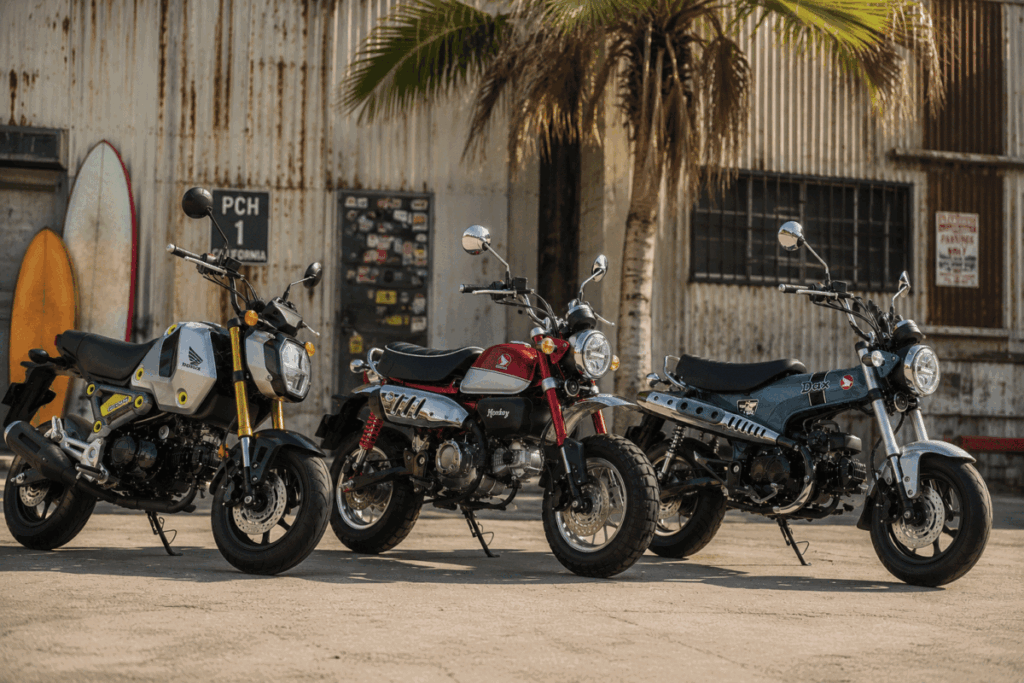
Honda Dax 125 vs Grom vs Monkey 125: Which One Should You Buy?
All three bikes share Honda’s 12-inch mini bike platform. All three are designed for urban use. All three have genuine appeal. The decision comes down to what you’re actually looking for.
Choose the Grom if:
You want maximum riding engagement and the deepest custom potential available. The Grom’s 12-inch wheels create a handling character that’s uniquely sharp and immediate, and the global aftermarket ecosystem around the platform is unmatched at this price point. It’s the choice for riders who want to ride hard and build harder.
Choose the Monkey 125 if:
You want the most complete and refined package. Inverted forks, front and rear disc brakes, ABS, and the most balanced riding character of the three. The Monkey 125 is the choice for riders who value overall quality and the classic round-headlight aesthetic above everything else.
Choose the Dax 125 if:
You want the strongest retro identity and the most accessible riding experience. The backbone frame is unique, the semi-automatic transmission removes the clutch learning curve entirely, and the Dax carries a heritage that neither sibling can match. It’s the choice for riders who connect most with classic motorcycle aesthetics and want the easiest possible entry into mini bike ownership.
For a complete look at the Grom, read: Honda Grom Review: The Small Bike That Refuses to Be Ignored
For a complete look at the Monkey 125, read: Honda Monkey 125 Review: More Than Just a Cute Bike
Verdict: The Most Classic of Honda’s Mini Bike Trio
The Honda Dax 125 review conclusion is straightforward.
This is not the fastest of the three Honda mini bikes. It doesn’t have the largest fuel tank. Its custom ecosystem doesn’t match the Grom’s.
What it has is a backbone frame that’s been turning heads since 1969, a semi-automatic transmission that genuinely removes barriers to entry, and a design heritage that neither sibling can claim. In person, it carries a presence that specs don’t convey — solid, architectural, and unmistakably classic.
For riders who want the most accessible Honda mini bike with the strongest retro identity, the Dax 125 delivers exactly that.
The backbone has been there since 1969. It’s not going anywhere.
Choosing a helmet for your Dax 125? Start here: How to Choose a Motorcycle Helmet: A Beginner’s Guide
For official Honda Dax 125 specifications, visit the Honda Global Newsroom