QJ Motor is showing up in more and more rider forums lately, and it’s easy to glance at the name and think “another Chinese bike” before scrolling on. But once you dig into what this company actually is, that quick dismissal gets a lot harder to justify. In this QJ Motor review we’ll break down what the brand really is, why it’s suddenly everywhere, and — most importantly — what you should check before you buy one.
Before we get into it, a quick note on approach: a lot of the early buzz around QJ Motor traces back to importer press releases. So rather than hyping the brand, this piece separates verifiable fact from marketing message.
Why QJ Motor Is Suddenly Getting Attention
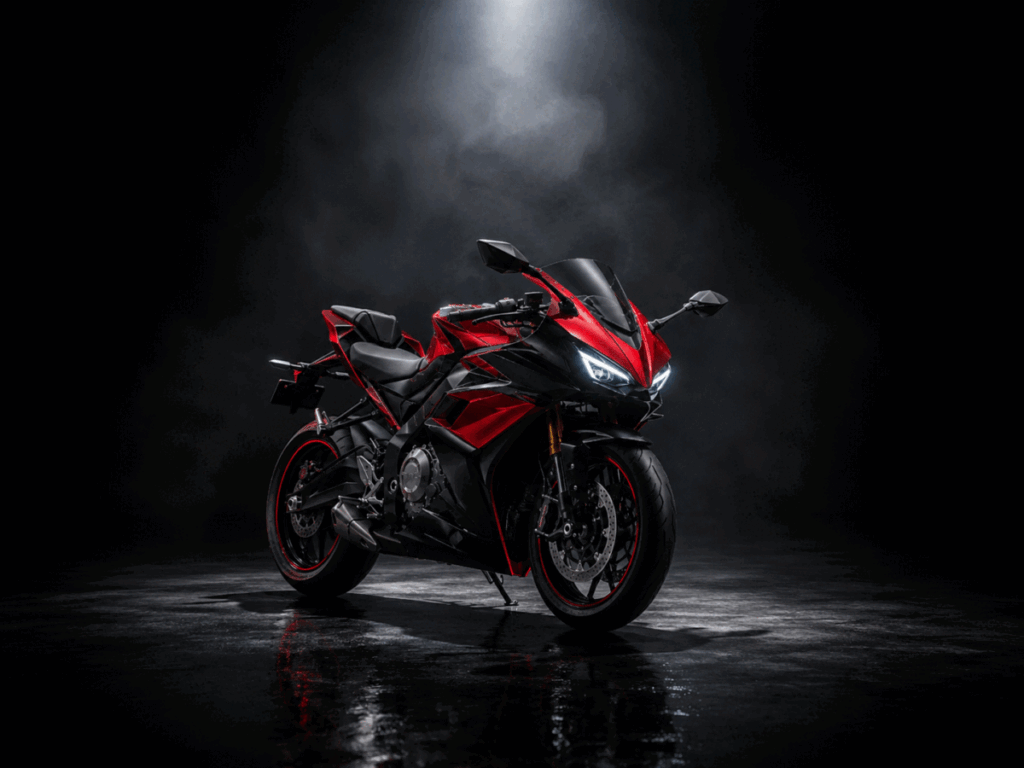
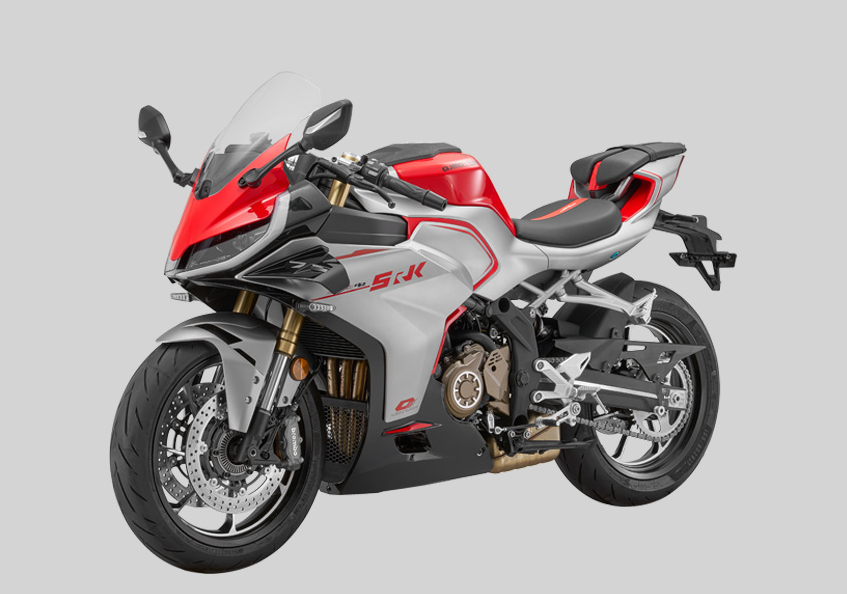
The short answer is price. The bike putting QJ Motor on the map is the SRK421RR, a 421cc four-cylinder sportbike. A four-cylinder engine is genuinely rare in this displacement class, and the pricing is aggressive — that combination had riders talking before the bike even reached showrooms.
But it’s worth stepping back here. Much of the early demand data comes from importer announcements, so it’s better read as a signal of early interest than as independently verified sales.
QJ Motor and Geely: The Volvo, Polestar, and Lotus Connection
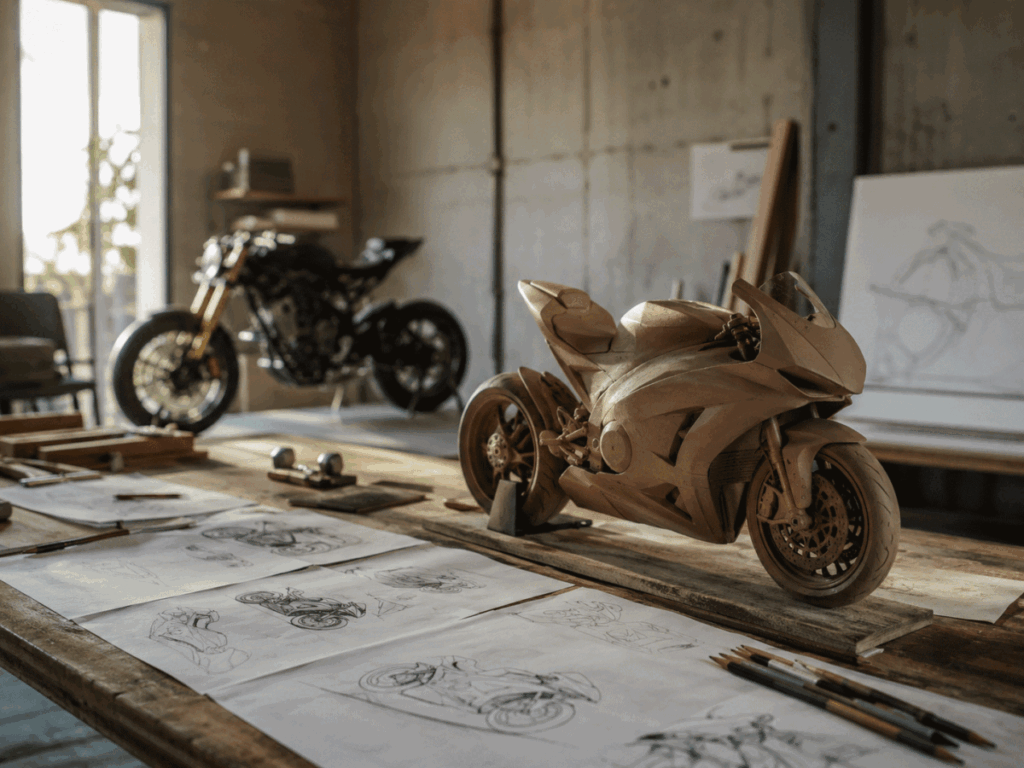
Let’s start with the line you’ll hear most often: “QJ Motor is basically part of Volvo’s family.” Half true, half oversimplified.
The brand’s actual parent is Qianjiang Motorcycle Group, founded in 1985 in Zhejiang, China. In September 2016, the automotive group Geely became its majority shareholder, which is how today’s structure came to be. So the QJ Motor brand wasn’t created in 1985 — its roots (Qianjiang) date to 1985, and QJMOTOR is the more recent global brand name built on top of that. You can confirm this history on the brand’s own official global site.
Geely is the conglomerate that has acquired or holds controlling stakes in Volvo, Polestar, and Lotus. So the accurate framing is this: QJ Motor is a two-wheeler brand inside the Geely ecosystem, and Volvo, Polestar, and Lotus sit in that same ecosystem. It’s not “the same company as Volvo” — it’s “under the same corporate umbrella.”
That distinction matters. Volvo’s quality doesn’t automatically transfer. But the capital strength of a group that grew Volvo into a global premium player sitting behind the motorcycle business is a different situation from an unknown startup. The name may be new to you; the backing isn’t a newcomer’s.
How Benelli Fits Into the QJ Motor Story
📷 [이미지 — 선택] 이탈리아 디자인 스튜디오 컷
alt: QJ Motor and Benelli Italian motorcycle design connection
Go one step deeper and you hit Benelli, the storied Italian marque with over a century of history — which now shares roots with QJ Motor too.
Here’s the accurate order of events: Benelli was acquired by Qianjiang Group in 2005 after years of financial trouble; Qianjiang then entered the Geely ecosystem in 2016. So today Benelli shares the same parent (Qianjiang) as QJ Motor. Rather than “Benelli is also Geely family,” the precise picture is: Benelli sits under Qianjiang, and Qianjiang sits inside Geely.
The operating model is the interesting part. Benelli still does design and R&D in Pesaro, Italy, while production happens in China — Italian design sensibility plus Chinese manufacturing scale. QJ Motor shares that production base and know-how. That’s exactly why “Chinese-made” is an awkward single label to pin on it.
Why QJ Motor Leans So Hard on Racing
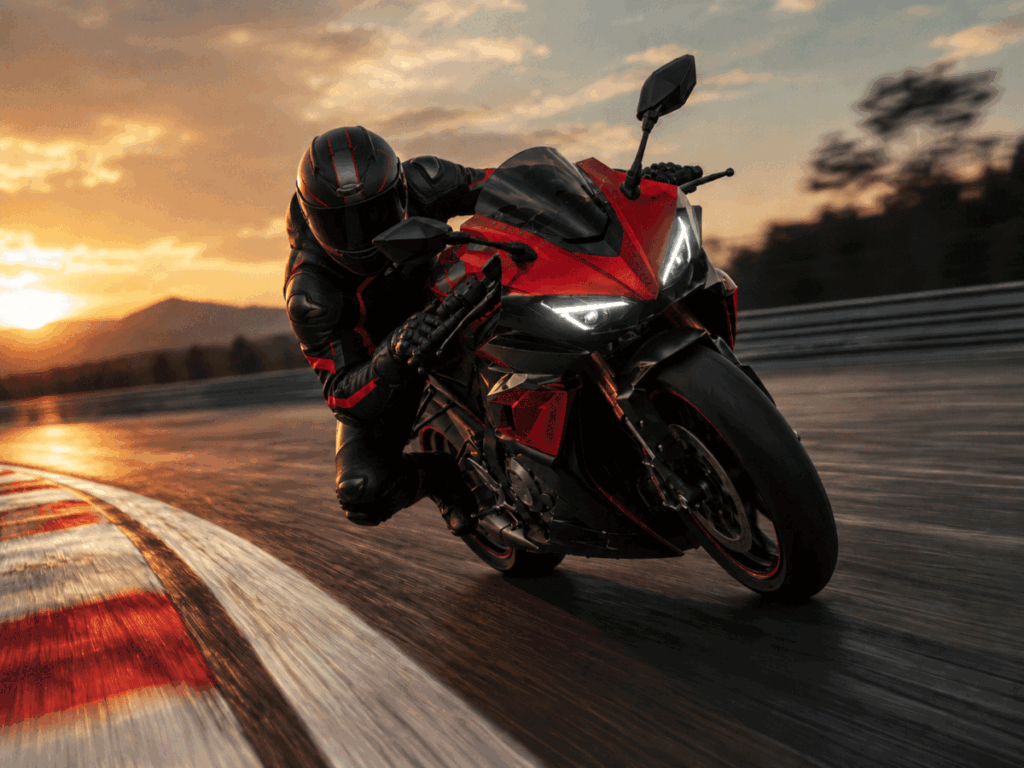
QJ Motor makes a point of using team sponsorships and brand visibility on the global racing stage, pushing to be seen as a global performance brand rather than a domestic-only player.
Be honest about what that means, though: racing sponsorship does not guarantee production-bike quality. Track visibility and the durability of a factory unit are two separate things. But the move signals a company that has no intention of staying a cheap domestic brand — and where a company spends its money tends to tell you where it’s trying to go.
The QJ Motor SRK421RR: The Model That Started It All
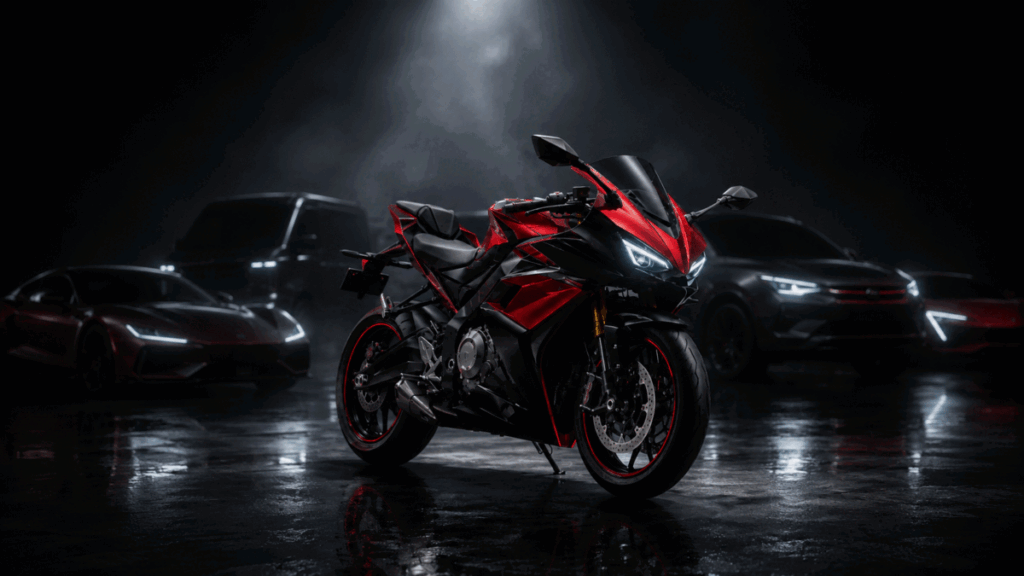
The SRK421RR is QJ Motor’s headline model, and early demand — at least on the surface — has been strong in markets where it’s launched, with reports of initial allocations selling out fast. Just remember those figures mostly originate from importer announcements, so take them as an indicator of early interest rather than verified demand.
Why the 421cc Four-Cylinder Engine Is the Hook
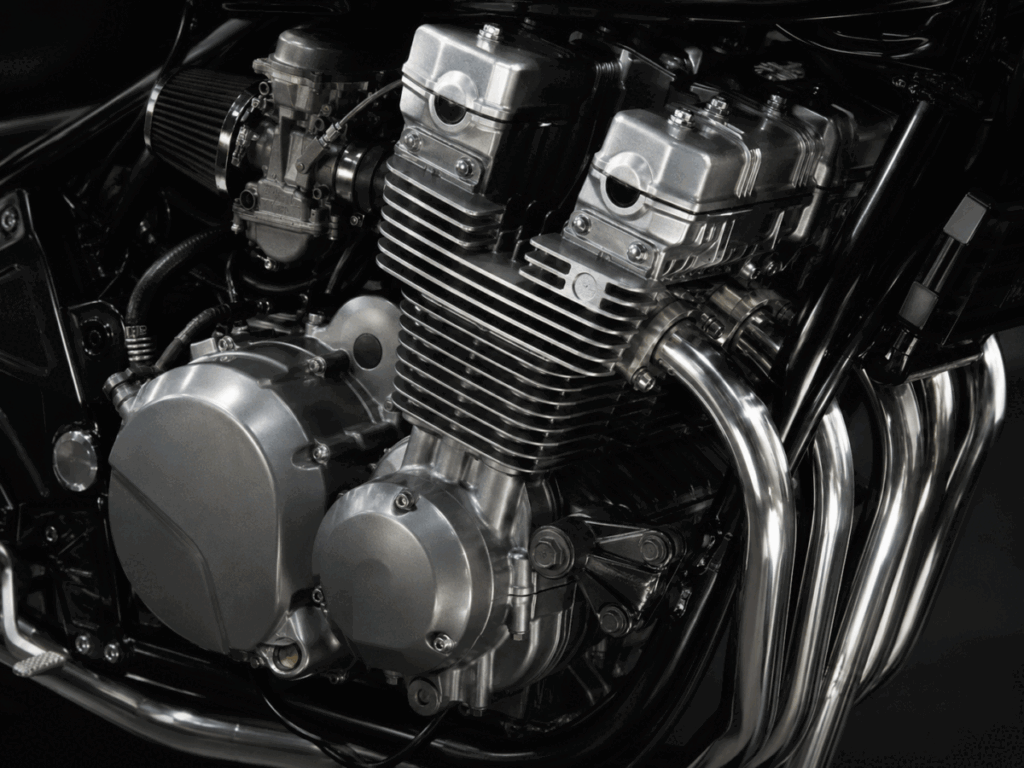
The core of this bike is 421cc paired with four cylinders. Most bikes in this range run a single or a twin, so a four is uncommon. On the official overseas spec sheet, it’s a liquid-cooled 421cc inline-four, 16-valve DOHC engine making roughly 77.5 hp and revving to 14,000 rpm — a genuinely high-revving character. That four-cylinder sound and smooth delivery in this class is the real draw.
(For the record: people sometimes call this a “quarter-class” bike out of habit, but quarter-class strictly means 250cc, so 421cc sits closer to a middleweight-entry position.)
The Price Gap vs. the Kawasaki ZX-4RR
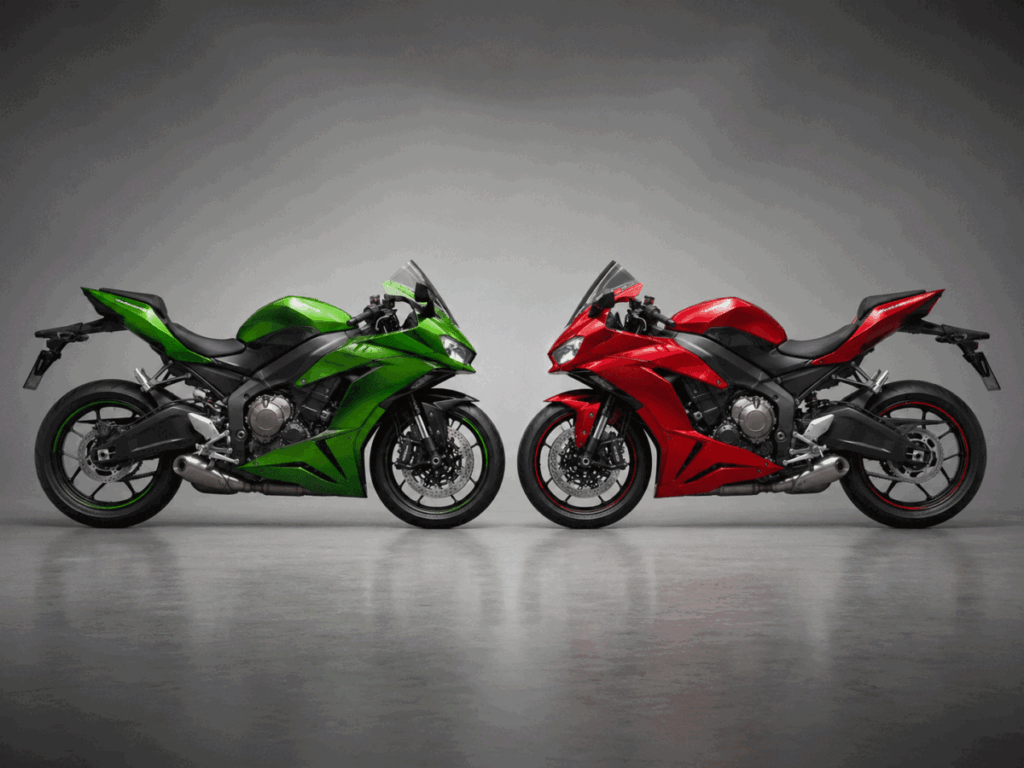
This is where the real story is. The SRK421RR’s natural — and in many markets essentially only — rival in the small four-cylinder class is the Kawasaki Ninja ZX-4RR. In markets where both sell, the QJ comes in at roughly half to two-thirds the Kawasaki’s price. Exact figures vary by market, but the gap is large and consistent.
That gap is the whole point. Before you even reach authenticity or heritage, a price difference that big makes almost anyone pause — even riders who distrust Chinese-built bikes. It puts Kawasaki, a brand built on single-minded performance, in the unusual position of facing a roughly half-price rival in its own niche. (For more on that brand’s performance-only philosophy, see our earlier piece on Kawasaki.)
The QJ Motor SRV300A: An Auto-Shift Cruiser for New Riders
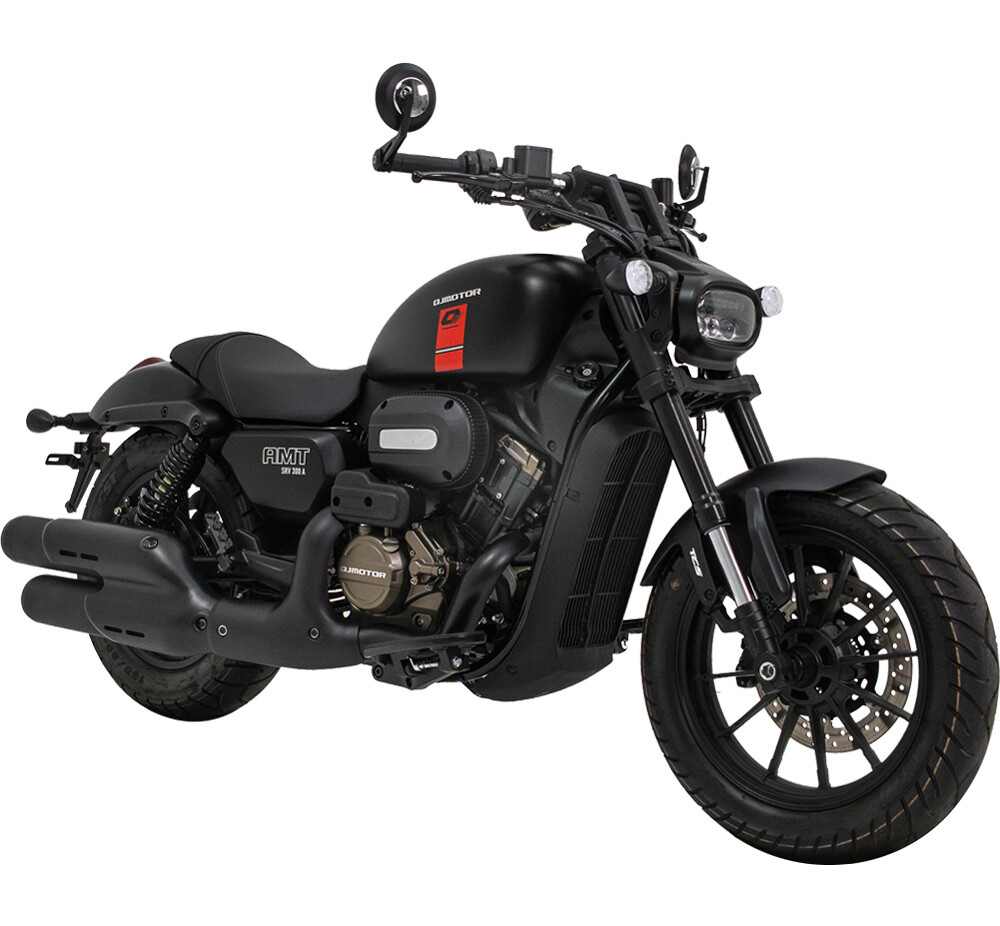
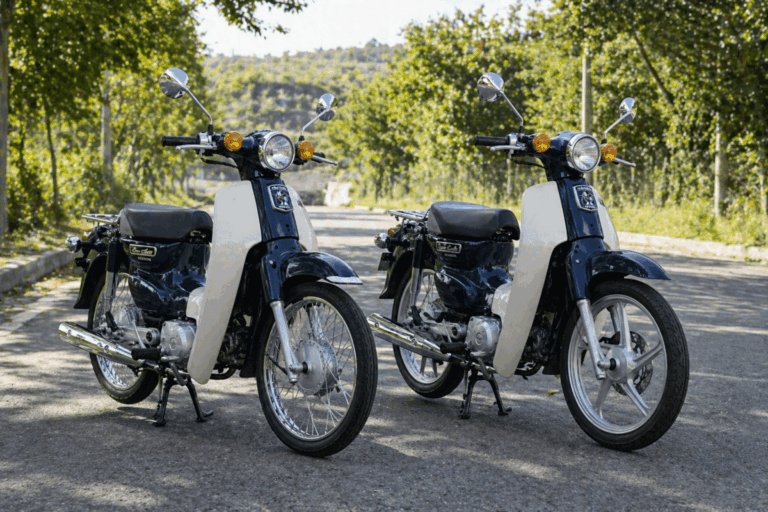
QJ Motor’s second model, the SRV300A, plays a completely different game. It’s a 296cc liquid-cooled V-twin cruiser with a 6-speed AMT (automated manual transmission) that switches between automatic (D mode) and manual (M mode, via paddle shift).
The pitch is a small-displacement automatic V-twin cruiser. For newer riders intimidated by clutch work, automatic mode lowers the barrier; for those who want involvement, manual mode is there. For people who hold a license but have been putting off riding because manual operation scares them, it’s a sensible on-ramp.
What to Check Before You Buy a QJ Motor
Here’s where the real judgment starts. With QJ Motor, what matters most isn’t the launch-day impression — it’s where you stand one or two years later.
Parts Availability
The chronic weak spot for any foreign brand, especially a new entrant, is consumables and parts supply. From oil filters to body panels after a crash, whether you can get them within days shapes ownership satisfaction. Stock may be fine now — but whether parts still flow a few years after a model is discontinued is something only time confirms.
Service Network
A new importer usually advertises a service-center count, and it may look fine on paper. But what matters more is whether there’s a capable shop within your daily range — and whether those locations still exist in a few years. New import brands not infrequently expand fast, then thin out.
Resale Value and Long-Term Reliability
Price is a powerful weapon. But a cheap purchase price doesn’t mean cheap ownership. New brands tend to depreciate harder, and a shallow used-market buyer pool means that loss lands on you. First-batch build quality, niggle frequency, crash-repair support, resale strength — those four have to prove out before brand trust is earned.
The Verdict: QJ Motor Isn’t a Brand to Dismiss on Reputation Alone

So here’s the summary. QJ Motor is not a brand you can write off as a “cheap Chinese bike.” It arrives with a 40-year-old parent in Qianjiang, the capital strength of the Geely ecosystem, a production base shared with Italy’s Benelli, and — above all — Japanese four-cylinder performance at roughly half the price.
But that doesn’t lead straight to “Chinese bikes are fine now.” The more accurate picture: QJ Motor isn’t so much a cheap Chinese product as a challenger that showed up to disrupt the pricing structure of the Japanese four-cylinder segment. Whether that challenge was real won’t be decided by a flashy launch month — it’ll be decided one or two years out, by parts supply and resale values.
If the SRK421RR or SRV300A has caught your eye, being pulled in by the price is natural. Just run those three checks — parts, service, resale — before you sign anything. That’s what turns the appeal of a big price gap into a genuinely smart choice.
Motorcycle Types for Beginners: Choosing Your First Bike by Genre