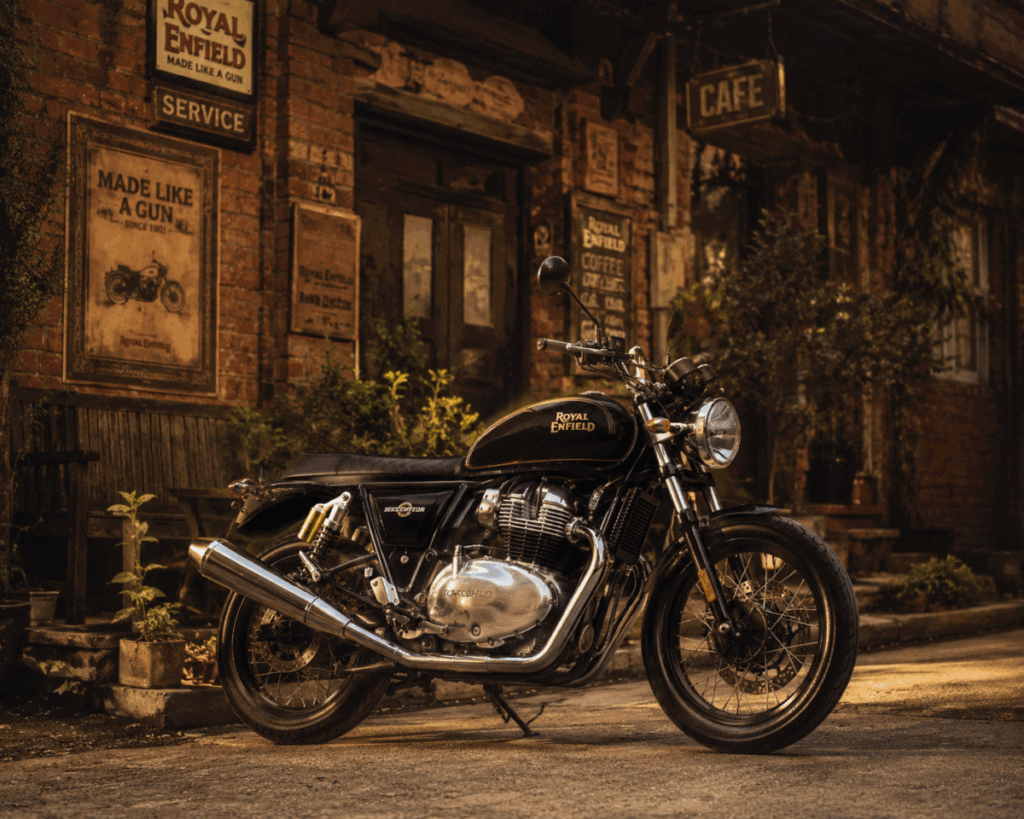
The Royal Enfield history begins in 1901 — making it the oldest motorcycle brand in continuous production today.
Harley-Davidson nearly went bankrupt.
Triumph actually collapsed — and had to be rebuilt from scratch.
Norton spent decades wandering before finally finding its way back.
But there is one motorcycle brand that never stopped.
From 1901 to today, through two world wars, the shutdown of its original British operations, and a complete change of country — the name never disappeared.
That brand is Royal Enfield.
The Royal Enfield History — From England to India
1901, Redditch, England
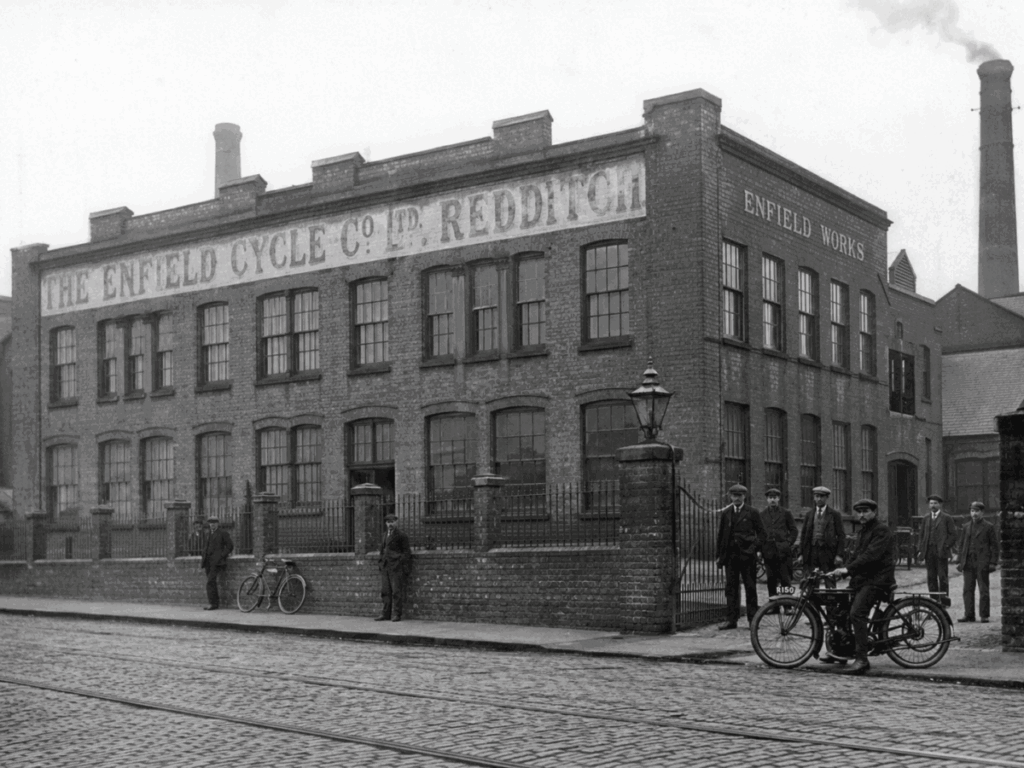
Royal Enfield began in Redditch, a small industrial town in England.
The company originally manufactured bicycles and precision components. In the 1890s, its connection with the Royal Small Arms Factory in Enfield gave rise to the Enfield name, and the famous “Made Like a Gun” trademark soon followed.
From the very beginning, Royal Enfield was never about speed. It was about toughness.
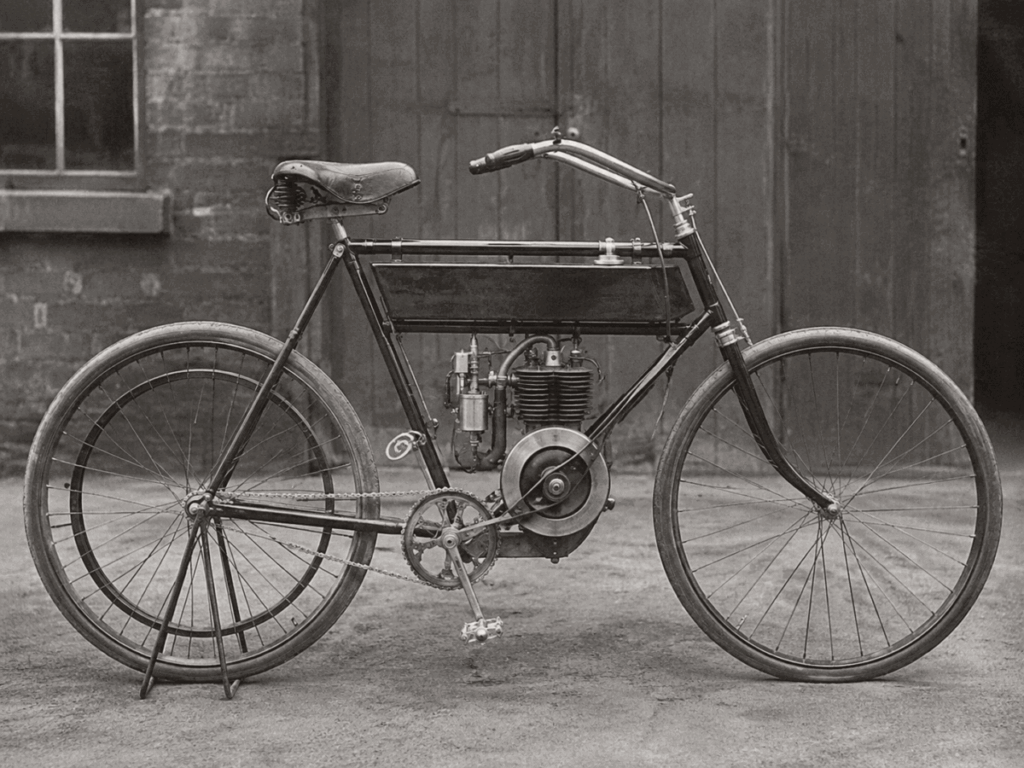
In 1901, the company produced its first motorcycle. A 1.5hp Minerva engine, belt-driven, mounted to a bicycle frame. Primitive by today’s standards — but revolutionary for its time.
Built for War — The Flying Flea
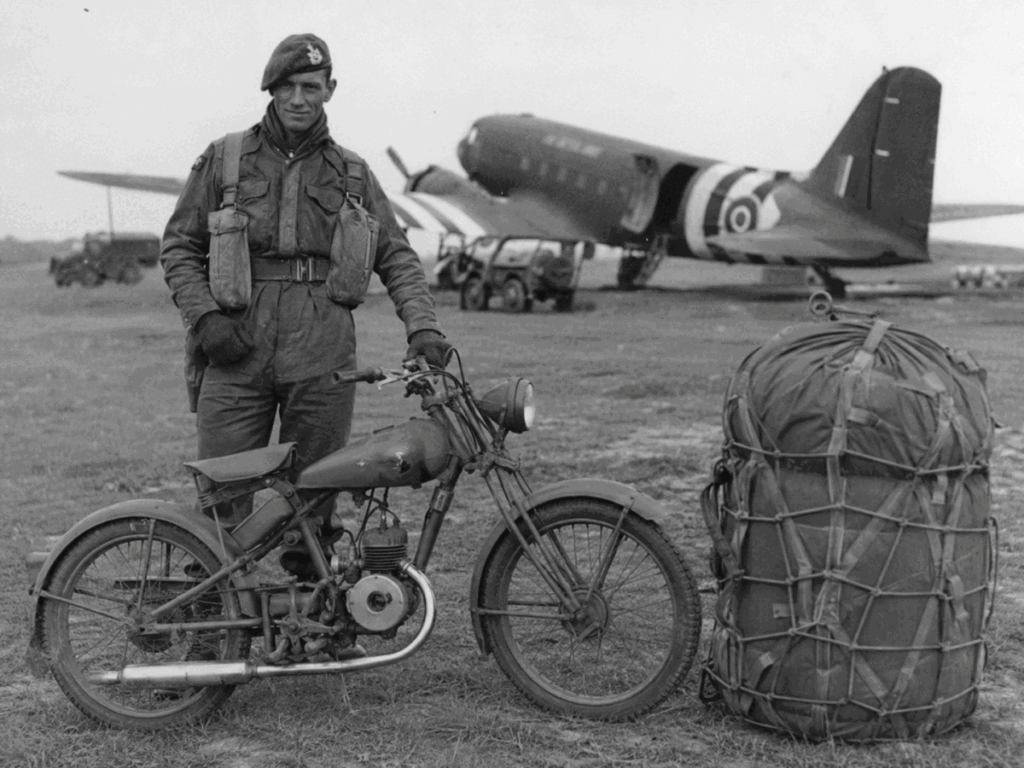
During the World Wars, Royal Enfield supplied motorcycles to the British military. Its most legendary wartime machine came in World War II: the Flying Flea.
A 125cc-class two-stroke lightweight motorcycle designed to be strapped into a container and dropped by parachute alongside paratroopers.
It had to start in the mud. It had to survive a drop from the sky. It had to be fixed with basic tools in the middle of a battlefield.
Simple. Tough. Repairable anywhere.
That philosophy never left Royal Enfield’s DNA.
How India Saved the Brand
In 1952, Royal Enfield signed a contract to supply Bullet 350cc motorcycles to the Indian military and police.
In 1955, a factory was established in Madras — now Chennai. Enfield India was born.
Back in Britain, things were falling apart.
The economic aftermath of the Great Depression, the rise of cheap and reliable Japanese motorcycles from Honda and Yamaha, a collapsing domestic market. One by one, British motorcycle brands disappeared.
Triumph fell. Norton collapsed. BSA vanished.
By the late 1960s and early 1970s, Royal Enfield’s British operations had effectively shut down.
But the Indian operation survived.
India’s massive domestic market kept the brand alive. The military and police continued riding Bullets. Civilian demand grew. The name lived on.
Then, in 1977, something remarkable happened.
India started exporting Royal Enfield motorcycles back to Britain.
British riders — nostalgic for the classic single-cylinder motorcycles their country could no longer produce — were buying Indian-made Bullets.
The Eicher Era — From Survival to Global Momentum
In 1994, Indian commercial vehicle manufacturer Eicher Motors acquired Royal Enfield.
Nobody paid much attention. A truck company buying a motorcycle brand wasn’t exactly headline news.
But under CEO Siddhartha Lal, the company was transformed. Engines were modernized. Younger riders became the target. Global markets opened up.
The numbers tell the story.
In the early 2010s, Royal Enfield was still a relatively small manufacturer, selling fewer than 100,000 motorcycles a year by several reported estimates.
In FY2024-25, Royal Enfield sold 1,002,893 motorcycles globally — crossing the one-million mark for the first time in a financial year. From fewer than 100,000 units in the early 2010s to over one million a decade later, the scale of this turnaround is difficult to overstate.
“Made Like a Gun” — What Royal Enfield Actually Sells
When you look at a Royal Enfield for the first time, something feels off.
No cutting-edge electronics. No aggressive bodywork. No performance numbers that dominate a spec-sheet comparison.
And yet people buy them. All over the world.
Why?
The Bullet — A Name That Never Stopped
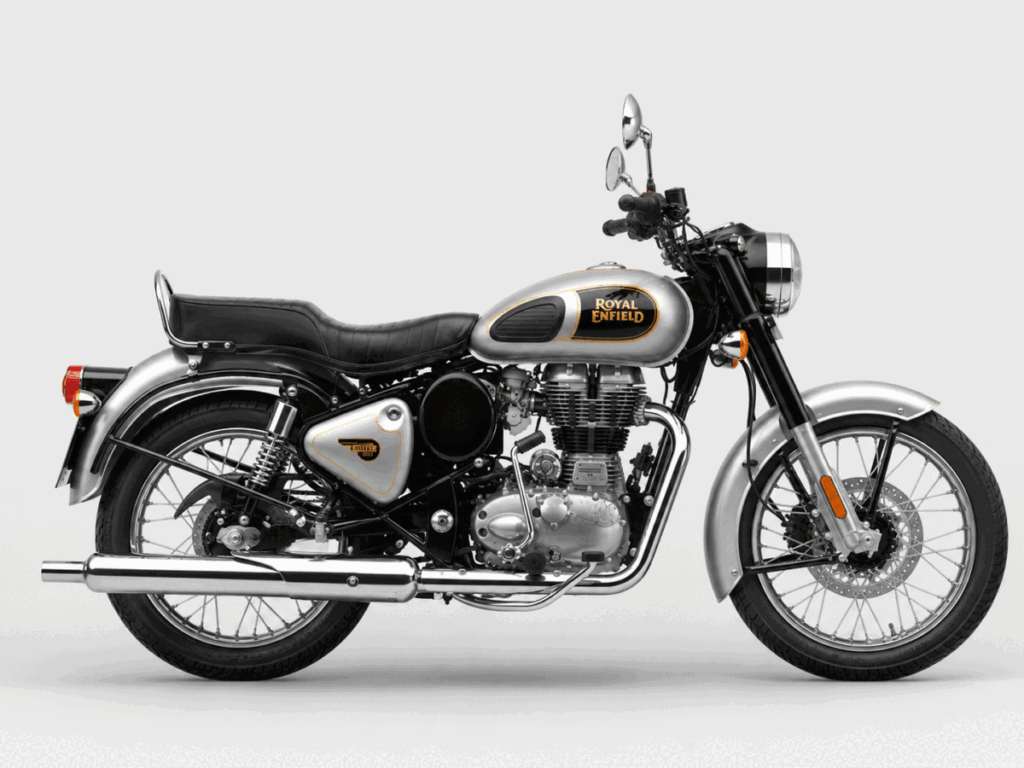
The Bullet first appeared in the early 1930s.
It is widely cited as one of the longest-running motorcycle models in continuous production anywhere in the world.
In 2023-2024, it was completely re-engineered on Royal Enfield’s new J-series platform — modernized mechanically from the ground up. But the silhouette? The gold pinstripes? The unmistakable presence?
Unchanged.
Royal Enfield doesn’t chase trends. It outlasts them.
The Sound
Royal Enfield single-cylinder engines produce a sound unlike anything else on the road.
Not the V-twin rumble of a Harley-Davidson. Not the high-pitched scream of a sportbike. Something in between — a slow, rhythmic thump that sounds almost organic. Like the engine is breathing.
Some people hate it. Some people buy the bike specifically for it.
That’s not a flaw. That’s a personality.
The Custom Culture
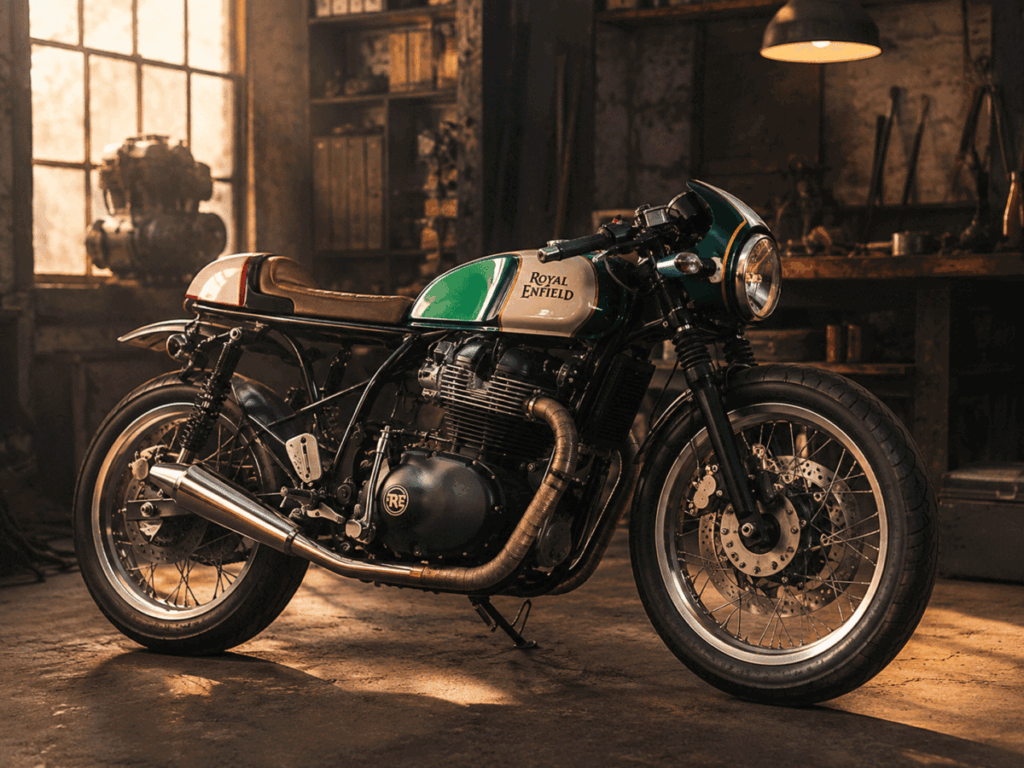
Royal Enfield has one of the most active custom communities in motorcycling.
The architecture is simple. The parts ecosystem is enormous. Change the handlebars, the exhaust, the seat — and you have a completely different motorcycle.
For riders who want to build something personal, Royal Enfield is the ideal starting point. The brand actively supports this culture through its Custom World program, showcasing builds from around the globe.
Why the World Is Paying Attention Now
The Neo-Retro Moment
Since the 2010s, one category has consistently outgrown every other segment of the motorcycle market.
Neo-retro.
Old design language. Modern engineering underneath. Triumph Scrambler, BMW R nineT, Honda CB series — all of them are chasing this same emotional space.
And the reason is simple.
Modern motorcycles feel sterile. Plastic everywhere. Electronics for everything. They perform brilliantly but feel like appliances.
Classic motorcycles feel alive.
Here’s what makes Royal Enfield different from the rest:
Triumph and BMW made design choices to look classic. Royal Enfield never stopped being classic. There’s no reinvention here — just continuity.
Global Growth by the Numbers
- FY2024-25 official global sales: 1,002,893 motorcycles — the first time Royal Enfield crossed the one-million mark in a financial year
- International presence: more than 50 countries
From fewer than 100,000 units in the early 2010s to over one million a decade later. The scale of this turnaround is difficult to overstate.
The Royal Enfield Lineup — Which Bike Is For You?
350cc — Royal Enfield at Its Most Approachable
The 350cc range is Royal Enfield at its most approachable. Manageable power, classic proportions, and a price point that makes it genuinely accessible.
Classic 350
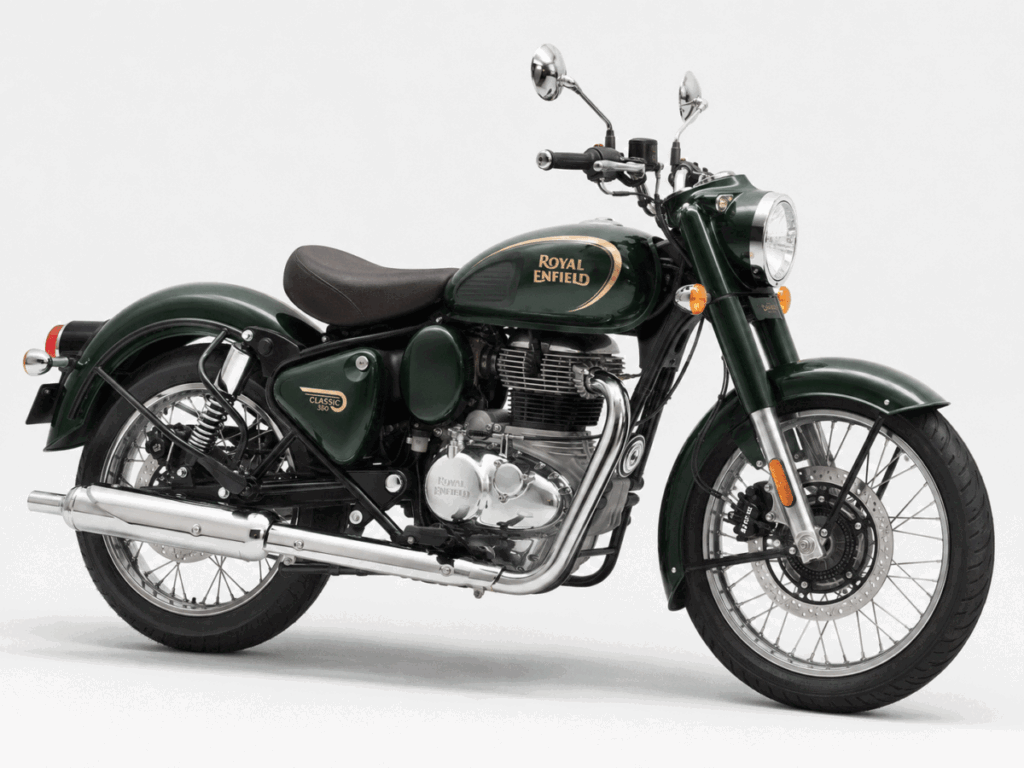
The Classic 350 is the purest expression of Royal Enfield’s modern identity. Inspired by the post-war G2 model, rebuilt on a modern platform. The brand’s best-selling model globally. If you want the full Royal Enfield experience, this is where it starts.
Bullet 350
The name that started everything. Re-engineered on the J-series platform in 2023-2024 but wearing the same heritage silhouette it has carried for nearly a century. Gold pinstripes, upright posture, that signature thump.
Hunter 350
The lightest and most urban-focused 350. Roughly 14kg lighter than the Classic 350. Easier to handle in city traffic. A strong first motorcycle — or a practical second one.
Meteor 350
A cruiser built for riders who want to cover distance at a relaxed pace rather than attack corners.
450cc — Where Royal Enfield Gets More Modern and Versatile
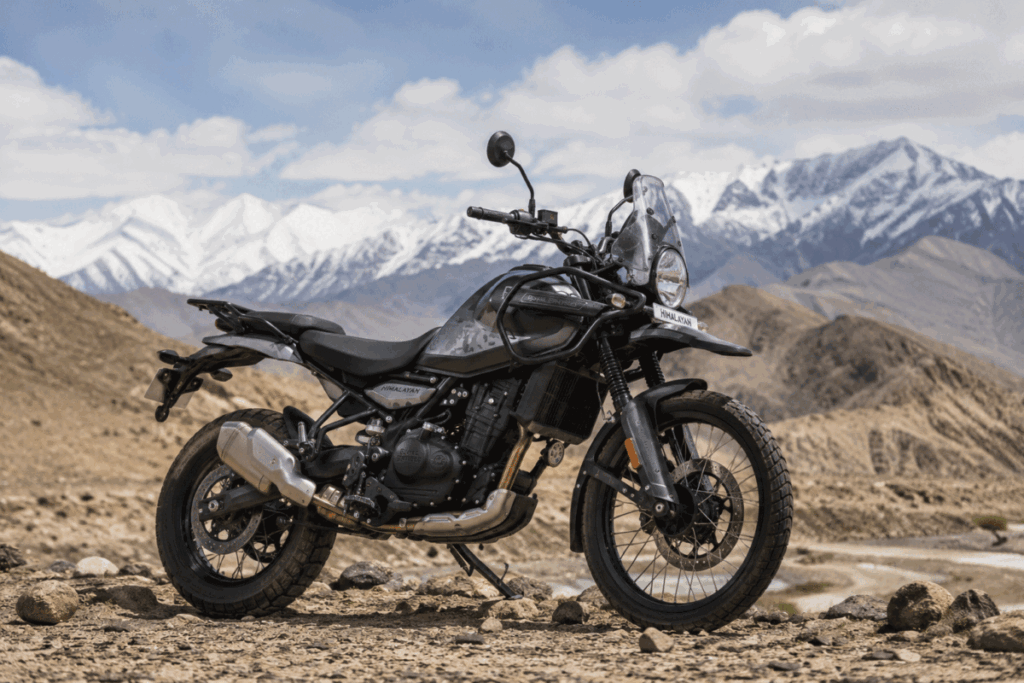
The 450cc range is where the brand becomes more modern and versatile — bringing liquid cooling, higher output, and broader capability.
Himalayan 450
Royal Enfield’s adventure motorcycle. Liquid-cooled DOHC engine producing 40PS. 21-inch front wheel. Capable on dirt roads, comfortable on highways. A strong value proposition in the middleweight adventure segment.
Guerrilla 450
Based on the Himalayan platform but built for city streets. More aggressive stance, 17-inch wheels, roadster attitude. For riders who want the 450 engine in a sharper, more urban package.
650cc — Where Royal Enfield Competes on the Global Stage
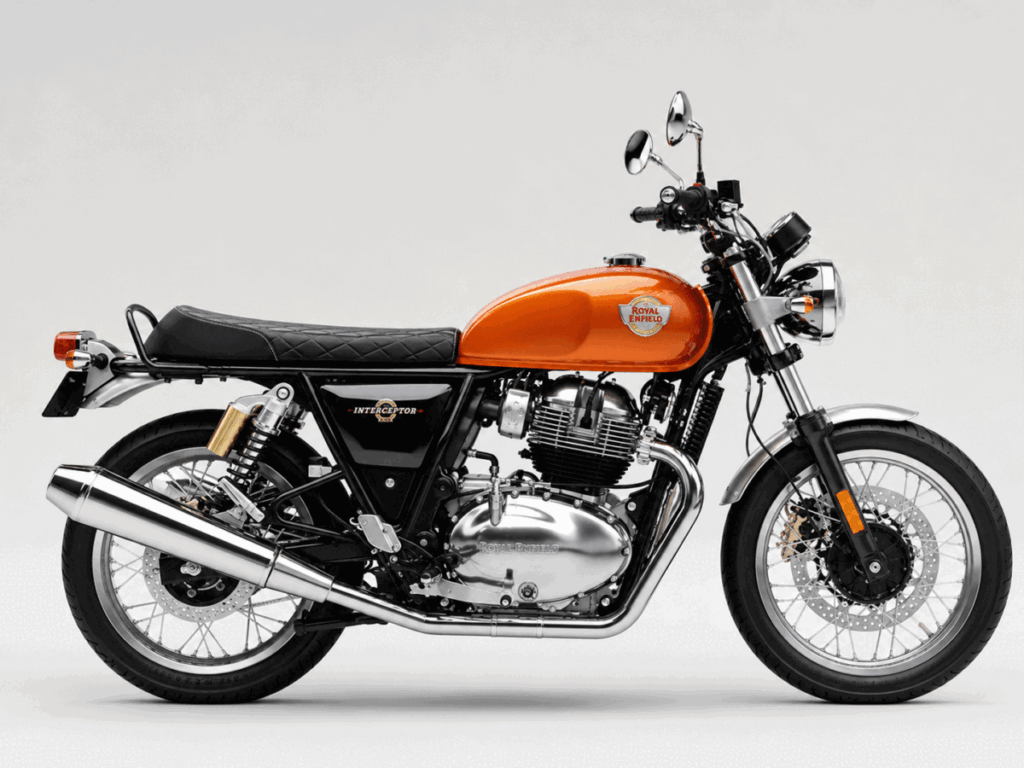
The 650cc range is where Royal Enfield starts competing seriously on the global middleweight stage — and where the brand earns the most international respect.
Interceptor 650
A 648cc parallel-twin wrapped in classic roadster bodywork. Widely regarded as one of the best value middleweight motorcycles available. The model that introduced many Western riders to the idea that Royal Enfield was serious about engineering.
Continental GT 650
Same engine as the Interceptor. Café racer posture. For riders who want the 650 twin with clip-on bars and a more aggressive lean.
Super Meteor 650
Royal Enfield’s premium cruiser. The most touring-focused motorcycle in the lineup. Built for long-distance riders who want comfort and that 650 twin character.
Shotgun 650
Custom culture in production form. Bobber-style bodywork, low stance, blacked-out components. The most visually distinctive 650 in the range.
Bear 650
A scrambler built on the Interceptor 650 platform. Inspired by the 1960 Big Bear Run. Showa USD forks, raised ride height, scrambler ergonomics.
What’s Next
The 650cc lineup has continued to expand with the Classic 650 and Bullet 650 joining the family in key markets, alongside the Interceptor, Continental GT, Super Meteor, Shotgun and Bear 650.
Is Royal Enfield Right for You?
Buy One If You…
Want classic aesthetics without a classic price tag
Modern neo-retro bikes from Triumph or BMW deliver a similar emotional experience at a significantly higher cost. Royal Enfield puts that feeling within reach.
Are buying your first motorcycle
The 350cc range is approachable, manageable, and forgiving. The power won’t overwhelm a new rider. The riding position is upright and comfortable.
Want to customize
Royal Enfield is one of the most customization-friendly brands available. The platform is simple, the aftermarket is massive, and the community is globally active.
Want something different from the usual Japanese options
Nothing wrong with Honda, Yamaha, Kawasaki, or Suzuki — they make excellent motorcycles. But if you want something with a different personality, Royal Enfield offers exactly that.
Look Elsewhere If You…
Need high-performance riding
Royal Enfield does not compete on top speed or acceleration. The brand is built for riding enjoyment at realistic speeds — not track days or canyon carving at pace.
Are sensitive to fit and finish
Indian manufacturing quality has improved significantly, but some riders report minor inconsistencies or early mechanical issues. It is worth researching ownership communities before purchasing.
Need fast, reliable after-sales support
The dealer network is growing but still thinner than the major Japanese brands in most markets. If proximity to a service center matters to you, check availability in your area first.
125 Years. Still Running.
Royal Enfield survived because it never tried to be something it wasn’t.
Simple. Tough. Honest.
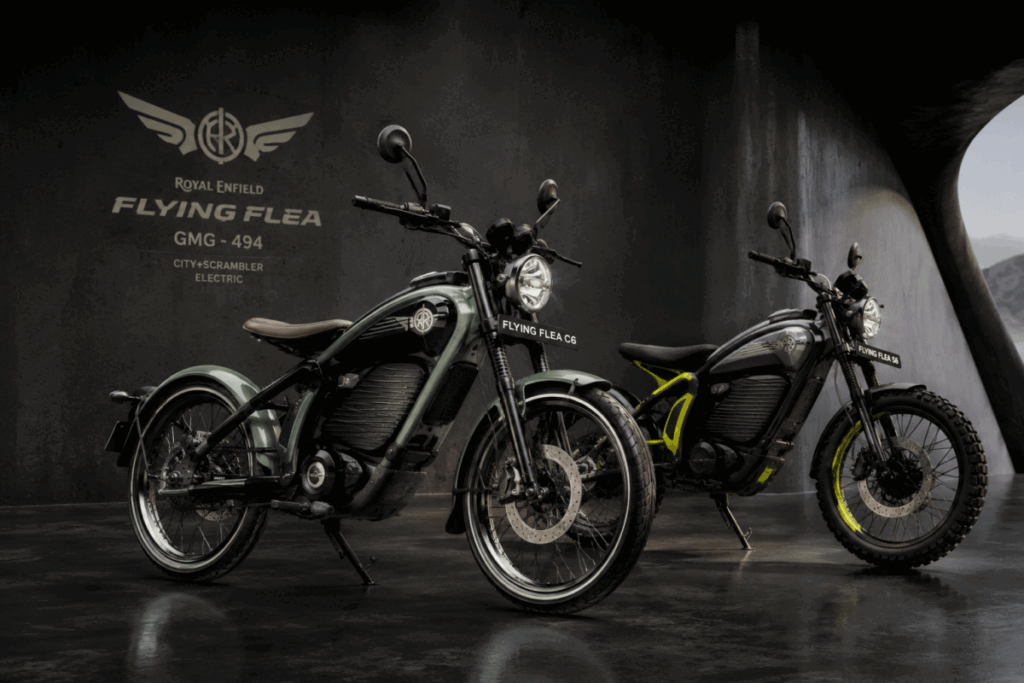
It was born in Britain, saved by India, and is now sold across more than 50 countries. It crossed one million annual sales for the first time in FY2024-25. Its 650cc lineup keeps growing with the Classic 650 and Bullet 650 now joining key markets. And it is moving into electric motorcycles through Flying Flea, its EV sub-brand, beginning with the C6 and followed by the scrambler-style S6.
The neo-retro trend didn’t create Royal Enfield.
Royal Enfield was just already there when the trend arrived.
Royal Enfield doesn’t chase trends. It outlasts them.
If you approach motorcycling as an experience rather than a performance benchmark, Royal Enfield deserves serious consideration.
It has been earning that consideration since 1901.
If you enjoy motorcycle brand stories, you may also like:
Triumph Bonneville History: Why This Classic Motorcycle Became an Icon
Ducati History: From Radio Components to Racing Legend
For the full lineup and dealer information, visit the official Royal Enfield website.