The Honda Grom review conversation almost always starts the same way.
Someone sees one parked on the street. They stop. They tilt their head. They say something like “is that a real motorcycle?” or “how fast does that actually go?” — and then they pull out their phone.
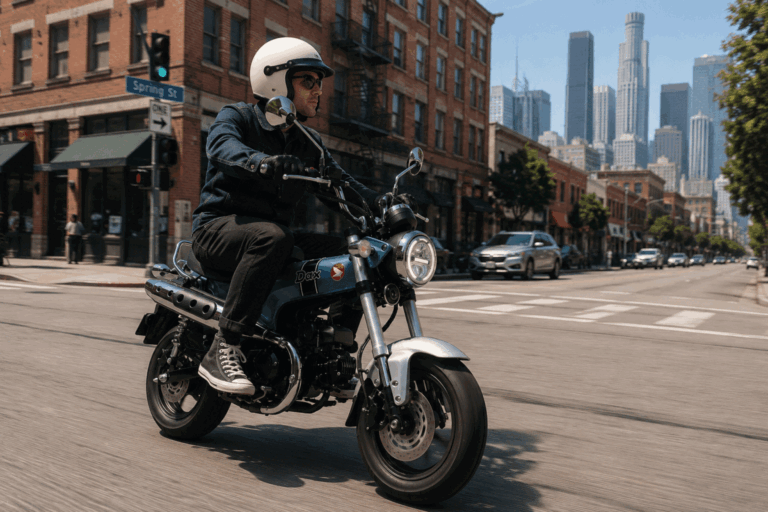
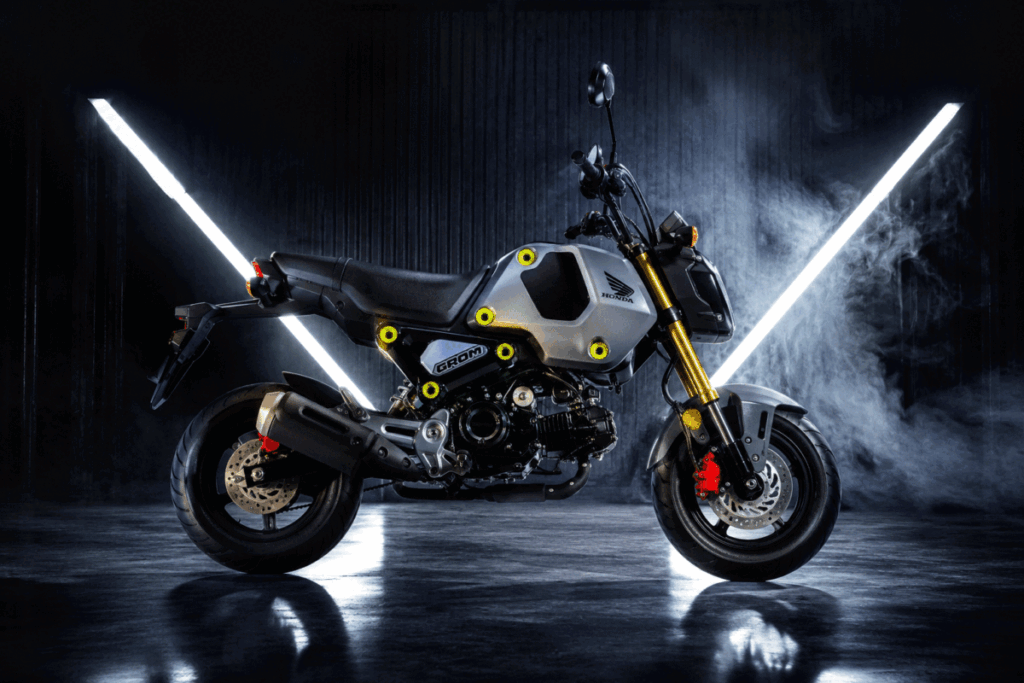
The Grom has that effect on people. It’s small. Aggressively small. The 12-inch wheels, the stubby frame, the compact proportions — at first glance, it looks like something a teenager would ride around a parking lot.
But here’s what that first glance misses: the Honda Grom has been one of the most influential small motorcycles of the last decade. It spawned an entire racing series. It built a global custom culture that rivals bikes three times its size. It introduced a generation of riders to motorcycling who might never have started otherwise.
This review covers everything — specs, riding experience, the custom scene, honest drawbacks, and who this bike is genuinely built for.
Honda Grom Specs: What You’re Actually Getting
Before getting into how it rides, here’s what the Grom brings to the table:
- Engine: 124cc single-cylinder 4-stroke SOHC
- Power: 9.7 hp at 7,250 rpm
- Torque: 1.05 kgf·m at 5,500 rpm
- Transmission: 5-speed manual with clutch lever
- Fuel tank: 5.5 liters (1.45 gallons)
- Weight: 107 kg (236 lbs)
- Seat height: 761mm (30 inches)
- Wheel size: 12 inches
On paper, those numbers look modest. But the spec sheet doesn’t capture what makes the Grom special.
At 107 kg with a 761mm seat height, the Grom is genuinely accessible. Shorter riders, newer riders, riders who’ve been intimidated by larger bikes — the Grom removes almost every physical barrier to getting started. And the 12-inch wheels, which look almost comically small, are central to what makes this bike so distinctively fun to ride.
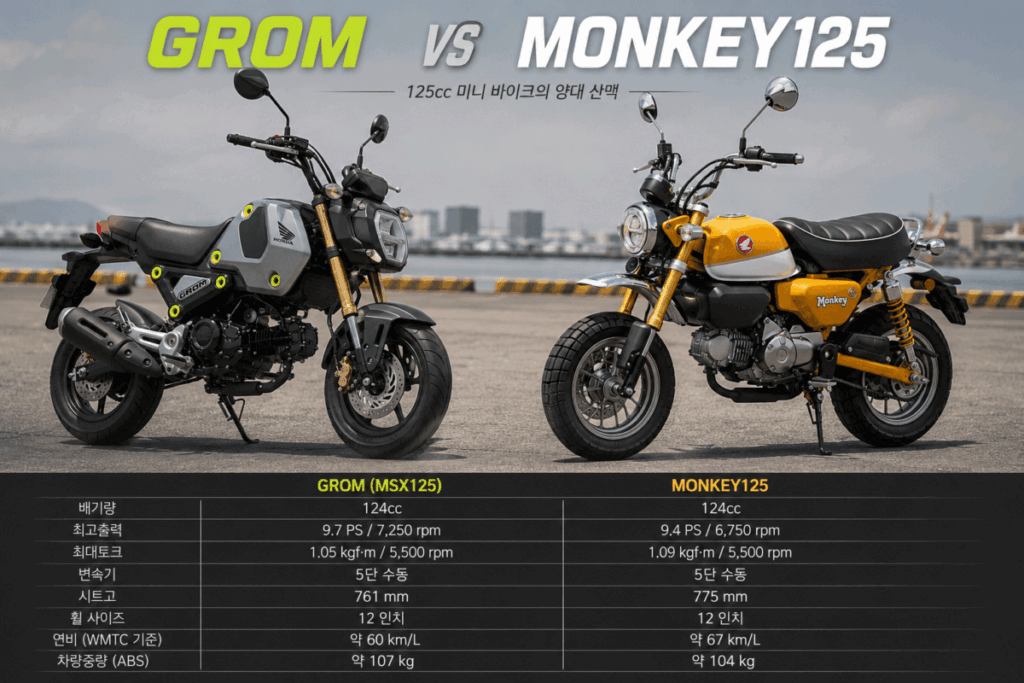
Grom vs Monkey 125 — Spec Comparison:
|
Spec |
Honda Grom |
Honda monkey 125 |
|
Displacement |
124cc |
124cc |
|
Power |
9.7 hp |
9.4 hp |
|
Weight |
107kg |
104kg |
|
Seat height |
761mm |
775mm |
|
Wheel size |
12 inches |
12 inches |
|
Transmission |
5 speed manual |
5 speed manual |
|
Fuel economy |
~60 km/L |
~67 km/L |
The specs are remarkably close. The difference between these two bikes isn’t in the numbers — it’s in the character. More on that later.
Honda Grom History: How a Mini Bike Took Over the World
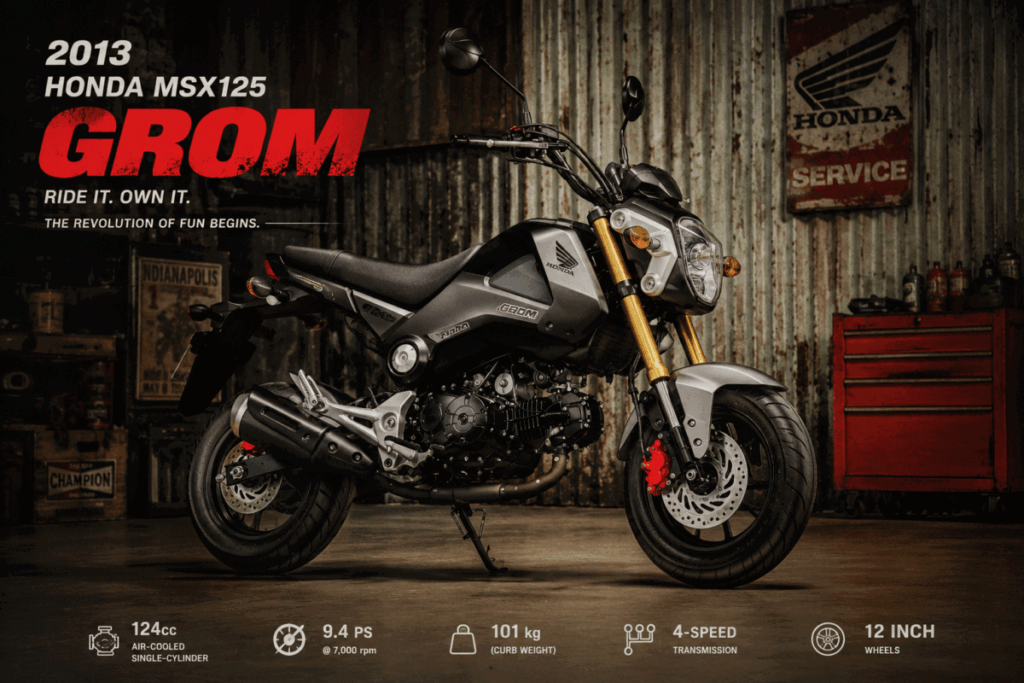
The Honda Grom launched in 2013. In Japan, it’s sold as the MSX125 — a name that emphasizes its street-fighter aesthetic and urban positioning. In North America and much of the world, Honda marketed it as the Grom — a term borrowed from surf culture, where “grommet” refers to a young, enthusiastic beginner. Small but keen. That’s the Grom.
The reception was immediate and unexpected in scale. Honda had built an affordable, lightweight, fun urban commuter. What they got back was a cultural phenomenon.
Within a year of launch, dedicated Grom racing series had appeared in the United States. Custom builders started using the Grom as a platform for increasingly ambitious projects. YouTube channels devoted entirely to Grom content accumulated millions of subscribers. A bike that cost under $3,500 was generating more community energy than machines costing ten times as much.
In 2021, Honda refreshed the Grom with updated styling, revised bodywork, and improved fuel injection. The core identity — small, light, manual, fun — remained completely intact.

What It’s Like to Ride: Real-World Impressions
In the City
This is where the Honda Grom review gets genuinely enthusiastic.
The Grom in urban traffic is an experience unlike any other 125cc motorcycle. The 12-inch wheels create a handling character that’s immediate and almost playful — the bike responds to inputs faster than you expect, and at low speeds it feels almost like a go-kart with handlebars. Filtering through traffic, threading gaps, making tight turns — the Grom does all of it with a directness that larger bikes simply can’t replicate.
The 761mm seat height means most riders can get both feet flat on the ground without stretching. In stop-and-go city traffic, that confidence matters. The bike never feels like it’s managing you — you’re always in control.
The upright riding position works well for shorter urban trips. For anything over an hour, the compact ergonomics start to ask questions of taller riders in particular.
On the Highway
Honesty first: the Grom is not a highway motorcycle.
Top speed sits around 90–95 km/h (56–59 mph). It will reach highway speeds. Sustaining them comfortably is a different matter. The 12-inch wheels are sensitive to crosswinds and surface irregularities at speed, and the engine is working hard in territory it wasn’t designed for.
The Grom’s natural habitat is below 80 km/h. In that range, it’s genuinely excellent. Above it, the limitations become apparent quickly.
For riders whose routes stay on city streets and secondary roads, this is a non-issue. For anyone who needs regular highway access, it’s a dealbreaker worth knowing about upfront.
Fuel Economy
The PGM-FI fuel injection system returns strong economy figures. Real-world fuel consumption sits around 55–65 km/liter (130–153 mpg), which is impressive for any motorcycle.
The 5.5-liter (1.45-gallon) tank provides roughly 300–350 km (186–217 miles) of range under normal conditions. For urban use, that’s more than adequate. The small tank only becomes a limitation on longer rides away from the city.
The Custom Culture: Why the Grom Is More Than a Commuter
No Honda Grom review is complete without addressing the custom scene — because for a significant portion of Grom owners, the riding is almost secondary to the building.
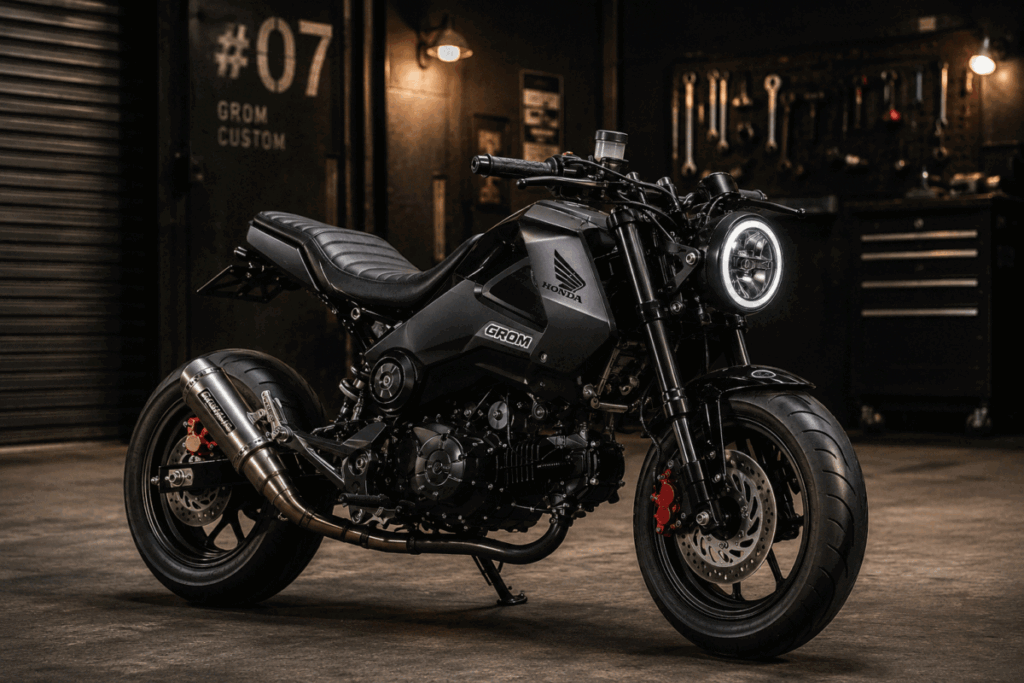
The Grom has generated one of the most active custom cultures of any motorcycle regardless of displacement. The accessible platform, the global community, and the economics of modification have combined to produce everything from subtle tasteful builds to machines that barely resemble the original bike.
The most popular custom directions:
Mini Café Racer
Low clip-on bars, full fairing, classic two-tone paintwork. The Grom’s compact dimensions suit the café racer proportions surprisingly well. The results often look like scale models of 1960s racing bikes — and they’re genuinely striking.
Mini Street Fighter
Aggressive naked styling, wide handlebars, minimalist bodywork. In urban environments, a well-built Grom street fighter turns more heads than bikes with ten times the horsepower.
Scrambler
High exhaust routing, knobby tires, upswept bars. The small-bike scrambler aesthetic has found a devoted following, and the Grom translates it well.
Full custom builds
Some builders have taken the Grom considerably further — turbocharged engines, completely fabricated frames, race-spec suspension. These builds exist as proof that the platform has essentially no ceiling when it comes to modification potential.
The aftermarket parts ecosystem supports all of this. Frames, suspension components, bodywork, engine parts — the Grom aftermarket is one of the most developed of any small motorcycle in the world. If you want to modify it, the parts almost certainly exist.
Honest Pros and Cons
What Works
Urban riding experience
No 125cc motorcycle matches the Grom for city riding engagement. The handling character created by the 12-inch wheels and short wheelbase is unique — immediate, responsive, and genuinely fun at the speeds that urban riding involves.
The most developed small-bike custom ecosystem in the world
Whatever direction you want to take a Grom build, the parts exist and the community knowledge is extensive.
Accessible seat height
At 761mm, the Grom is one of the most physically accessible motorcycles available. Shorter riders, newer riders, and anyone who’s found other bikes intimidating will find the Grom approachable from the first moment.
Low running costs
Strong fuel economy, low insurance costs, and straightforward maintenance make the Grom inexpensive to own relative to almost any alternative.
Global community
The Grom community is one of the most active in motorcycling at any displacement level. Information, parts, and fellow enthusiasts are easy to find anywhere in the world.
What Doesn’t Work
Highway limitations
The 12-inch wheels and 124cc engine are not suited to sustained highway speeds. This is the Grom’s most significant practical limitation and worth understanding clearly before purchasing.
Long-distance discomfort
The compact ergonomics work well for urban riding. On longer trips, taller riders in particular will find the riding position increasingly uncomfortable.
12-inch tire availability and cost
12-inch motorcycle tires are less common than standard sizes, which can make replacement more expensive and sourcing more complicated depending on your location.
Size limitations for larger riders
Riders above average height may find the Grom’s proportions work against them on longer rides. The bike fits most people well for city use — extended touring is a different question.

Who Should Buy the Honda Grom
The Grom is a strong fit if you:
- Ride primarily in urban or suburban environments
- Are new to motorcycling and want an accessible, forgiving platform
- Are interested in motorcycle customization and want a platform with genuine potential
- Are shorter and find other bikes’ seat heights difficult to manage
- Value riding engagement and fun above comfort or long-distance capability
The Grom is probably not the right fit if you:
- Need regular highway access
- Plan to tour long distances
- Are significantly above average height
- Prioritize stability and comfort over handling responsiveness
Honda Grom vs Monkey 125: Same Family, Different Character
Both bikes carry the Honda badge. Both run 124cc engines with 5-speed manual gearboxes and 12-inch wheels. On paper, they’re almost identical. In practice, they feel like completely different motorcycles.
The Monkey 125 leads with aesthetics. The round headlight, the retro proportions, the chrome details — it’s designed to be looked at as much as ridden. The inverted forks and ABS add a layer of refinement that gives the Monkey a more composed, planted feel. It’s the choice for riders who want a motorcycle as a style statement.
The Grom leads with engagement. The angular bodywork, the upright street-fighter stance, the immediate handling — it’s designed to be ridden aggressively and modified extensively. The custom ecosystem around the Grom dwarfs the Monkey’s. It’s the choice for riders who want a motorcycle as a hobby.
If the question is which bike looks better parked outside a coffee shop, the Monkey 125 probably wins. If the question is which bike is more fun to ride hard through city traffic and which one has more potential as a long-term project, the Grom makes a compelling case.
For a complete look at the Monkey 125, read: Honda Monkey 125 Review: More Than Just a Cute Bike

Verdict: Small Bike, Serious Fun
The Honda Grom review conclusion is straightforward: this is not a serious motorcycle in the traditional sense. It’s not fast. It doesn’t go far. It won’t impress anyone who measures motorcycles by horsepower or top speed.
What it does — better than almost anything else at any price — is make riding genuinely enjoyable at the speeds and in the environments where most urban riders actually spend their time. Every city block becomes more interesting. Every gap in traffic becomes an opportunity. Every red light becomes a chance to think about what you’d change on the build next.
For new riders looking for an accessible entry point, the Grom is one of the best answers available. For experienced riders who want something that reminds them why they started riding in the first place, it works just as well.
It’s small. It’s loud about being small. And it’s one of the most enjoyable motorcycles Honda has ever built.
Choosing a helmet for your Grom? Start here: How to Choose a Motorcycle Helmet: A Beginner’s Guide
For official Honda Grom specifications, visit the Honda Global Newsroom