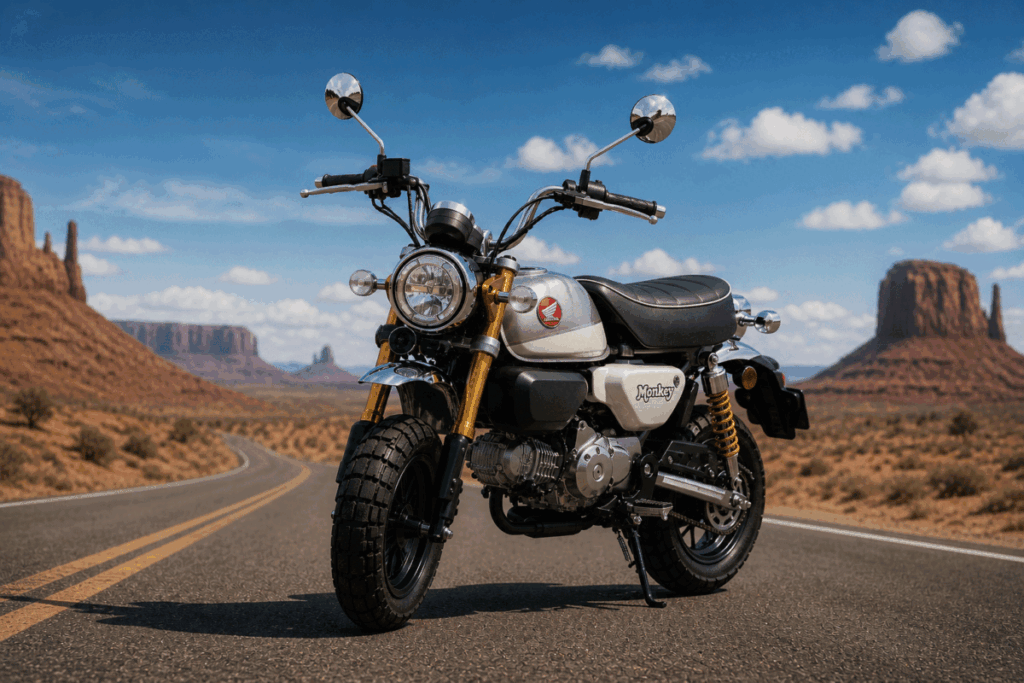
The Honda Monkey 125 review conversation usually starts the same way.
Someone sees one parked on the street. They stop. They look at it. They say something like “that’s adorable” or “is that a real motorcycle?” — and then they pull out their phone to take a photo.
The Monkey 125 has that effect on people. The round headlight, the stubby frame, the chrome details, the retro proportions — it’s one of the most visually distinctive motorcycles on the road today. And it draws attention everywhere it goes.
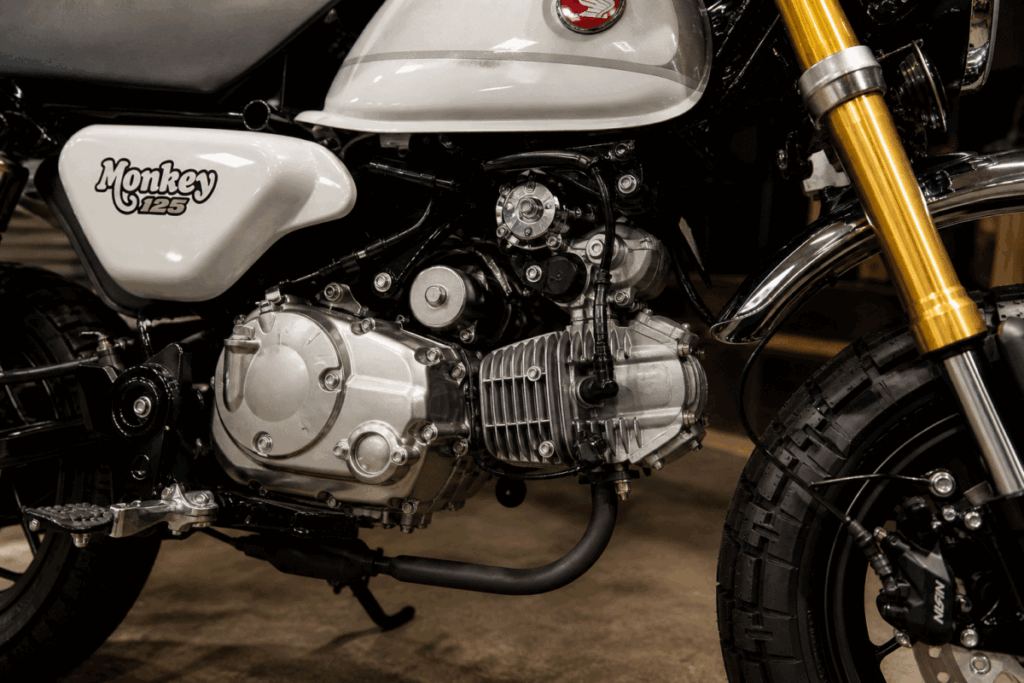
But here’s the thing: the Honda Monkey 125 isn’t just a novelty. It isn’t a toy. Underneath that charming exterior is a genuinely well-engineered motorcycle with inverted forks, front and rear disc brakes, ABS, and fuel injection — hardware you don’t usually find on a 125cc bike at this price point.
This review covers everything. The specs, the riding experience, the custom culture, the honest drawbacks, and — most importantly — who this bike is actually built for.
Honda Monkey 125 Specs: What You’re Actually Getting
Before getting into how it rides, here’s what the Monkey 125 brings to the table:
Engine: 123cc single-cylinder 4-stroke SOHC
Power: 9.4 hp
Transmission: 5-speed manual with clutch lever
Fuel tank: 5.6 liters (1.48 gallons)
Weight: 107 kg (236 lbs)
Seat height: 775mm (30.5 inches)
On paper, those numbers look ordinary. But the spec sheet doesn’t tell the full story of what Honda put into this bike.
Inverted front forks. Front and rear disc brakes. ABS as standard. Honda’s PGM-FI fuel injection system. On a 125cc motorcycle, that’s a serious equipment list. Most competitors at this price point are running conventional forks, drum rear brakes, and carburetors. The Monkey 125 is built to a different standard.
The 5-speed manual gearbox is also worth noting. The trend in small motorcycles has been toward automatics and semi-automatics — easier to ride, lower barrier to entry. Honda went the other direction with the Monkey. It has a proper clutch lever and a proper gear change. That’s a deliberate choice, and it says something about the kind of rider Honda built this bike for.
Honda Monkey 125 History: From Amusement Park Ride to Icon
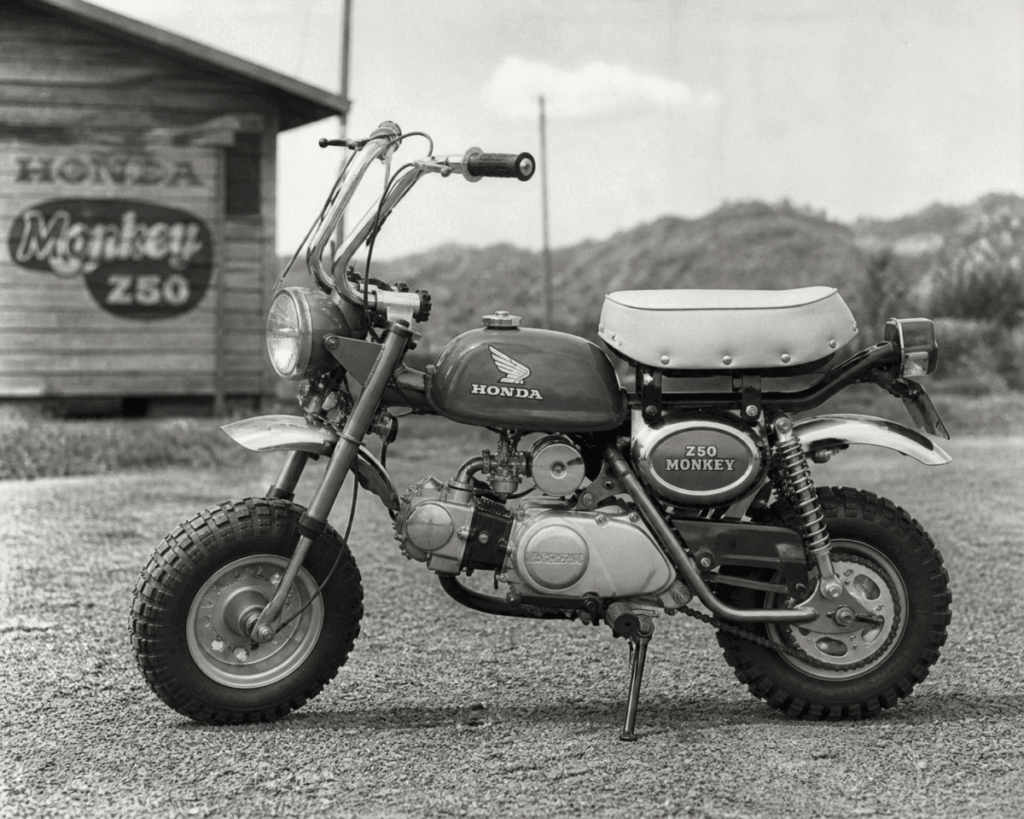
The Honda Monkey has one of the most unusual origin stories in motorcycling.
It started in 1961 — not as a road bike, but as an attraction at a Honda-owned amusement park in Japan. The little bike was designed for park visitors to ride around the grounds. Riders perched on top of the tiny machine apparently looked like monkeys — and that’s where the name came from.
The response was strong enough that Honda brought it to the general market in 1964. Over the following decades, the Monkey became one of Honda’s most beloved models — a cult classic with a global following, a thriving custom scene, and an identity that never really needed updating.
In 2018, Honda launched the current Monkey 125 — a complete redesign that kept the classic silhouette while replacing everything mechanical with modern hardware. New engine, new suspension, new brakes, new electronics. The look stayed. The engineering started fresh.
The response from a new generation of riders was immediate. The Monkey 125 sold well from launch and has continued to find new fans ever since.
What It’s Like to Ride: Real-World Impressions
In the City
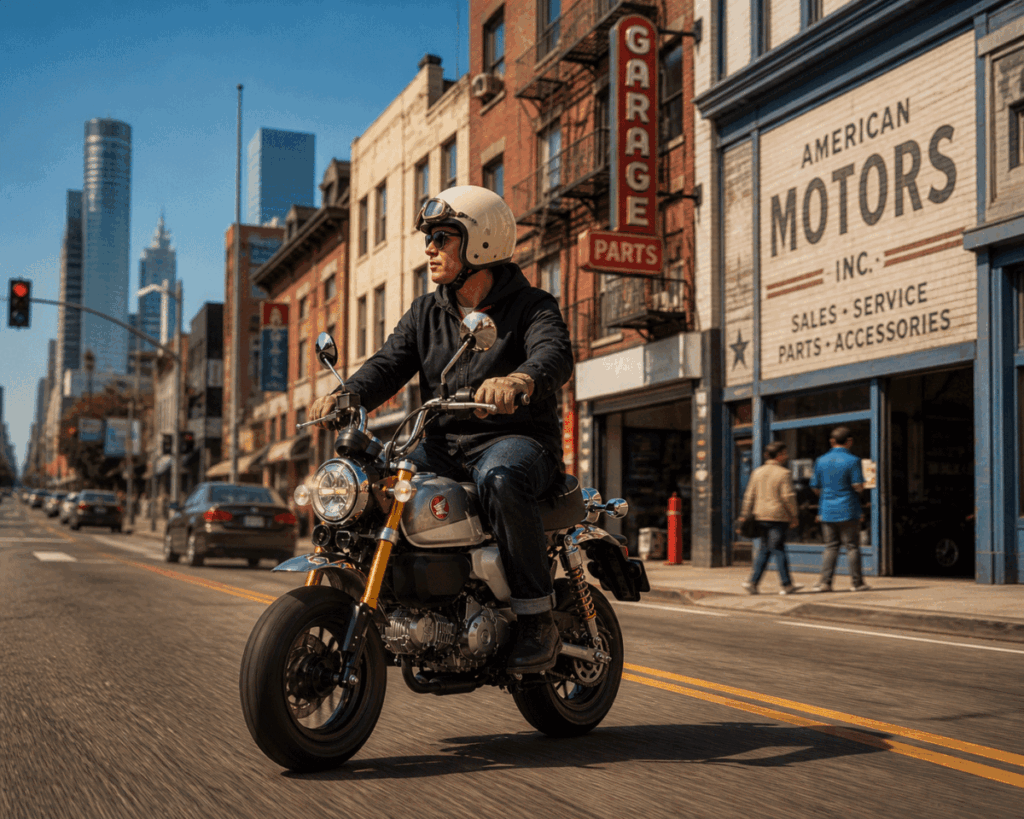
This is where the Honda Monkey 125 makes the most sense, and where it genuinely shines.
At 107 kg, it’s light enough to maneuver through tight urban traffic without effort. The handlebar width gives good leverage and control at low speeds. The suspension handles city road surfaces — potholes, speed bumps, uneven asphalt — with composure. And the brakes, with ABS, inspire real confidence in stop-and-go conditions.
The riding position is upright and comfortable for short to medium distances. The seat height of 775mm (30.5 inches) means shorter riders may find themselves on tiptoe — this is worth checking before buying. If you can, sit on one before committing.
The 5-speed gearbox rewards engagement. Short-shifting through city blocks, blipping the throttle on downshifts — the Monkey 125 responds well to a rider who wants to be involved. It’s not a passive experience.
On the Highway
Honesty first: the Monkey 125 is not a highway motorcycle.
The 123cc engine produces enough power for confident city riding and comfortable speeds on secondary roads. But at highway speeds — anything above 80 km/h (50 mph) sustained — the engine is working hard and the small-diameter wheels become noticeably sensitive to crosswinds and road surface changes.
Top speed is approximately 95–100 km/h (59–62 mph). It will get there. Staying there comfortably on a busy highway is a different matter.
For commuting, weekend rides, and urban exploration, the Monkey 125 is excellent. For regular highway use or long-distance touring, it isn’t the right tool.
Fuel Economy
The PGM-FI system does its job well. Real-world fuel economy sits around 45–55 km/liter (106–129 mpg), which is strong for any motorcycle and genuinely impressive for urban stop-and-go riding.
The 5.6-liter (1.48-gallon) tank limits range to roughly 250–300 km (155–185 miles) per fill. For city use, that’s plenty. For longer rides, you’ll be stopping for fuel more frequently than on a bike with a larger tank.
The Custom Culture: Why the Monkey 125 Is More Than a Commuter
One of the most compelling reasons to own a Honda Monkey 125 has nothing to do with spec sheets or fuel economy.
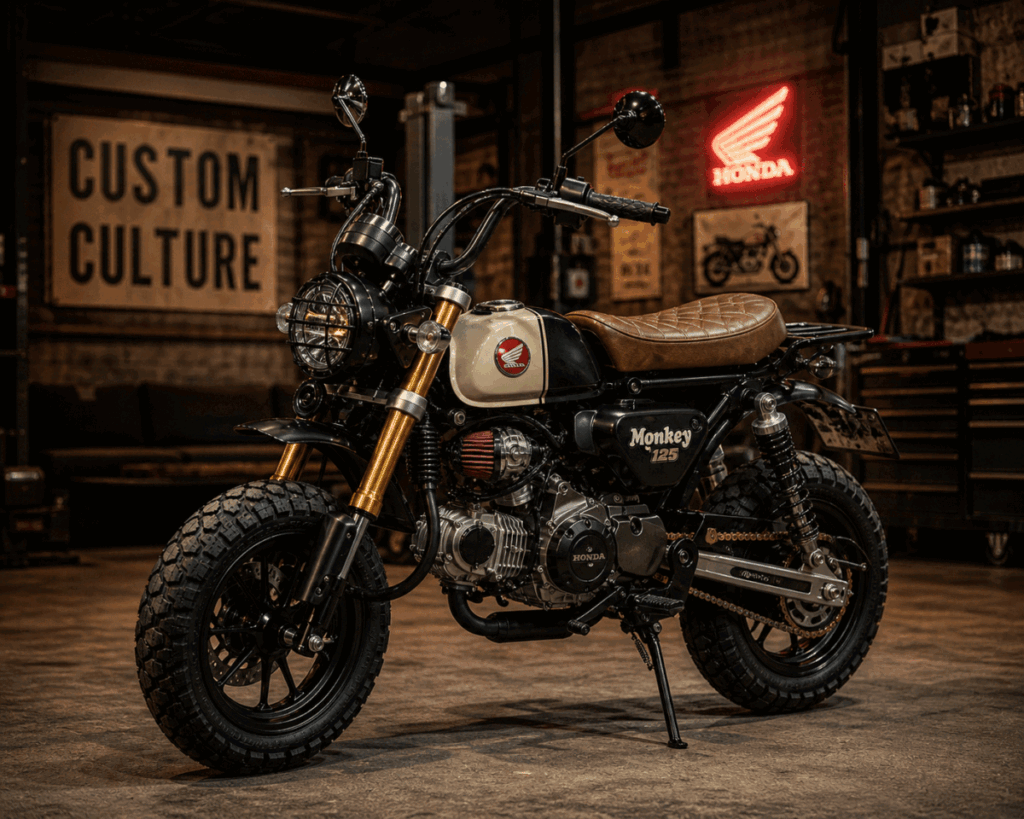
The Monkey has one of the most active custom cultures of any small motorcycle in the world. The compact, accessible platform has attracted builders and hobbyists globally, and the aftermarket parts ecosystem reflects that. Handlebars, seats, exhausts, mirrors, lighting — virtually every component has aftermarket options. The bike invites modification.
The scrambler conversion is particularly popular — keeping the retro aesthetic while adding knobby tires, higher exhaust routing, and more rugged details. The results range from tasteful to extraordinary, and the process of building one is half the appeal for many owners.
For a rider who wants a motorcycle as a project as much as a mode of transport, the Monkey 125 offers something rare at this price point: a platform worth customizing, with a community behind it.

Honest Pros and Cons
What Works
Hardware above its class
Inverted forks, dual disc brakes, ABS, and fuel injection on a 125cc motorcycle is genuinely unusual. Honda built the Monkey 125 with components that belong on more expensive machines.
Unmistakable design
There is no other motorcycle that looks like this. The visual identity of the Monkey 125 is one of its most practically useful features — it generates goodwill, conversation, and attention wherever it goes.
Rich custom ecosystem
The global aftermarket for Monkey parts is extensive. Whatever your aesthetic direction, the parts exist to take it there.
Low running costs
125cc reliability, strong fuel economy, and accessible maintenance costs make the Monkey 125 inexpensive to own day-to-day.
Honda reliability
Honda’s reputation for engine longevity is well-established. With proper maintenance, a Monkey 125 should run for a very long time.
What Doesn’t Work
Highway limitations
Sustained highway riding is uncomfortable and outside what this engine was designed for. This isn’t a criticism — it’s just an honest statement of what the bike is.
Seat height
At 775mm, shorter riders will find it difficult to get both feet flat on the ground. Always check fit before purchasing.
Price
The Monkey 125 costs more than most 125cc competitors. The hardware justifies it, but budget-focused first-time buyers may find the price harder to absorb.
Small fuel tank
5.6 liters is adequate for city riding but limiting on longer trips. Frequent fuel stops are part of the ownership experience if you ride beyond urban areas.
Who Should Buy the Honda Monkey 125
The Monkey 125 is a strong fit if you:
- Ride primarily in urban or suburban environment
- Value riding engagement over pure convenience
- Are interested in motorcycle customization
- Want a bike with a strong visual identity
- Are looking for low running costs on a quality platform
The Monkey 125 is probably not the right fit if you:
- Commute regularly on highways
- Need a motorcycle for long-distance touring
- Are shorter and find the 775mm seat height difficult to manage
- Are looking for the most affordable entry-level option available
Honda Monkey 125 vs Super Cub: Same Family, Different Purpose
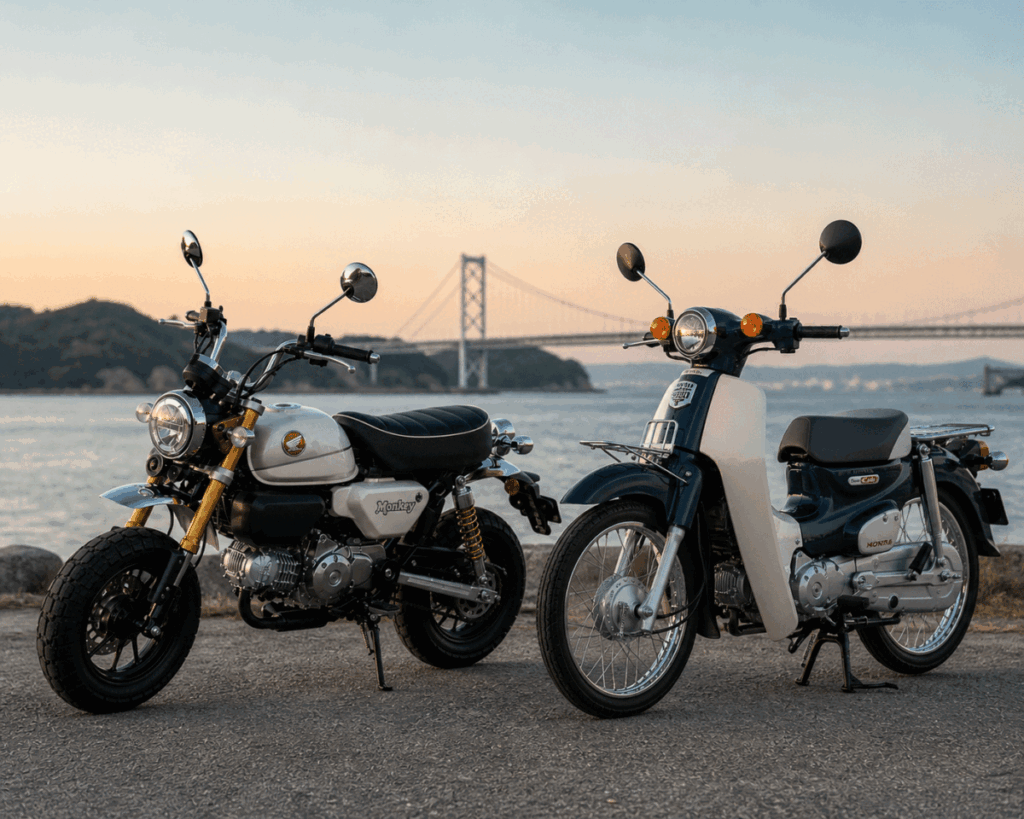
Both bikes wear the Honda badge. Both are 125cc. Both have devoted global followings. But they’re built for different riders with different priorities.
The Super Cub is optimized for practicality. The automatic centrifugal clutch makes it accessible to any rider. The underbone frame carries cargo easily. The fuel economy is exceptional. It’s a working motorcycle — reliable, efficient, and uncomplicated.
The Monkey 125 is optimized for enjoyment. The manual gearbox adds involvement. The design commands attention. The custom potential adds a dimension of ownership that the Super Cub doesn’t offer in the same way.
If you need a dependable daily commuter, the Super Cub is the answer. If you want a motorcycle that’s also a hobby, a conversation piece, and a canvas — the Monkey 125 is worth serious consideration.
For a complete look at the Super Cub’s history and what makes it special, read: The Honda Super Cub: How a 50cc Bike Became the World’s Best-Selling Vehicle of All Time
Verdict: Cute on the Outside, Serious Underneath
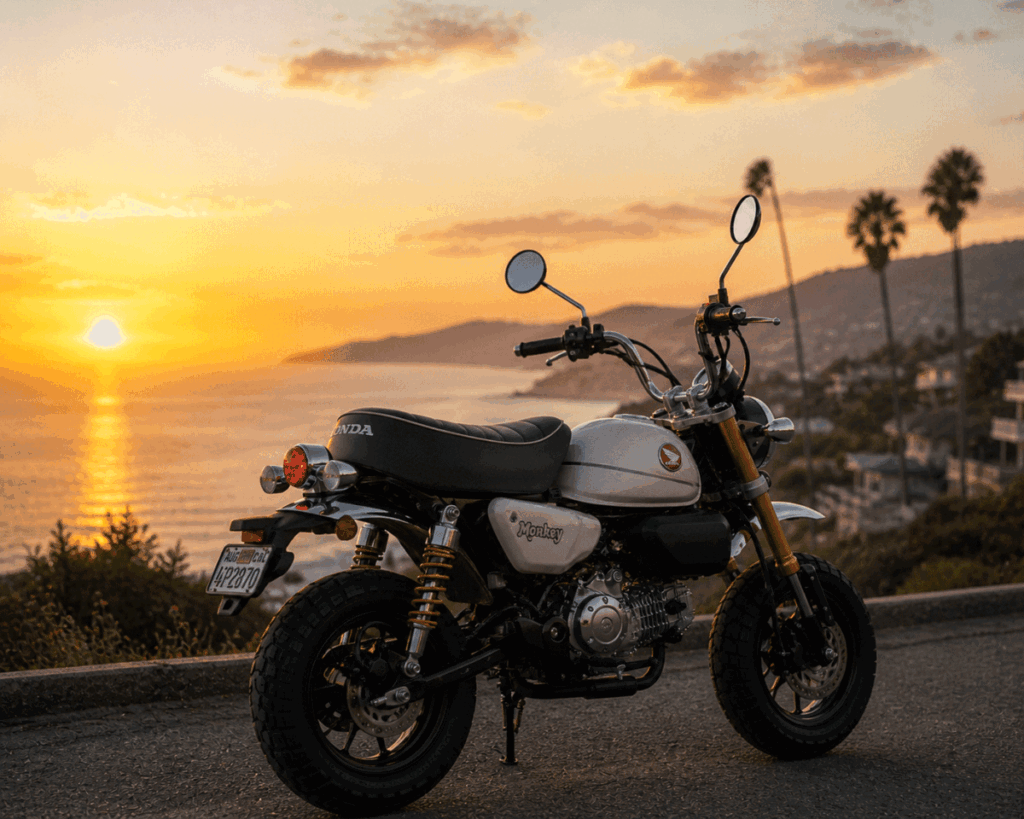
The Honda Monkey 125 review comes down to this: don’t let the looks mislead you.
This is a properly engineered motorcycle with hardware that punches above its class, a design heritage that stretches back over six decades, and a global community of riders and builders behind it. It’s not a toy. It’s not a novelty. It’s a real motorcycle that happens to look like nothing else on the road.
For urban riding, short commutes, weekend exploration, and anyone who wants a motorcycle they’ll actually enjoy working on and looking at — the Monkey 125 delivers in ways that its price and displacement don’t fully prepare you for.
It’s cute. It’s also genuinely good. That combination is rarer than it sounds.
Choosing the right helmet for your Monkey 125? Start here: How to Choose a Motorcycle Helmet: A Beginner’s Guide
For official Honda Monkey 125 specifications, visit the Honda Global Newsroom