A motorcycle lift stand changes what’s possible for home maintenance. Here’s what it does, who needs one, and what to look for before buying.
Most motorcycle maintenance problems aren’t about skill. They’re about access.
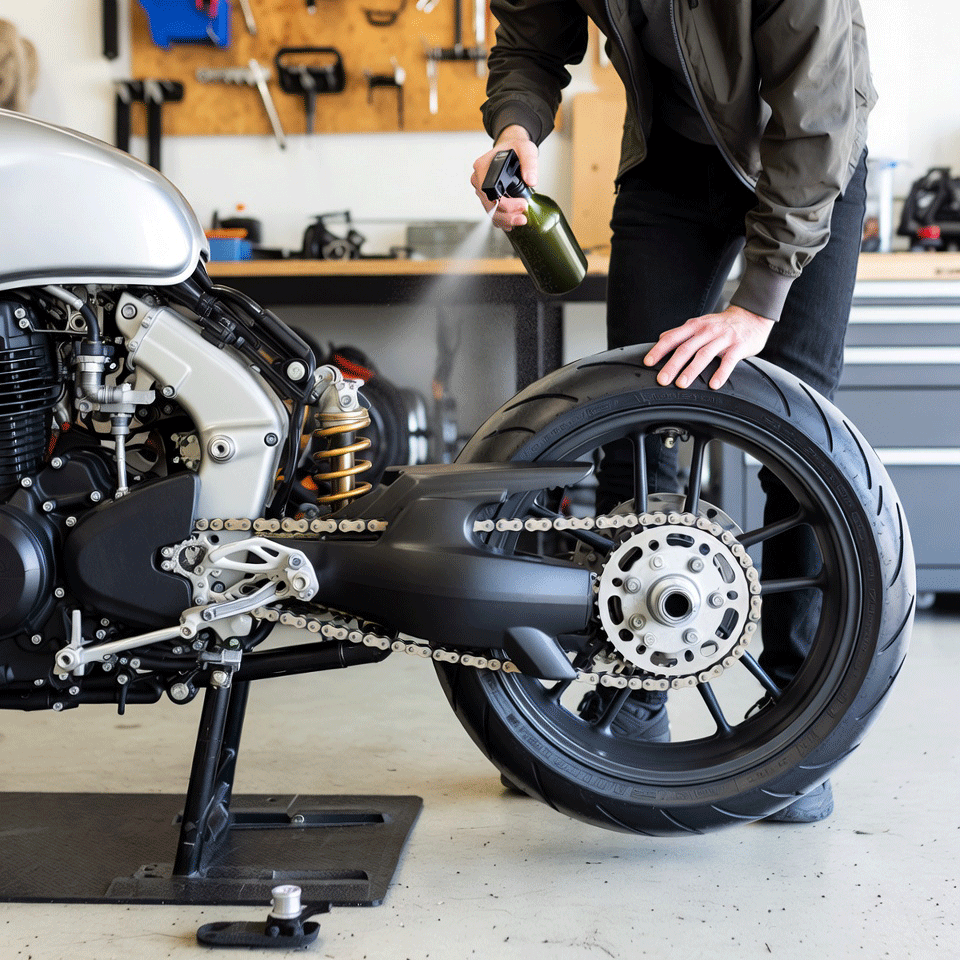
Chain cleaning, tire inspection, underbody washing, oil changes — these are straightforward tasks on a bike that’s properly elevated. The same tasks become awkward, incomplete, or skipped entirely when you’re working around a bike that’s sitting flat on the ground.
A motorcycle lift stand solves one problem: it gets the bike off the ground and keeps it stable while you work. That’s the entire value proposition. For riders who handle any level of their own maintenance, it’s one of the more impactful tools to add to a home garage setup.
What a Lift Stand Actually Does
The practical difference between working with and without a lift stand comes down to access and stability.
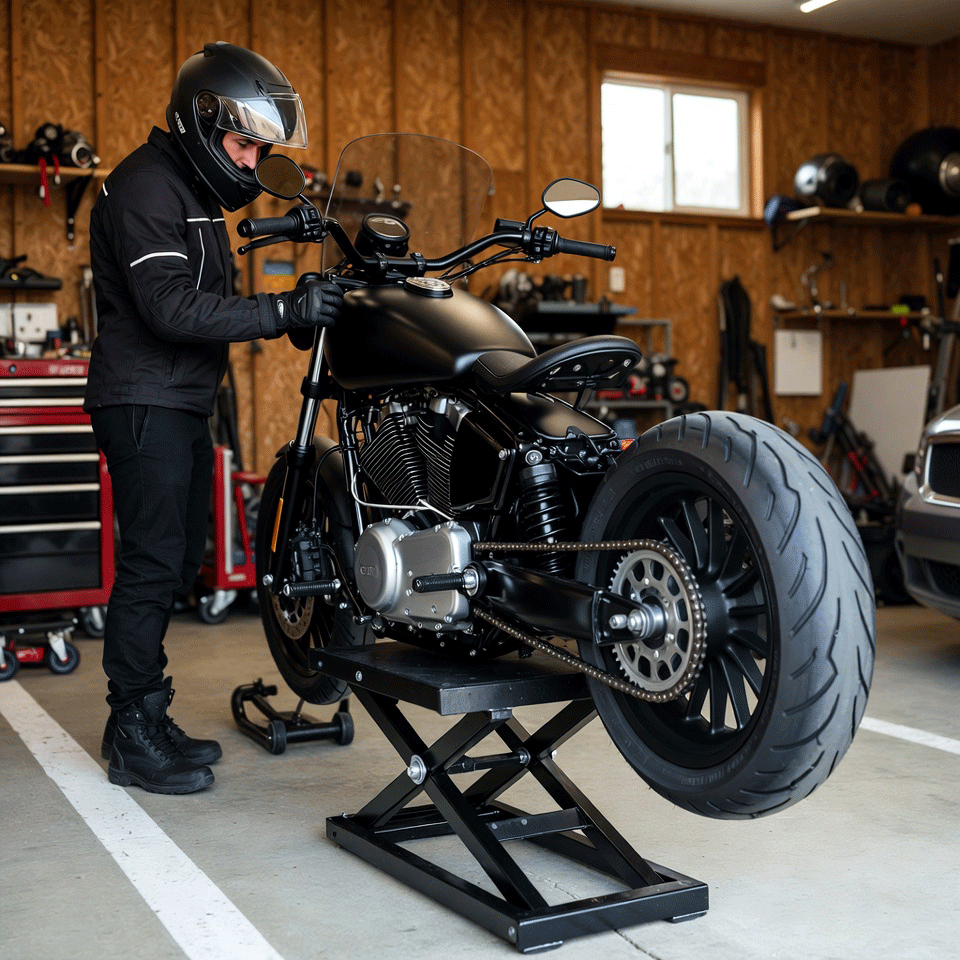
With the bike elevated, the rear wheel can spin freely. Chain cleaning and lubrication becomes a standing job — you rotate the wheel with one hand and apply lube evenly across every link with the other. No crouching, no awkward angles, no missed sections of chain. The quality of the work improves simply because you can see what you’re doing.
Tire inspection follows the same logic. A wheel pressed flat against the floor can only be checked in sections as you move around the bike. Elevated and spinning freely, you can check the full circumference in one pass — tread depth, sidewall condition, embedded objects, uneven wear patterns.
Underbody access opens up entirely. Dirt and grime accumulate in the lower sections of any motorcycle, particularly around the swingarm, chain guard, and lower frame rails. Without elevation, cleaning solution can’t reach these areas properly. With the bike lifted, the whole underside becomes accessible.
For oil changes, elevation makes drain plug access cleaner and reduces the risk of oil running down the frame before it reaches the drain pan. For brake inspection, getting underneath the caliper and rotor is significantly easier with the wheel off the ground.
What to Look for in a Lift Stand
Not all lift stands are the same. A few specifications matter more than others when choosing one for home use.
Load capacity is the starting point. A stand rated for 300 to 350kg covers the majority of standard road motorcycles, from small-displacement commuters to mid-range bikes. If you’re working on heavier touring bikes or adventure bikes, check the rated capacity against your specific bike’s weight before purchasing.
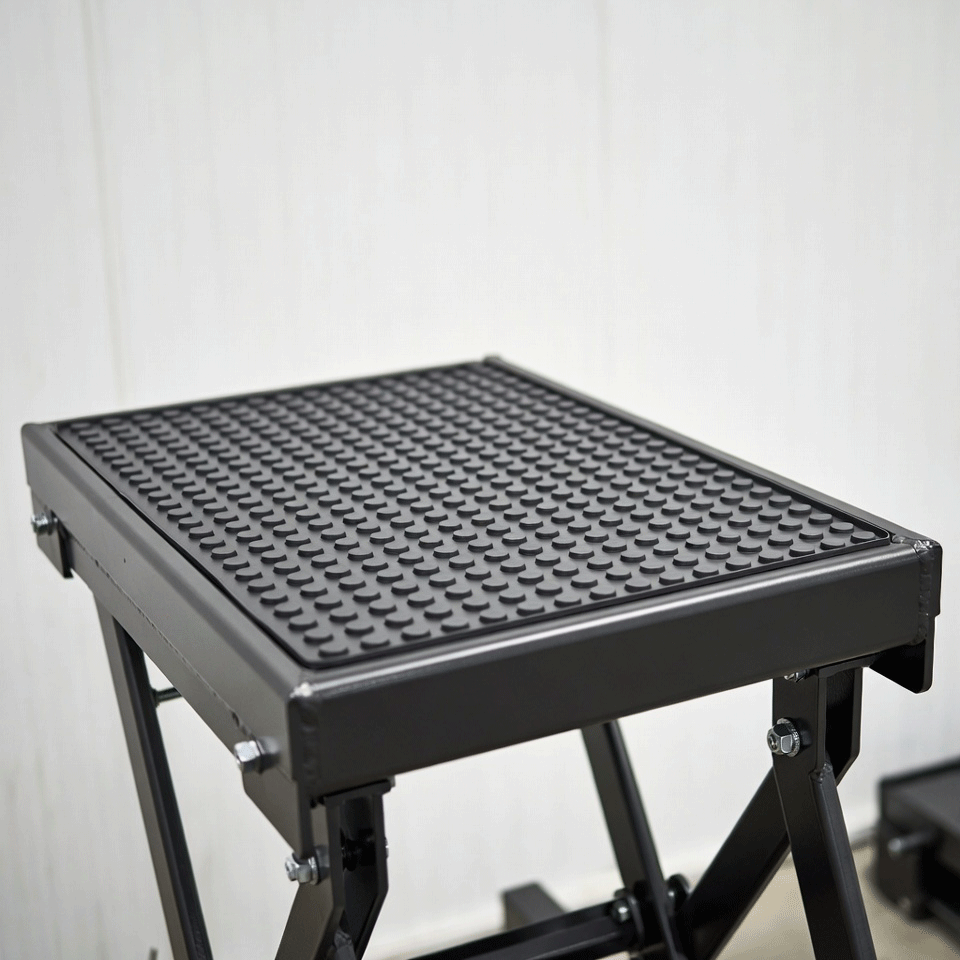
Platform size and anti-slip surface determine how stable the bike feels during work. A larger platform gives more contact area with the bike’s frame or swingarm. An anti-slip surface — rubber or textured material — prevents the bike from shifting laterally while elevated.
Frame construction affects durability and flex under load. Steel construction handles repeated use better than aluminum or plastic alternatives at the budget end of the market. Check that the stand doesn’t flex noticeably when weight is applied — a stand that rocks or shifts under load is a safety concern.
Height and scissor mechanism determine how much elevation you actually get and how smoothly the stand raises and lowers. Most home-use stands use a scissor jack mechanism operated by a handle bar. The handle should extend far enough to give you leverage without requiring excessive force.
Footprint and storage matter in smaller garages. A stand that collapses flat stores easily against a wall. Check the folded dimensions against your available storage space before purchasing.
Types of Lift Stands
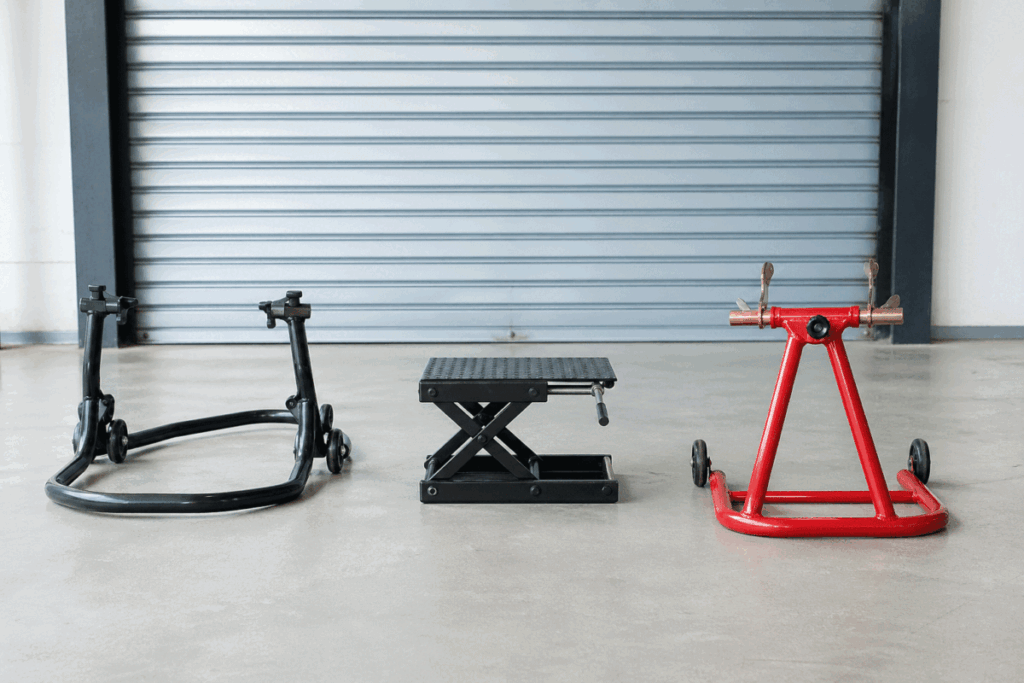
There are three common configurations for home motorcycle maintenance.
Scissor lift stands are the most common for home use. They use a scissor mechanism to raise a platform beneath the bike’s frame or swingarm. Compact, affordable, and suitable for most standard maintenance tasks. The limitation is that the bike remains in contact with the ground through the front wheel and kickstand — only the rear is elevated.
Paddock stands lift the bike from the swingarm spools, getting the rear wheel completely off the ground. More stable than scissor stands for extended work, and allow the rear wheel to be removed entirely. They require compatible swingarm spools or adapters on the bike.
Centre stands are integrated into some bikes and raise both wheels off the ground simultaneously. Not an aftermarket option, but worth noting for riders choosing between bikes — a factory centre stand significantly simplifies home maintenance.
For most home mechanics doing chain service, tire inspection, and general maintenance, a scissor lift stand is sufficient and the most practical starting point.
Who Needs a Lift Stand
A lift stand makes the most sense for riders who are doing any of the following regularly.
Chain cleaning and lubrication on a schedule rather than occasionally. Tire pressure and condition checks as a routine rather than an afterthought. Oil changes handled at home rather than at a shop. Any work that requires getting underneath the bike or spinning the rear wheel freely.
For riders who take their bikes to a shop for all maintenance, a lift stand adds less immediate value — though having one available for basic checks and cleaning still has merit.
For riders who are just starting to handle their own maintenance, a lift stand is one of the first tools worth adding. It makes the work more accessible, improves the quality of what you can do, and reduces the likelihood of skipping maintenance because it’s too awkward to do properly.
Frequently Asked Questions

Q. Can a lift stand damage my bike’s frame?
A properly sized stand with a padded or anti-slip platform won’t damage a frame under normal use. Ensure the contact point is on a structural part of the frame or swingarm rather than bodywork or plastic panels.
Q. Do I need a lift stand if my bike has a centre stand?
A factory centre stand handles most of the same tasks. If your bike has one, a separate lift stand is less necessary for routine maintenance. For work requiring full rear wheel removal, a paddock stand may still be useful.
Q. What’s the difference between a lift stand and a paddock stand?
A lift stand raises the bike from below using a platform under the frame. A paddock stand lifts from the swingarm spools, getting the rear wheel completely clear of the ground. Paddock stands are better for wheel removal; lift stands are more versatile for general maintenance.
Q. How much should I expect to spend?
Home-use scissor lift stands range from under $30 at the budget end to around $80 to $100 for mid-range options with better build quality and higher load ratings. For occasional home use on standard bikes, budget options perform adequately. For frequent use or heavier bikes, a mid-range stand is worth the additional cost.
The Bottom Line
A lift stand doesn’t make you a better mechanic. It makes the work you already know how to do easier to do properly.
For chain service, tire inspection, oil changes, and general maintenance, the difference between working at ground level and working with the bike elevated is significant enough that most riders who add one to their setup use it consistently from that point forward.
The decision comes down to how much of your own maintenance you handle and how often. If the answer is regularly, a lift stand earns its place in the garage quickly.