The Terminator 2 Motorcycle: How the Harley Davidson Fat Boy Became an Icon
When people think about Terminator 2: Judgment Day, they remember the liquid metal T-1000, the mall chase scene, and the molten steel ending.
But they also remember a single line delivered in a biker bar, followed by the image of a machine walking out with a set of keys.
“I need your clothes, boots, and your motorcycle.”
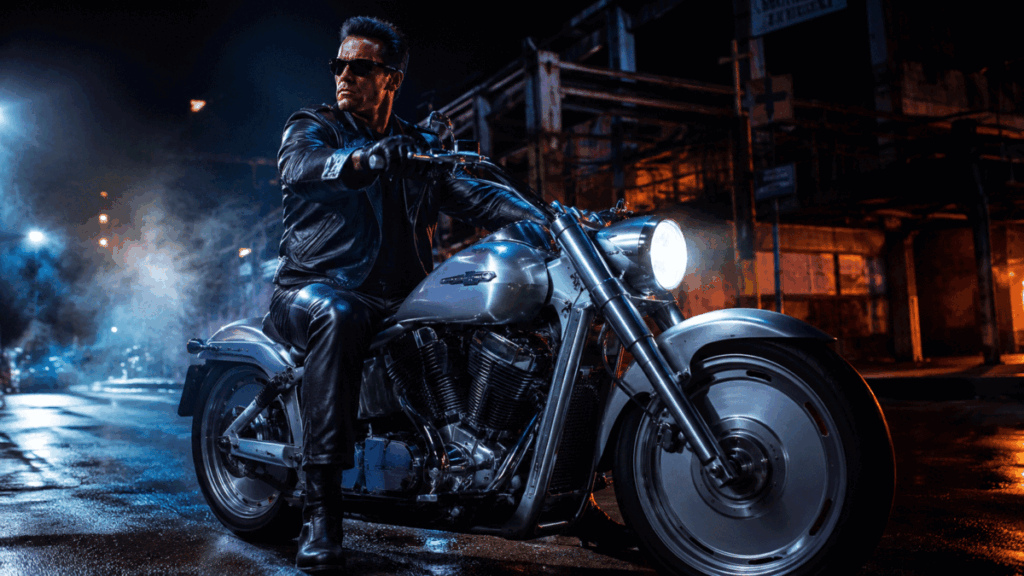
The camera cuts to a black cruiser motorcycle. Thick tires. Low-slung frame. Chrome-plated engine gleaming under the California sun. Arnold Schwarzenegger kicks it to life and rides off, and in that moment, the motorcycle stops being a prop and becomes part of the character.
That motorcycle was a 1991 Harley Davidson Fat Boy.
Over the three decades since the film’s release, the Fat Boy has remained inseparable from the image of the Terminator. It wasn’t just featured in the film — it became the film’s mechanical co-star, a symbol of power and inevitability that matched the character perfectly.
This is the story of why the Fat Boy was chosen, how it worked within the film, and why it’s still remembered as one of the most iconic motorcycles in cinema history.
The Motorcycle: Harley Davidson Fat Boy 1991
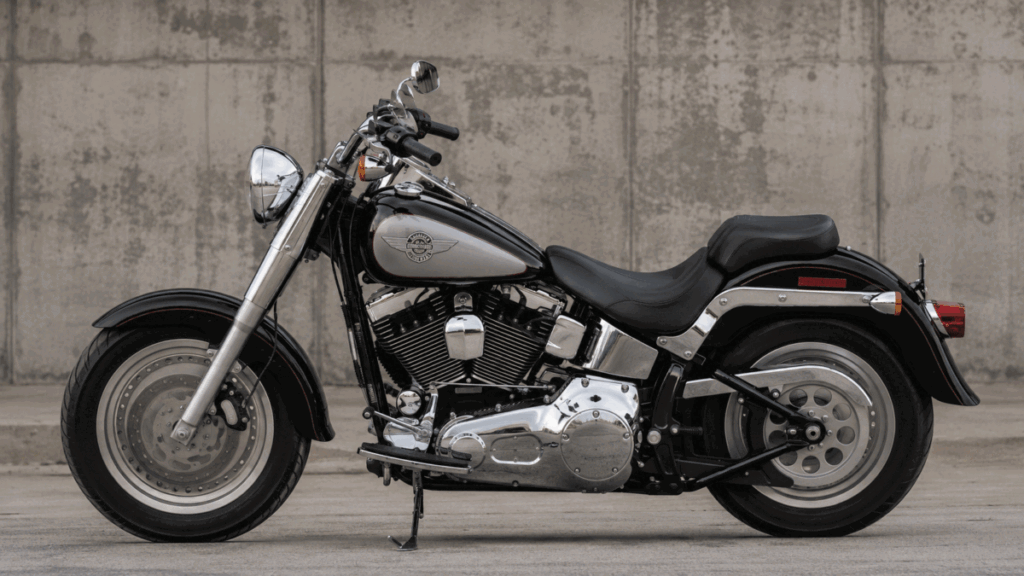
The motorcycle ridden by the Terminator throughout the film is a 1991 Harley Davidson Fat Boy.
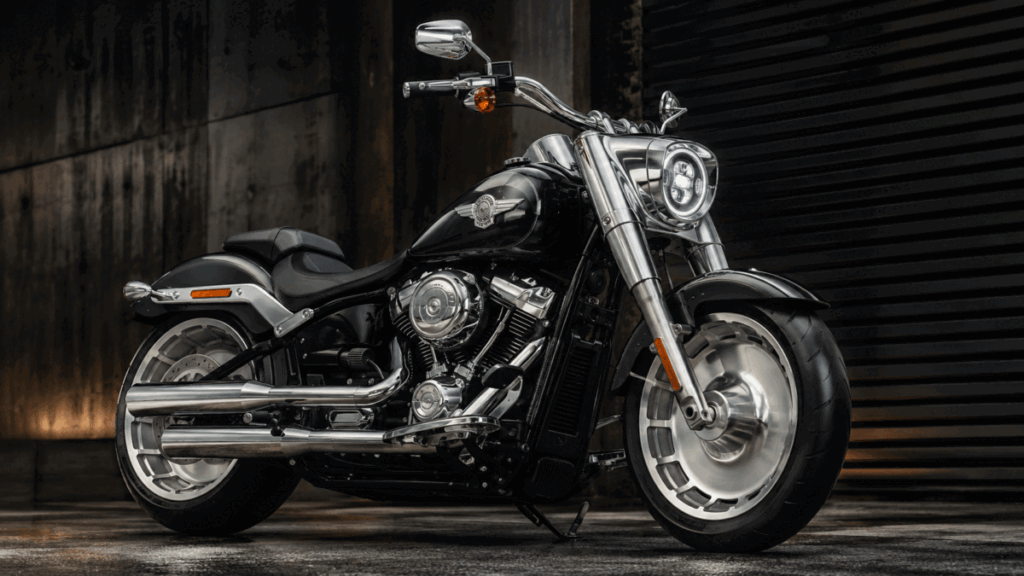
First introduced in 1990, the Fat Boy belongs to Harley’s Softail lineup and represents a distinctly American approach to motorcycle design. At the time of its release, it was visually unusual — even within Harley’s own range.
Key specifications:
- Engine: 1340cc Evolution V-Twin
- Wheels: Solid disc wheels (unusual for the era, which favored spoked wheels)
- Finish: Heavy chrome plating across engine, exhaust, and trim
- Style: Low, wide American cruiser
- Weight: Approximately 300+ kg (660+ lbs)
The name Fat Boy has long been rumored to reference the atomic bombs dropped on Hiroshima and Nagasaki — Fat Man and Little Boy. Harley has never officially confirmed this, but the name fits the bike’s thick, imposing presence.
What made the Fat Boy distinctive in 1991 was its styling. The solid disc wheels, the generous chrome detailing, and the low, heavy stance gave it a look that was both retro and futuristic — a combination that worked perfectly for a film about time travel and killer robots.
Why Terminator 2 Chose the Fat Boy
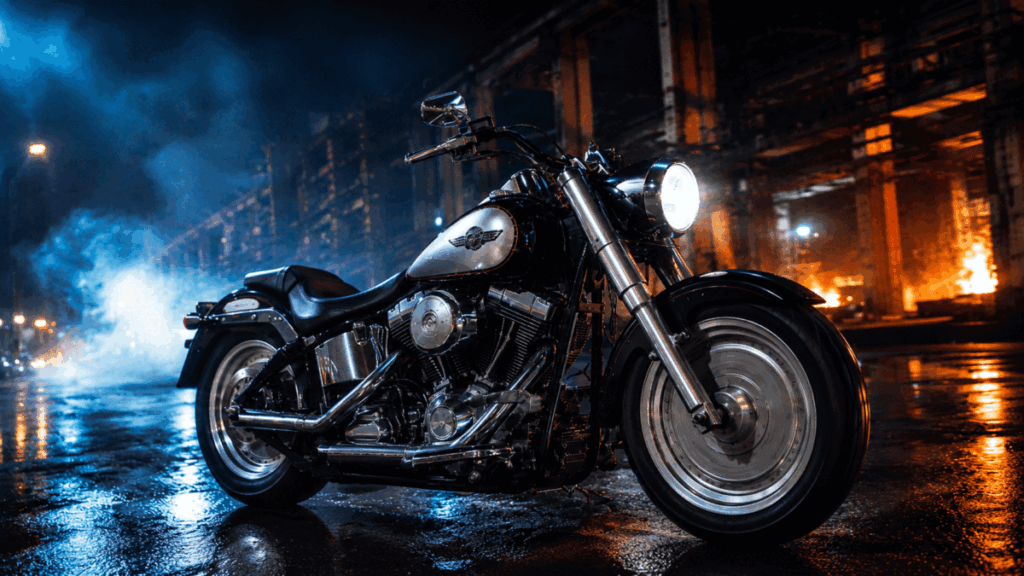
The choice of motorcycle wasn’t arbitrary. The Terminator is a machine sent from the future to kill. He’s emotionless, massive, and overwhelming. The motorcycle needed to reflect those qualities.
A lightweight, agile sport bike would have been wrong. The character doesn’t dart through traffic — he moves through it with inevitability. The Fat Boy, with its weight, its presence, and its chrome-heavy aesthetic, matched that energy perfectly.
Where Top Gun’s Kawasaki Ninja GPZ900R represented speed and freedom, the Terminator’s Fat Boy represented power and dominance. The two motorcycles embodied completely different philosophies, and both worked flawlessly within their respective films.
Cruiser motorcycle characteristics:
- Low, comfortable seating position
- Forward foot controls
- Heavy frame
- Torque delivery at low RPM
- Optimized for straight-line riding rather than cornering
These characteristics prioritize presence and comfort over agility. In the film, the Terminator rarely needs to corner aggressively — he rides in straight lines, often while holding a weapon. The Fat Boy’s design suited that riding style exactly.
Iconic Scenes: The Fat Boy in Action
The Fat Boy appears in three memorable sequences in Terminator 2, each contributing to its cultural impact.
The Biker Bar Scene
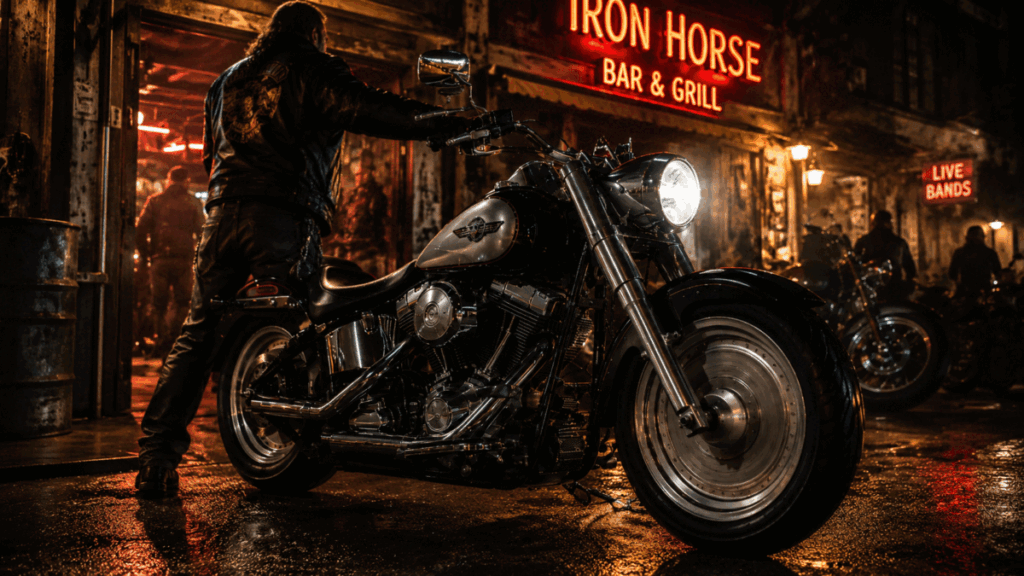
The Terminator’s first acquisition of the Fat Boy happens in a roadside biker bar. He walks in, scans the room, and forcibly takes the motorcycle from its owner — a member of a leather-clad biker gang.
This scene establishes something important: in biker culture, a Harley Davidson represents freedom and rebellion. But when the Terminator takes the bike, that meaning inverts. The machine now belongs to a machine. The symbol of human freedom becomes a tool of robotic efficiency.
The imagery is deliberate. The Terminator doesn’t negotiate. He doesn’t persuade. He simply takes what he needs, and the Fat Boy becomes an extension of that cold logic.
The Chase Scene
The mid-film chase sequence, in which the Terminator pursues the T-1000 while carrying John Connor and wielding a shotgun, remains one of the most visually striking action sequences of the 1990s.
What’s notable is that the Fat Boy doesn’t look fast in these scenes. It looks heavy. Stable. Overwhelming. Unlike a sport bike, which would weave and accelerate aggressively, the Fat Boy moves with deliberate momentum. It doesn’t dart — it charges.
This matches the Terminator’s character perfectly. He doesn’t panic. He doesn’t rush. He pursues with mechanical certainty, and the Fat Boy’s weight and presence reflect that.
The Shotgun
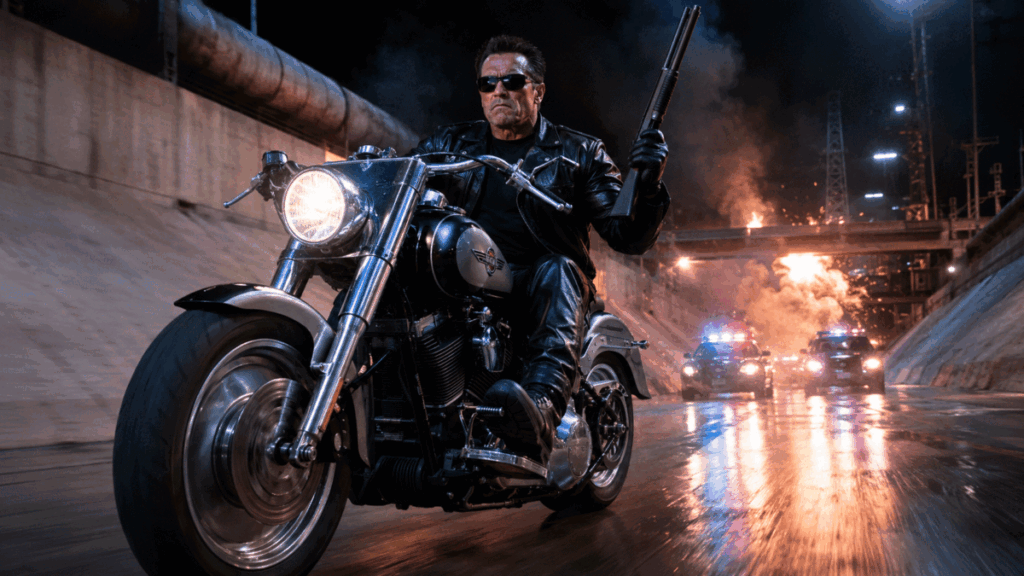
One of the film’s most iconic images is the Terminator riding the Fat Boy one-handed while firing a shotgun with the other.
This visual works because of the cruiser’s ergonomics. Sport bikes require a forward-leaning riding position that makes one-handed operation difficult. Cruisers, by contrast, position the rider upright with relaxed arm placement, making it plausible — at least cinematically — to operate a weapon while riding.
The image of the Terminator, shotgun raised, riding a Harley Davidson through Los Angeles traffic became one of the defining visuals of 1990s action cinema. The motorcycle wasn’t just transportation — it was part of the arsenal.
How the Film Changed the Fat Boy
After Terminator 2’s release in 1991, sales of the Fat Boy surged.
Harley Davidson has never released exact figures, but the company has confirmed that the Fat Boy became one of its best-selling models in the years following the film. Anecdotally, dealerships reported increased interest from younger buyers who cited the film as their introduction to the brand.
Before Terminator 2, Harley Davidson’s customer base skewed older and was heavily concentrated in the United States. The film exposed the brand — and the Fat Boy specifically — to a global audience and connected it with action, power, and cinematic cool.
What the Fat Boy gained from Terminator 2:
- Global brand recognition
- Appeal to a younger demographic
- Status as a cultural icon
- Permanent association with one of the decade’s biggest films
The Fat Boy is no longer just a cruiser model. It’s a piece of film history. Even people who have never ridden a motorcycle recognize it.
Harley Davidson Culture and the Cruiser Philosophy
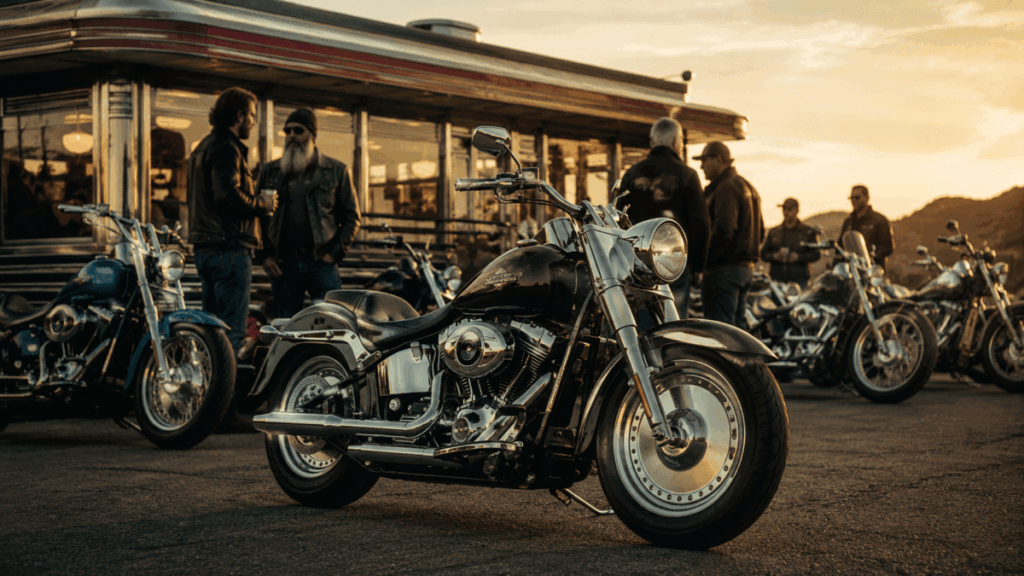
Harley Davidson is more than a motorcycle brand. It’s a cultural institution.
Founded in 1903, Harley has spent over a century building an identity rooted in American individualism, freedom, and rebellion. The company’s motorcycles aren’t just machines — they’re symbols. The distinctive rumble of a Harley V-Twin engine is recognizable worldwide.
Cruiser motorcycles represent a riding philosophy that differs fundamentally from sport bikes.
Sport bikes prioritize speed, handling, and track performance. Cruisers prioritize comfort, torque, and presence. They’re built for long-distance highway riding, not aggressive cornering. The journey matters more than the destination.
Comparing the Top Gun Ninja and the Terminator Fat Boy makes this difference clear:
Kawasaki Ninja GPZ900R: Japanese sport bike, speed, youth, freedom
Harley Davidson Fat Boy: American cruiser, power, presence, dominance
Both motorcycles were perfect for their films. Both became icons. But they represented entirely different ideas about what a motorcycle could be.
The Fat Boy Today
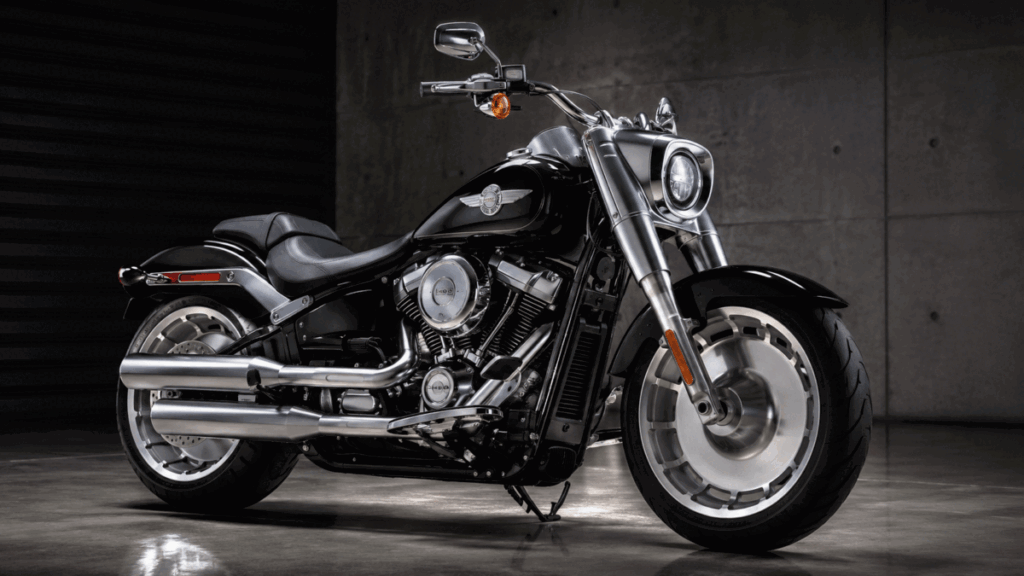
The Fat Boy remains in production as one of Harley Davidson’s core models.
Since its 1990 introduction, the bike has been updated multiple times. The current version features Harley’s Milwaukee-Eight engine, modern electronics, and refined ergonomics, but the design philosophy remains unchanged.
Current Fat Boy features:
- Milwaukee-Eight 114 engine (1868cc)
- Electronic suspension
- LED lighting
- Modern instrumentation
- Solid disc wheels (unchanged from the original)
Compared to the 1991 model, performance and comfort have improved significantly. But the visual identity is preserved. The Fat Boy is still low, still heavy, still chrome-plated, and still unmistakable.
Among Terminator 2 enthusiasts, original 1991 Fat Boys command a premium on the used market. Bikes matching the film’s specifications — particularly in black with chrome detailing — are sought after by collectors.
Verdict: When a Motorcycle Becomes a Character
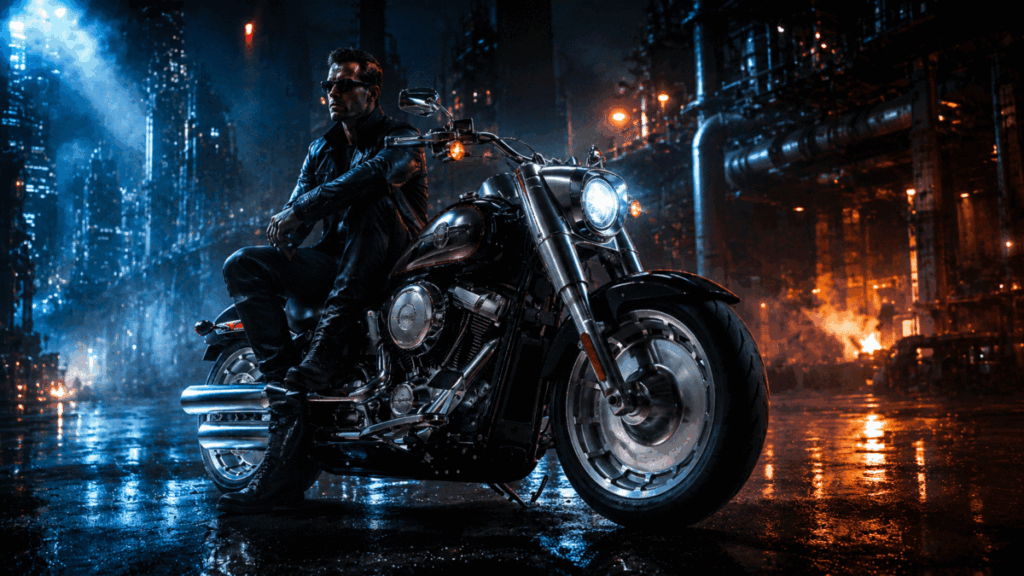
People remember the Terminator 2 Fat Boy not because of its specifications, but because the film gave it meaning.
The Terminator is a character without emotion. But the motorcycle he rides conveys power, inevitability, and dominance. The Fat Boy became an extension of the character, and eventually, it became inseparable from the character’s identity.
Where Top Gun’s Ninja represented speed and freedom, the Terminator’s Fat Boy represented force and presence.
Motorcycles sometimes transcend their mechanical purpose and become symbols. The Harley Davidson Fat Boy is one of those motorcycles. And when people see one today, the first thing many of them think of isn’t the engine displacement or the chrome finish.
It’s a man in a black leather jacket, holding a shotgun, riding through Los Angeles with mechanical certainty.
For the story of another iconic movie motorcycle, read: The Top Gun Motorcycle: Kawasaki Ninja GPZ900R Explained
For current Harley Davidson models, visit the Harley Davidson Official Website