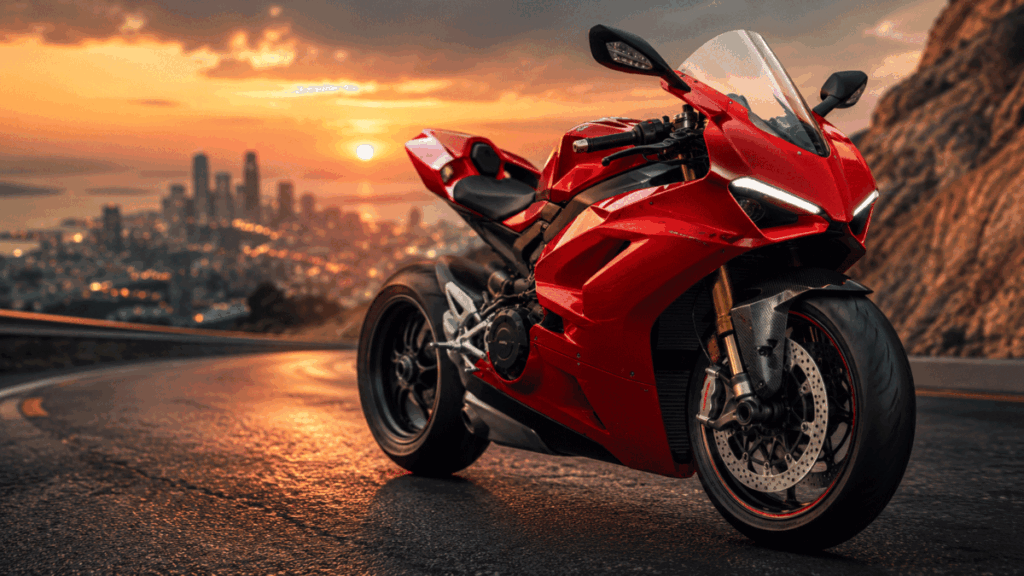
When riders think of Ducati, a few images usually come to mind.
Red fairings.
The unmistakable sound of a twin-cylinder engine.
Italian design.
Racing circuits.
And a kind of emotional intensity that few motorcycle brands can imitate.
Ducati is not just a manufacturer of fast motorcycles. It is a brand built on identity, engineering philosophy, racing heritage, and Italian character.
But Ducati’s story did not begin with superbikes.
It did not even begin with motorcycles.
Ducati began as a radio components company.
Long before the Panigale, the Monster, the 916, or the roar of Ducati machines on racing circuits, the company was building precision electronic parts in Bologna, Italy.
This is the story of Ducati history — how a small electronics company founded in 1926 became one of the most iconic motorcycle brands in the world.
The Unexpected Beginning: A Radio Components Company

Ducati was founded in 1926 in Bologna, Italy.
The company was established by Antonio Cavalieri Ducati and his three sons, Adriano, Marcello, and Bruno. Its original name was Società Scientifica Radio Brevetti Ducati, which can be roughly translated as Scientific Radio Patent Company.
At that point, Ducati had nothing to do with motorcycles.
Its business was built around radio components and precision electronics. During the 1920s and 1930s, radio technology was expanding quickly across Europe, and Ducati became one of Italy’s notable manufacturers in this new industry.
Ducati’s official heritage archive
Ducati Before Motorcycles
Before Ducati became a motorcycle name, it produced components such as capacitors, vacuum tubes, and optical equipment.
The company grew rapidly enough to build a large factory in Bologna by the mid-1930s. For a time, Ducati seemed to be heading toward a future in electronics, not transportation.
Then World War II changed everything.
In 1944, Ducati’s main factory was heavily damaged by Allied bombing. When the war ended in 1945, Italy was economically exhausted, and Ducati had to rebuild almost from the ground up.
The demand for radio components was no longer enough.
Italy needed affordable transportation.
Ducati needed a new direction.
And the motorcycle industry was about to become part of its future.
From Electronics to Motorcycles
Postwar Italy created the perfect conditions for small, affordable transportation.
Roads were damaged.
Money was limited.
Cars were too expensive for many families.
People needed practical mobility more than luxury or performance.
This was the same environment that helped create icons like Vespa. It was also the environment that pushed Ducati toward motorcycles.
In 1946, Ducati acquired the production rights for the Cucciolo engine, designed by Aldo Farinelli.
The name “Cucciolo” means “puppy” in Italian.
It was a small name for a small engine, but it played a major role in Ducati’s future.
The Cucciolo Engine
The Cucciolo was a 48cc four-stroke single-cylinder engine.
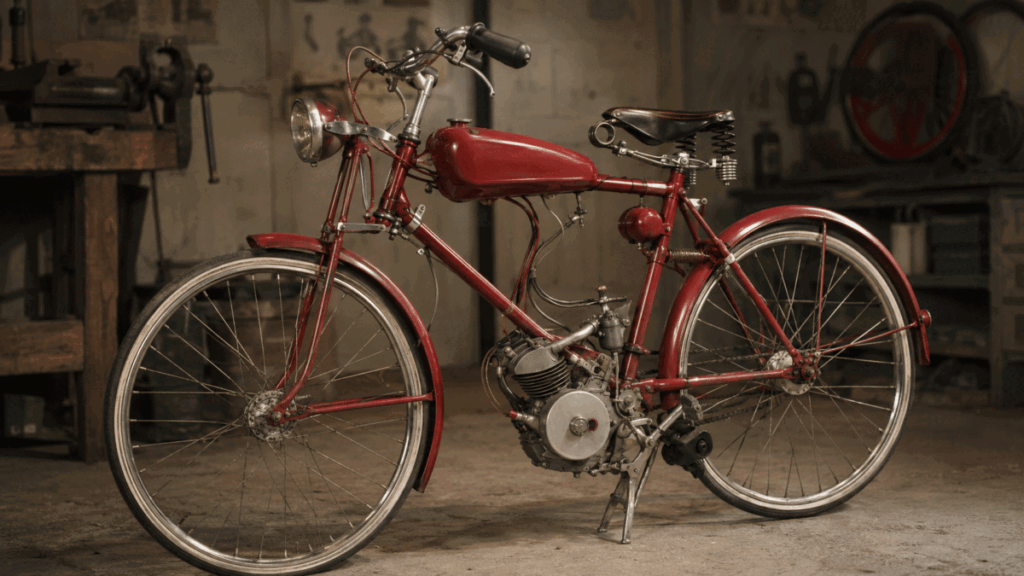
At first, it was not used in a complete motorcycle. Instead, it was designed to be attached to a bicycle, turning a regular bicycle into a simple motorized vehicle.
By modern standards, the engine was extremely modest. Its power output was low, and it had none of the drama people now associate with Ducati.
But that was exactly why it worked.
The Cucciolo was affordable, economical, and useful. In postwar Italy, those qualities mattered more than speed.
The engine became a commercial success and helped Ducati move from electronics into the world of motorized transportation.
By 1950, Ducati had produced a large number of Cucciolo engines, and the company took the next important step: it released its first complete motorcycle fitted with a Cucciolo engine.
This was the real beginning of Ducati as a motorcycle manufacturer.
The company was no longer simply adding engines to bicycles. It was now designing complete motorcycles.
Throughout the 1950s, Ducati produced a range of small-displacement motorcycles for the Italian market. At this stage, however, Ducati was not yet the legendary brand it would later become.
It was still one of many Italian motorcycle companies trying to survive and grow in a changing market.
The turning point came when Ducati found a way to become mechanically different.
The Technology That Made Ducati Different: Desmodromic Valves
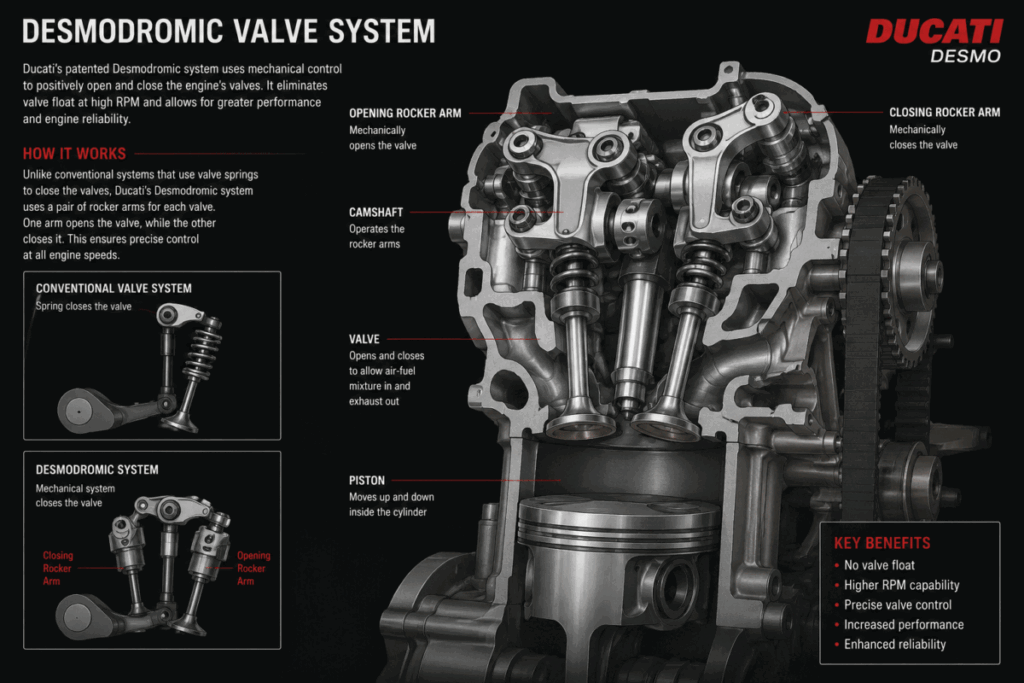
One technology became deeply connected with Ducati’s identity.
That technology was the desmodromic valve system.
For many motorcycle enthusiasts, the word “desmo” is almost inseparable from Ducati. It is not just a technical feature. It is part of the brand’s personality.
What Is a Desmodromic Valve System?
In a conventional engine, valves are opened by the camshaft and closed by springs.
This system is simple, reliable, and widely used. But at very high engine speeds, valve springs can struggle to close the valves quickly enough. When that happens, a problem called valve float can occur.
Valve float can reduce performance and may cause engine damage in extreme situations.
Ducati’s desmodromic system approaches the problem differently.
Instead of relying only on springs to close the valves, the system uses a mechanical mechanism to both open and close them.
In simple terms, the engine controls the valves more directly.
This allows more precise valve movement at high rpm and gives the engine a distinctive mechanical character.
Why Ducati Kept the Desmo System
The desmodromic system is not the easiest solution.
It is more complex.
It is more expensive to build.
It requires more precise maintenance.
And for many manufacturers, modern valve spring technology is already good enough.
Japanese brands such as Honda, Yamaha, Suzuki, and Kawasaki developed highly reliable engines using conventional valve spring systems. Their approach emphasized durability, efficiency, and mass production.
Ducati went in a different direction.
In the late 1950s, engineer Fabio Taglioni played a major role in developing Ducati’s desmodromic technology. By 1958, Ducati applied the system to its 125cc Grand Prix racing motorcycle.
From that point on, desmodromic valves became one of Ducati’s most recognizable engineering signatures.
This is one reason Ducati motorcycles feel different.
They are not always the simplest machines.
They are not always the most practical machines.
But they carry a mechanical identity that riders remember.
Ducati’s technical explanation of the V4 Granturismo
The Birth of Ducati’s Racing DNA
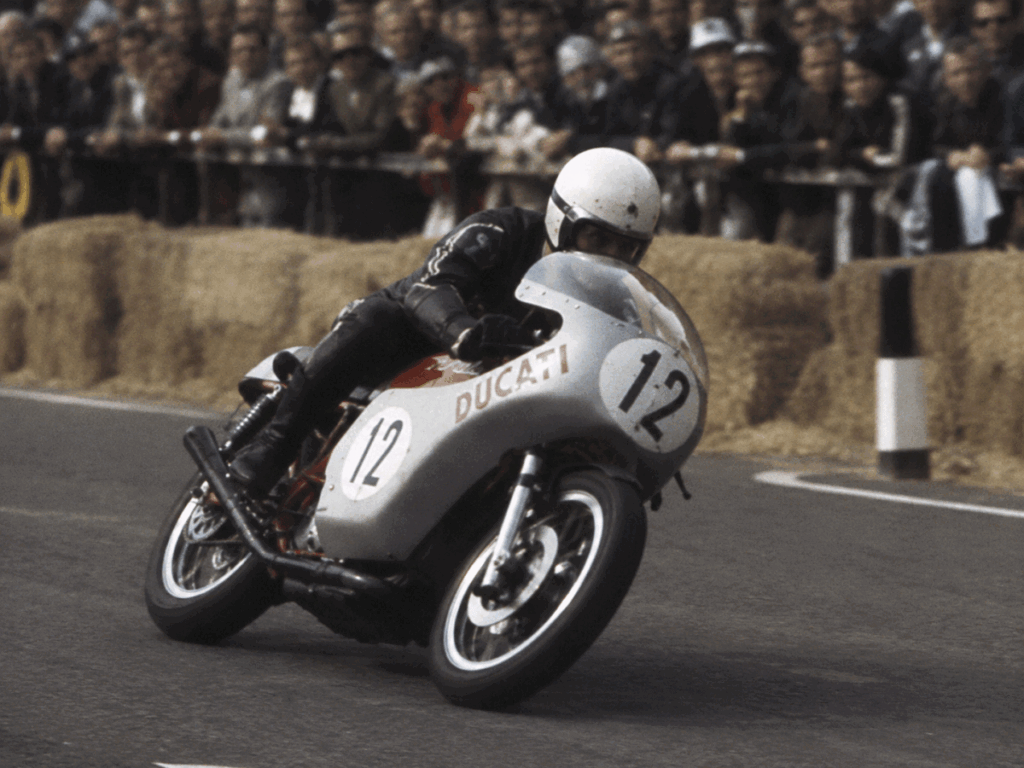
Ducati’s identity was not created only in workshops and engineering departments.
It was shaped on racetracks.
From the late 1950s, Ducati began competing in Grand Prix racing. At first, it focused on smaller displacement classes, including 125cc and 250cc machines.
But racing soon became more than competition.
It became part of Ducati’s brand language.
The 1972 Imola Victory
One of the most important moments in Ducati history came in 1972.
Paul Smart won the Imola 200 riding a Ducati 750 Imola. That victory became a defining moment for the brand.
The 750 Imola used a 90-degree L-twin engine and desmodromic valve technology. This combination would later become a foundation of Ducati’s sport bike identity.
The win changed how Ducati was perceived.
Ducati was no longer seen only as a company that made small practical motorcycles. It was becoming a racing brand.
Racing as Brand Identity
Racing gave Ducati something that specifications alone could not create.
It gave the brand emotion.
Italian design, mechanical uniqueness, and race-proven performance came together. This combination separated Ducati from many other motorcycle manufacturers.
A Ducati was not just a machine for transportation.
It was a machine with character.
This idea would become even more important in the decades that followed.
Crisis and Rebirth: The Ducati 916 Era
Ducati’s history was not always a story of success.
By the 1980s, the company was in serious difficulty.
Japanese motorcycle manufacturers had become extremely strong. They had scale, reliability, advanced engineering, and global sales networks. Their motorcycles were fast, dependable, and often more affordable.
Ducati struggled financially.
The company came under state control and was later acquired by the Cagiva Group in 1985.
But Ducati still had something valuable.
It had identity.
And in the 1990s, that identity returned in one of the most important sport bikes ever made.
The Ducati 916
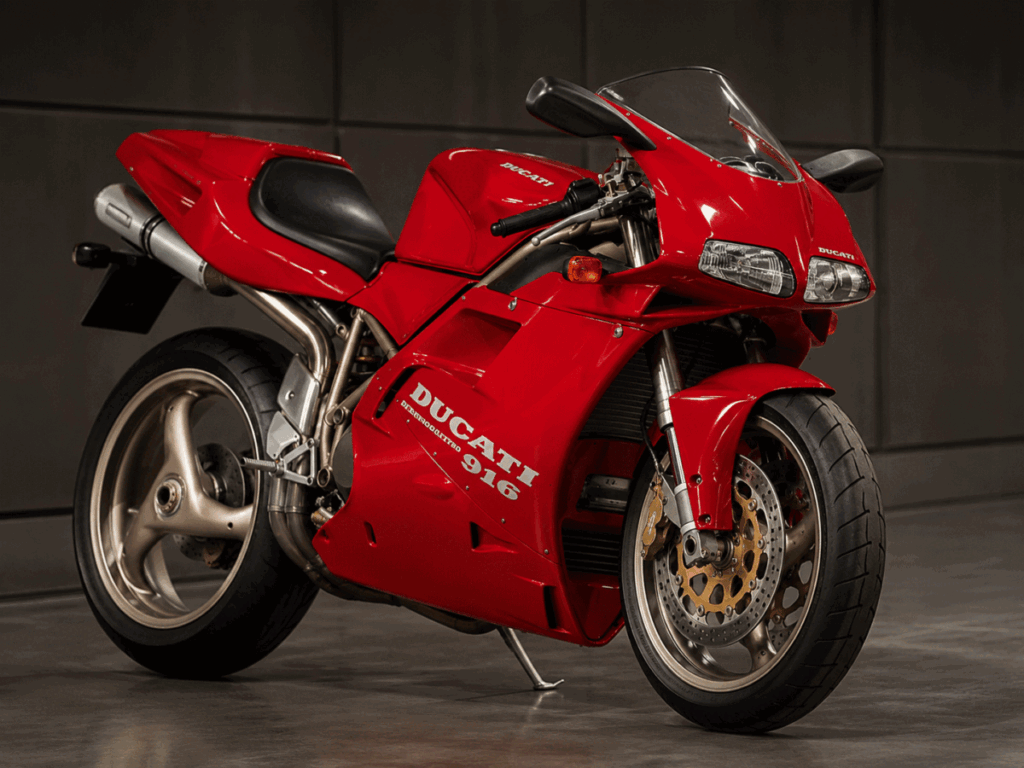
In 1994, Ducati introduced the 916.
Designed by Massimo Tamburini, the Ducati 916 became one of the most iconic motorcycles in superbike history.
Its design was sharp, compact, aggressive, and elegant at the same time. The single-sided swingarm, under-seat exhausts, sculpted fairings, and focused proportions made the 916 instantly recognizable.
Even today, the 916 still looks modern.
But the 916 was not only beautiful.
It was also a serious racing machine.
Its success in the World Superbike Championship helped Ducati return to the center of the global motorcycle world.
Why the 916 Still Matters
The Ducati 916 proved an important point.
Ducati could not defeat Japanese manufacturers by simply copying them.
It had to win by being different.
Instead of trying to become the most practical or mass-produced motorcycle brand, Ducati leaned into design, racing emotion, mechanical character, and Italian identity.
That decision shaped the Ducati superbikes that followed.
The 916 led to later models such as the 996, 998, 999, 1098, 1199, 1299, and eventually the Panigale V4.
Each generation carried the same basic message:
Ducati is not trying to be ordinary.
It is trying to be unforgettable.
Ducati vs Japanese Motorcycles: A Difference in Philosophy
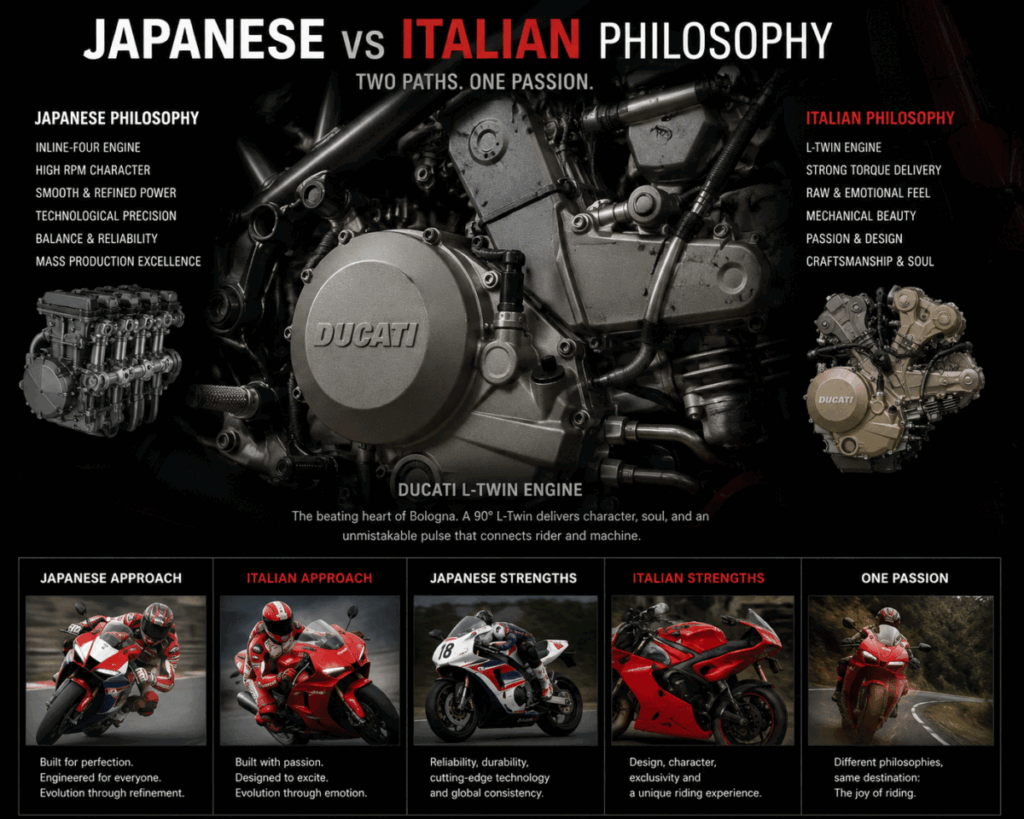
To understand Ducati, it helps to compare it with Japanese motorcycle brands.
Honda, Yamaha, Suzuki, and Kawasaki are known for reliability, efficiency, scale, and strong value for money.
Their motorcycles are often practical, durable, and easy to live with. They are built with a philosophy that values consistency and usability.
That is their strength.
Ducati’s philosophy is different.
Efficiency vs Emotion
Ducati focuses on emotion, racing heritage, design, and mechanical character.
A Ducati motorcycle is often more expensive than a comparable Japanese motorcycle. Maintenance can be more demanding, and ownership costs may be higher.
From a purely practical point of view, that can look like a disadvantage.
But Ducati buyers usually understand this.
They are not choosing Ducati only because it is the most logical option.
They are choosing Ducati because of how it feels.
The sound.
The design.
The racing connection.
The mechanical personality.
The idea of owning something with heritage.
For many Ducati riders, those things matter as much as numbers on a specification sheet.
Why Ducati Feels Expensive
Ducati motorcycles often feel expensive because the brand is built around details that are not always practical.
The engineering can be complex.
The design is a major part of the product.
The racing program influences the brand image.
The production philosophy is different from high-volume Japanese manufacturing.
For some riders, this makes Ducati less sensible.
For Ducati fans, it is exactly the point.
A Ducati is not only something you ride.
It is something you experience.
Ducati Today
Today, Ducati is one of the most recognizable motorcycle brands in the world.
The company is no longer defined only by superbikes. Its modern lineup covers several categories, from high-performance sport bikes to adventure touring machines, naked bikes, retro-inspired models, and power cruisers.
Ducati has become broader, but it has not lost its core identity.
The brand still revolves around performance, design, racing culture, and emotional appeal.
Current Ducati Lineup
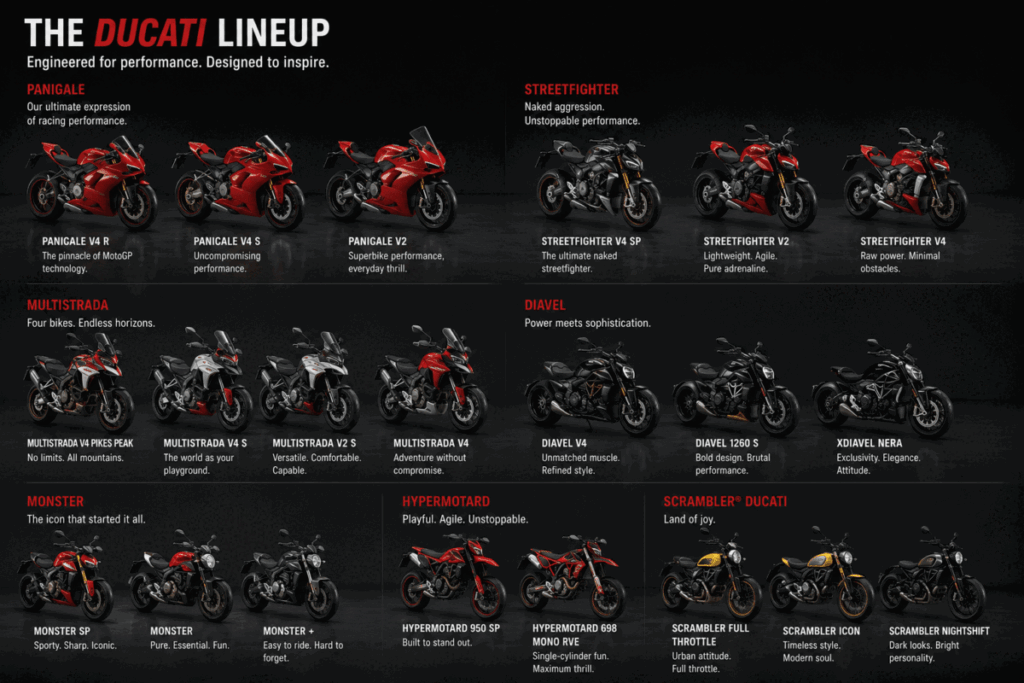
Ducati’s modern lineup includes several major model families.
Panigale V4
The Panigale V4 is Ducati’s flagship superbike family.
It represents the most direct connection between Ducati’s racing development and its road-going sport bikes.
Streetfighter V4
The Streetfighter V4 takes superbike performance and presents it in a more aggressive naked-bike form.
It is not a calm commuter motorcycle. It is a performance machine with a raw street presence.
Monster
The Monster is one of Ducati’s most important naked bike families.
It helped define the modern naked bike category and remains one of the most recognizable names in Ducati’s lineup.
Multistrada
The Multistrada is Ducati’s adventure touring family.
It shows how Ducati has expanded beyond pure sport machines into long-distance comfort, versatility, and everyday usability.
Scrambler
The Scrambler line focuses on simplicity, retro style, and lifestyle appeal.
It is one of Ducati’s most approachable model families and gives the brand a more relaxed personality.
Diavel
The Diavel is Ducati’s power cruiser.
It combines muscular styling with Ducati performance, creating a motorcycle that does not fit neatly into traditional categories.
Modern Ducati and the Desmo Identity
Desmodromic valves remain one of Ducati’s most famous engineering symbols.
For decades, the desmo system helped define Ducati’s mechanical identity. It became part of the brand’s sound, maintenance culture, and enthusiast language.
However, modern Ducati is not trapped in the past.
The company has also developed engines and models that focus more on usability, longer maintenance intervals, comfort, and broader riding conditions.
This matters because it shows that Ducati is evolving.
The brand still respects its heritage, but it also understands that modern riders expect more than racing emotion alone.
They want performance.
They want character.
But they also want motorcycles that can be used in real life.
Ducati in Modern Racing
Racing remains central to Ducati’s image.
Even as the lineup has expanded, Ducati continues to be strongly connected with MotoGP, World Superbike, and high-performance motorcycle development.
This racing connection is not just about trophies.
For Ducati, racing is proof of identity.
It reminds riders that the brand’s emotional image is not only marketing. It comes from decades of competition, engineering risk, and mechanical ambition.
Ducati’s dominant 2024 MotoGP season
Conclusion: When a Brand Becomes More Than a Machine
Ducati began in 1926 as a radio components company in Bologna.
It survived war, factory destruction, economic uncertainty, ownership changes, and intense competition from Japanese manufacturers.
And through all of that, it became one of the most emotional motorcycle brands in the world.
Ducati history is not only a story of technology.
It is a story of identity.
The brand created its own language through desmodromic valves, L-twin engines, red fairings, racing victories, Italian design, and unforgettable motorcycles like the 916.
Japanese brands conquered the world with reliability, efficiency, and practicality.
Ducati survived by offering something different.
Emotion.
Sound.
Design.
Racing heritage.
Mechanical character.
That is why people do not buy a Ducati only as transportation.
They buy into a story that began in Bologna nearly a century ago.
And that story continues today on roads, racetracks, and in the imagination of riders around the world.
FAQ
Did Ducati originally make motorcycles?
No. Ducati originally started as a radio components company in Bologna, Italy, in 1926. The company moved into motorcycle production after World War II.
What was Ducati’s first motorcycle-related product?
Ducati’s first major motorcycle-related product was the Cucciolo engine, a small 48cc engine designed to be attached to bicycles.
What does “Cucciolo” mean?
“Cucciolo” means “puppy” in Italian. The name was used for Ducati’s small postwar engine that helped move the company into motorcycles.
What is Ducati famous for?
Ducati is famous for Italian design, racing heritage, desmodromic valve technology, emotional engine character, and iconic sport bikes such as the Ducati 916 and Panigale series.
Why is the Ducati 916 important?
The Ducati 916 is considered one of the most iconic sport bikes ever made. It helped revive Ducati’s global image in the 1990s and strongly influenced modern superbike design.
Is Ducati better than Japanese motorcycle brands?
Ducati is not better in every practical sense. Japanese brands often offer excellent reliability, lower ownership costs, and easier maintenance. Ducati stands out through design, racing heritage, mechanical character, and emotional appeal.
Why are Ducati motorcycles expensive?
Ducati motorcycles are often expensive because of their engineering, design, racing development, brand positioning, and lower-volume production compared with many Japanese manufacturers.