The first time most people see a Piaggio MP3, the reaction is predictable.eel scooter, the reaction is predictable.
“What is that?”
A scooter with two front wheels looks wrong to anyone accustomed to the visual logic of two-wheeled motorcycles and four-wheeled cars. The category itself feels unfamiliar. We’re conditioned to think in pairs and quads, not threes.
But when Piaggio launched the MP3 in 2006, they didn’t just create a new product. They created a new category.
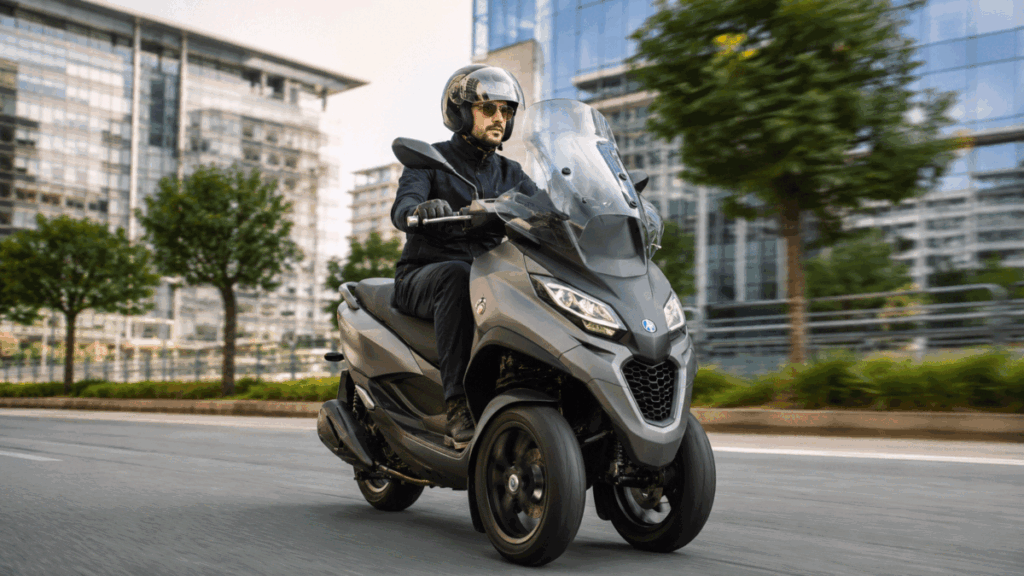
The MP3 is the world’s first tilting three-wheel scooter — a vehicle that leans into corners like a motorcycle but stands upright on three wheels. Over the past 18 years, it has sold more than 230,000 units worldwide. That’s roughly 14,000 units per year — not a mass-market product by any measure, but enough to prove that a market exists.
The MP3 occupies a space that didn’t exist before it arrived. It’s not a two-wheel scooter. It’s not a conventional trike. It’s something else entirely, and for a specific subset of urban riders, it’s the only thing that makes sense.
This is the story of how Piaggio built that market from scratch.
The World’s First Tilting Three-Wheeler (2006)
The Piaggio MP3 launched in 2006 as the world’s first production tilting three-wheel scooter.
Piaggio, the Italian company that created the Vespa in 1946, has a history of identifying transportation problems and solving them with unconventional designs. The Vespa addressed postwar Italy’s need for affordable mobility. The MP3 addressed modern urban traffic — congestion, instability on poor road surfaces, and the intimidation factor that keeps potential riders away from two-wheeled motorcycles.
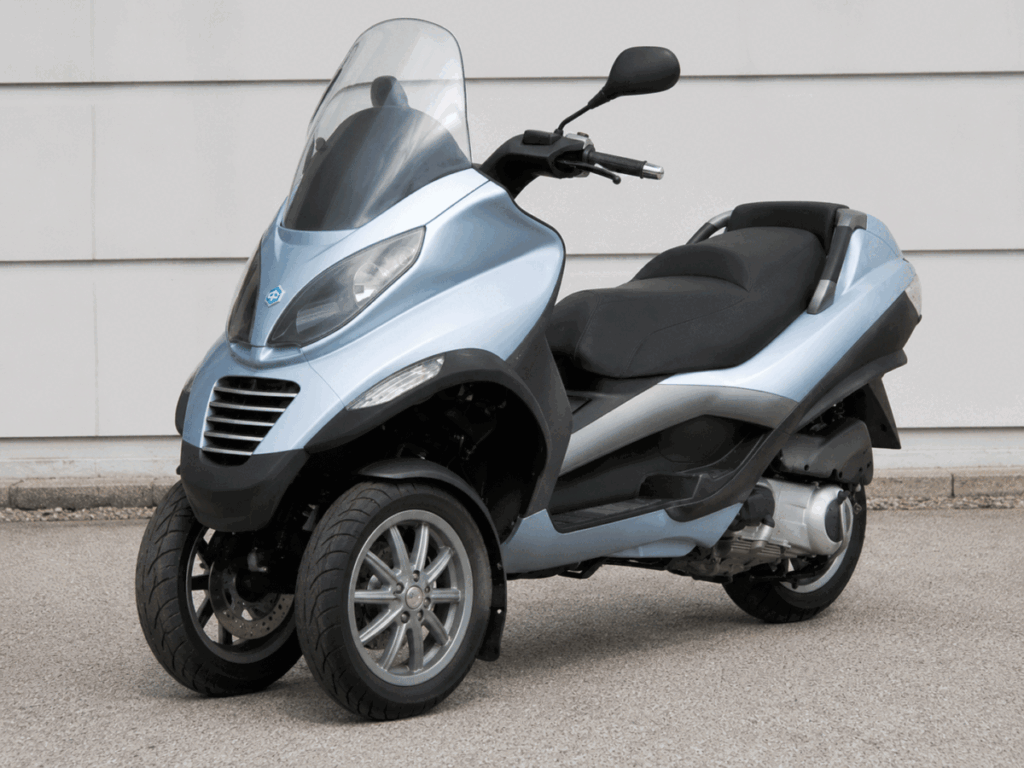
The structure is simple: two wheels in front, one in the rear. But the defining feature isn’t the wheel count — it’s the tilting mechanism. Conventional trikes stay upright through corners, relying on tire grip alone. The MP3 leans like a motorcycle, allowing the rider to countersteer and shift weight through turns.
That’s the core innovation: motorcycle dynamics on three wheels.
The first model featured a 250cc single-cylinder engine and targeted European urban commuters. Piaggio set cautious sales goals, but the MP3 became the company’s best-selling scooter in its first year. The market responded immediately.
How the Tilting System Works
The difference between a conventional trike and the MP3 comes down to suspension geometry.
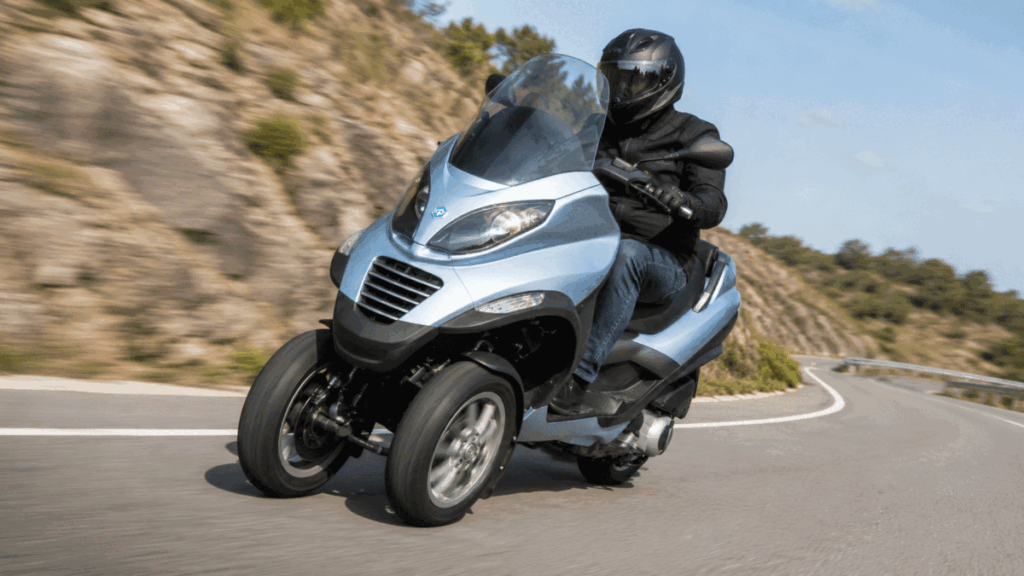
A conventional three-wheeler keeps the chassis level through corners, like a car. Centrifugal force pushes the vehicle outward, and if the speed is too high relative to the turn radius, the inside wheel lifts and the vehicle tips. It’s stable at low speeds but limited at higher speeds.
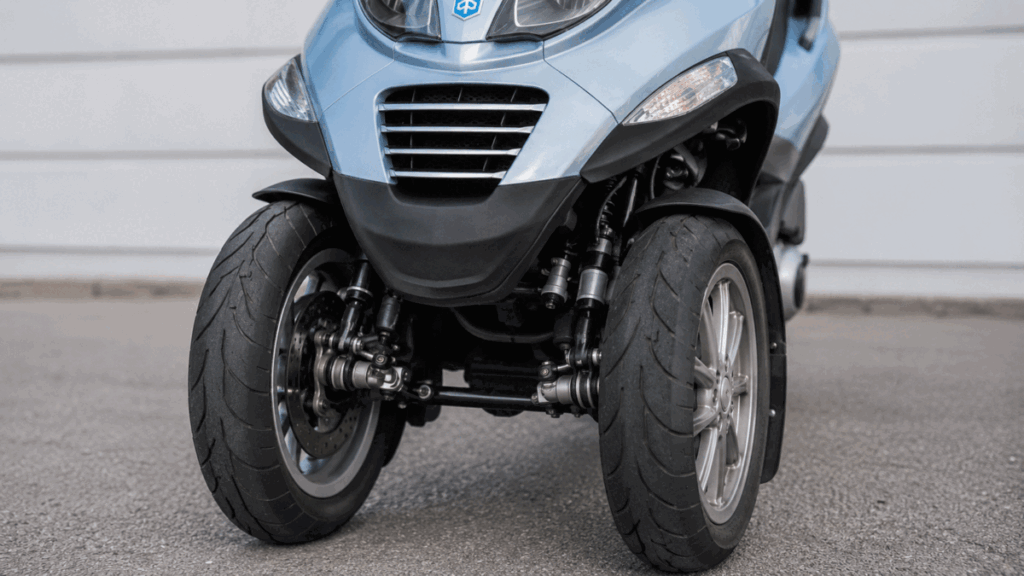
The MP3 tilts. The two front wheels are connected by a parallelogram linkage system — an aluminum frame that allows both wheels to lean together while maintaining independent suspension travel. When the rider countersteers and leans into a corner, both front wheels tilt in unison.
The mechanism works like this:
Parallelogram linkage: The two front wheels are mounted on a linkage that pivots at the center.
Central steering arm: A single steering input controls both wheels simultaneously.
Synchronized lean: When the rider leans, both wheels tilt together, maintaining even contact with the road.
The result is a vehicle that handles like a motorcycle but provides the stability advantage of two front contact patches instead of one.
Why Three Wheels: Advantages Over Two
The decision to add a second front wheel wasn’t arbitrary. It addresses specific weaknesses inherent to two-wheeled vehicles.
Double the Contact Patch
Two front wheels mean two tire contact patches with the road surface. If one wheel encounters a pothole, tar snake, or slick surface, the other maintains grip. The suspension articulates independently, so road imperfections that would unsettle a single front wheel are absorbed asymmetrically.
Piaggio claims the MP3 reduces braking distance by approximately 20% compared to conventional scooters. Each front wheel has a 240mm disc brake, and under hard braking, the load is distributed across two contact patches rather than one. The front wheel is far less likely to lock, and the rear wheel is less likely to lift.
Wet and Uneven Surfaces
Urban riders know the hazards: painted lane markers, manhole covers, oil slicks, gravel at intersections. A two-wheeled scooter loses traction if the front tire crosses any of these at the wrong angle. The MP3’s dual front wheels provide redundancy — if one slips, the other compensates.
Stability at Low Speed
Two-wheeled scooters require the rider to balance at low speeds or while stopped, using feet for support. The MP3 remains stable even at walking pace. The dual front wheels provide enough lateral stability that the vehicle won’t tip over during slow-speed maneuvering.
The Parking System Innovation
One of the MP3’s most distinctive features is its parking mechanism.
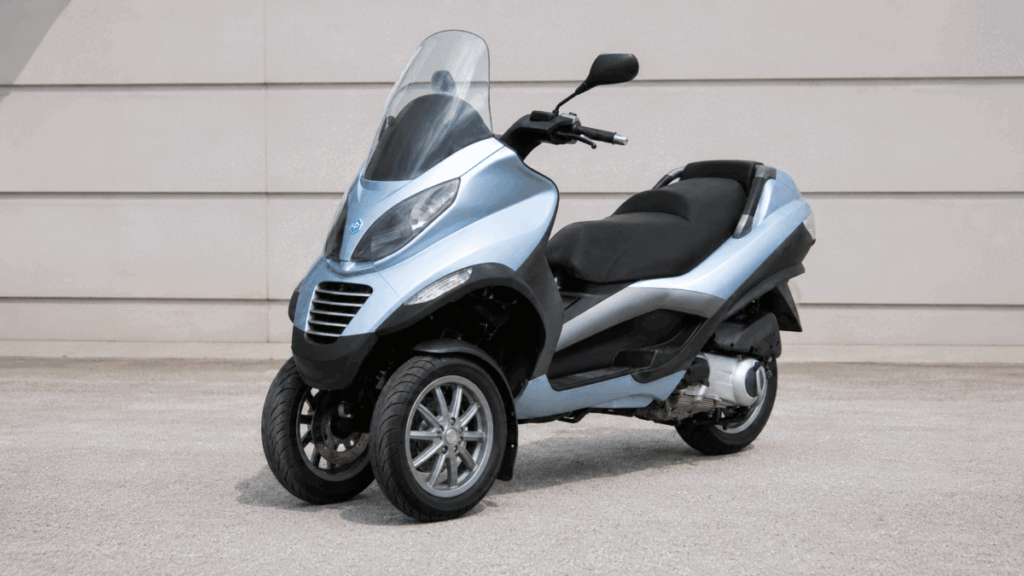
Conventional motorcycles and scooters require a side stand or center stand to remain upright when parked. The MP3 doesn’t. It stands on its own.
The system works through a locking mechanism controlled by a lever under the handlebars. When the rider pulls the parking brake lever, two things happen simultaneously: the brakes engage, and the tilting mechanism locks in the upright position. The front wheels are held vertical, and the vehicle stands without external support.
This has practical advantages. The MP3 can be parked on uneven ground, slopes, or side-sloping surfaces where a conventional kickstand would be unstable. It can also be parked in tighter spaces because there’s no need to account for the side stand footprint.
For daily commuters parking repeatedly throughout the day, eliminating the need to deploy and retract a stand saves seconds per stop — small gains that compound over time.
The Car License Loophole (Europe)
In certain European markets, specific versions of the MP3 can be legally ridden with only a standard car license — no motorcycle endorsement required.
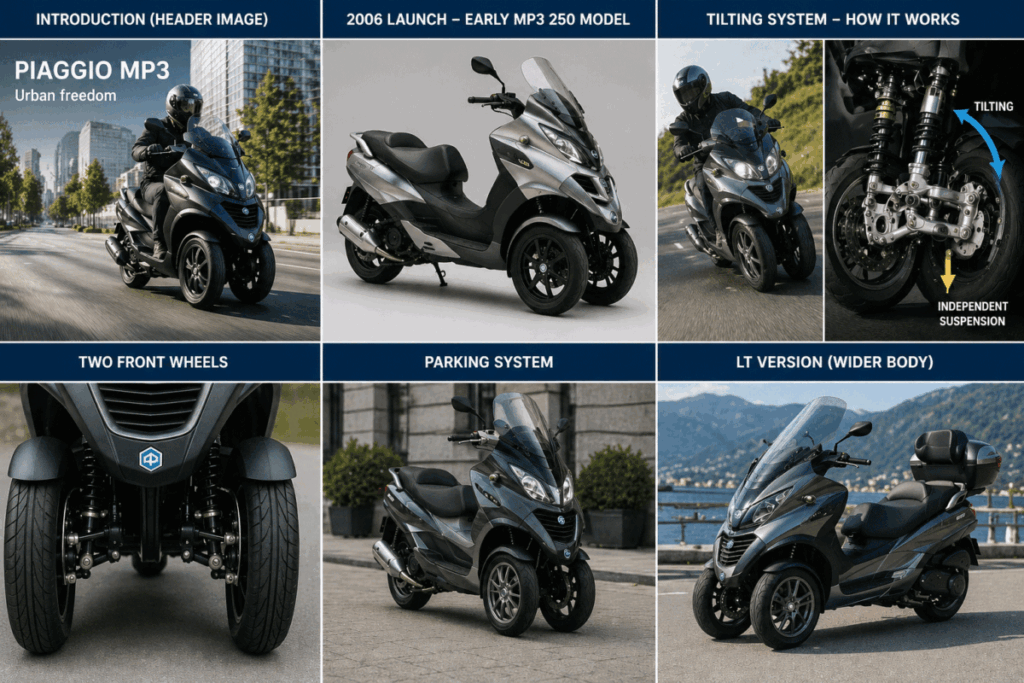
This applies to the MP3 LT (Long Travel) variant, which was engineered to meet a specific EU vehicle classification that falls outside the motorcycle category.
The modifications required to qualify included:
Widened front track: The distance between the two front wheels was increased to meet regulatory thresholds.
Foot brake pedal: A brake pedal was added to the floorboard, mimicking car-style braking in addition to the hand lever.
Integrated braking system: ABS and a linked braking system were made standard.
These changes allowed the MP3 LT to be classified as a different vehicle type in countries like the UK, France, and Italy, making it accessible to car license holders who had never obtained motorcycle certification.
This regulatory positioning opened the market to riders who would never have considered a two-wheeled scooter. It’s one reason the MP3 found traction in segments that conventional scooters couldn’t reach.
Urban Commuting: The Target Market
The MP3 was designed for a specific use case: dense urban commuting.
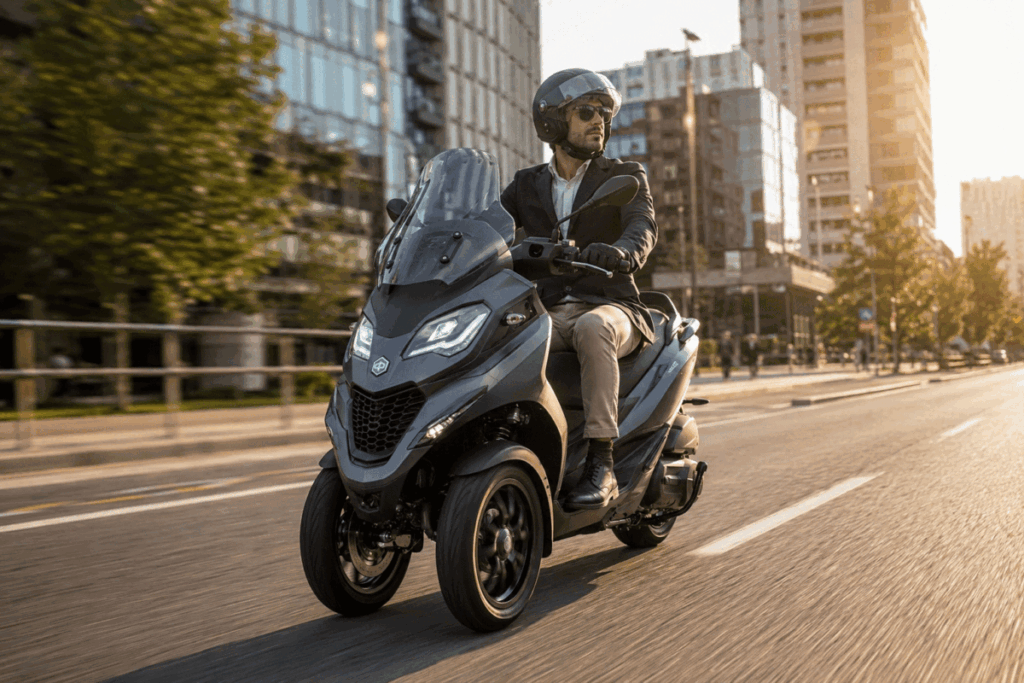
In congested European cities where traffic moves slowly, parking is scarce, and public transit is crowded, the MP3 offers a middle ground between cars and motorcycles.
Advantages for city riders:
Lane filtering: The MP3 is narrower than a car, allowing it to move through stopped traffic (though wider than a conventional scooter).
Minimal parking footprint: Takes up less space than a car, often eligible for motorcycle parking zones.
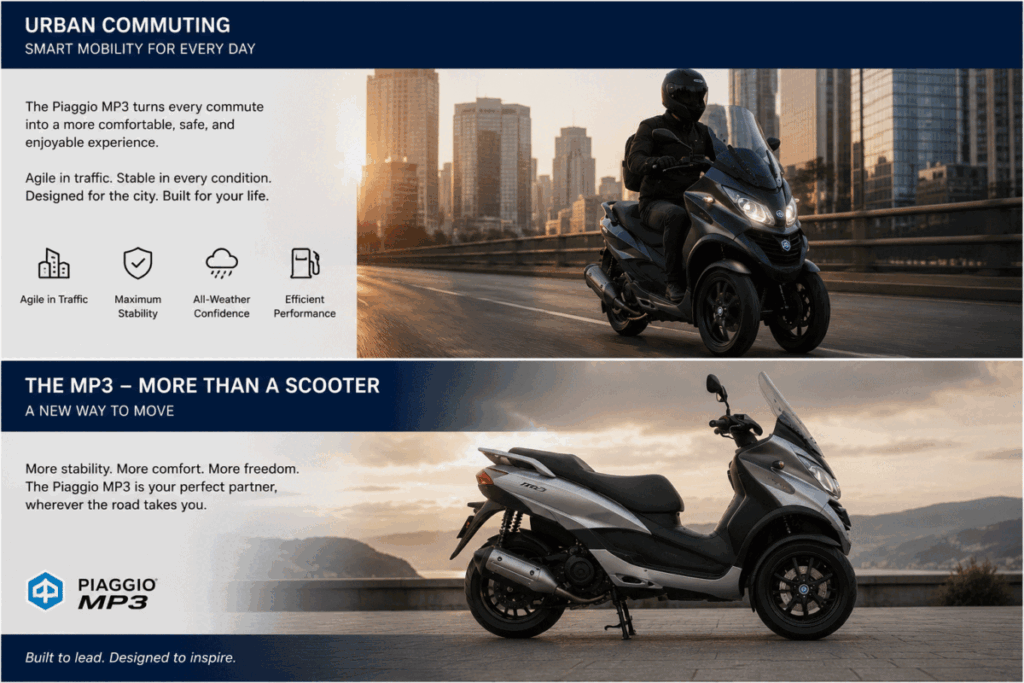
Fuel efficiency: 30+ km per liter, significantly better than most cars.
Accessibility: Lower perceived risk than motorcycles for riders who find two wheels intimidating.
The MP3 found its audience in European markets where scooter culture was already established and urban infrastructure favored two-wheeled (or three-wheeled) transport. Cities like Rome, Paris, and London — where traffic density and parking costs make car ownership burdensome — provided ideal conditions for adoption.
Evolution of the MP3 Lineup
Since 2006, the MP3 has evolved through multiple generations and displacement variants.
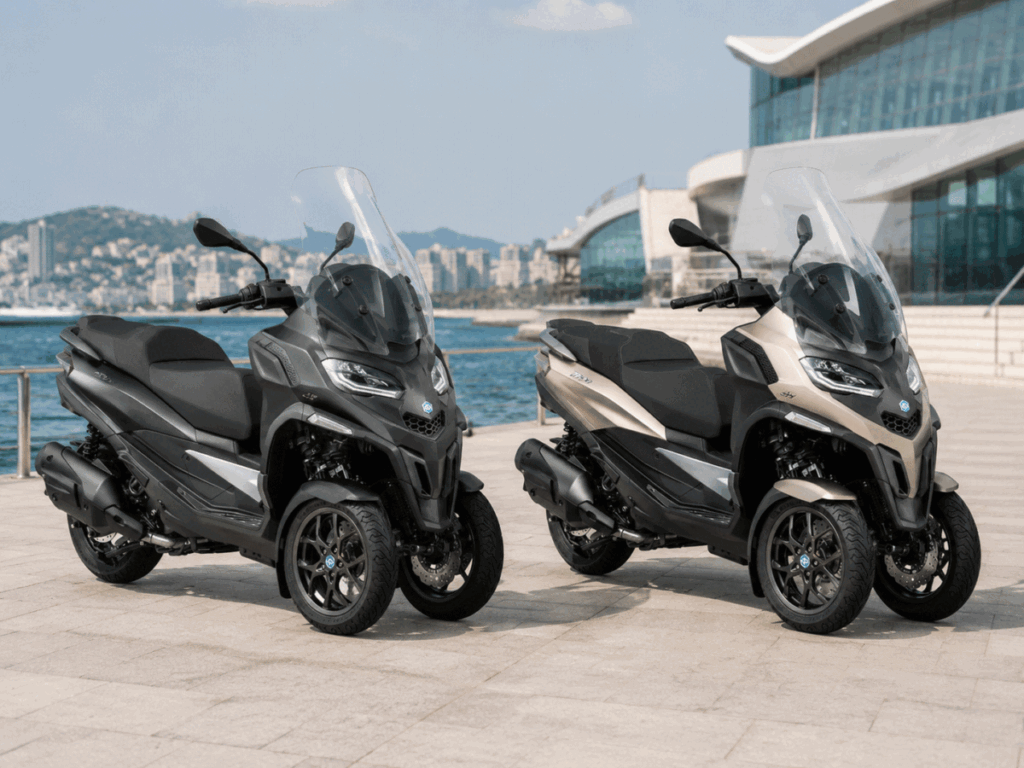
2006: MP3 250 — Original model, 250cc single-cylinder engine
2008: MP3 400 & 500 — Larger displacement models for highway capability
2009: MP3 Hybrid — World’s first hybrid scooter, combining 125cc engine with electric motor
2011: MP3 LT — Car-license-eligible version introduced
2018: HPE Engine Range — New 350 HPE and 500 HPE engines introduced
2022: Third Generation — 400 HPE and 530 HPE models with redesigned bodywork, radar-based blind spot detection (BLIS), and rear-facing camera
The current lineup includes:
MP3 300 HPE: 278cc, 23 hp
MP3 400 HPE: 400cc, 35 hp
MP3 530 HPE: 493cc, 44 hp
The third-generation models introduced technology uncommon in the scooter segment: radar-based blind spot monitoring, a 7-inch TFT display, cruise control, LED lighting, and a reverse camera. These features position the MP3 as a premium urban mobility tool rather than basic transportation.
Competition: Yamaha and Peugeot
The MP3’s success attracted competitors.
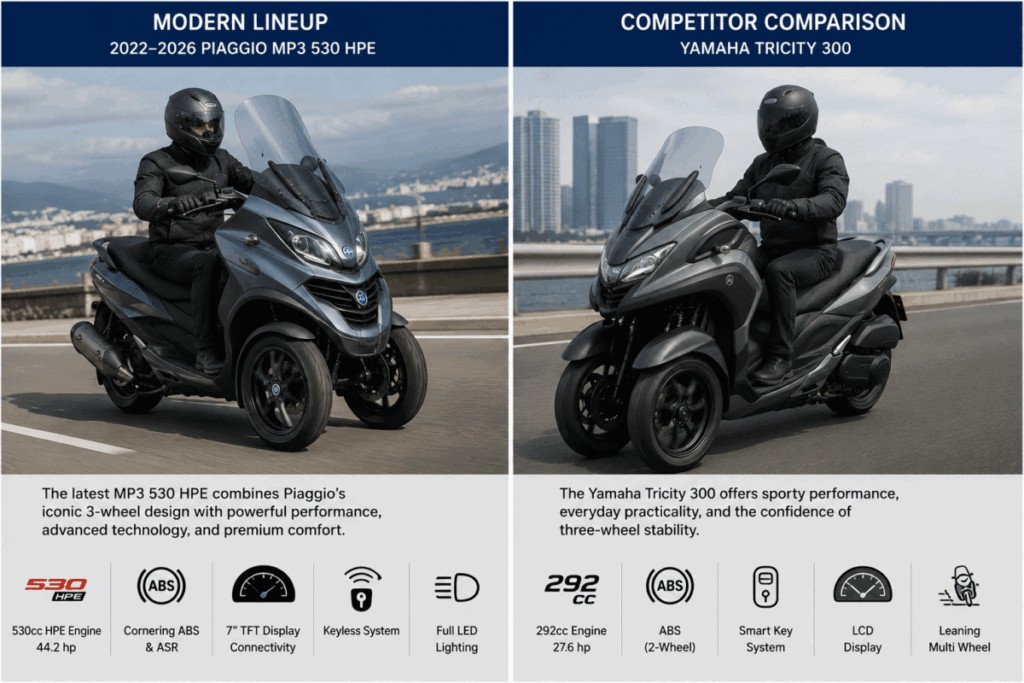
Yamaha Tricity 300
Yamaha’s tilting three-wheeler launched later than the MP3 and features a 292cc engine producing 28 hp. Pricing starts around £8,100 in the UK — significantly higher than the MP3 300’s approximately £6,600.
Peugeot Metropolis
Peugeot’s entry in the tilting trike category is positioned as a larger, more touring-focused machine with a 400cc engine. Pricing starts around £8,999, placing it closer to the MP3 530 in market positioning.
Compared to both, the MP3 benefits from price competitiveness, a wider model range, and nearly two decades of development and refinement. It remains the best-selling tilting three-wheeler globally.
Limitations and Trade-Offs
The MP3 isn’t without compromises.
Weight
The MP3 is heavy. Base models weigh approximately 250 kg, while larger variants exceed 300 kg. Conventional scooters of similar displacement typically weigh around 150 kg. The extra weight comes from the dual front suspension, additional braking hardware, and structural reinforcement required for the tilting mechanism.
At low speeds, the weight is manageable — the dual front wheels provide stability. But maneuvering the MP3 manually in a parking garage or pushing it up a curb requires effort.
Price
The MP3 costs significantly more than conventional scooters. A Honda SH350i, for example, is approximately £1,700 cheaper than the MP3 300 in the UK market. The premium reflects the complexity of the tilting system, additional hardware, and niche production volumes.
Width
Two front wheels mean a wider footprint. The MP3 is less effective at filtering through narrow gaps in traffic compared to conventional scooters. In dense urban environments where lane-splitting is common, this width disadvantage is noticeable.
Complexity
The tilting mechanism, dual front suspension, and additional braking components add mechanical complexity. Maintenance costs are higher than conventional scooters, and tire replacement involves three wheels instead of two.
Verdict: Creating a Market Where None Existed
When Piaggio launched the MP3 in 2006, the prevailing question was whether anyone actually needed a three-wheel scooter.
[이미지 10 위치: MP3 측면 프로필 감성 사진]
The answer, 18 years and 230,000+ units later, is clear: not everyone, but enough people to sustain a market.
The MP3 didn’t become a mass-market product. It didn’t need to. It carved out a niche and defended it successfully against competitors who entered later. For riders who want the stability of three wheels without sacrificing the leaning dynamics of a motorcycle, the MP3 is the only production option that delivers both.
Piaggio created the scooter category with the Vespa in 1946. They created the tilting three-wheeler category with the MP3 in 2006. Neither invention conquered the market. Both created markets that didn’t exist before they arrived.
And sometimes, creating the category is more valuable than dominating it.
For the history of how scooters changed urban mobility, read: History of the Scooter: From Post-War Italy to Modern Cities
For current Piaggio models, visit the Piaggio Official Website