If your motorcycle won’t start, you’re not alone — and in most cases, you can find the cause yourself before calling a mechanic.
You turn the key, press the start button — and nothing. No crank, no click, no sign of life. It’s one of the most frustrating experiences a rider can face, especially when you’re geared up and ready to ride. The reassuring truth is that most no-start conditions follow a predictable pattern. With a clear, methodical approach, the majority of causes can be identified — and often fixed — without an expensive workshop visit.
This guide covers everything from the fundamental principles behind engine starting, through each diagnostic step, to knowing when to hand the bike over to a professional.
■ Why an engine starts — and why it doesn’t
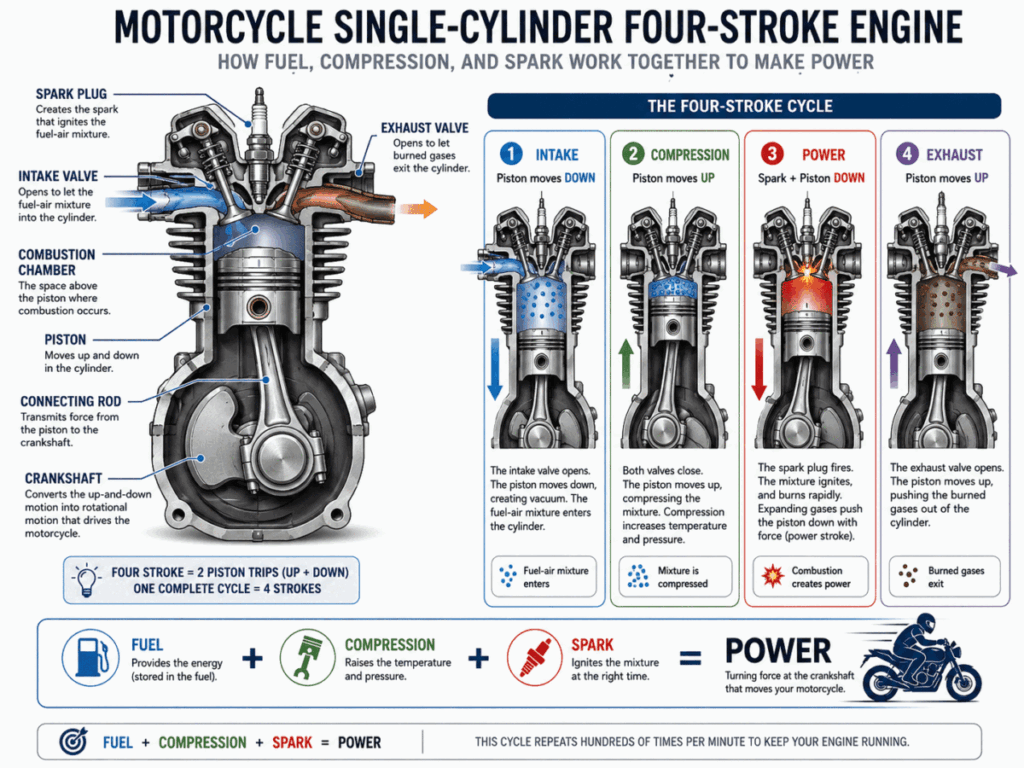
Before touching anything, it helps to understand what actually needs to happen for your engine to fire. Every internal combustion engine — whether a single-cylinder commuter or a four-cylinder sportbike — depends on the same three elements.
① Fuel:
A correctly proportioned mixture of air and fuel must be delivered into the cylinder. Too rich, too lean, or no fuel at all — none of these will produce combustion.
② Compression:
Once the mixture is inside the cylinder, the piston must compress it to the correct pressure. Without adequate compression, the mixture won’t combust even if everything else is perfect.
③ Spark:
At precisely the right moment in the piston’s cycle, the spark plug must fire and ignite the compressed mixture. Timing, spark intensity, and plug condition all matter.
This trio — fuel, compression, spark — is the foundation of every diagnostic process. When your bike won’t start, one or more of these is missing or insufficient. Your job is to find out which one, in the most efficient order possible.
■ Step 1 — Start with the obvious
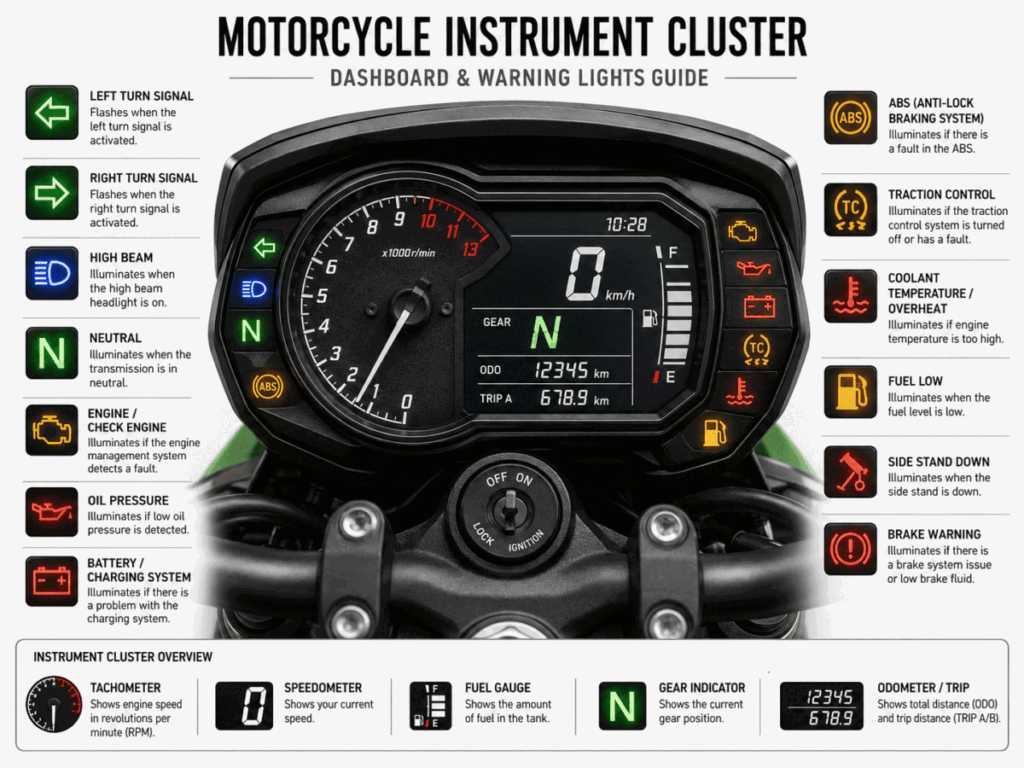
A significant proportion of no-start situations come down to something simple. Work through this checklist before pulling anything apart.
[1] Dashboard response
Turn the key to ON and watch the instrument cluster. The needles should sweep, warning lights should illuminate briefly, and you should hear the fuel pump prime — a faint whirring from the tank lasting one to two seconds. No response at all means you have lost power to the system entirely. Check the battery voltage and main fuse first.
[2] Safety interlock switches
Modern motorcycles cut the starter circuit if any of these are in the wrong position:
- Kill switch: Must be in RUN, not OFF.
- Side stand: Many bikes cut the engine if the stand is down with a gear selected. Ensure it is fully retracted.
- Neutral / clutch: Some bikes require neutral; others require the clutch lever fully pulled in.
Experienced riders overlook these too — don’t let pride stop you from checking them first.
[3] Fuel level
Confirm there is fuel in the tank. On bikes with a petcock, try switching to RES (reserve). If you ran the tank completely dry, air may have entered the fuel line — you may need to crank several times before it fires after refuelling.
[4] Recent changes
Think back. Has anything changed recently? A battery replacement, a service visit, a tip-over, or riding through a flood? Contextual clues can dramatically narrow the search before you pick up a tool.
💡 Key diagnostic question: when you press the starter button, does the engine crank (turn over)? This single observation splits every possible cause into two separate categories.
■ Step 2 — Does it crank?
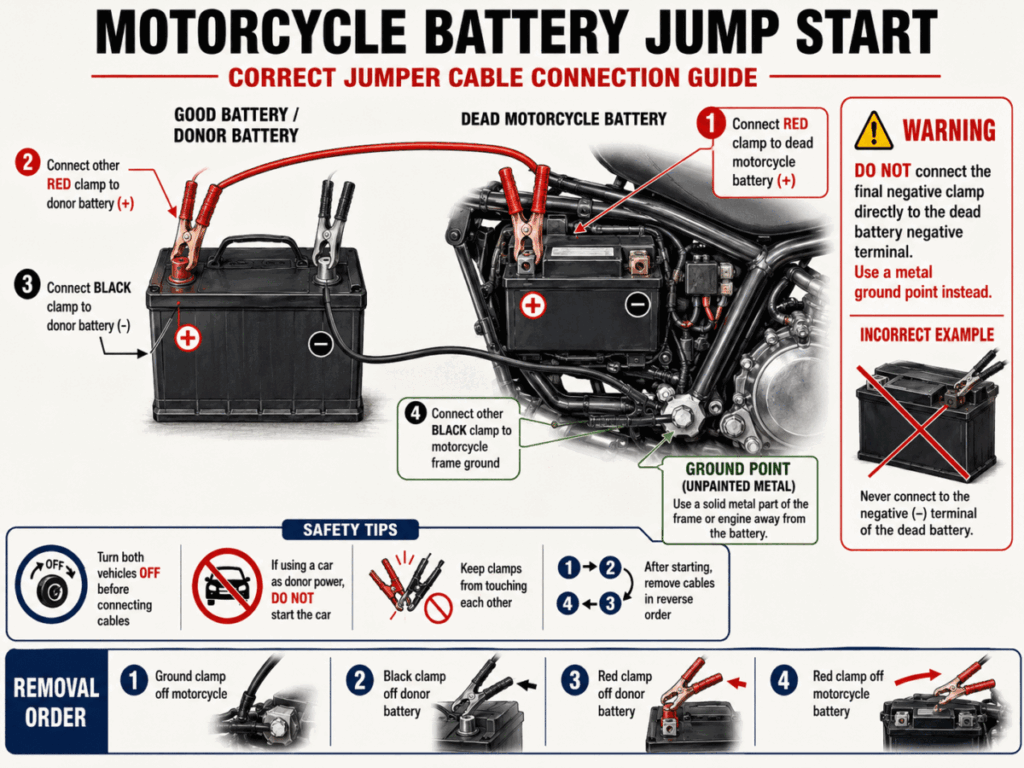
▶ No cranking → electrical system fault
If pressing the starter produces silence, a single click, or rapid clicking, the engine is not rotating. This rules out fuel, compression, and spark as the primary issue.
Battery
By far the most common cause. A healthy 12V battery reads 12.6–12.8V at rest. Below 12.0V is too discharged to start the bike. Signs include a dim dashboard, rapid clicking when pressing the starter, or a very slow crank. Try jump-starting — if it fires immediately, the battery is the problem. Most motorcycle batteries last two to four years.
Starter motor
If the relay clicks firmly but the engine doesn’t rotate, the starter motor may have worn brushes. Test by connecting it directly to battery voltage — if it spins freely, the issue is upstream in the circuit.
Starting relay
No sound at all when pressing the button — no click, nothing — points to a failed relay or broken circuit. Relay contacts corrode over time and can fail intermittently. Try swapping with an identical relay from another circuit on the bike.
HT cable and wiring
Common on scooters and older bikes. Vibration loosens connectors and corrosion builds up in exposed terminals. A no-start after rain should prompt immediate inspection of connectors and the high-tension cable.
⚠ Scooter note: Scooters experience electrical no-start failures at a much higher rate than conventional motorcycles due to wiring routing and weather exposure. Always check the electrical system first if your scooter won’t start after rain or storage.
▶ Cranks but won’t fire → fuel, compression, or spark
The engine is rotating — the battery and starting circuit are working. Now identify which combustion element is missing.
■ Step 3 — Fuel system diagnosis
[A] Carbureted bikes
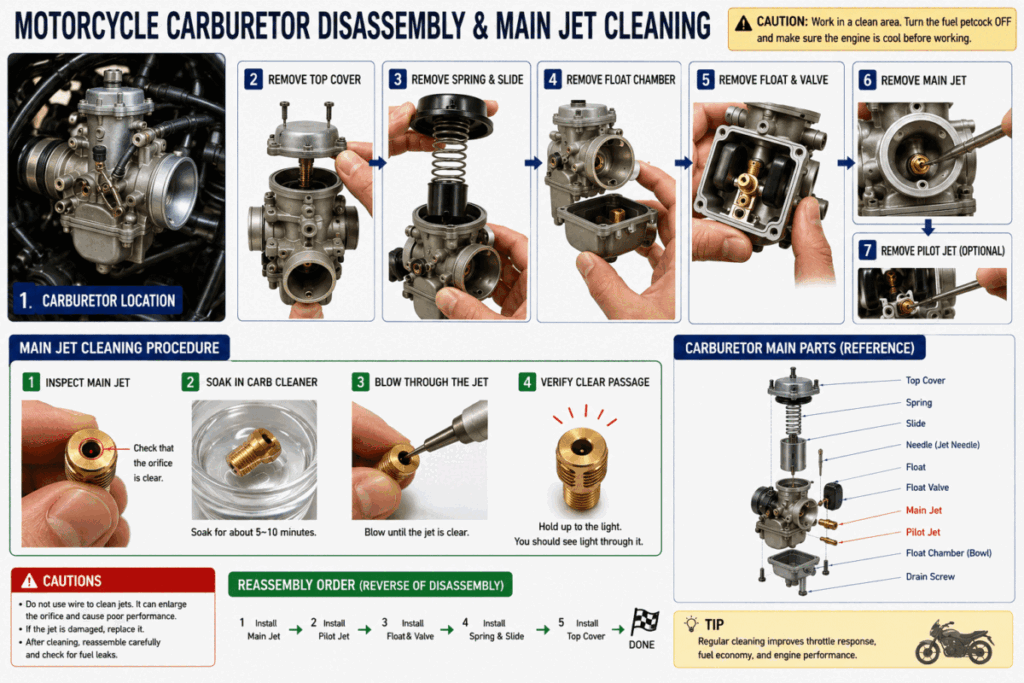
The carburetor mixes air and fuel mechanically. It’s simple but has several wear-prone components.
Main jet blockage
The most frequent cause of a no-start on a stored bike. Petrol degrades quickly, leaving a varnish residue that blocks the fine drillings inside the carb. Remove the air filter and blip the throttle — you should see a fine fuel spray. No spray means the jet is blocked. A carb clean is the correct first step, not replacement.
Diaphragm crack or wear
A cracked CV diaphragm causes erratic idling, hesitation on acceleration, and can prevent starting. Remove the top cap and hold the diaphragm to light — look for pinholes or tears. Replacement diaphragms are inexpensive and widely available.
Float valve stuck open
Fuel floods the cylinder. A strong petrol smell from the exhaust and a fuel-soaked plug are the signs. Remove the plug and let the engine air for ten to fifteen minutes before retrying.
Mixture and idle screws
Factory settings are noted in the service manual. If these have been tampered with or vibrated out of position, the idle mixture may be wrong. Reset to the specified baseline.
[B] Fuel-injected (EFI) bikes
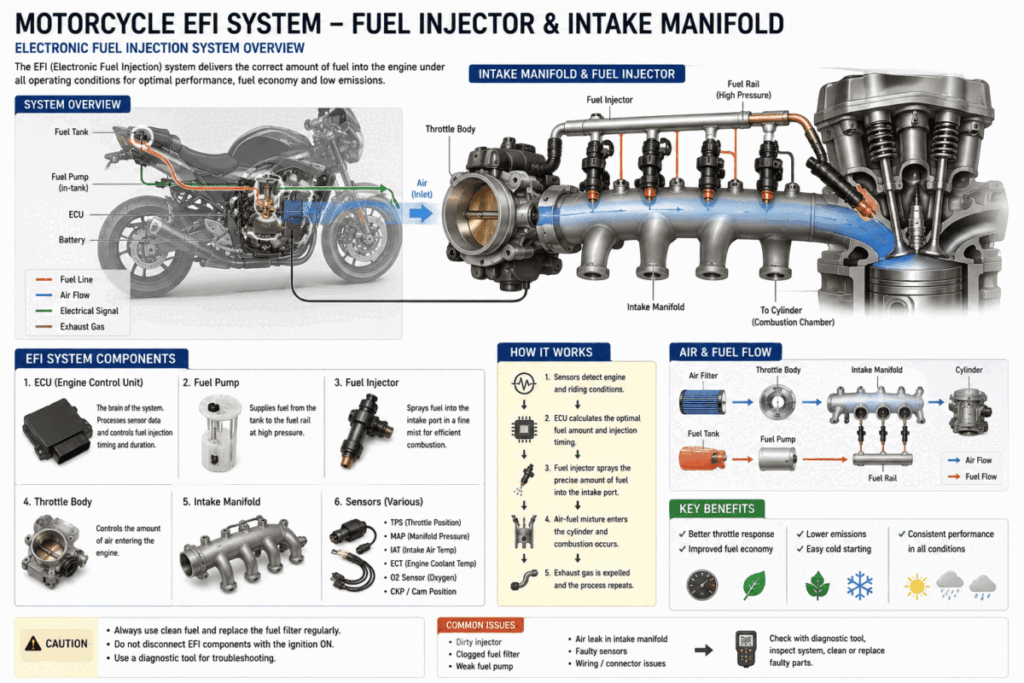
The ECU controls injector timing and duration based on sensor input. More precise than a carb, but diagnosis requires a different approach.
Fuel pump prime
With the key ON, listen for a brief whirring from the tank. No sound almost certainly means a failed fuel pump. Confirm with a pressure gauge at the rail — most motorcycle EFI systems require around 2.8 kgf/cm² (40 psi).
Fuel filter
A blocked filter drops rail pressure and prevents correct atomisation. Replace every 20,000–30,000 km. Many riders skip this and pay for it later.
Fuel quality and water contamination
Petrol degrades after a few months. Ethanol-blended fuels absorb water, which can cause phase separation — the water-rich mixture reaches the injector first. If the bike has been stored, drain and replace the fuel before further diagnosis.
Sensors and ECU fault codes
A faulty TPS, crankshaft position sensor, or coolant sensor can cause the ECU to cut fuel entirely. Check the instrument cluster for warning lights or error codes. A diagnostic tool with live data makes this step significantly faster.
■ Step 4 — Compression and ignition
[C] Compression test
Attach a compression gauge to the plug hole, hold the throttle fully open, and crank through four to six revolutions. Most motorcycle engines produce 8–12 kgf/cm² (114–170 psi) when healthy. A significantly lower result, or large cylinder-to-cylinder variation, points to worn rings, damaged valves, or a blown head gasket. These require engine disassembly — take the bike to a professional.
A wet compression test (add a small amount of oil to the cylinder before testing) helps distinguish ring wear (compression improves) from valve problems (compression stays low).
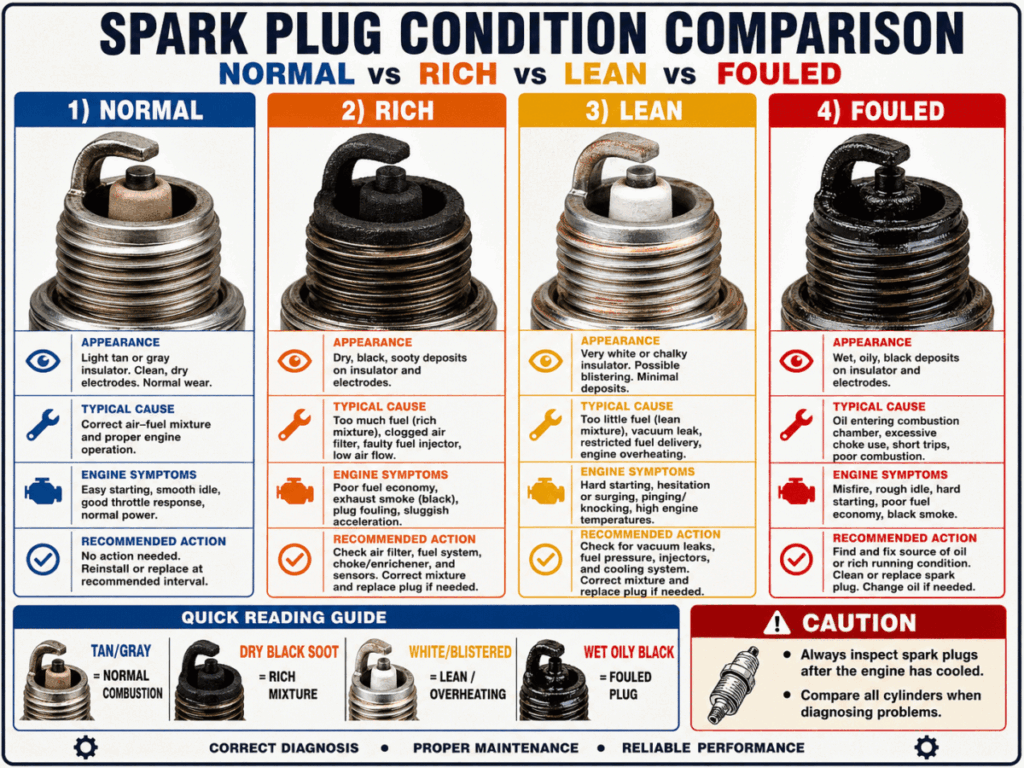
[D] Ignition check
Inspect the spark plug electrode:
- Light tan or grey: Normal and healthy.
- Black and sooty: Rich mixture — check choke, carb settings, or injector.
- Chalky white or blistered: Lean mixture or overheating — check for air leaks and fuel delivery.
- Wet with fuel: Flooding — let the engine air out before retrying.
- Wet with oil: Oil entering the combustion chamber — worn rings or valve seals.
Ground the plug against bare engine metal and crank. You should see a crisp, bright blue spark. A weak yellow spark or no spark points to the ignition coil or CDI unit.
Spark plugs are inexpensive consumables. If yours shows any abnormality, replace it as part of the diagnosis. It eliminates a variable and frequently solves the problem outright.
■ Quick-reference diagnosis table
Symptom | Most likely cause | First check
No dashboard response | Dead battery / blown fuse | Battery voltage, fuse box
No cranking, no sound | Relay / kill switch / wiring | Starting relay, kill switch position
Rapid clicking, no crank | Discharged battery | Battery voltage, jump start
Cranks very slowly | Weak battery | Battery load test
Cranks normally, won’t fire | Fuel, spark, or compression | Fuel pump prime sound, plug condition
Starts then immediately dies | Idle circuit / vacuum leak | Carb idle screw, vacuum hoses
Fails to start after rain | Water in electrics or fuel | Connectors, HT cable, fuel condition
Fails to start after storage | Carb varnish / degraded fuel | Carb clean, drain and replace fuel
■ When to call a professional
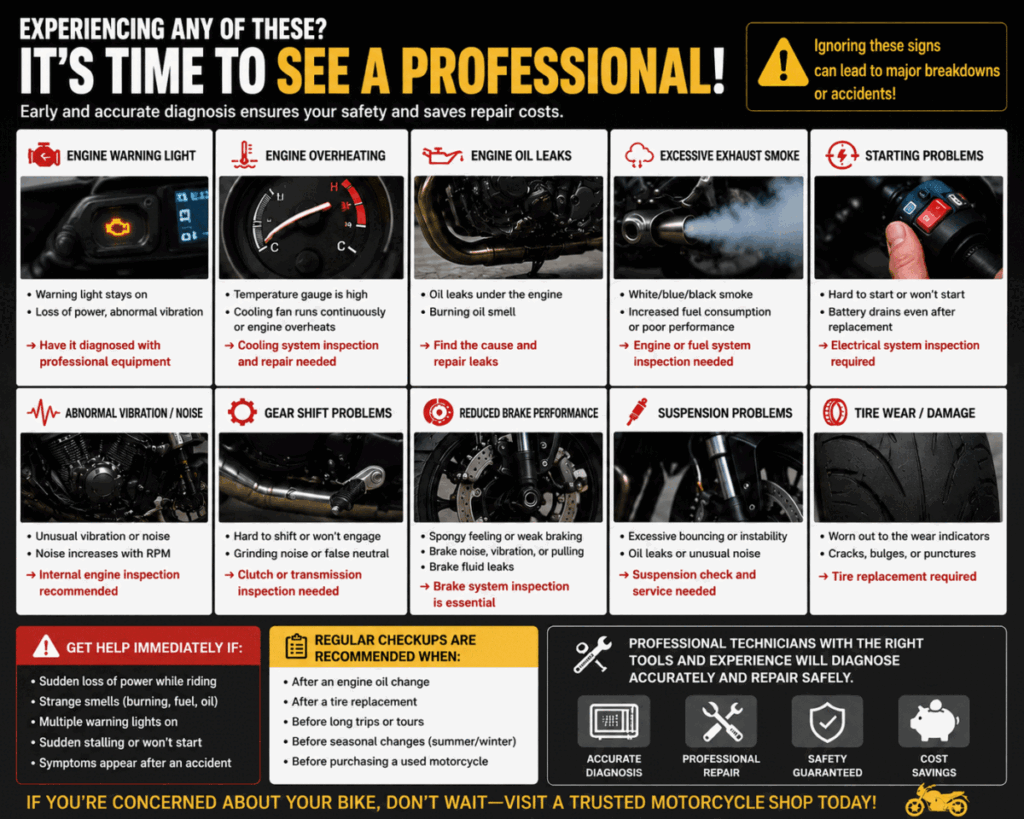
Stop and seek professional help when:
① Compression is substantially below specification — internal engine work is required.
② You hear metallic knocking, grinding, or abnormal engine noise.
③ You find burnt or melted wiring, or evidence of an electrical short.
④ The ECU is logging fault codes you cannot interpret.
⑤ You have worked through every step above and still cannot identify the fault.
When you take the bike in, provide as much context as possible: when did it first happen, does it fail every time or intermittently, has anything changed recently. A technician with full context can often identify the cause in minutes.
■ Final thoughts

A motorcycle that won’t start is almost always telling you something specific — you just need to know how to listen. The fuel-compression-spark framework gives you a rational, repeatable structure to work through any no-start, regardless of the bike’s age, type, or fuel system.
Start with the simplest explanations, eliminate them methodically, and resist the urge to replace parts at random. Methodical beats hopeful every time.
For a deeper look at how fuel injection works on modern motorcycles, visit: Bosch Motorcycle EFI Technical Guide
For current Harley Davidson cruiser models: Harley Davidson Official Website