
Choosing the right motorcycle chain lubricant matters more than most riders think. Here’s a practical breakdown of foam, oil, and wax types — and which one fits your riding style.
Most riders pick up whatever chain lubricant is on the shelf without thinking much about it. That works — until it doesn’t. The wrong motorcycle chain lubricant for your riding conditions accelerates chain wear, attracts grime, and shortens the life of both your chain and sprockets faster than you’d expect.
The three main types — foam, oil, and wax — aren’t interchangeable. Each has a specific set of conditions where it performs well and situations where it falls short. Understanding the difference takes about five minutes and saves significantly more time and money down the road.
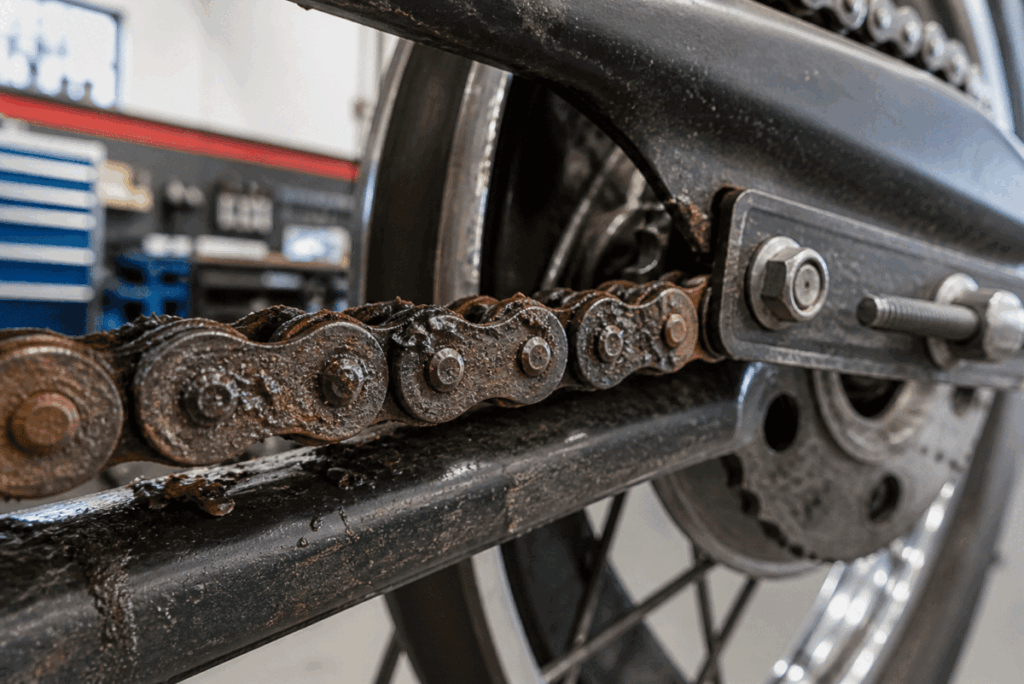
Why Motorcycle Chain Lubricant Actually Matters
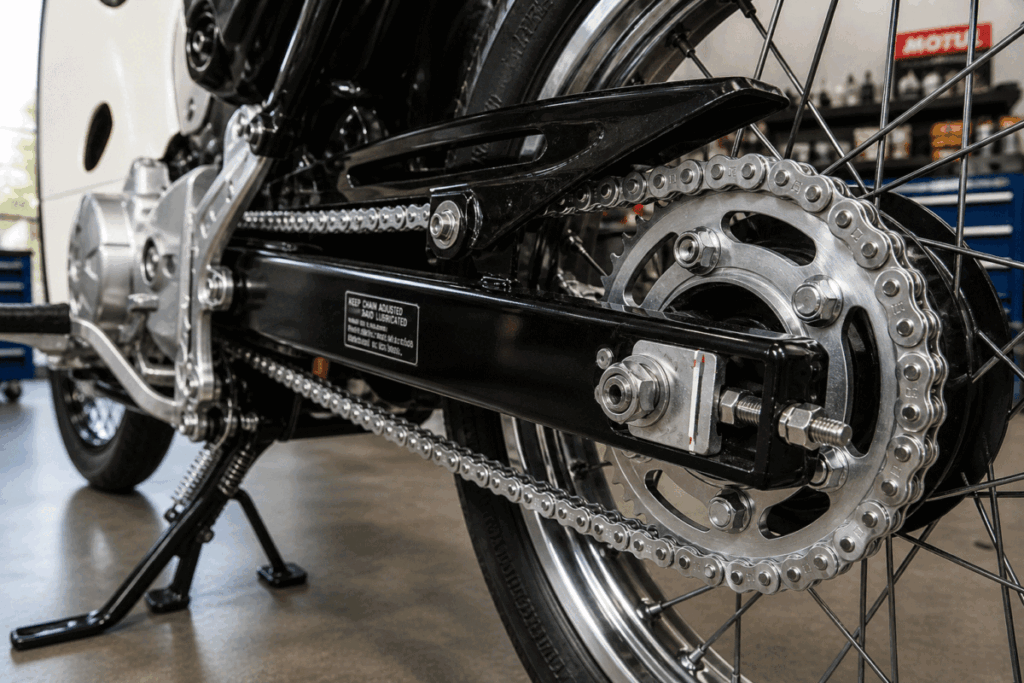
The chain transfers engine power to the rear wheel. Every link in that chain contains metal-on-metal contact points that generate friction with every rotation. Motorcycle chain lubricant reduces that friction, protects the internal components of each link, and — on O-ring chains — keeps the seals from drying out and cracking.
A chain that runs dry doesn’t just wear faster. It affects power delivery, creates noise, and puts additional stress on the sprockets. The sprockets wear unevenly when chain lubrication is inconsistent, and replacing both the chain and sprockets together is significantly more expensive than maintaining either properly.
The general rule for motorcycle chain lubricant application is every 500km under normal conditions. After riding in rain or through heavy dust, reapply regardless of mileage. Letting either of those conditions sit on an unlubricated chain accelerates corrosion and wear in ways that aren’t always visible until the damage is already done.
“If your chain is properly lubricated but you’re still hearing a clicking noise that won’t go away, the source is likely inside the engine rather than the chain itself.”
Super Cub Clicking Noise? 3 Causes & Engine Timing Kit Fix
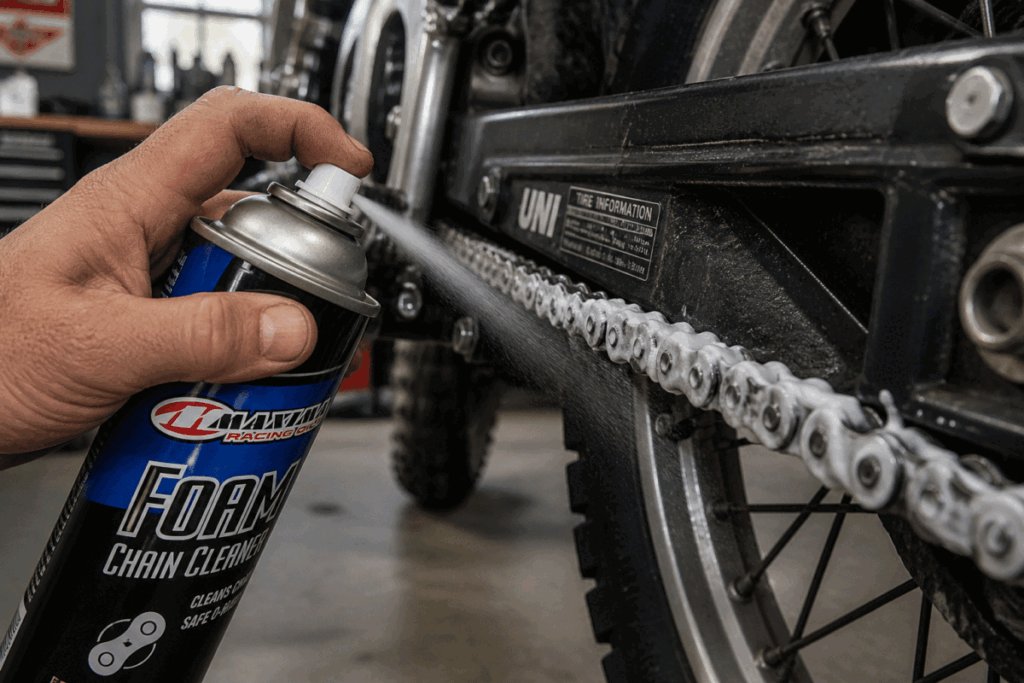
Foam Motorcycle Chain Lubricant: Advantages and Disadvantages
Foam is the most widely used motorcycle chain lubricant type, and for good reason. It sprays on as a foam that clings to the chain immediately, reducing drip and making application clean and straightforward. The foam penetrates into the link internals as it settles, and most products in this category are formulated to be safe for O-ring and X-ring chains.
The application process is simple enough that it encourages regular maintenance — which matters more than any single product choice. You don’t need to be precise or careful about overspray in the same way you do with liquid oil products.
The limitation of foam lubricants is water resistance. Rain washes them off relatively quickly, which means riders in wet climates or those who regularly ride through rain need to reapply more frequently than the standard interval suggests. Applying too much at once can also result in fling-off — excess lubricant being thrown onto the rear wheel or swingarm during riding.
Foam motorcycle chain lubricant is the best starting point for riders doing primarily urban commuting in dry conditions, or for anyone who wants a low-maintenance application routine.
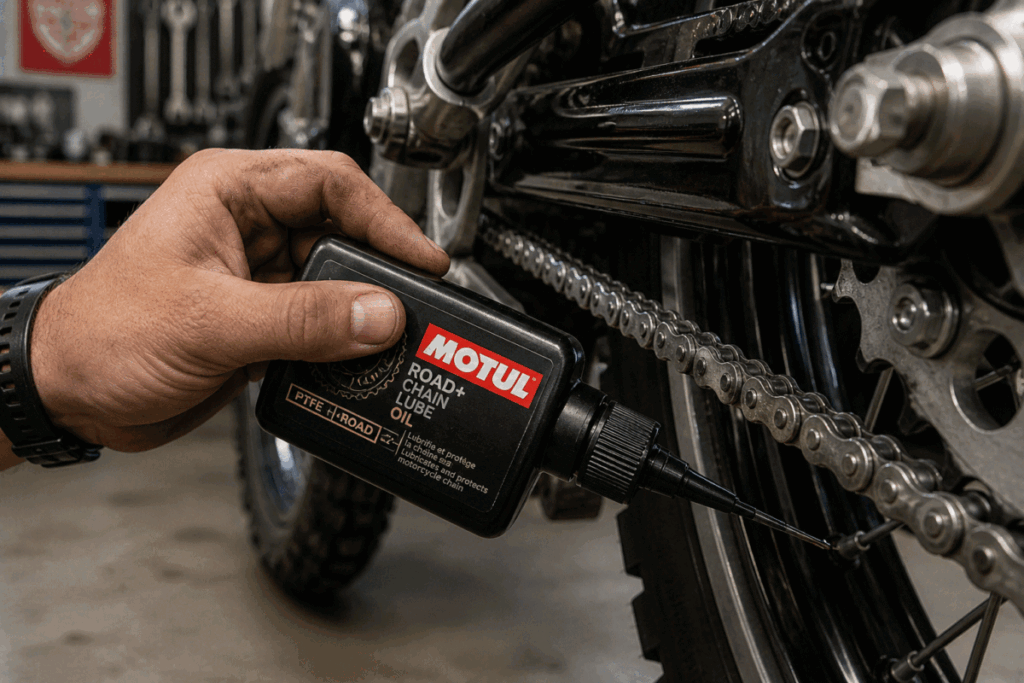
Oil Type Motorcycle Chain Lubricant: Advantages and Disadvantages
Oil type motorcycle chain lubricant penetrates deeper into chain link internals than foam. The liquid consistency allows it to reach the internal rollers and side plates more thoroughly, which translates to better protection under heavy load and at higher operating temperatures.
Durability is the main argument for oil type lubricants. A single application holds up longer than foam under demanding conditions — extended touring, high-speed riding, or regular use on rough roads. For riders covering significant distances between maintenance stops, this reduces how often reapplication is necessary.
The trade-off is cleanliness. Oil attracts and holds dirt, dust, and road debris more aggressively than foam or wax. On dry dusty roads, a freshly oiled chain will accumulate grime quickly, creating an abrasive paste that works against the lubrication you just applied. Oil type lubricants also require more care during application to avoid contaminating the rear tire or brake disc.
Oil type motorcycle chain lubricant suits riders who prioritize longevity and internal chain protection — long-distance tourers, off-road riders, and anyone running in high-load conditions where maximum penetration matters more than cleanliness.
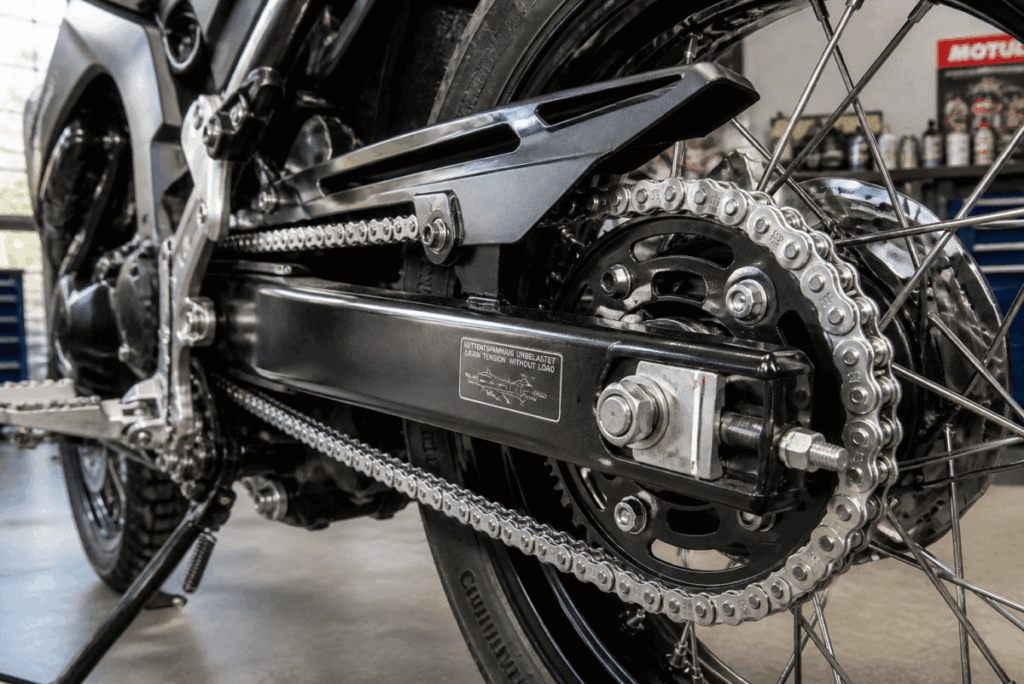
Wax Type Motorcycle Chain Lubricant: Advantages and Disadvantages
Wax type motorcycle chain lubricant applies as a liquid and dries to a solid or semi-solid film on the chain surface. Once set, the wax layer repels dirt and debris rather than attracting it — which is the defining advantage of this format.
A waxed chain stays visibly cleaner than one treated with oil. In urban environments with heavy dust, pollution, or dry road debris, this makes a significant practical difference. Cleaning intervals are longer, and the chain remains in better visual condition between services. Wax also doesn’t fling off during riding the way excess oil can.
The limitation is penetration depth. Wax sits primarily on the surface rather than working into the link internals the way liquid oil does. For chains under sustained heavy load or extreme conditions, this can mean less internal protection than oil provides. Wax lubricants also require the chain to be clean before application — applying over a dirty chain traps contaminants under the wax layer.
Wax type motorcycle chain lubricant is well suited to urban commuters who prioritize a clean drivetrain, riders in dry dusty environments, and anyone who finds chain cleaning to be the most tedious part of routine maintenance.

Choosing by Riding Condition
The right motorcycle chain lubricant depends more on where and how you ride than on any product ranking.
For urban commuting on paved roads in dry conditions, foam or wax both work well. Foam is easier to apply consistently; wax keeps the chain cleaner between applications. Either is appropriate and the choice comes down to personal preference.
For long-distance touring or sustained highway riding, oil type lubricant offers the best internal protection and longest interval between reapplication. The grime accumulation trade-off is manageable with periodic cleaning stops built into longer trips.
For riding in wet conditions or through rain regularly, look for lubricants specifically marketed for wet conditions — typically oil-based formulas with higher water resistance than standard foam. Standard wax products are not suitable for consistent wet weather use.
For off-road or gravel riding, oil type lubricant handles the higher chain stress and impact loads better than foam or wax. The dirt accumulation issue is present but less critical than ensuring adequate internal lubrication under demanding conditions.
Application Tips That Actually Matter
Regardless of which motorcycle chain lubricant type you choose, a few application habits make a consistent difference.
Apply to a warm chain when possible. A chain that’s been ridden recently is more receptive to lubricant penetration than a cold one. A short ride before lubrication improves results with all three types.
Apply to the inside of the chain rather than the outside. The inside edge — where the chain contacts the sprocket — is where lubrication matters most. Applying to the outside looks thorough but delivers less where it counts.
Wipe off excess after application. Excess lubricant that doesn’t penetrate will fling off during riding and deposit on areas where it causes problems. A quick wipe with a clean rag after application reduces this significantly.
Clean before reapplying. Building up successive layers of lubricant without cleaning traps old grime and eventually creates more abrasion than protection. A chain cleaner applied before each lubrication session produces better long-term results than lubricant alone.
Frequently Asked Questions
Q. Can I use WD-40 as a motorcycle chain lubricant?
WD-40 is a water displacement and cleaning product, not a lubricant. Using it as a chain lubricant removes existing lubrication and leaves the chain inadequately protected. Use a product specifically designed for motorcycle chain lubrication.
Q. How often should I apply motorcycle chain lubricant?
Every 500km under normal conditions is the standard interval. After rain exposure or riding through heavy dust, reapply regardless of mileage. Regular short trips may require more frequent application than the distance interval suggests.
Q. Is foam or oil better for O-ring chains?
Both can be suitable if the product is specifically formulated to be O-ring safe. Check the product label for O-ring compatibility before using any lubricant on a sealed chain. Using a product that degrades O-ring material accelerates seal failure and reduces chain life.
Q. Do I need to clean the chain before applying lubricant?
Ideally, yes. Applying lubricant over accumulated grime traps contaminants against the chain surface. A chain cleaner used before lubrication removes old residue and allows the new lubricant to penetrate and adhere more effectively.
The Bottom Line
No single motorcycle chain lubricant type is universally best. Foam suits riders who want simple, consistent application in normal conditions. Oil suits riders who prioritize internal protection and extended intervals under heavy use. Wax suits riders who want a cleaner drivetrain with less frequent cleaning.
The best motorcycle chain lubricant is the one you’ll actually use on a consistent schedule. Regular application of a middle-of-the-road product outperforms occasional application of the theoretically optimal one.
“Having the right tools makes chain maintenance significantly easier. A proper socket set covers most of the access points you’ll need for chain adjustment and wheel removal.”