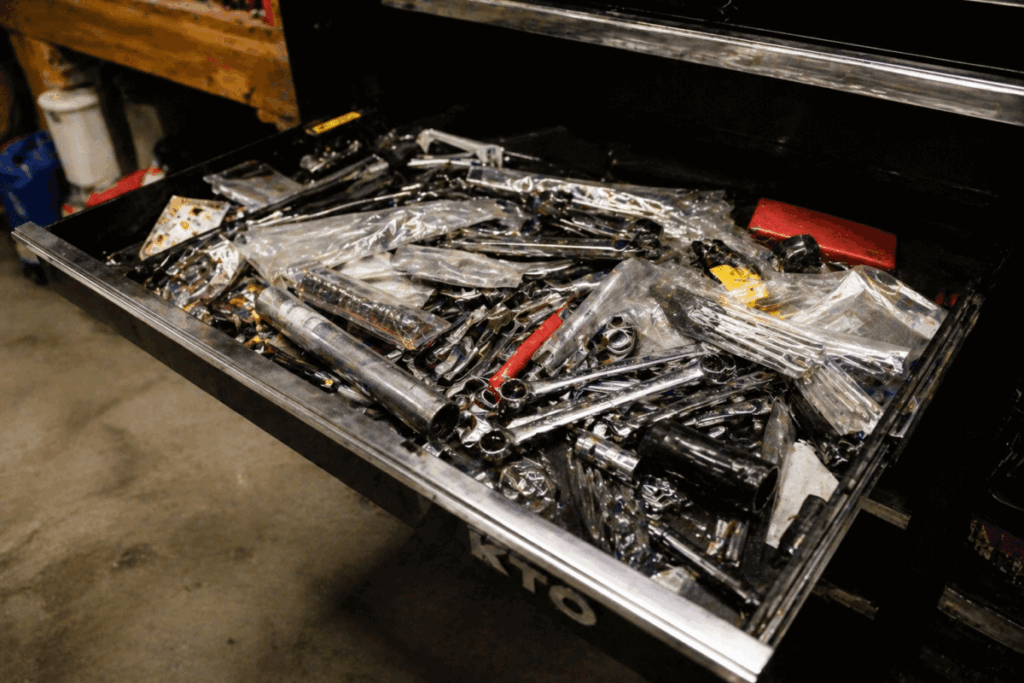
Most riders buying super cub tools for the first time make the same mistake. They either buy a massive set with sizes they’ll never use, or they pick up individual tools without knowing which specs actually matter for this bike.
The result is the same either way — money spent on tools that sit in a drawer while the ones you actually need aren’t in the box.
Here’s the short version: five socket sizes cover the vast majority of Super Cub maintenance work. Everything else is optional.
Why Tool Selection Gets Confusing
The problem isn’t that Super Cub maintenance is complicated. The problem is that generic tool recommendations don’t account for what this specific bike actually uses.
Search for motorcycle tool recommendations and you’ll find lists with dozens of sizes, specialty tools, and brand suggestions that vary wildly depending on who’s writing. Spec information across forums and listing pages is inconsistent. And most tool sets are designed to cover every possible motorcycle — which means they include plenty of sizes you’ll never touch on a Super Cub.
The result is decision paralysis, or worse, buying the wrong things and finding out mid-job.
“Before diving into tools, it’s also worth ruling out internal engine issues first. A clicking noise that won’t go away usually points to something else entirely.”
The 5 Sizes That Actually Matter
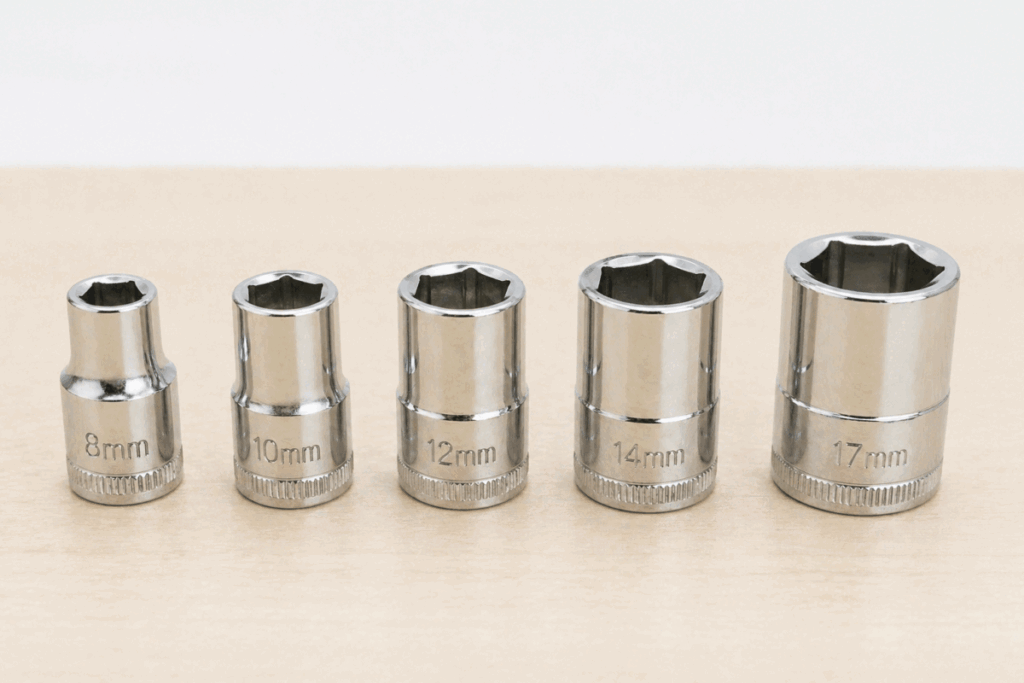
After breaking down what the Super Cub actually uses across its common maintenance points, the list comes down to five socket sizes.
⚙️8mm — covers smaller bolts across the engine casing and bodywork panels.
⚙️10mm — one of the most frequently used sizes on the bike. Shows up on multiple external components.
⚙️12mm — axle nuts, engine mount points, and several drivetrain fasteners.
⚙️14mm — used on larger structural bolts including some suspension and frame attachment points.
⚙️17mm — axle and wheel-related work. If you’re pulling a wheel, you need this.
These five sizes handle external panels, the seat, chain adjustment, oil drain, and most engine access points. For a rider doing routine self-maintenance rather than full rebuilds, this is the complete working set.
One more thing worth knowing: long reach sockets make a real difference on the Super Cub. The engine layout puts several bolts in positions where a standard-length socket doesn’t give you clean access. A set that includes both short and long reach options saves you from improvising mid-job.
Super Cub Tools: The Screwdriver Problem Nobody Talks About
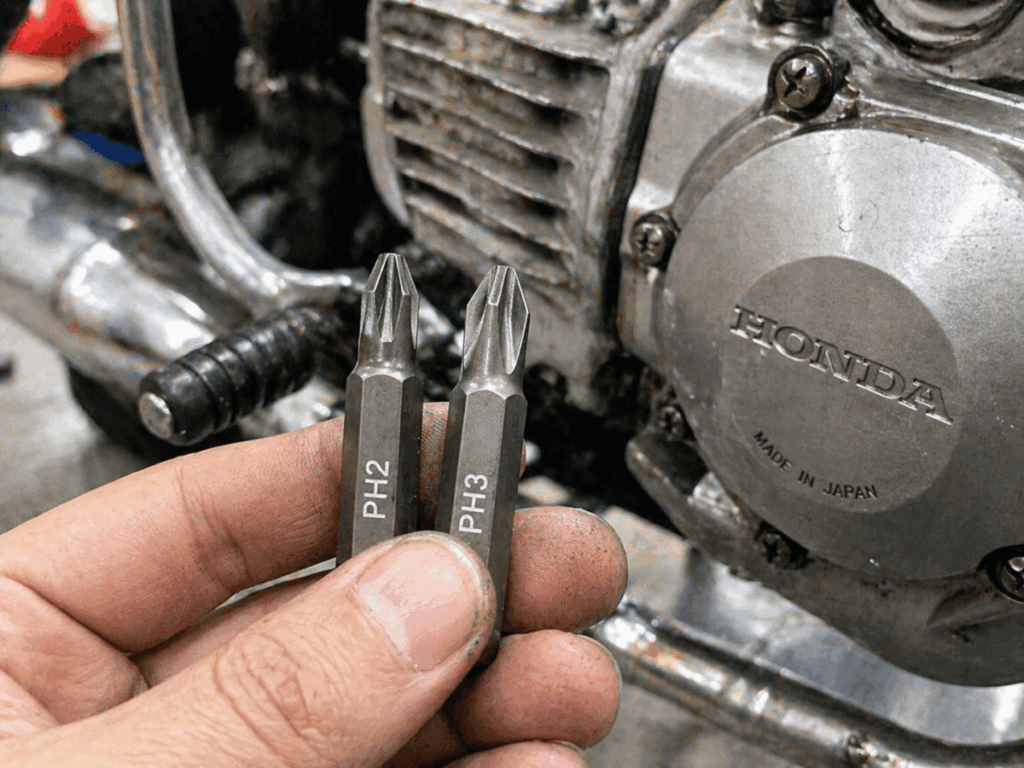
Socket sizes are straightforward once you know the list. Screwdrivers are where riders consistently run into problems.
The Super Cub uses JIS (Japanese Industrial Standard) fasteners, not standard Phillips. The difference matters more than most people expect. A standard Phillips bit used on a JIS bolt will fit — but it doesn’t seat the same way, and under torque, it’s significantly more likely to slip and round the bolt head.
The two sizes you need are PH2 and PH3. PH3 handles the larger fasteners you’ll encounter most often. PH2 comes up frequently enough in practice that working without it creates unnecessary risk.
Running the wrong bit on a recessed bolt in a tight location is how bolt heads get damaged. And a damaged bolt head on an engine casing is a problem that costs significantly more to fix than the right screwdriver would have.
Ratchet Over Spanner — Every Time
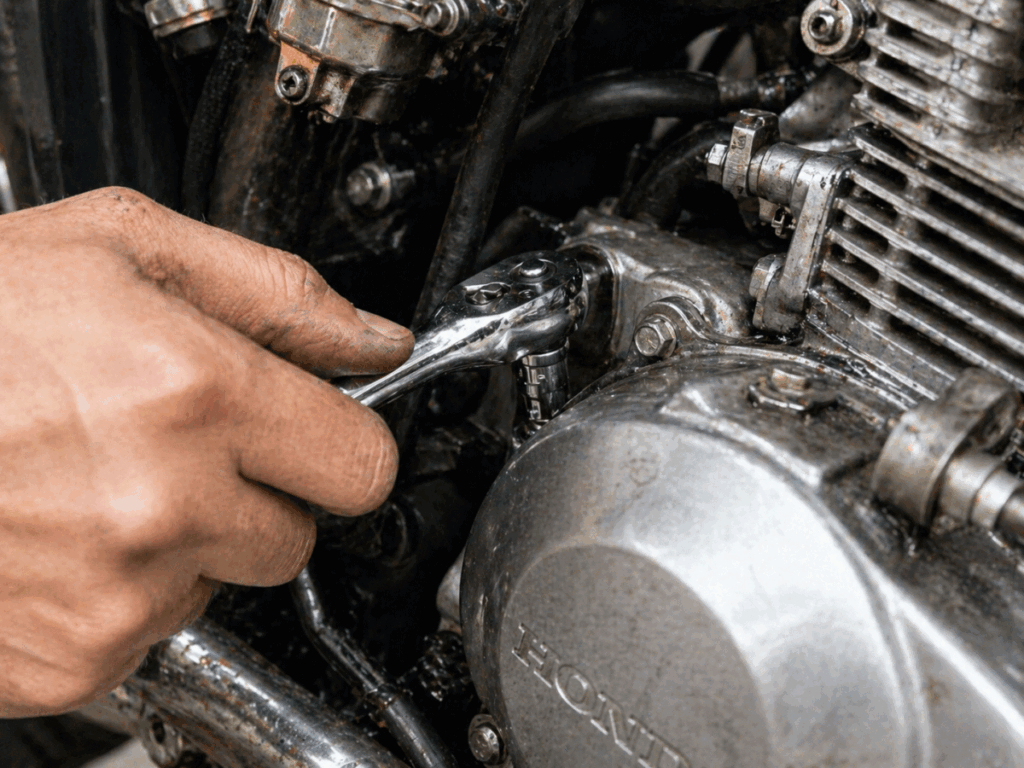
Same sizes, completely different experience depending on which tool type you use.
Open-ended spanners work. But on a Super Cub, where access to bolt heads is often limited by surrounding components, a ratchet and socket setup changes the quality of the work significantly. You can maintain consistent torque, work in tighter spaces, and move faster without repositioning the tool on every turn.
A 72-tooth ratchet is worth paying attention to here. The finer the tooth count, the smaller the arc you need to move the handle to advance the socket. In tight spaces where you can only move the ratchet a few degrees at a time, a 72-tooth mechanism makes the difference between a job that’s frustrating and one that’s manageable.
For anyone setting up a basic home maintenance kit, the priority order is: socket set with the five sizes above, ratchet handle, extension bar for hard-to-reach fasteners.
A spanner is a backup. A ratchet is the working tool.
How to Build the Right Kit Without Overspending
Three configurations depending on where you’re starting.
Minimum setup — the five socket sizes plus PH2 and PH3 bits. Covers routine maintenance including oil changes, chain service, and panel removal.
Recommended setup — minimum plus a ratchet handle, long reach sockets, and short extension. This is the kit that makes the work feel clean rather than frustrating.
What to avoid — large mixed sets marketed as complete motorcycle tool kits that bundle metric and imperial sizes together. The Super Cub uses metric fasteners exclusively. Imperial sizes aren’t relevant for this bike and you end up paying for volume rather than the tools you’ll actually use.
For riders who want to cover everything in a single purchase, a 95-piece set that includes both short and long reach metric sockets, a 72-tooth ratchet, extension bars, and JIS-compatible bits covers the full range of Super Cub maintenance without needing to source anything separately.
“Check whether the set you’re looking at includes long reach options alongside standard sockets. That combination handles the Super Cub’s awkward bolt positions without improvising.”
Frequently Asked Questions
Q. Can I use a standard Phillips screwdriver on the Super Cub?
It will fit the fasteners, but the engagement is different from JIS. Under load, standard Phillips bits are more likely to cam out and damage the bolt head. PH2 and PH3 JIS bits are the correct tool for this bike.
Q. Do I need metric and imperial sizes?
No. The Super Cub is a Japanese motorcycle and uses metric fasteners exclusively. Imperial sizes aren’t relevant for this bike.
Q. Is a torque wrench necessary?
For basic maintenance like oil changes and panel removal, a standard ratchet is sufficient. For engine work or any fastener with a specific torque spec in the service manual, a torque wrench is the right tool.
Q. Why does socket length matter?
On the Super Cub, several bolts sit in recessed positions surrounded by other components. A standard length socket won’t always reach cleanly. Long reach sockets give you the depth to seat properly without needing to stack multiple extension bars
The Practical Summary
The right super cub tools don’t need to be expensive or complicated. Five socket sizes, JIS-compatible bits, and a ratchet that works in tight spaces — that’s the complete kit for routine Super Cub maintenance.
Before buying anything, check that the set covers 8mm, 10mm, 12mm, 14mm, and 17mm in both short and long reach. Confirm PH2 and PH3 bits are included. Everything else is optional.