When you read motorcycle specs, one thing trips up a lot of beginners: two bikes can be in the same displacement class, yet one is a single and the other a twin. It’s tempting to assume more cylinders is simply better — but that’s not how it works.
Cylinder count is less a “performance grade” and more an engine’s personality. A single has its place, and so does a four. This guide walks through single vs twin vs four-cylinder engines — how each one actually feels to ride, the real trade-offs, and which fits which kind of rider — all at a beginner’s level.
What Cylinder Count Actually Changes
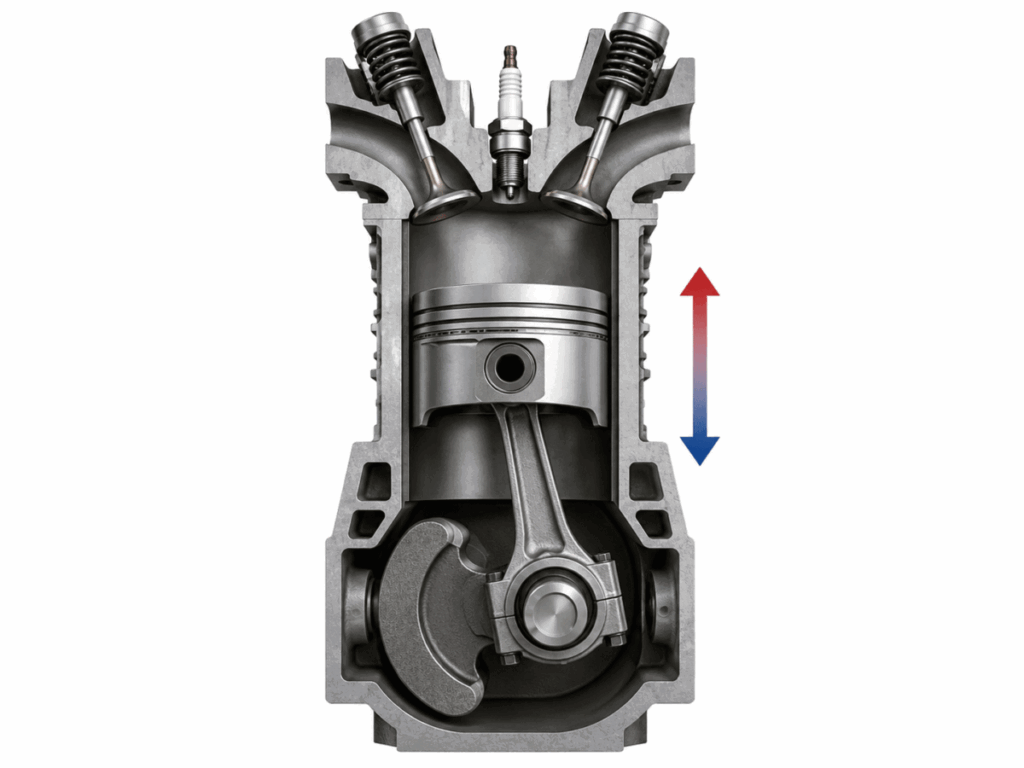
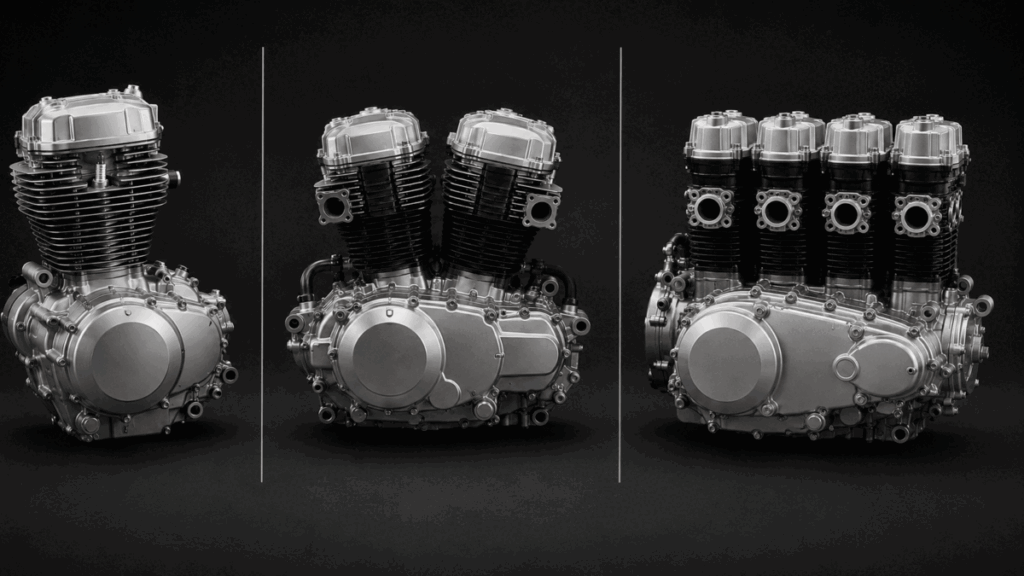
First, what’s a cylinder? A cylinder is the “room” inside the engine where fuel ignites and drives a piston up and down. One room is a single, two is a twin, four is a four-cylinder.
How many rooms there are changes four big things: vibration (more cylinders cancel each other out, so it’s smoother), power character (strong low-end pull vs. happy high revs), weight and complexity (more cylinders, heavier and more complex), and sound (cylinder count shapes the exhaust note). That’s why the same displacement can feel like a completely different bike depending on cylinder count.
Here’s the big picture first.
|
Category |
Single |
Twin |
Four (Inline-4) |
|
Construction |
Simple |
Medium |
Complex |
|
Weight |
Light |
Medium |
Heavy |
|
Vibration |
Higher |
Lower |
Smoothest |
|
Power character |
Low-end torque |
Balanced across range |
High-speed, high-RPM |
|
Economy & service |
Better, simpler |
Medium |
Worse, complex |
|
Price |
Cheap |
Medium |
Expensive |
|
Best for |
Beginner, city, off-road |
City + highway, touring |
High-speed, sport |
Why the Same Displacement Feels Different
Spec sheets miss something: the same 250cc can feel quite different as a single versus a twin.
A single has lively low-speed pull that makes it feel peppy in the city. But as speed climbs, vibration and engine noise announce themselves first. A twin’s initial punch isn’t as raw as a single’s, yet it carries on more smoothly the faster you go. So if you choose by horsepower numbers alone, the real-world feel can surprise you. Even at the same displacement and similar power, where and how that power arrives changes with cylinder count.
Low-End Torque vs High RPM: What Matters More for Beginners?
At the beginner stage, easy-to-use low-speed power matters more than top speed.
Think about it: the situations a new rider actually faces most happen at low speed — pulling away, U-turns, alleys, stop-and-go traffic, hill starts. In those moments, an engine with strong low-end torque, like a single or a twin, is less demanding. A small input gets a smooth response. A four-cylinder, by contrast, comes alive at high RPM, so a beginner rarely gets to use that performance in everyday riding. The horsepower is high, but you seldom meet it where you actually ride.
So for beginners, “how easy is the power to manage at low speed?” is a far more practical yardstick than “what’s the peak horsepower?”
Pros and Cons of Single-Cylinder Engines
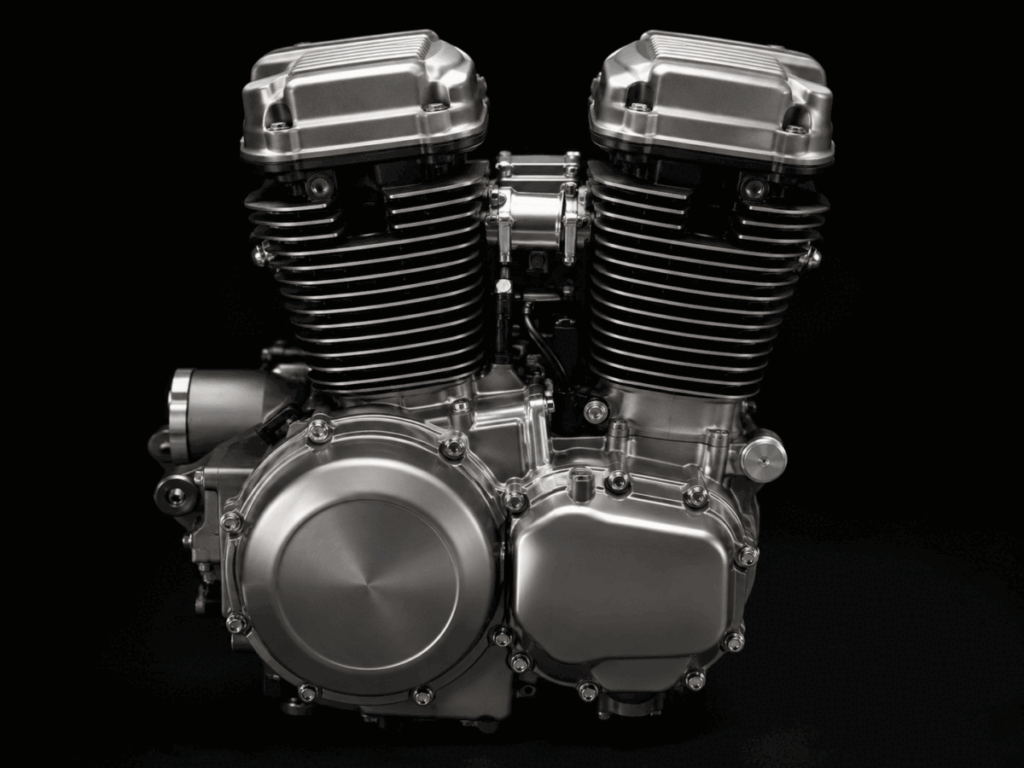
The upside: light, simple, cheap
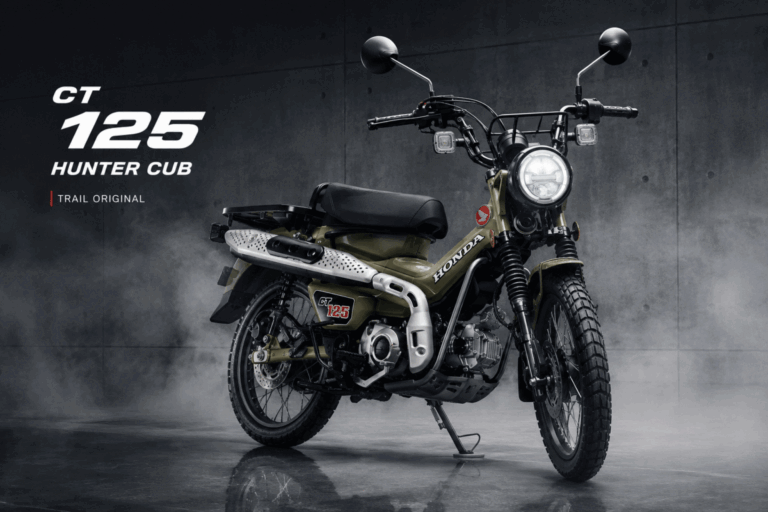
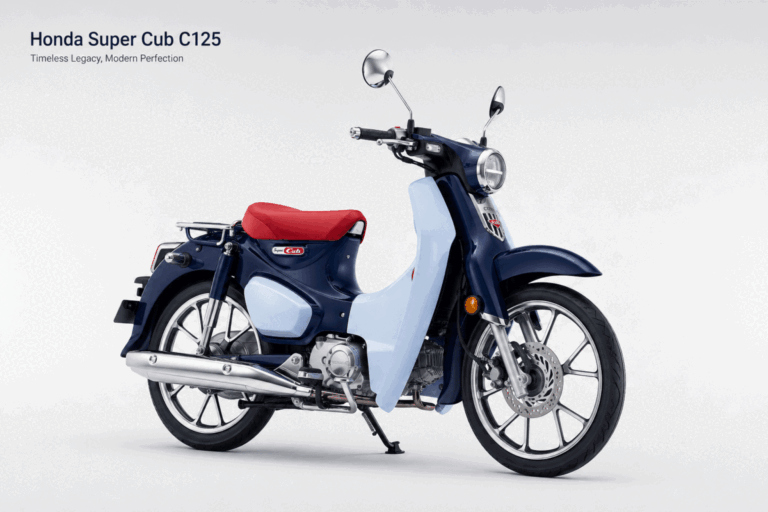
The single is the simplest, lightest engine — affectionately called a “thumper” in English for its distinctive beat. With one piston and one combustion chamber, it has fewer parts, less weight, and is cheap to build, so the bike costs less. Service is simple and fuel economy is good. Its strong low-end torque also gives it a satisfying punch off the line in town, and that light weight is why singles dominate dirt and off-road bikes. All of this suits beginners well.
The downside: vibration and limits
The downside is vibration. With a single piston working alone and no partner to balance it, vibration runs higher. A single also makes less total power than a twin of the same displacement, and it’s not suited to sustained high-speed cruising or high performance.
Pros and Cons of Twin-Cylinder Engines
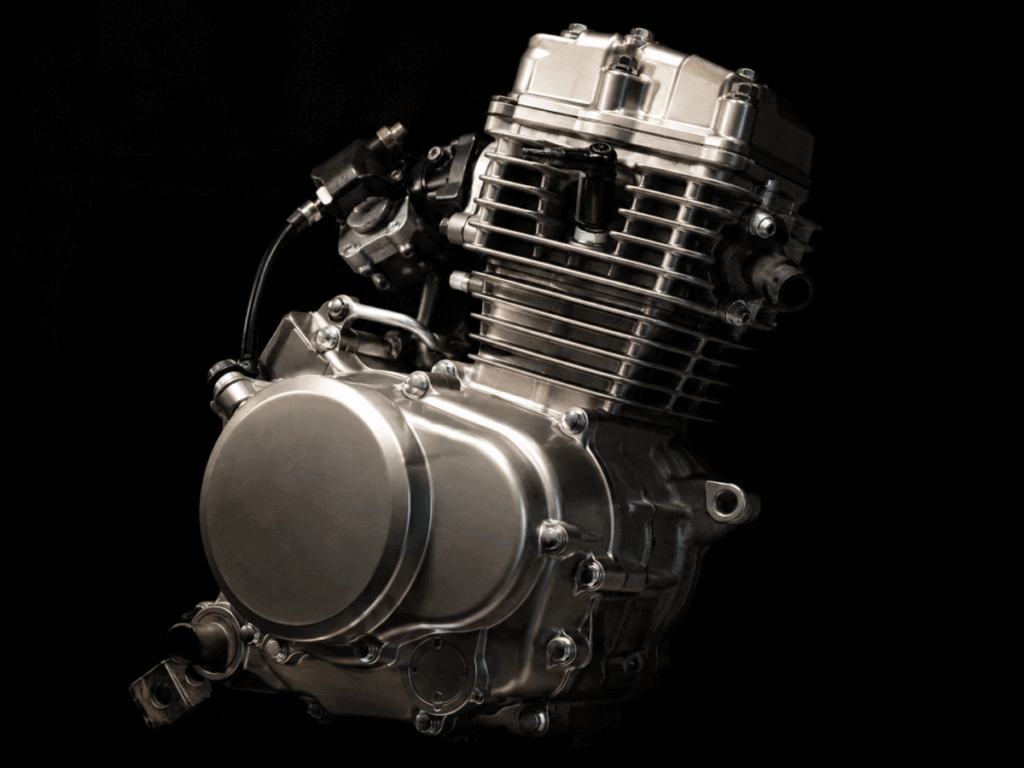
The upside: smooth and balanced
The twin is the engine most beginners meet as they step up — the balance point between single and four. With two pistons complementing each other’s motion, it vibrates less and runs smoother than a single. Power and torque come on evenly across the rev range, and high-speed response is good. That makes it an all-rounder, comfortable from city streets to high-speed runs to long-distance touring.
The downside: complexity and cost
The catch is more complexity than a single. Extra parts add a little weight, higher build cost raises the price, and maintenance costs more than a single’s.
A note on twin layouts
Twins come in different layouts, each with its own character: parallel twins with side-by-side pistons (common in smaller sport bikes), V-twins splayed in a V (the muscular cruiser feel — Ducati opens its to 90° so it looks more like an “L”), and boxer/flat twins lying flat on each side (a BMW signature). The V-twin, for instance, has been a brand-defining layout for decades, as Harley-Davidson’s own engine history shows. Same two cylinders, but the layout shifts the sound and feel quite a bit.
How Three- and Four-Cylinder Engines Differ
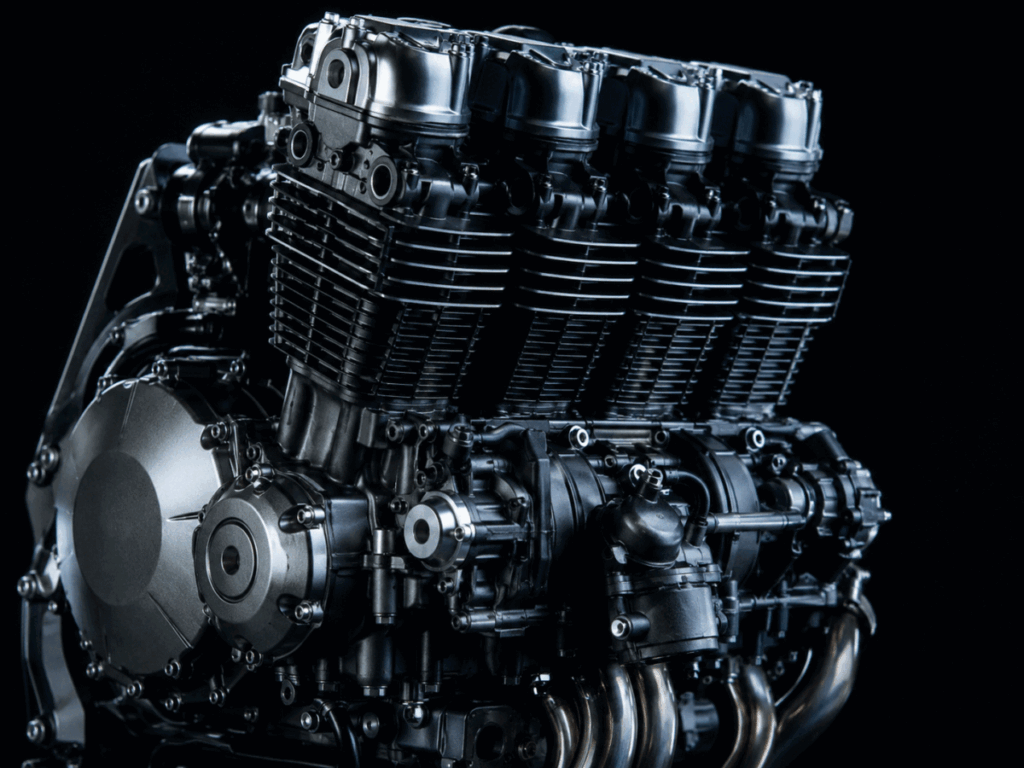
Add more cylinders and the theme is “smoother and higher-revving.”
The triple (three-cylinder) is a middle ground between single/twin and four. With three pistons it’s smoother and quieter than a twin while making good power — often lighter and more characterful than a four, yet smoother than a twin, so it’s prized for combining smoothness and personality.
The inline-four is the peak of smoothness and high performance. Four pistons cancel each other’s vibration for a very smooth spin, and it makes strong horsepower at high RPM for a high-speed advantage. Traditionally, the inline-four has been the signature layout for many high-performance sport bikes. (Some high-performance models use a V4 instead, like the Ducati Panigale V4 or Aprilia RSV4.) The trade-off: it’s the heaviest, most complex, and most expensive.
Is Vibration Always a Bad Thing?
Worth pausing here. Earlier we listed vibration as a single’s downside — but vibration isn’t purely bad.
The buzz of a single or a V-twin is fatigue to one rider and “the engine feeling alive” to another. Plenty of people seek out that pulse through the bars on purpose. That said, beginners should be realistic about long-distance fatigue. What’s a charming throb on a short city ride can turn into wrist, peg, and seat fatigue over a long, fast stretch. So treat vibration as both a downside and a matter of taste.
The Difference You Can’t Read on a Spec Sheet: Sound
There’s one more thing specs can’t capture: sound.
Cylinder count and layout decide the character of the exhaust note. The “thump-thump” beat of a single, the heavy V-twin cruiser pulse, the sharp wail of an inline-four at high RPM — it all comes from the cylinder configuration. Many riders choose a bike by the feel of that sound and vibration as much as by the power figures.
So cylinder count isn’t just a performance metric — it’s also the emotional part that decides how a bike makes you feel.
Why a Four-Cylinder Can Be Demanding for Beginners
A four-cylinder is hard for beginners for more than just being fast.
Many four-cylinder engines are mild at low RPM, then change character sharply as the revs rise. To an experienced rider that shift is thrilling; to a beginner it can feel like the speed arrives all at once, late — harder to manage. On top of that, the heavier body and higher part count make a four tougher to pick up if you drop it, and costlier to repair. That’s why fours are usually recommended after you’ve built up some experience.
Single vs Twin vs Four-Cylinder: Which Should a Beginner Choose?

The key question, again, is how you’ll ride. Break it down by use.
Match the engine to your riding
If you want an easy start, ride mostly in the city, and value light, cheap, simple-to-service — a single is closest to the right answer. It’s a low-pressure first bike.
If you’ll ride the city and faster roads, with the occasional long trip, a twin is the comfortable all-rounder. It’s the most commonly recommended step up for beginners.
If high-speed and sport riding is the main goal and you want smooth high revs, you’re looking at a four — but its weight, cost, service demands, and tricky power delivery mean it’s usually better after you’ve gained some experience.
Bottom Line: Cylinder Count Is Character, Not Rank
In single vs twin vs four-cylinder, these aren’t higher and lower grades — they’re different personalities. The single is light, simple, and economical; the twin is a do-it-all balance; the four is smooth and high-performance but heavy and pricey.
So instead of asking “how many cylinders is best?”, ask “how will I ride?” first. Start light with a single, do a bit of everything with a twin, chase speed with a four. The right answer to single vs twin vs four-cylinder isn’t the cylinder count — it’s your riding style.
Related reads:
Air-Cooled vs Liquid-Cooled Motorcycle Engines: A Beginner’s Guide
Honda Engines: Why It’s Really an Engine Maker, Not a Carmaker