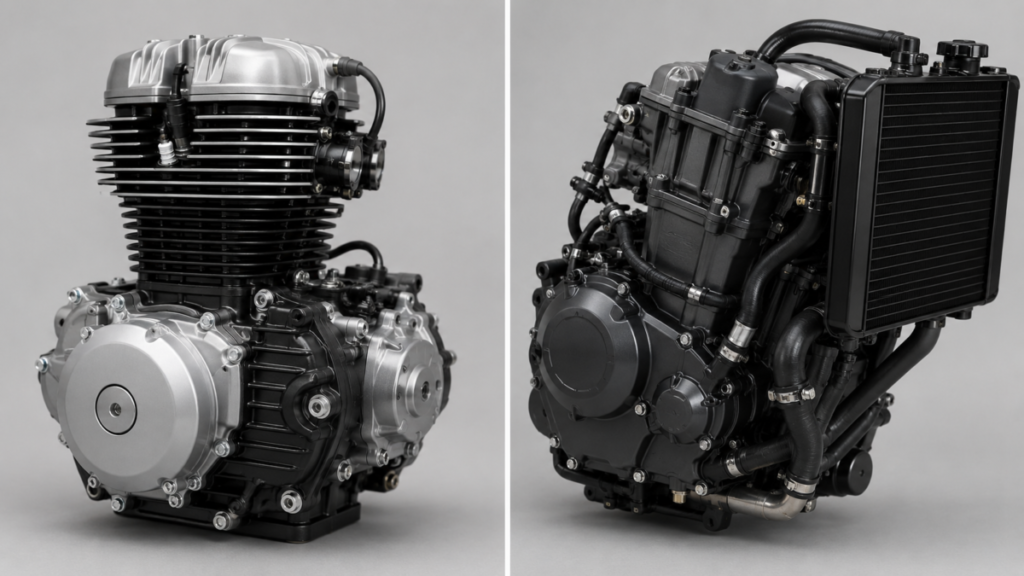
If you’re shopping for your first motorcycle, one pair of words keeps showing up: air-cooled and liquid-cooled. Two bikes can be in the same displacement class, yet one may be air-cooled and the other liquid-cooled — and it’s easy to wonder what the difference is, and which one you should pick.
Here’s the short version up front: in the air-cooled vs liquid-cooled debate, neither is simply “better.” They’re two approaches with different trade-offs, not a ranking. This guide breaks down how each one works, the real pros and cons, and which fits which kind of rider — all at a beginner’s level.
Why Does a Motorcycle Engine Need Cooling?
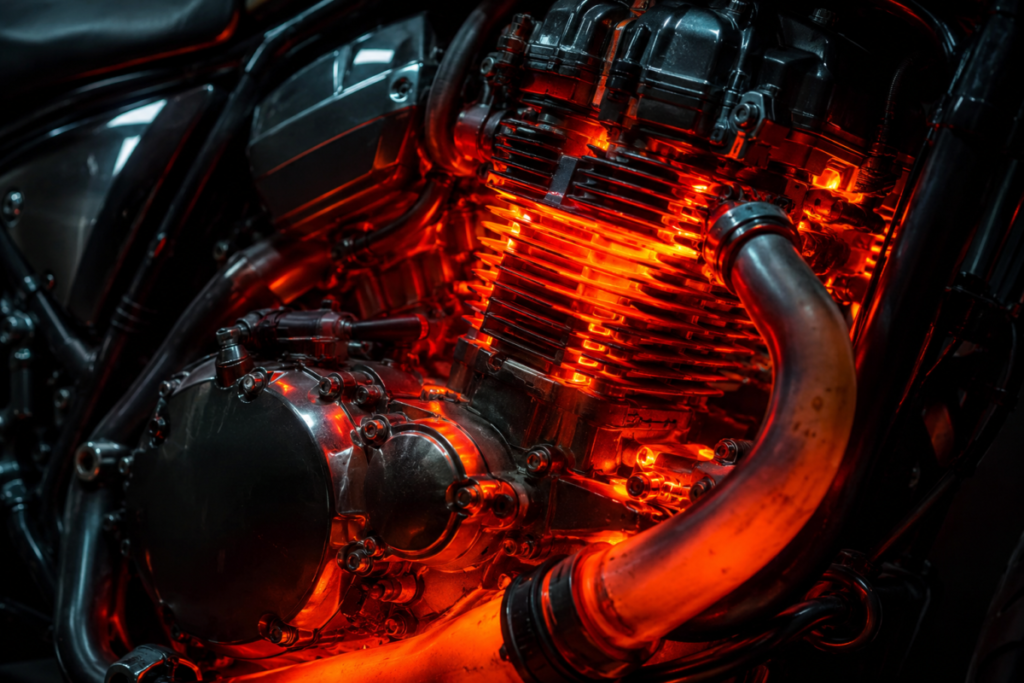
Start with the basics. An engine makes power by burning fuel, and burning fuel produces a lot of heat. If that heat isn’t carried away fast enough, metal parts expand and warp, and in the worst case the engine fails. So every engine needs some way to shed heat — a cooling system.
There are two main ways to do it: use airflow to remove heat, or use circulating coolant to carry heat away. That single choice — the heart of the air-cooled vs liquid-cooled question — shapes a surprising amount of a bike’s character.
Air-Cooled vs Liquid-Cooled: The Core Difference
The principle is simpler than it sounds.
How air cooling works
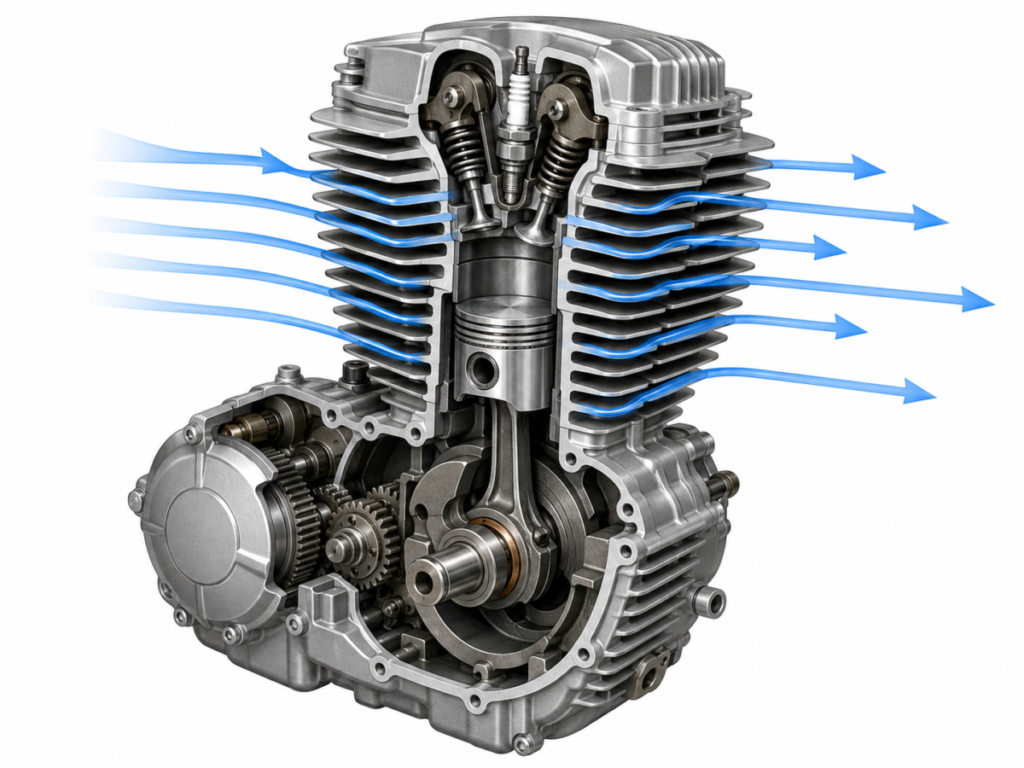
Air cooling does exactly what it says — it cools with airflow. You’ve probably seen those thin metal blades wrapped around an engine; those are cooling fins. They increase the surface area so that air rushing past as you ride carries away as much heat as possible. No extra hardware — just air.
How liquid cooling works
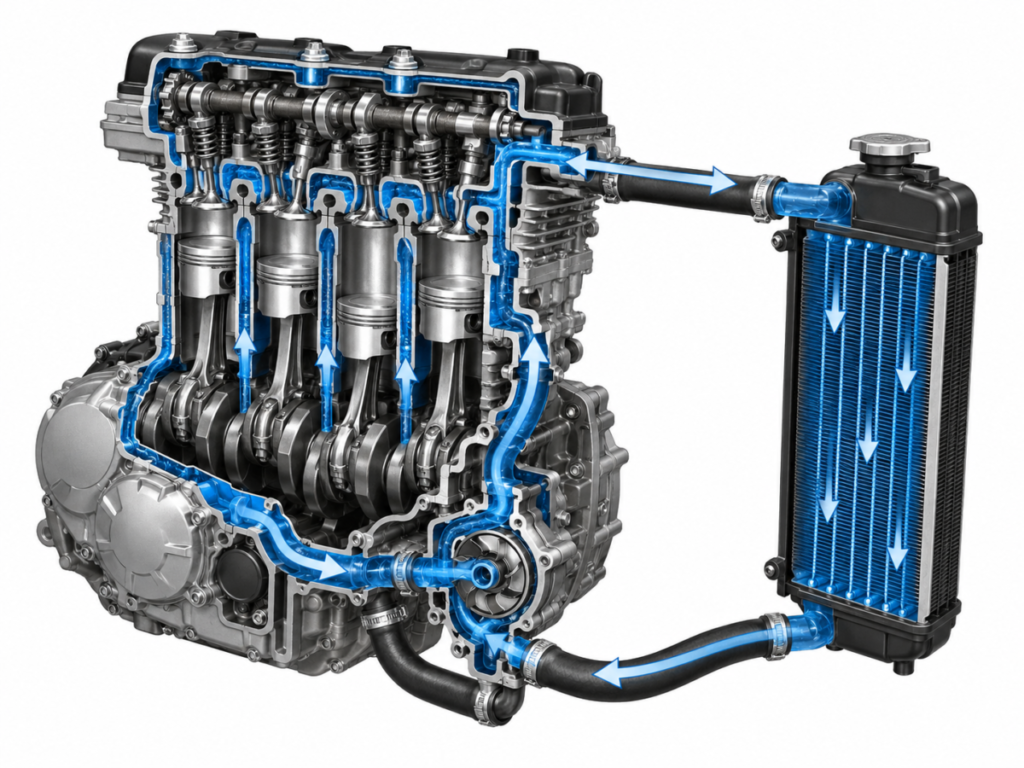
Liquid cooling uses coolant, like a car. Coolant flows through passages inside the engine, absorbs heat, travels to a radiator (the grille-like part usually at the front) to cool down, and circulates back, driven by a water pump. One note: although people say “water-cooled,” what’s actually inside is coolant — a mix with antifreeze and rust inhibitors — so “liquid-cooled” is the more accurate term.
In a sentence: air cooling leaves it to the wind, while liquid cooling actively manages temperature. Before the details, here’s the whole thing at a glance.
|
Category |
Air-Cooled |
Liquid-Cooled |
|
Cooling method |
Airflow while riding |
Coolant + radiator |
|
Construction |
Simple |
Complex |
|
Weight |
Lighter |
Heavier |
|
Maintenance |
Simpler |
Needs coolant care |
|
High-speed runs |
Less favorable |
Favorable |
|
City traffic |
Struggles with heat |
Handles heat well |
|
Character |
Classic looks |
Modern, performance-focused |
|
Best for |
125cc commuters, classics |
250cc+, highway, stop-and-go cities |
Pros and Cons of Air-Cooled Engines
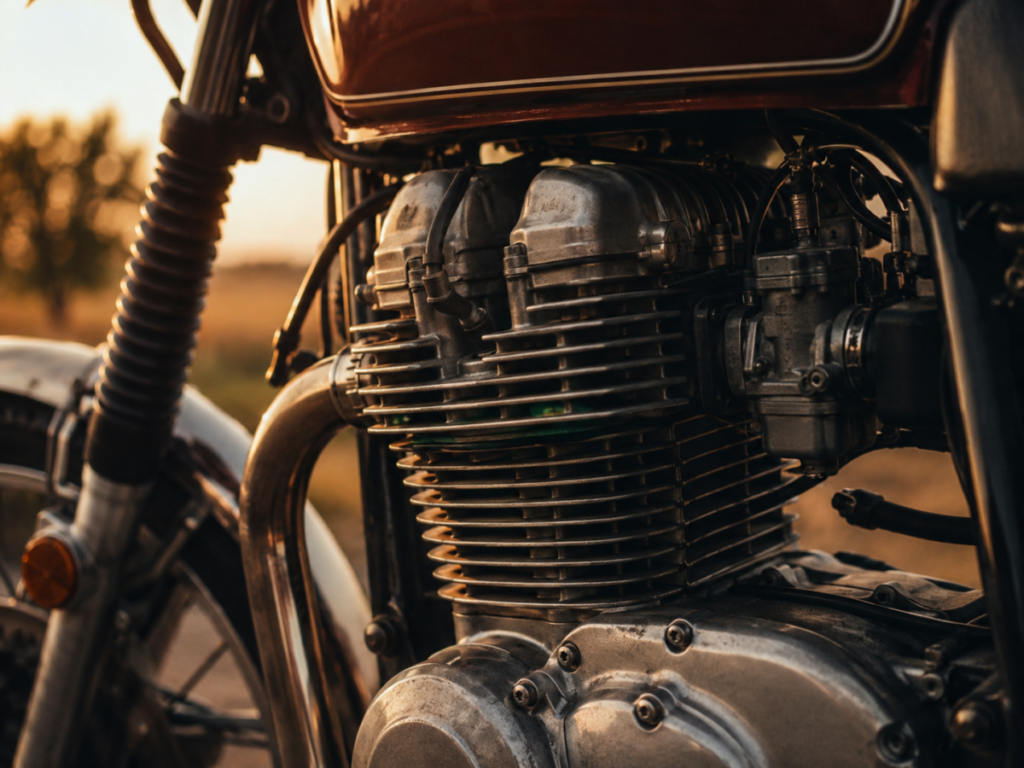
The upside: simple and light
Air cooling’s biggest appeal is simplicity.
With no radiator, water pump, coolant, or hoses, the system is simpler and lighter. Fewer parts means fewer things to fail, so maintenance tends to be simpler and cheaper. Plenty of riders also love the look of those exposed fins — that classic “you can see the engine” aesthetic.
The downside: heat and limits
The downside is inconsistent temperature. Because it relies on airflow, the engine heats up quickly when you’re stopped at a light or stuck in traffic with no wind passing through — especially in hot summer traffic or long stop-and-go conditions. Air-cooled engines also have to tolerate a wide temperature range, which means looser part tolerances, and that tends to limit how much performance you can extract from a given displacement. They’re usually a bit louder, too.
Pros and Cons of Liquid-Cooled Engines
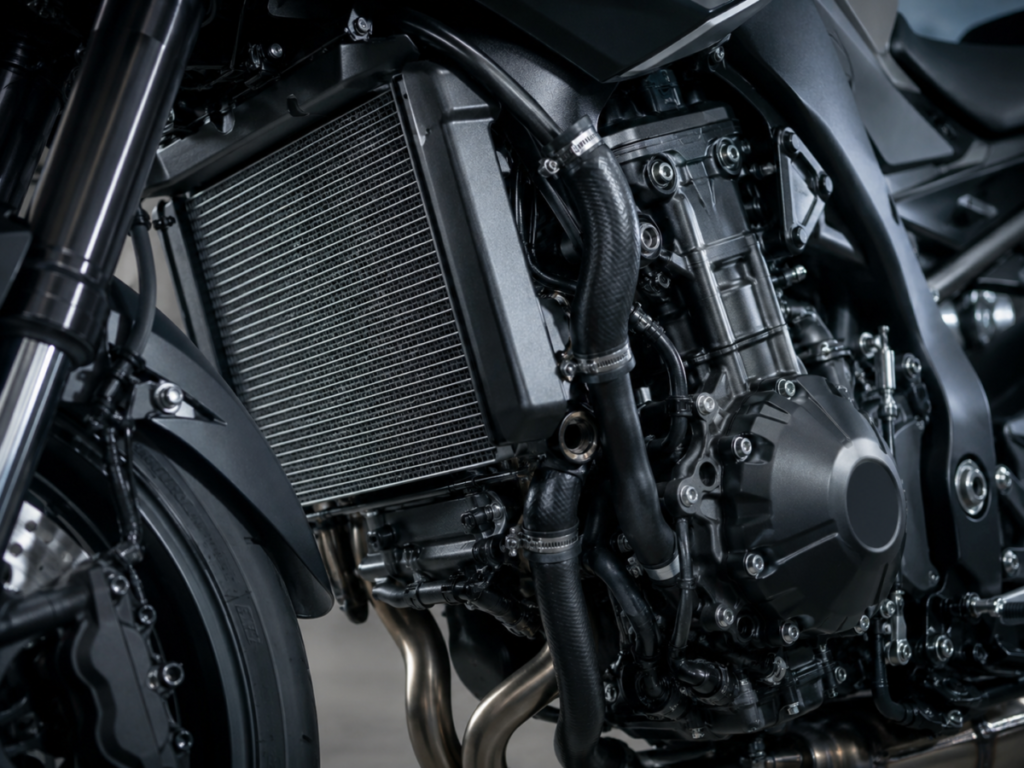
Liquid cooling’s core strength is stable temperature management.
The upside: stable and strong
Because coolant holds the temperature steady, engineers can run higher compression, tighter tolerances, and higher RPM — meaning more performance, more reliably, from the same displacement. Stable temperature also makes the air-fuel ratio predictable, which helps fuel economy and emissions, and the coolant jacket around the engine muffles noise. It shines at high RPM and in hot, stop-and-go conditions.
The downside: complexity and cost
The cost is complexity. A radiator, water pump, coolant, and hoses add weight, and the coolant needs periodic changes. Hoses, pumps, and radiators can also develop leaks. Higher manufacturing cost usually means a higher sticker price, too.
The Myth That Liquid-Cooled Means More Maintenance
When it comes to air-cooled vs liquid-cooled, here’s something beginners often get wrong: “Liquid cooling is complex, so it must need way more maintenance.” That’s half true, half false.
Look at the cooling system alone and yes, liquid cooling asks for more — coolant changes, more parts. But look at the whole engine and the picture shifts. Because a liquid-cooled engine runs at a steady temperature, the intervals for other key service items — like valve checks — tend to be longer, a point manufacturers like Harley-Davidson also explain. By contrast, an air-cooled engine sees a wider temperature swing, so on some models basic service items like valve-clearance checks are scheduled more often.
The point is that maintenance is not automatically worse — it depends on the model and the type of service.
Which Should a Beginner Choose?
In the air-cooled vs liquid-cooled decision, the key question is how you’ll actually ride. Break it down by displacement and use, and it gets clear.
125cc commuters
For a 125cc commuter for errands and short hops, air cooling is plenty. For steady riding at modest speeds and low RPM, air-cooled is light and economical — cheaper to buy, simpler to service.
250–300cc and up
For 250–300cc and up, if you’ll spend long stretches at high speed or use high RPM often, liquid cooling has the edge. Its thermal stability really shows when you hold high speeds and revs. It’s also the easier choice for city riders who face a lot of hot, stop-and-go traffic.
A note on bigger bikes
The larger and more performance-oriented the bike, the more liquid cooling becomes the de facto standard — precise temperature control is essential to deliver high performance reliably.
Will Air-Cooled Engines Disappear?
Why liquid cooling is winning
Since liquid cooling has the advantage on performance and regulations, newer bikes do keep trending liquid-cooled. A big reason is historical: as emissions rules tightened from the 1980s, the steady temperature of a liquid-cooled engine made it easier to keep the air-fuel ratio in check, which helped meet those rules.
Why air cooling still survives
But air cooling isn’t vanishing. There’s also “partial” liquid cooling that blends the two. For example, later versions of BMW’s boxer GS engines used liquid cooling around the hottest areas while keeping much of the traditional boxer character — splitting the difference between air-cooled simplicity and liquid-cooled stability.
And in the classic and cruiser world, many bikes deliberately keep the air-cooled look and feel. Some brands even offer air-cooled and liquid-cooled models side by side in the same lineup. Performance isn’t the only thing that decides the choice.
Bottom Line: A Beginner’s Decision Guide
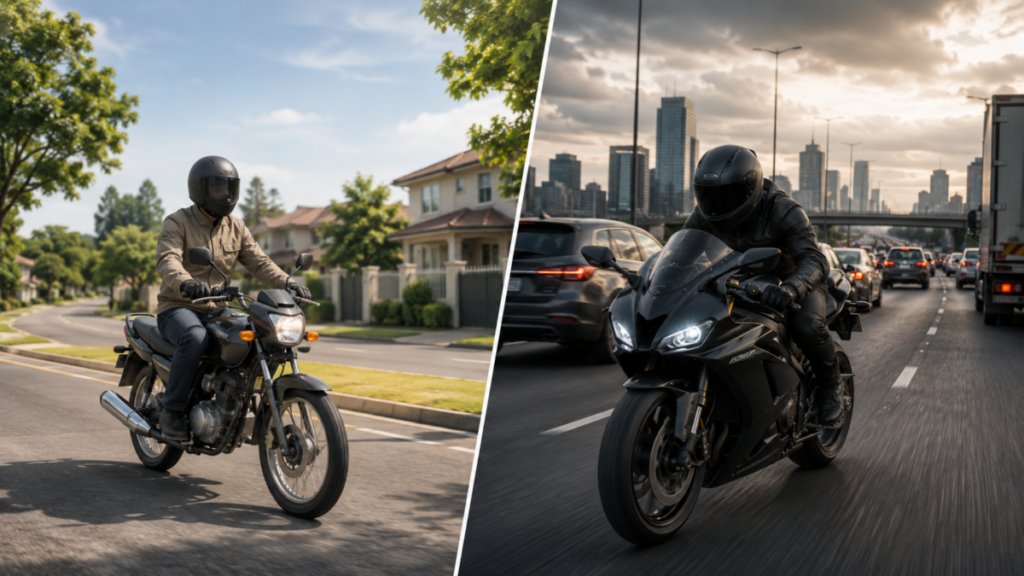
Air-cooled vs liquid-cooled is a trade-off, not a ranking. To make it concrete:
Choose air-cooled if — you ride a 125cc-class commuter for short, local trips; you want light, affordable, simple-to-service; you value classic looks and feel.
Choose liquid-cooled if — you ride 250–300cc and up with frequent high-speed or long-distance runs; you regularly face hot, stop-and-go city traffic; you want more performance and stability from the same displacement.
So instead of asking “which is better?”, ask “how will I ride?” first. The right answer isn’t on the spec sheet — it’s in your riding style.
Related reads (replace # with the live URL after publishing):
Honda Engines: Why It’s Really an Engine Maker, Not a Carmaker
Who Owns Ducati? The Italian Icon That’s Actually German-Owned