Some of the most dangerous motorcycle road hazards are things you never think about behind the wheel of a car: a scattering of gravel, a slight lip between lanes, a metal joint on a bridge.
In fact, U.S. data from NHTSA and IIHS shows that a large share of motorcycle fatalities happen in single-vehicle crashes. In other words, the danger isn’t only collisions with other vehicles — it also hides in the road surface and in a single split-second input. That’s exactly why the small variables a car driver never even sees can become life-threatening motorcycle road hazards for a rider. This guide covers the ones car drivers miss, and how to handle each.
Why the Same Road Is More Dangerous on Two Wheels
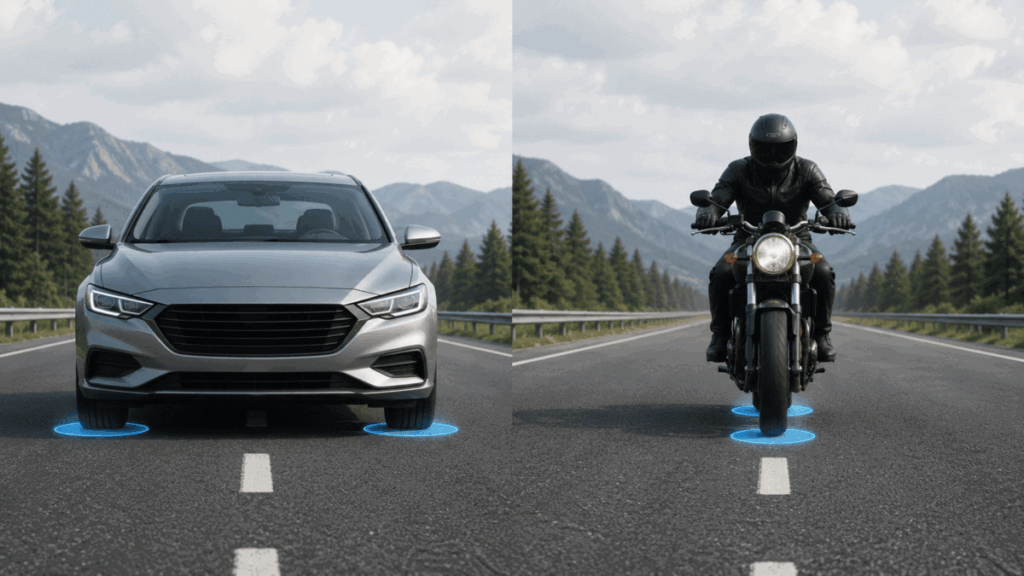
Why is the same road riskier for a motorcycle? Two reasons.
First, a rider is exposed.
A car driver sits wrapped in a metal shell with seatbelts and airbags; between a rider’s body and the road there’s only gear. Small impacts come straight through.
Second, there are only two wheels.
Where a car grips the road with four, a motorcycle has just two contact patches. So if one wheel loses grip on gravel or water, your whole balance is instantly compromised — a car has the other wheels to hold on, a bike doesn’t. These two facts are why obstacles that mean nothing to a car turn into real motorcycle road hazards.
Gravel and Sand: The Most Common Cause of a “Lay-Down”
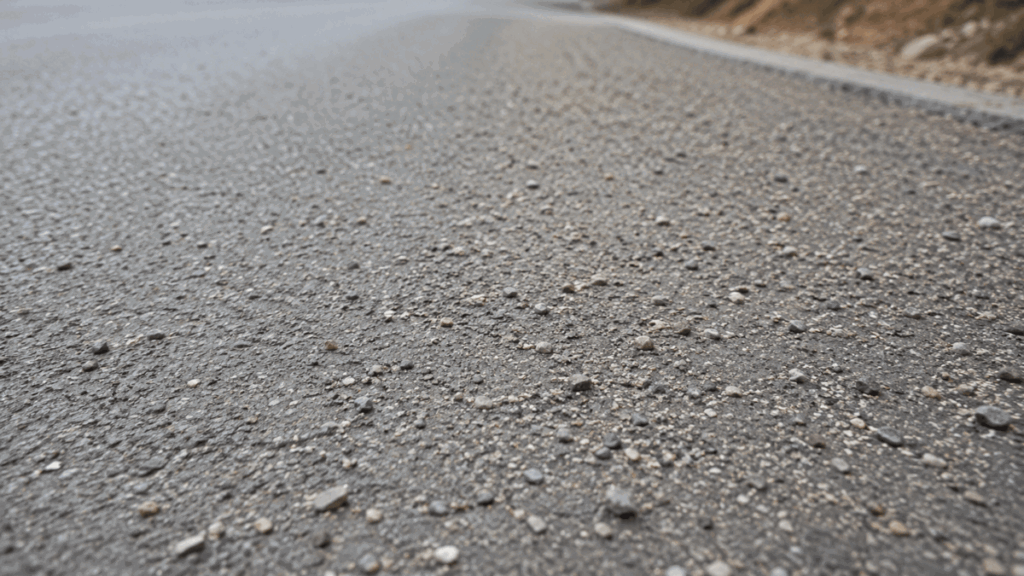
The hazard riders meet most often is gravel and sand. Gravel is one of the most common causes of a motorcycle “lay-down” — sliding out and going down — and inexperienced riders are especially prone to it.
The tricky part is how hard it is to see. Sand and gravel blend into the pavement’s color, so you often spot it too late, mid-corner. Lose grip there and you slide in an instant.
The key to handling it is smoothness. On gravel, avoid hard braking and sharp steering inputs, and hold a steady, gentle speed. If you’re already on it, don’t grab the brakes — keep your eyes up on where you want to go and make your inputs as small as possible. Gravel in a corner is the most dangerous of all, so scrub off speed before you enter the turn.
Edge Breaks: Nothing to a Car, Serious to a Rider
An edge break happens when two lanes sit at different heights — when roadwork or repaving leaves one lane milled or topped before the other.
For a car it’s barely an issue; you just thud over it. For a rider it’s different. At speed especially, catching that lip at a shallow angle can make the bike unstable and cost you control. When changing lanes, don’t ride along the edge break at a long, shallow angle — cross it at a sufficient angle, quickly.
Bridge Joints and Steel Grates
There’s a reason riders tense up crossing certain bridges.
Expansion and bridge joints
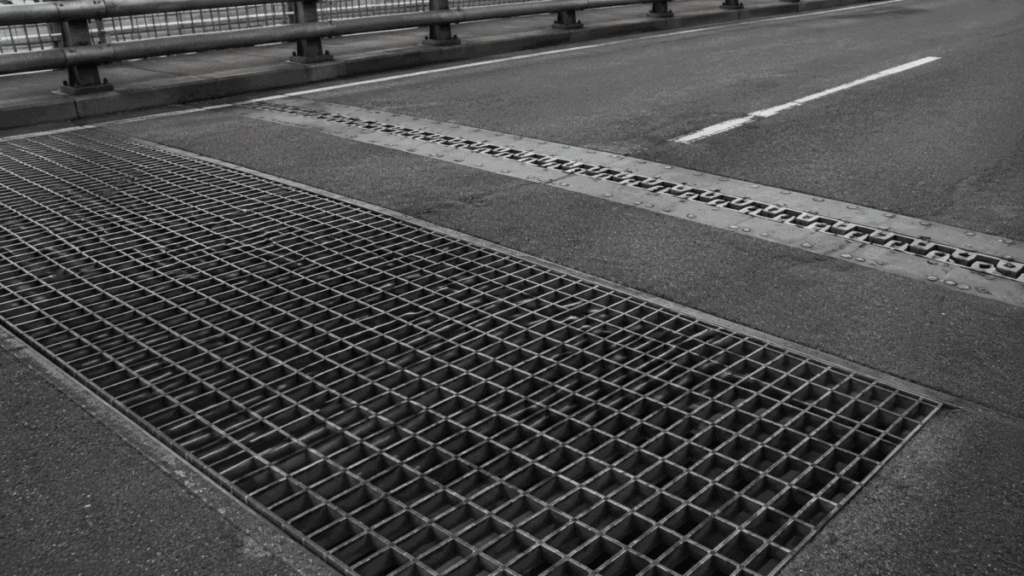
Bridge and expansion joints are metal pieces that let concrete expand and contract without cracking. Necessary — but to a rider they’re like a railroad crossing, a gap that can catch a wheel. A gap running parallel to your direction of travel is the dangerous one: keep the wheel from tracking along it by crossing at a sufficient angle (45 degrees or more) and getting over it quickly. Avoid abrupt speed or direction changes while you’re on it. The MSF Motorcycle Operator Manual gives the same guidance on crossing grooved and metal surfaces.
Steel-grate decks
A bridge with a steel-mesh grate deck is trickier still. The contact feel changes and the bike seems to wander side to side, which is unsettling. That wandering isn’t actually dangerous in itself, but it rattles riders who aren’t used to it — and the strong crosswinds common on bridges only add to it. The fix is counterintuitive: don’t strangle the bars trying to force the bike straight. Relax, hold a steady speed, and let it ride through smoothly.
[H2] Standing Water: A Trap of Unknown Depth
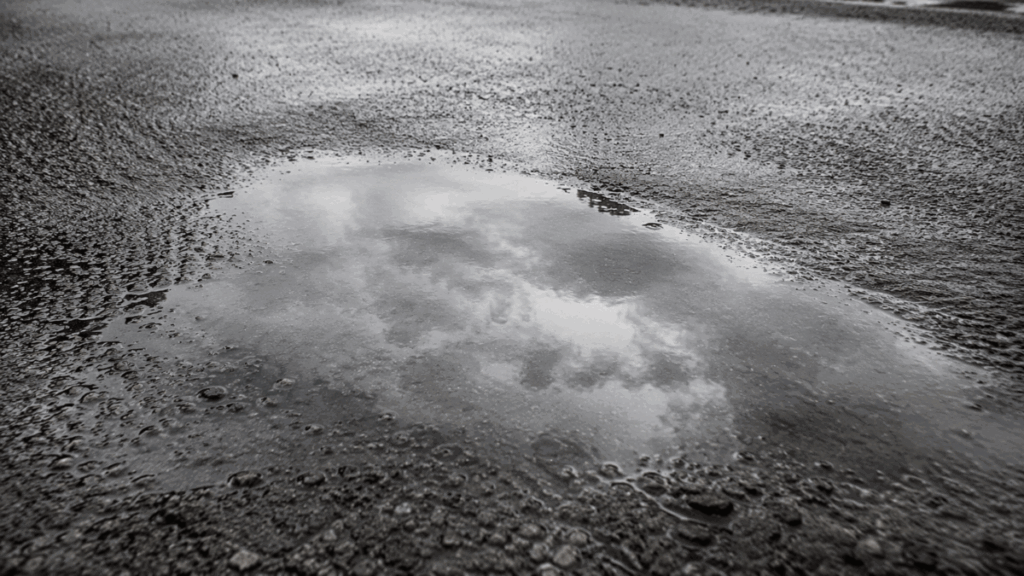
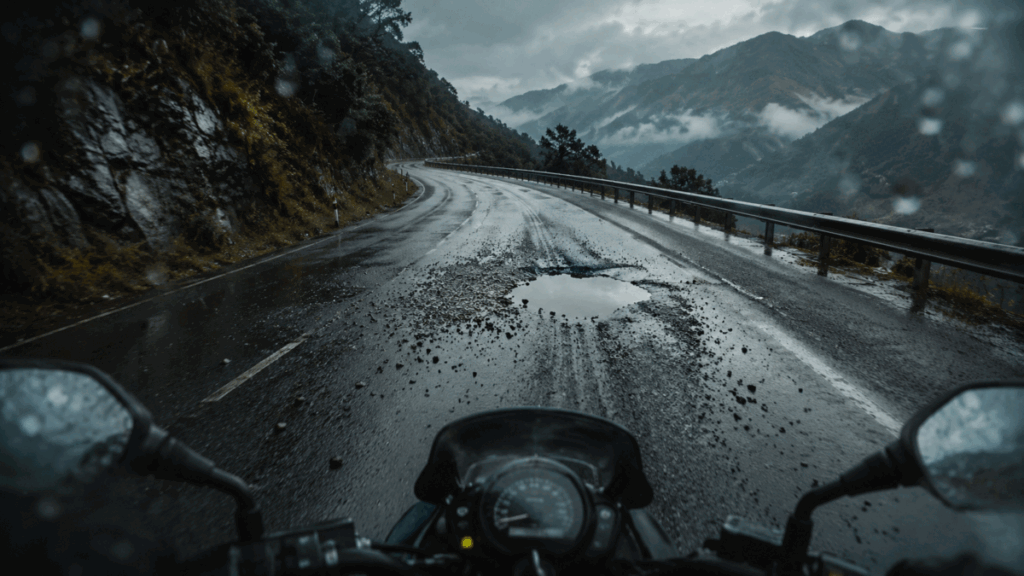
Standing water after rain is another threat that car drivers shrug off. A puddle that’s harmless to a car works differently on a bike.
Standing water hides two things. One is a deep pothole beneath it — water masks the depth, so a shallow-looking puddle can be a hole big enough to swallow a wheel. Edges of puddles especially can look shallow while the center is gouged deep, so the first choice is to not ride through it at all if you can. The other is hydroplaning: a film of water between tire and road can instantly rob you of steering and braking. On wet days, avoid puddles; if you can’t, slow down and pass through gently.
Road Debris: A Split-Second Decision
Fallen branches, shredded tire treads, cargo or tools dropped from a truck — debris appears without warning.
For a rider it forces a split-second decision. Swerve too hard and you lose control; ride straight over it and the bike can jolt or unsettle. That’s why the habit of looking far ahead to spot debris early matters so much. Spot it early and you have room to ease around it; spot it at the last second and you’re left with two bad options.
Wind: The Invisible Hand
The last is wind. Strong enough gusts push against the large surface area of bike and rider, shoving you across the lane or, in extremes, knocking you down.
The dangerous spots are where wind suddenly intensifies — on bridges, at tunnel exits, across open fields. The sudden shift in air when you pass or meet a large truck counts too. In crosswinds, ease off the speed a little and relax your body and grip so the bike can settle itself.
The Bottom Line on Motorcycle Road Hazards: Awareness, Not Fear
If all this makes you think “isn’t a motorcycle just too dangerous?” — that’s not the point. The point is that most of these motorcycle road hazards are things you can prepare for if you know them in advance.
The common principles boil down to three: look far ahead and read the surface early; keep enough following distance to buy reaction time; and slow down through hazard zones while avoiding abrupt inputs. On top of that, rehearsing a plan before you ride — “if there’s a gravel patch, I’ll move to the shoulder” — keeps you from freezing in the moment.
The eye to read the hazards a car driver never sees — that’s the real difference between an experienced rider and a beginner. The habit of doubting the road one more time is, in the end, what keeps you safe.
Related reads:
Single vs Twin vs Four-Cylinder Motorcycle Engines: A Beginner’s Guide
Air-Cooled vs Liquid-Cooled Motorcycle Engines: A Beginner’s Guide