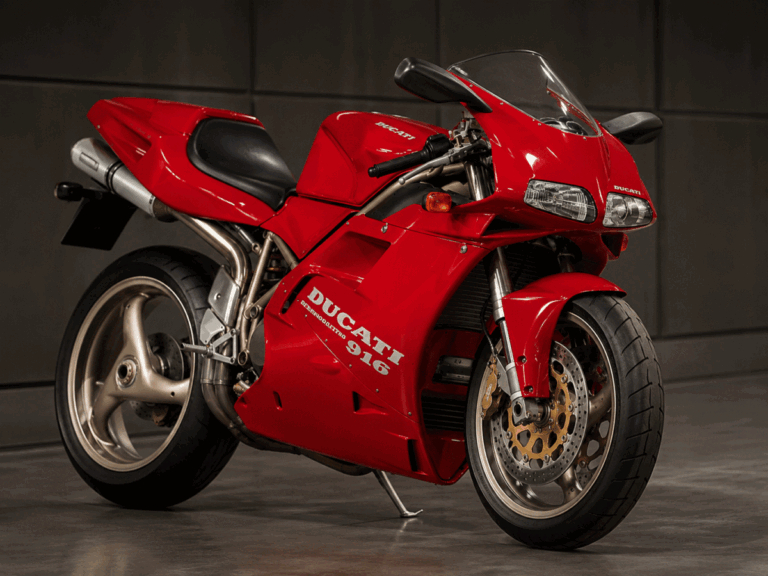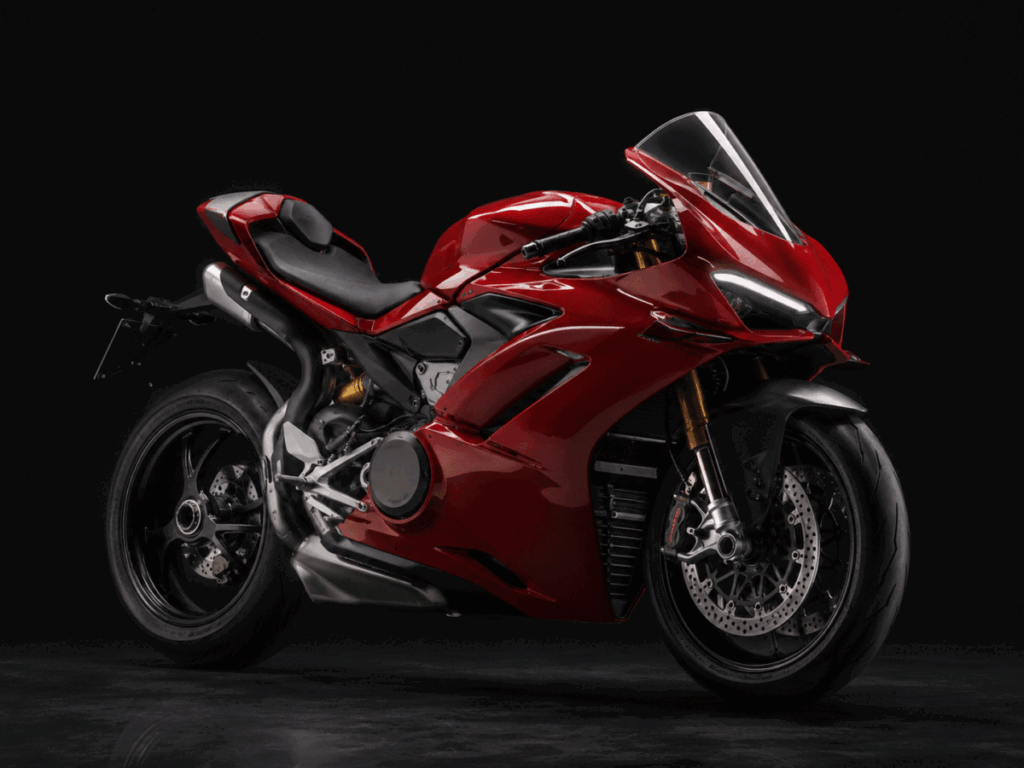
Red superbikes, desmodromic engines, born in Bologna. By every visible measure, Ducati is Italian to the core. But ask who owns Ducati, and the answer is more surprising than most riders expect.
Ducati is still an Italian motorcycle brand, designed and built in Italy. But in terms of ownership structure, it has belonged to Germany’s Volkswagen Group since 2012, and today it’s classified as a brand managed directly by Audi. Go one step further and it gets more interesting: the legal acquiring entity wasn’t Volkswagen or even Audi — it was Lamborghini. Let’s break down how this unusual ownership structure came to be, and what it actually means for the brand.
Who Owns Ducati? The Lamborghini → Audi → Volkswagen Structure
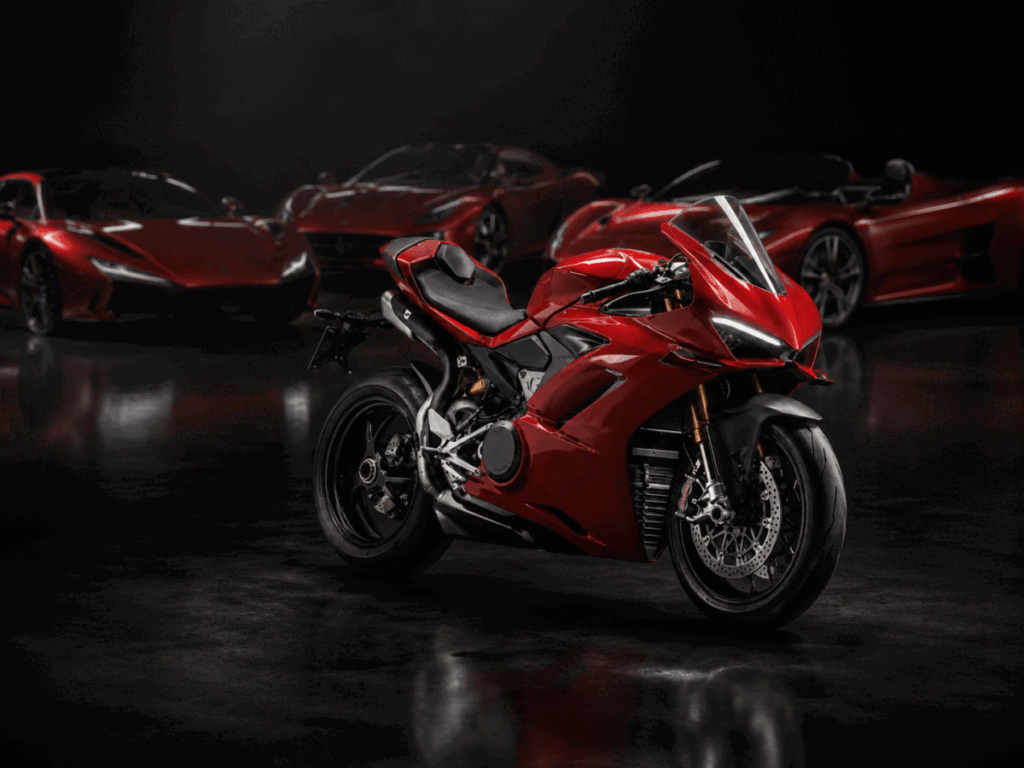
Let’s start with the precise structure. Ducati became the eleventh brand in the Volkswagen Group on July 19, 2012. To be exact: the group-level driver of the deal was Audi, but the legal acquiring entity was Audi’s subsidiary, Automobili Lamborghini S.p.A. So Ducati sits under Lamborghini in the ownership chart, Lamborghini sits under Audi, and Audi belongs to the Volkswagen Group.
That said, Lamborghini was the acquiring entity in name; operationally, Audi manages Ducati directly. So “Ducati belongs to the Volkswagen Group” is correct — the surprising part is that the structure routes through a supercar brand on the way there. Not many riders know Ducati and Lamborghini are linked this way. You can confirm the official history on the Volkswagen Group’s Ducati page.
There’s a small twist on the price, too. Press reports at the time put the deal at around €860 million. Later coverage citing Audi’s 2012 financial filings indicated the actual share-purchase price was about €747 million (roughly $980 million at the exchange rate then), and confirmed the acquiring entity as Automobili Lamborghini S.p.A.
Why Was Ducati Placed Under Lamborghini?
The most intriguing question is this. With so many brands inside the Volkswagen Group, why route Ducati specifically under Lamborghini?
This was never officially announced as being “for reason X.” But industry observers at the time suggested the placement under Lamborghini, rather than Audi proper, may have involved practical considerations around European emissions regulations and corporate average emissions calculations. The reasoning: brands making large-displacement vehicles struggle to meet fleet-average emissions targets, and how a fleet is structured across corporate entities can become a factor in regulatory compliance.
The idea that a legendary bike brand ended up under a supercar maker partly due to such real-world accounting — rather than pure engine romance — is a bit deflating, but that’s exactly what makes it interesting.
A CEO’s Personal Attachment Played a Part
Of course, accounting analysis doesn’t explain everything. There was a strong personal thread running through this acquisition.
Put simply, a top executive’s personal attachment appears to have weighed heavily. Ferdinand Piëch, who led the Volkswagen Group at the time, had wanted Ducati for years and owned a Ducati superbike himself. He’d missed a chance to buy Ducati roughly three decades earlier, and this deal was, in a sense, settling that old score. Some analysts at the time noted the acquisition offered no obvious major business benefit to Audi and read more as an expression of the chairman’s reputation as a collector of rare and exotic brands.
That a giant group’s acquisition was driven partly by one executive’s personal affection says something, ironically, about the pull of the Ducati brand itself.
So What Actually Changed for Ducati?
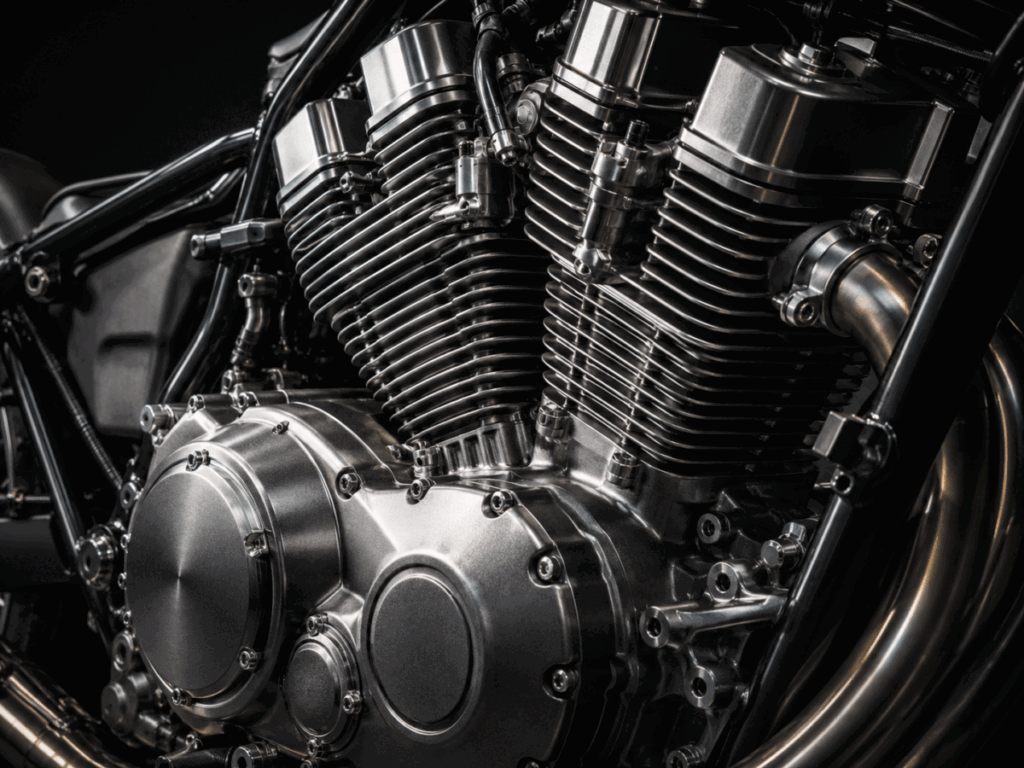
When ownership changes, riders usually worry first: “Now that a German group owns it, won’t it stop feeling like a Ducati?” The results suggest the opposite.
With the capital and R&D capability of the Volkswagen Group — Audi in particular — behind it, Ducati gained far more room for new-model development and technology investment. It operates as an autonomous brand within the Audi unit, retaining its position as a premium sports motorcycle maker and continuing to draw on its lightweight-construction and engine-development know-how. The structure uses the group’s resources while preserving the brand’s autonomy.
The desmodromic valve system, a brand signature, is part of that identity too. This technology — which prevents power loss at high rpm — originated in car racing, and Ducati first applied it in its 1956 125 Desmo model. Modern Ducati doesn’t insist on the exact same approach across every engine, but desmodromic remains a core symbol of the brand and an essential part of explaining its mechanical identity.
Was Ducati Ever for Sale? It’s Still in the Volkswagen Group
There was a stretch when Ducati’s future looked uncertain. As the Volkswagen Group reviewed cost-cutting and restructuring, the possibility of spinning off Lamborghini and Ducati was floated.
In the end, both brands stayed in the group. Ducati made clear it operates independently and profitably, without relying on central group funding or needing group support or investment — and that its new-model plans would proceed as scheduled.
As of the Volkswagen Group’s currently published brand structure in 2026, Ducati remains within the group, grouped alongside Audi, Bentley, and Lamborghini in the “Brand Group Progressive.”
So, Is Ducati Any Less Italian?
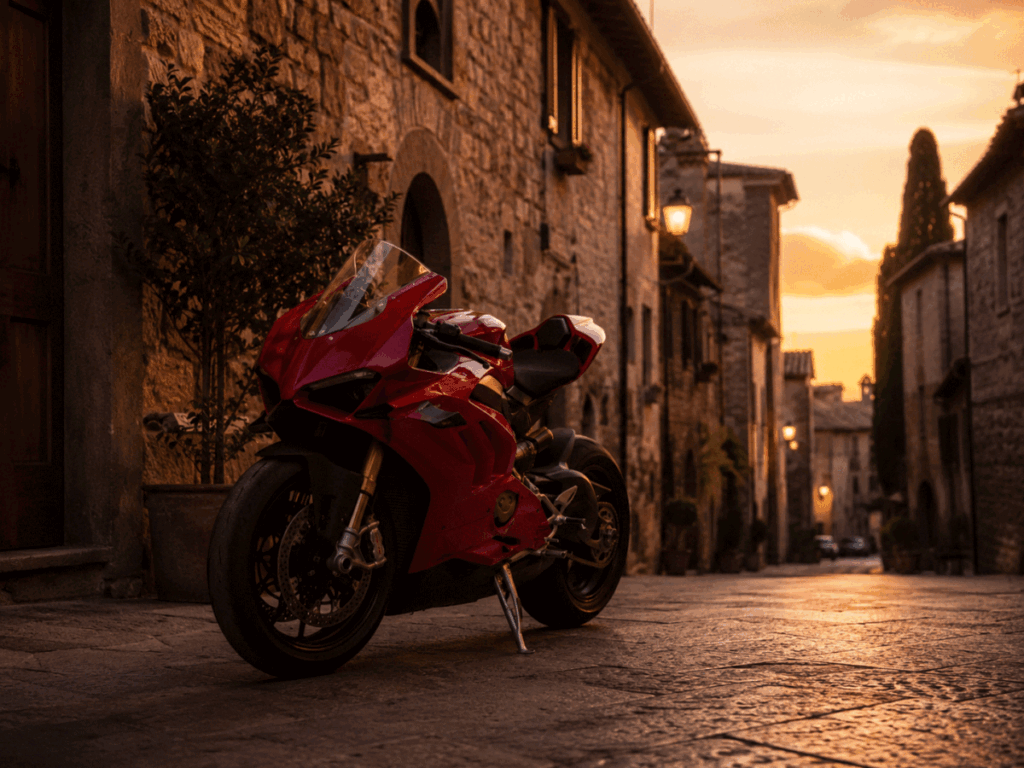
Here’s the summary. In ownership terms, Ducati belongs to Germany’s Volkswagen Group and is, on paper, managed by Audi by way of the supercar brand Lamborghini. Behind that arrangement sits a curious mix of regulatory analysis and one executive’s personal attachment.
But German ownership hasn’t made Ducati any less Italian. Design and production still happen in Borgo Panigale near Bologna, and the brand’s identity and engine philosophy remain intact. If anything, the addition of a giant group’s capital and technology completed an interesting combination: an Italian soul with German resources.
A brand’s nationality turns out to be less simple than it looks. The badge and heritage are Italian; the ownership structure is German — and Ducati is a fairly rare case where both coexist in one red motorcycle.
Is QJ Motor Really Just “Another Chinese Bike”? The Geely Connection