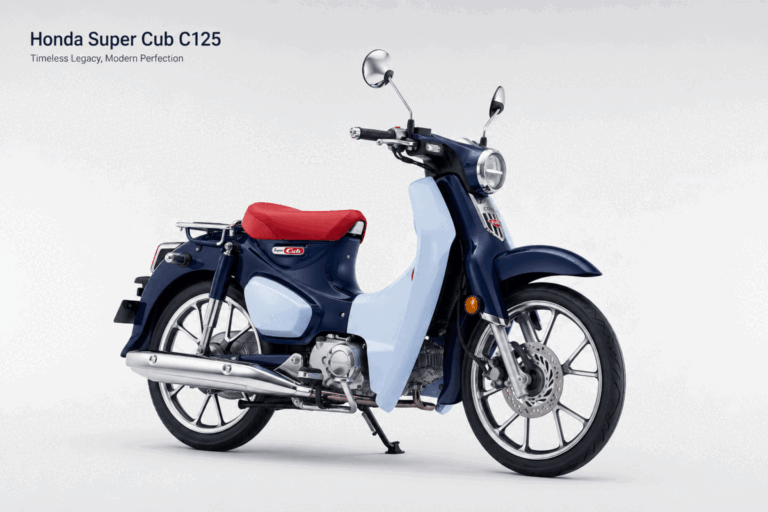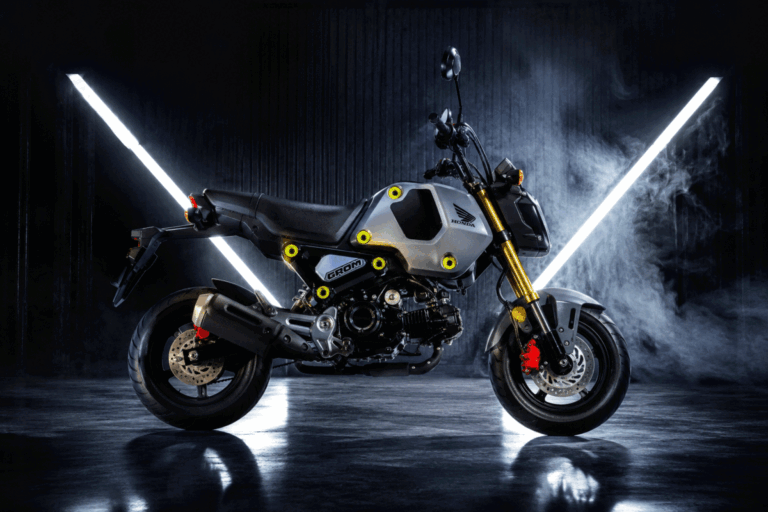
What comes to mind first when you think of Honda? Maybe the Civic, the Accord, or the CR-V. Maybe a Super Cub. Most people file Honda under “carmaker” or “motorcycle company” and move on. But if you had to compress Honda’s identity into a single word, it would land closer to engines than to cars.
That’s not a figure of speech. Honda engines number in the millions every year, and by unit volume the company is regularly described as the largest engine manufacturer on the planet. Cars are simply one of the many things Honda wraps around an engine. This piece walks through that surprisingly wide world — from the world’s largest engine output, to lawn mowers and outboard motors, all the way up to a business jet and a reusable rocket.
Honda Started With Power, Not Cars
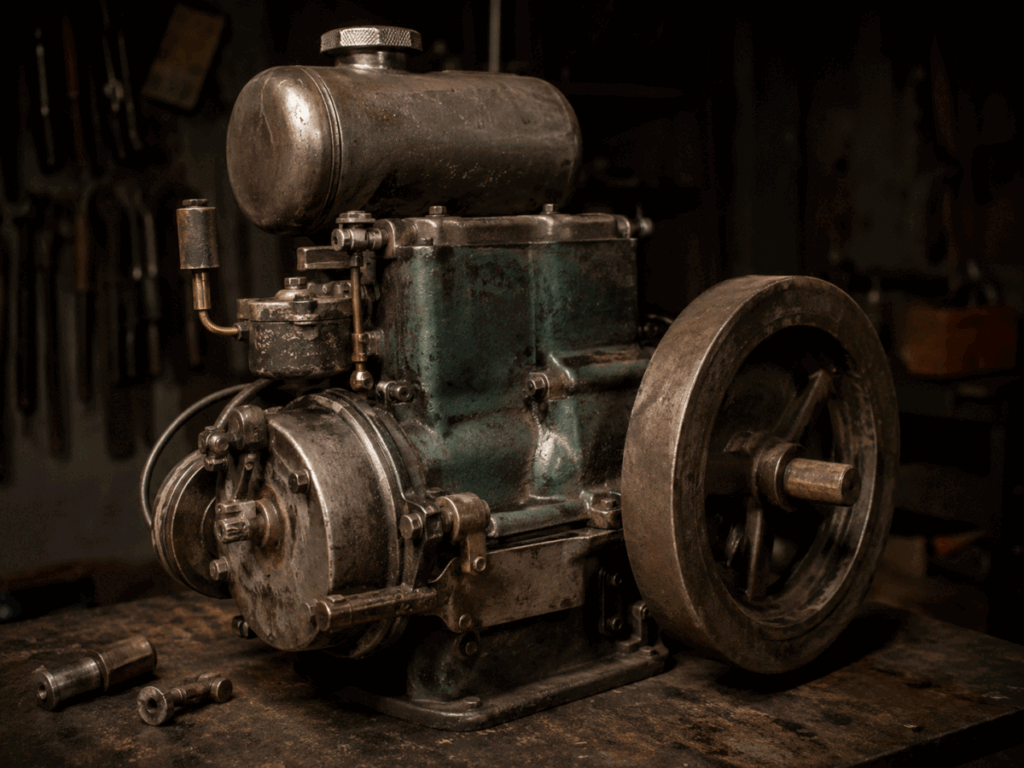
Honda’s origin story is, fittingly, an engine story. Long before there was a Civic, there was a small motor bolted onto a bicycle.
From a research institute to Honda Motor Co.
Honda’s roots trace to the Honda Technical Research Institute, founded in Hamamatsu in 1946, and then to Honda Motor Co., established in 1948. In those early years the company grew through small auxiliary engines fitted to bicycles and through motorcycles — not cars. In a postwar Japan short on transport, a little engine that could add power to an ordinary bicycle was exactly what people needed.
It looks humble next to the global giant Honda became. But that’s the point: Honda began with power, not with a particular vehicle. The line that runs from bicycle motors, to motorcycles, to automobiles all shares the same root — the engine.
Why the starting point matters
This matters because it reframes everything that came after. A company that starts by making vehicles tends to think in terms of vehicles. A company that starts by making engines tends to ask a different question: what else can this engine power? That second question is the thread that ties together almost everything Honda has done since — and it explains why Honda engines ended up in places no carmaker would ever go.
The World’s Largest Engine Maker — By Volume
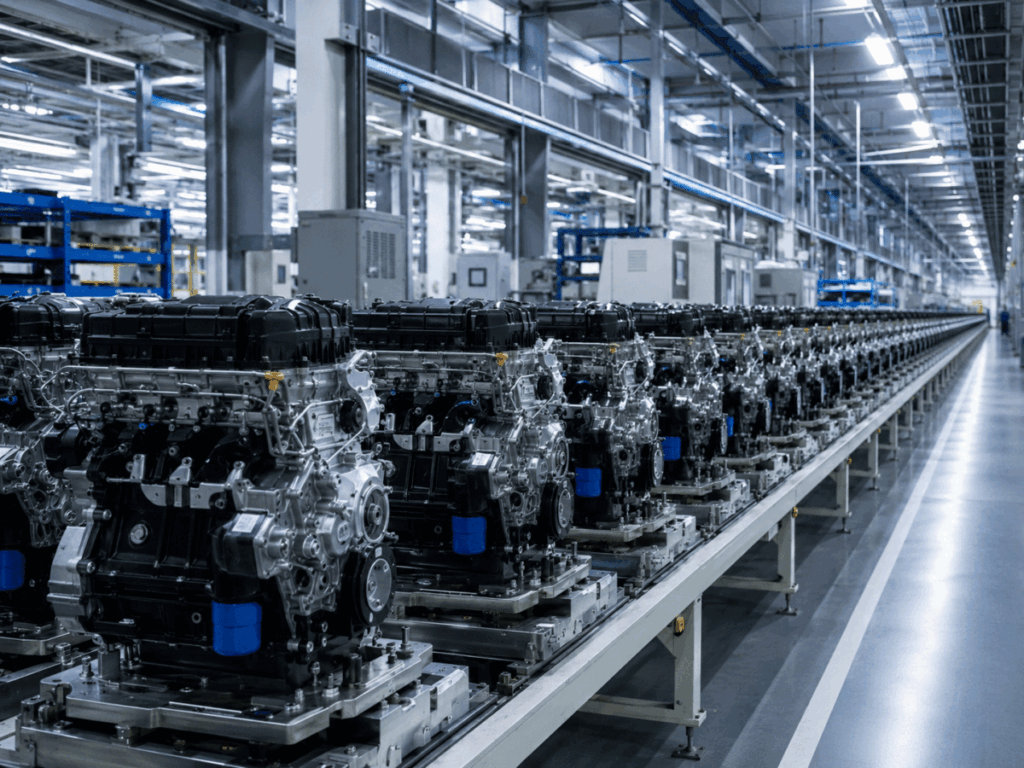
Look at the numbers and the “engine company” framing stops sounding like a marketing line.
What “largest” actually means
Honda is consistently described, by unit volume, as one of the world’s largest engine makers. Honda’s own engine division has stated that the company is the world’s largest engine manufacturer, and that in 2009 alone it produced and sold more than 23 million engines worldwide across its automotive, motorcycle, marine, and power-equipment lines.
Units vs. displacement vs. revenue
The qualifier “by volume” is doing real work here, so it’s worth being precise. There are different ways to crown a “largest” engine maker. If you measure by total displacement, or by revenue, other industrial giants enter the conversation. But if you measure the way that’s most intuitive — how many individual engines roll out the door — Honda sits at or near the very top. That’s a different kind of dominance than being the biggest car company, and it’s the one that captures what Honda actually is.
The motorcycle record
The engine dominance shows up most clearly in two wheels. Honda has been the world’s largest motorcycle manufacturer since 1959, and in 2025 it announced a cumulative milestone of 500 million motorcycles produced — a record stretching back to the 1949 Dream D-Type, its first mass-produced motorcycle. Half a billion bikes is, in the end, half a billion engines.
So the company most people think of as “the Civic company” is, more accurately, the company that stamps out engines in greater number than almost anyone else on Earth. Framed that way, it’s a genuinely unusual identity.
Where All Those Honda Engines Go
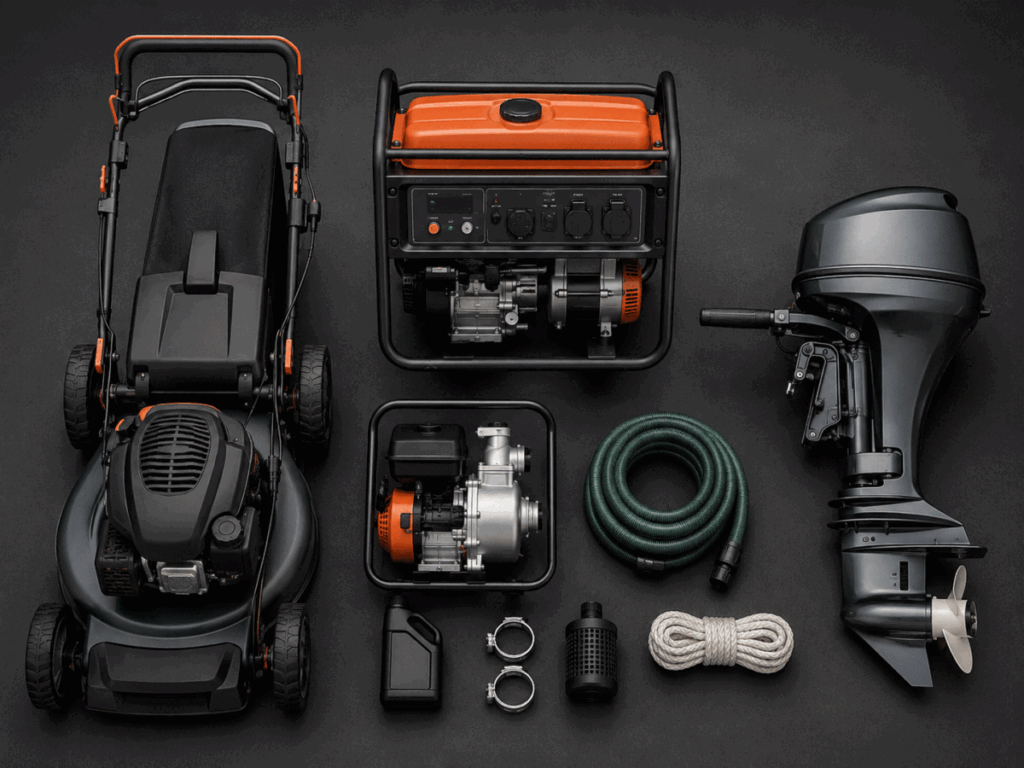
So where do all those millions of engines actually end up? Cars and motorcycles don’t come close to accounting for them. Honda engines turn up in far more corners of daily life than most people realize.
Power equipment: mowers, generators, pumps
Alongside its core car and motorcycle business, Honda makes garden equipment, outboard marine engines, personal watercraft, and power generators. The American power-equipment plant in Swepsonville, North Carolina, is one of Honda’s flagship power-product sites, building mowers, generators, tillers, and more, with production records running into the tens of millions of units. Plenty of the machines humming away on construction sites, in gardens, and on docks are quietly Honda-powered.
The GX general-purpose engine
If there’s an unsung hero in this story, it’s the GX-series general-purpose engine. These compact, durable motors act like a standardized “heart” you can drop into almost anything. They power pumps, generators, cement mixers, pressure washers, concrete saws, and a wide range of construction gear. You may never have bought a Honda product on purpose and still rely on a GX engine through the equipment around you.
Marine and the rest
Add outboard marine engines and personal watercraft to the list, and the picture sharpens: Honda isn’t a carmaker that dabbles in engines. It’s an engine maker that happens to also build some very good cars. The vehicle is the wrapper; the engine is the product.
From Lawn Mowers to the Sky

Here’s where the spectrum gets genuinely surprising. Honda engines don’t stop at lawn mowers — at the opposite end, they fly.
The HondaJet
In Greensboro, North Carolina, the Honda Aircraft Company designs and builds the HondaJet, a small business jet. Yes — the same corporate family behind a $400 lawn mower also builds a certified light jet, in-house, in the United States.
The over-the-wing engine mount
The HondaJet’s signature is its unusual Over-The-Wing Engine Mount. Instead of hanging the engines off the rear fuselage, Honda mounts them above the wings. According to HondaJet’s own materials, this layout removes the need for engine-support structures inside the fuselage, freeing up notably more cabin space, and it helps with cabin noise too. It’s an engineering bet that goes against convention in its class — exactly the kind of move you’d expect from a company that thinks in engines first.
A reusable rocket
And then there’s space. In 2025, Honda R&D successfully carried out a launch-and-landing test to validate core reusable-rocket technology. The experimental rocket rose to an altitude of 271.4 meters, landed within 37 centimeters of its target point, and was airborne for 56.6 seconds. A company that builds lawn-mower engines launching and landing a reusable rocket in the same era tells you just how far its obsession with propulsion actually reaches.
Beyond Engines: ASIMO and Robotics
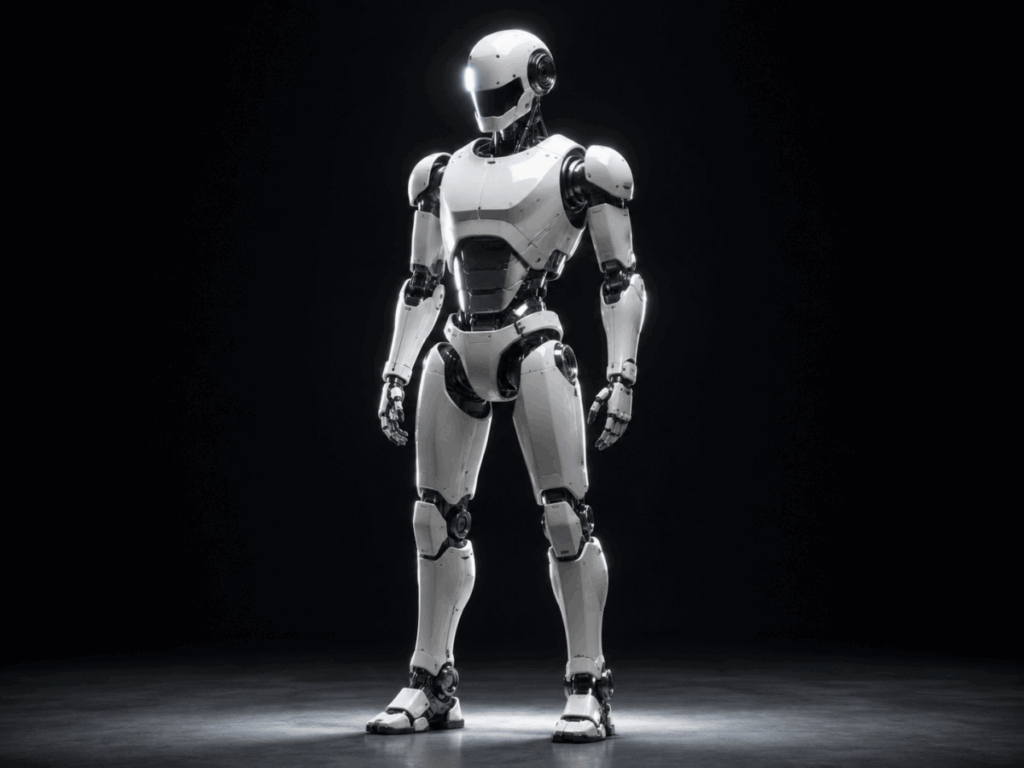
Honda’s curiosity has also spilled outside of combustion entirely. The clearest example is robotics.
Honda began humanoid-robot research in 1986 and, in 2000, unveiled ASIMO, a robot that walked on two legs much like a person. At the time, a bipedal walking robot was a sensation — and “why is a car company building a robot?” was a fair question to ask. But seen through the lens of motion and power control, even ASIMO sits comfortably inside Honda’s consistent preoccupation: making things move, and controlling how they do it.
So What Is Honda, Really?
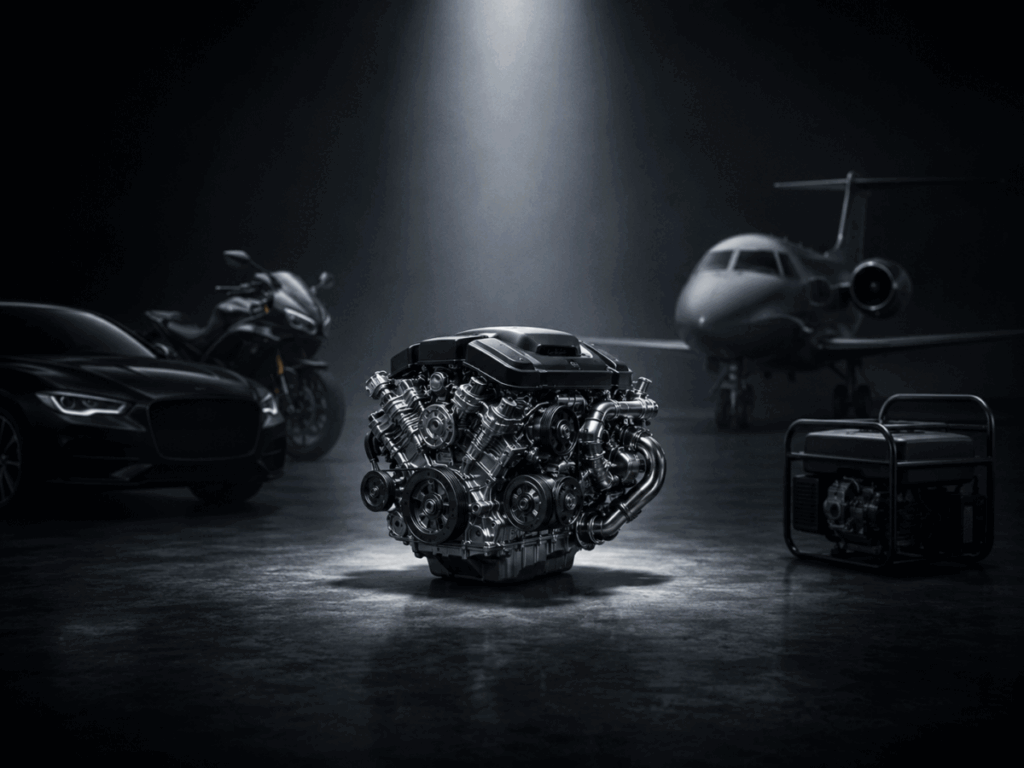
Here’s the summary. Honda is a carmaker that builds the Civic. It’s a motorcycle company that builds the Super Cub. But if you had to name the single identity running through all of it, Honda is a company that makes engines. It started with a bicycle motor, became one of the world’s largest engine makers by volume, and has poured those engines into cars, motorcycles, mowers, generators, boats — and jets.
We have a habit of filing brands into single boxes: “car company,” “bike company.” Honda is a standing reminder of how leaky those boxes are. Next time you spot the Honda badge — whether it’s on a car’s hood, a lawn mower, or the fuselage of a business jet — it’s worth remembering it’s all the same company, driven by the same obsession.
Is QJ Motor Really Just “Another Chinese Bike”? The Geely Connection
Who Owns Ducati? The Italian Icon That’s Actually German-Owned