Tell a new rider this and you’ll usually get a confused look: “To turn right, push the right grip forward.” Push the right grip and the front wheel briefly points slightly left — yet the bike leans right and turns right. It sounds like it shouldn’t work.
But it does. And the stranger part is that every rider moving above a slow walking pace is already doing it without thinking. The technique is called counter steering. Here’s the one-sentence version: counter steering isn’t about turning the bars the wrong way to corner — it’s about using a brief opposite steering input to lean the bike quickly in the direction you want.
What actually turns the bike is the lean, and counter steering is the fastest way to create that lean. Below, we’ll cover what it is, the real physics behind it, and the myth most articles get wrong.
What Is Counter Steering?
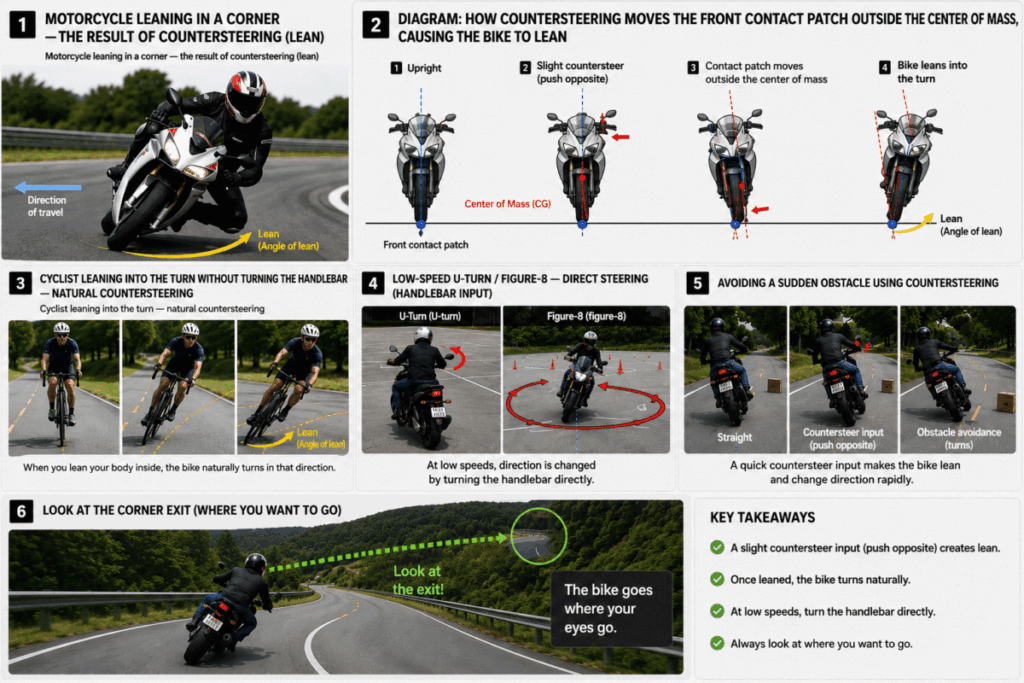
Counter steering is a slight forward push on the grip on the side you want to go, once you’re above a certain speed. To go right, you press the right grip forward; to go left, you press the left. Riders memorize it as a simple phrase: “push right to go right.”
Push Right to Go Right
This isn’t a big turn of the bars — it’s a light, deliberate pressure. Official rider training puts it the same way. The Washington State Motorcycle Operator Manual teaches cornering as “press right — lean right — go right,” and that press is the whole input.
Why Speed Changes Everything
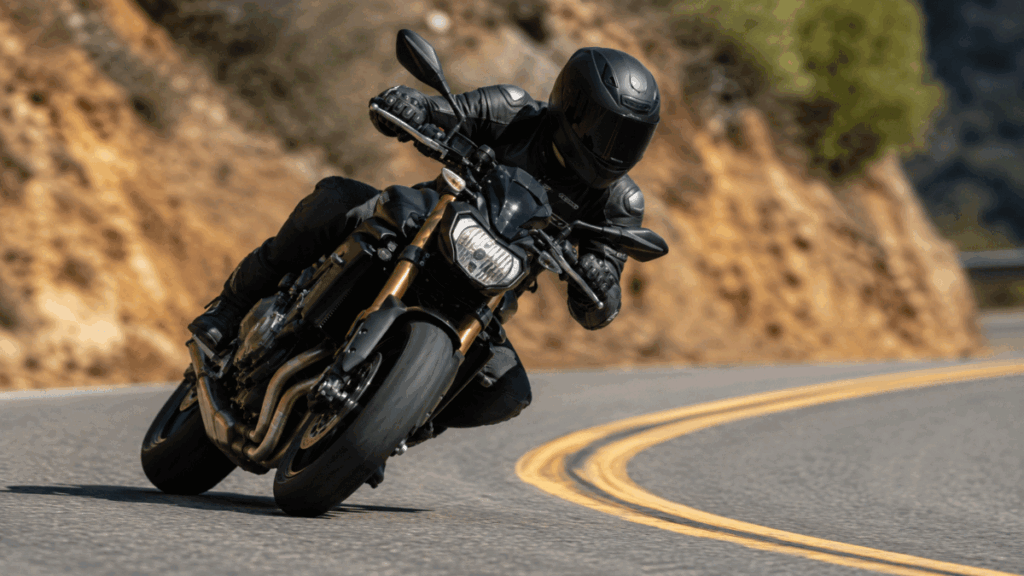
Speed is the key variable. At very low speeds, close to walking pace, you steer like a car — turning the bars directly toward where you want to go. Once you pick up some speed, though, usually somewhere around 20–30 km/h and up, the feeling shifts. Instead of turning the bars to corner, you press the grip and lean the bike first. That’s counter steering taking over.
Why Pushing One Way Leans You the Other
This is the important part — and the part the internet most often gets wrong.
The Common Myth: “It’s the Gyroscopic Effect”
Many articles explain counter steering with one idea: the gyroscopic effect. A fast-spinning wheel behaves like a top, so the story goes, and that’s what tips the bike. It isn’t false, exactly, but if you treat it as the main cause, the explanation falls short.
The Real Mechanism: The Contact Patch Moves Out
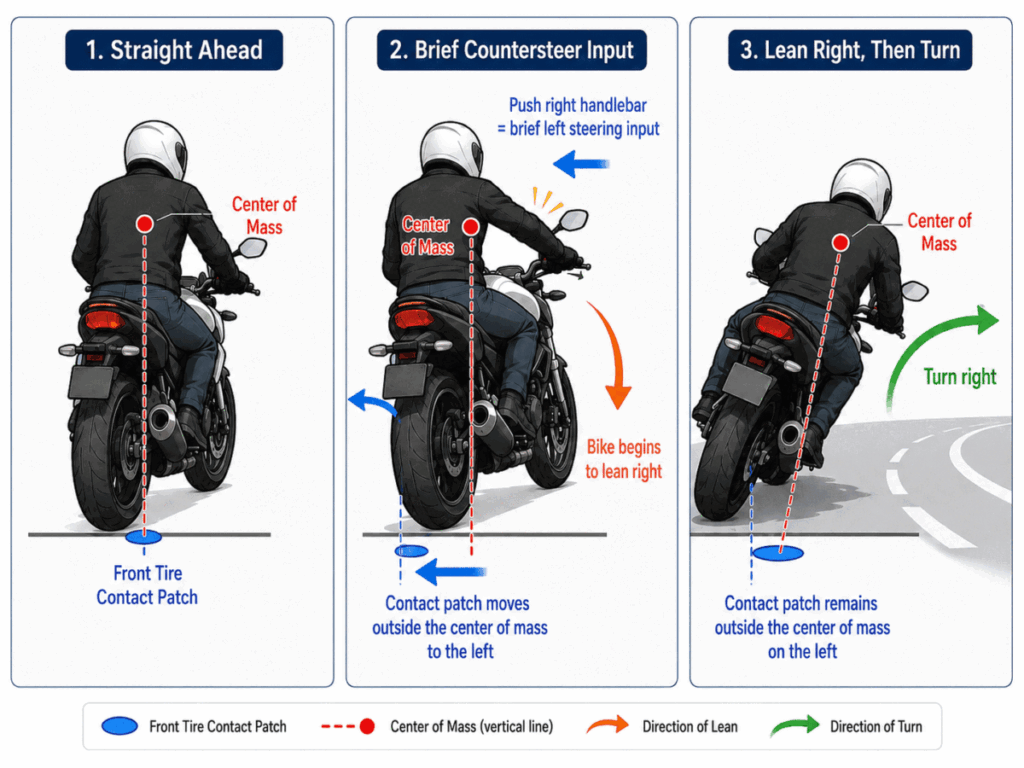
Here’s what actually happens. Press the right grip and the front wheel momentarily points slightly left around the steering axis. That moves the tire’s contact patch — the spot where rubber meets road — out to the left of the bike’s center of mass.
Stand a pole upright and kick its base to one side: it falls the other way. A bike does the same. With the contact patch shifted left, the center of mass is no longer supported and the bike leans right. Once it leans, the steering geometry and the rounded tire profile point the front wheel back into the corner, and the leaned tire generates the side force (camber thrust) needed to turn. The result is a right-hand corner. In other words, the bike is turned by the lean, not the bars — and counter steering is the trigger that creates that lean.
Where the Gyroscopic Effect Actually Fits
The gyroscopic effect isn’t absent — it just isn’t the star. Explaining counter steering with gyroscopics alone leaves out the main event. The effect plays some part in the process, but it’s better understood as one of several forces at work rather than the single cause.
You’re Already Doing It
The surprising thing is that people who’ve never heard the term are already counter steering.
Watch a Cyclist Lean Into a Turn
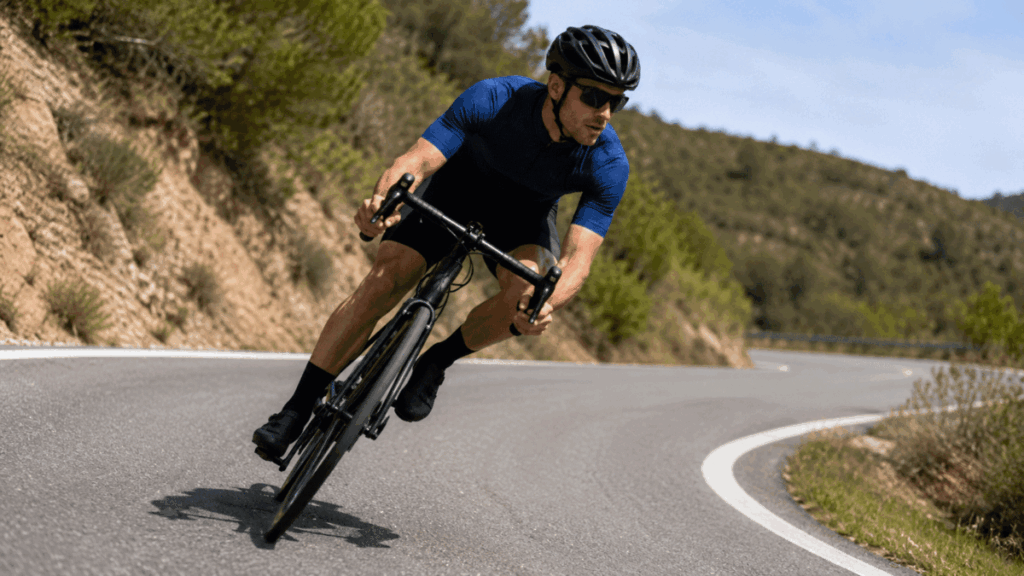
Picture riding a bicycle. When you change direction with some speed up, you don’t yank the handlebars — you lean yourself and the bike. The tiny steering input that creates that lean is counter steering. You just never noticed it. Everyone who rides on two wheels does it instinctively, which is why it’s more accurate to say you’re becoming aware of counter steering rather than learning it from scratch.
Low-Speed and High-Speed Steering Feel Different
Counter steering gets harder to feel the slower you go.
Why U-Turns Use Direct Steering
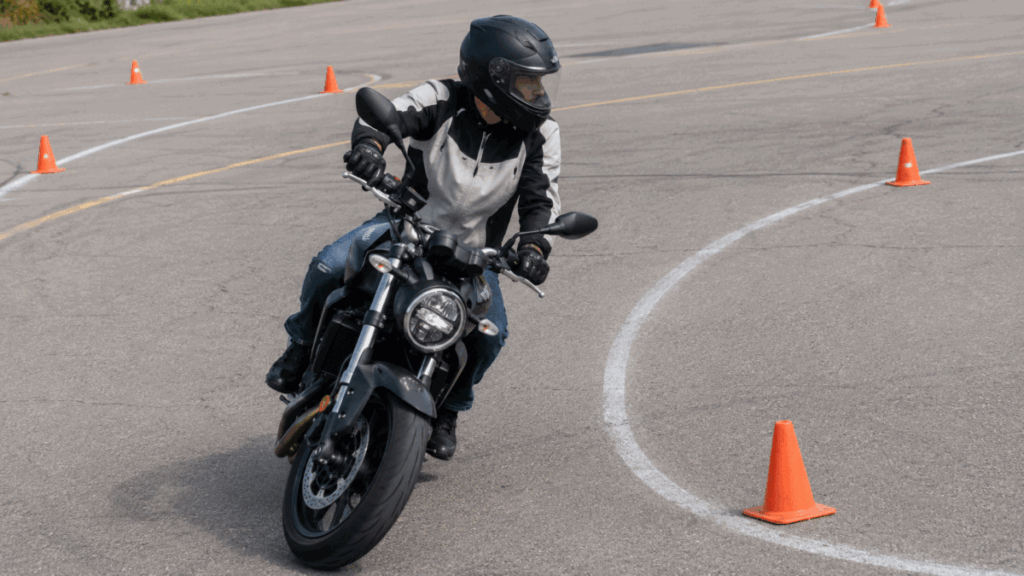
In a tight parking-lot U-turn or a slow figure-eight, the direct steering — turning the bars the way you want to go — clearly dominates. So low-speed steering and normal-speed steering end up feeling like almost two different skills to the rider. As speed builds, the switch happens on its own: pressing the grip to lean takes over from turning the bars, and most riders cross that line smoothly without ever noticing. That’s exactly why slow-speed figure-eight and slalom drills are worth practicing on their own. The Motorcycle Ohio Rider Enhancement guide makes the same point: turn the bars directly at very low speed, but press the grip to control lean at riding speed.
When to Use Counter Steering on Purpose
If you’re already doing it, why bother being conscious of it? Because of the moments that count.
Emergency Swerves
The biggest one is emergency avoidance. When an obstacle suddenly appears, the instinct to wrench the bars toward your escape route can actually drop you the wrong way. If your body knows “to dodge left, press left,” you clear the danger faster and more precisely. Rider training treats this as a priority for a reason — knowing it in your head and having your hands react instantly are two different things.
High-Speed Corners
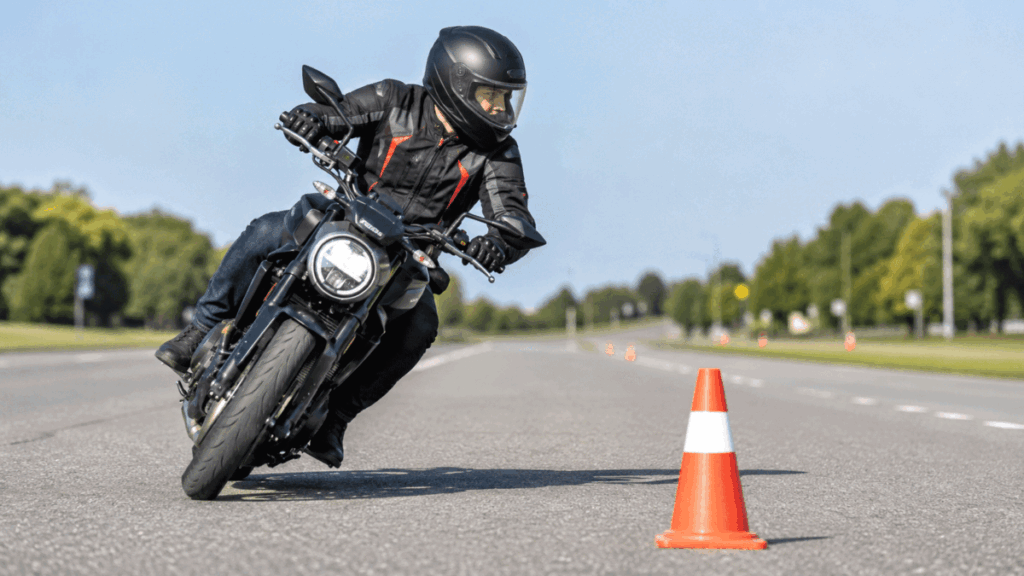
Fast corners are the same story. Deliberately pressing the inside grip on entry lets you set the lean angle exactly as much, and as quickly, as you want — far more controlled than waiting for the bike to tip in on its own.
The Trap to Know: Target Fixation
There’s one concept you have to pair with counter steering: target fixation.
Look Where You Want to Go
People tend to steer toward whatever they stare at, and that instinct kicks in at the worst moments. Lock your eyes on the obstacle you’re trying to avoid and your body quietly inputs toward it — so you drift straight into the thing you meant to dodge. The fix is simple: look at the gap, not the hazard. When your eyes find the escape line, your counter steering input naturally follows. In a crisis, vision and counter steering have to work as a set.
Heavier Bikes Need a Firmer Push
The same technique needs different effort depending on the machine.
Why Small Bikes Feel Nimble
The more mass, wheelbase, and wheel-and-tire size a bike has, the more force it takes to lean. A light, small-displacement bike can be flicked into a corner, while a big, heavy tourer wants a firmer input for the same move. That’s why beginners find cornering easier on small bikes. If you switch machines and feel like “it won’t drop in like my old bike did,” your technique isn’t wrong — you just haven’t found the right amount of input for this bike yet.
Other Skills Worth Pairing With Counter Steering
If counter steering is the core of steering, a few habits make it far more stable.
Vision, Relaxed Arms, and Smooth Braking
First, vision: look where you want to go and your body naturally inputs that way, so get in the habit of spotting the corner exit early. Second, relax your upper body — gripping the bars in a death clench muffles the small counter steering inputs you’re trying to make. Third, don’t stack hard braking and steering at once; grabbing the brakes mid-lean unsettles the chassis.
How to Practice Counter Steering Safely
Once you understand the principle, the fastest way to internalize it is to feel it — in a safe place.
A Simple Empty-Lot Drill
Find a wide, flat, empty lot with no traffic or people. Riding straight at about 30 km/h with both hands on the grips, add a light pressure to just one hand: press the right grip slightly forward to go right, the left to go left. It’s a gentle, steady push, not a hard turn — you’ll feel the bike roll smoothly toward the side you pressed.
Keep your arms loose; tension fights the input. Relax your shoulders and let your eyes lead toward where you want to go. It feels odd at first, but after a few tries you’ll hit that “oh — I was doing this all along” moment. Once your body remembers the feel, it shows up on its own when an emergency hits.
Final Thoughts
What to Remember About Counter Steering
Counter steering isn’t magic — it’s physics. Press the grip, the contact patch slips outside the center of mass, the bike leans, and the lean makes the turn. The gyroscopic effect plays a smaller solo role than it usually gets credit for.
Understanding this takes the mystery — and a lot of the fear — out of cornering. There’s a real safety gap between turning without knowing why and steering with intent. Next time you ride, give the grip a gentle press and feel it for yourself.
Related reads
Air-Cooled vs Liquid-Cooled Motorcycles: What’s the Difference?
Motorcycle Cylinder Count Explained: Single, Twin, Triple, Four
Honda Super Cub History: The World’s Best-Selling Motorcycle